

- expertise:
- Platform Testing, Cryptocurrency, Retail Investing
- credentials:
- Active investor since 2013 · 11+ years experience
- tested:
- 50+ platforms · 200+ guides authored

- expertise:
- Broker Comparison, ISA Strategy, Portfolio Management
- credentials:
- Active investor since 2013 · 11+ years experience
- tested:
- 40+ brokers with funded accounts
How We Test
Real accounts. Real money. Real trades. No demo accounts or press releases.
What we measure:
- Spreads vs advertised rates
- Execution speed and slippage
- Hidden fees (overnight, withdrawal, conversion)
- Actual withdrawal times
Scoring:
Fees (25%) · Platform (20%) · Assets (15%) · Mobile (15%) · Tools (10%) · Support (10%) · Regulation (5%)
Regulatory checks:
FCA Register verification · FSCS protection
Testing team:
Adam Woodhead (investing since 2013), Thomas Drury (Chartered ACII, 2018), Dom Farnell (investing since 2013) — 50+ platforms with funded accounts
Quarterly reviews · Corrections: in**@*******************co.uk
Disclaimer
Not financial advice. Educational content only. We're not FCA authorised. Consult a qualified advisor before investing.
Capital at risk. Investments can fall. Past performance doesn't guarantee future results.
CFD warning. 67-84% of retail accounts lose money trading CFDs. High risk due to leverage.
Contact: in**@*******************co.uk
Quick Answer: Is Monzo’s ISA Worth Opening?
Monzo’s stocks and shares ISA is worth opening if you’re a beginner who wants simplicity over choice, already bank with Monzo, and plan to invest small amounts regularly. The £1 minimum and automatic investing features make it one of the most accessible ISAs available.
But it’s not the cheapest option, and the fund selection is limited. If you want rock-bottom fees, Trading 212 charges nothing. If you want a wider fund range, Vanguard or Hargreaves Lansdown offer more. Monzo’s strength is making investing feel effortless — not winning on price or variety.
Monzo ISA — Quick Overview
| Feature | Details | Verdict |
|---|---|---|
| Annual Allowance | £20,000 | ✓ |
| Platform Fee | 0.25% (0.20% with Perks/Max) | ✓ |
| Minimum Investment | £1 | ✓ |
| Fund Options | BlackRock ready-made + themed + geographic | ✓ |
| Transfers In | Yes (cash ISA & stocks and shares ISA) | ✓ |
| Tax Treatment | Tax-free gains and income | ✓ |
| Dealing Fees | £0 | ✓ |
| Withdrawal Fees | £0 | ✓ |

You could get back less than you invest.
Note: You need a Monzo current account to use Investments. If you’re not already a Monzo customer, you’ll need to open one first – it’s free and takes around 10 mins.
You need a Monzo current account to use Investments. UK residents 18+. Ts&Cs apply.
What Is a Stocks and Shares ISA?
A stocks and shares ISA is a tax-efficient wrapper that lets you invest up to £20,000 per year without paying capital gains tax or income tax on your returns. Any profits you make, any dividends you receive — all tax-free.
This matters more than most people realise. Outside an ISA, you’d pay capital gains tax on profits above £3,000 (the current annual allowance). With shares, dividend income above £500 gets taxed too. An ISA sidesteps all of that.
The trade-off versus a cash ISA? Your money isn’t guaranteed. Investments can fall as well as rise. But over the long term — think 5+ years — stocks and shares ISAs have historically outperformed cash savings. That’s the bet you’re making.
For a deeper look at how investment returns are taxed, see our guide to tax on investments.
How Does Monzo’s ISA Work?
Opening Your ISA
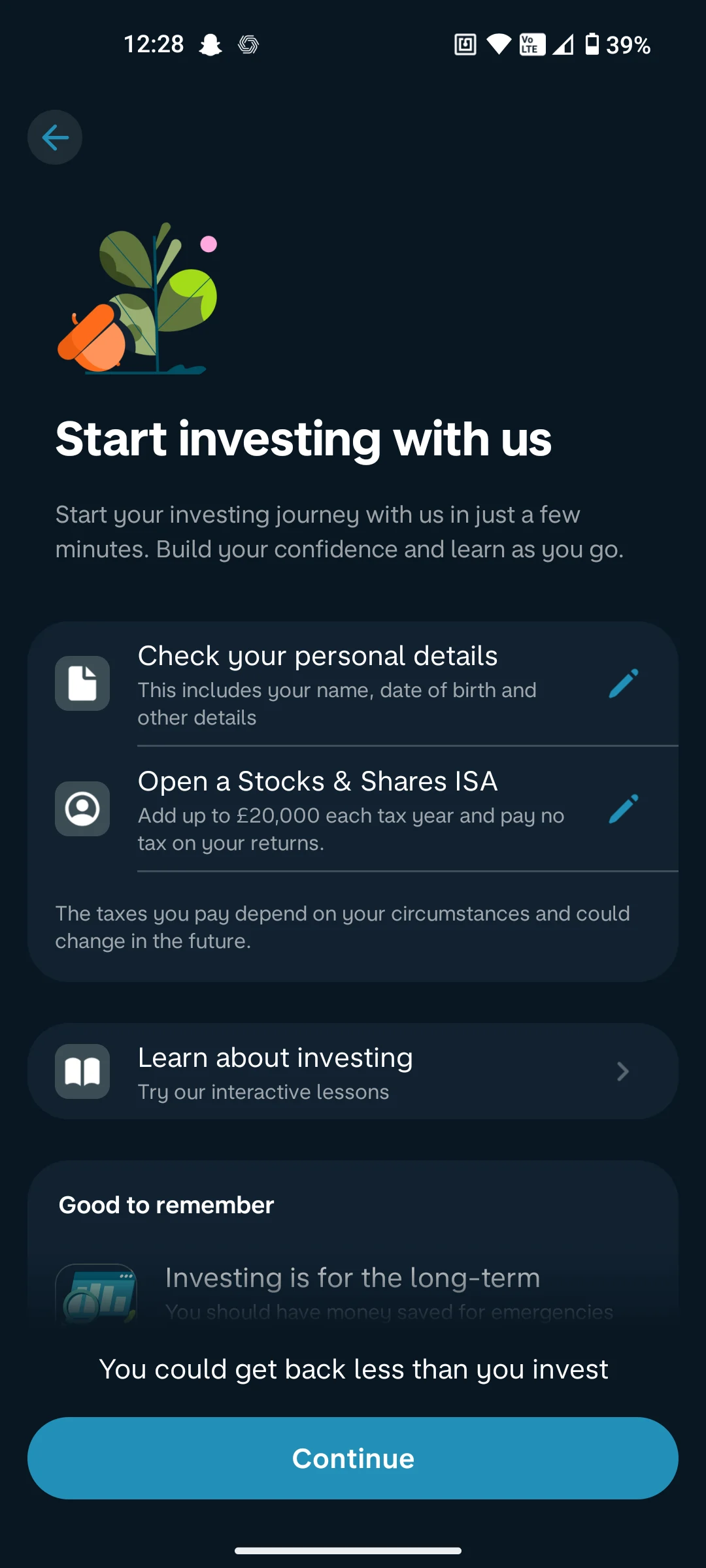
You’ll need a Monzo current account first. No way around that — it’s not a standalone product. If you’re already a Monzo customer, opening the ISA takes about two minutes through the app. Tap Investments, choose ISA, answer a few risk questions, and you’re done.
If you’re not a Monzo customer, you’ll need to open a current account first. That adds friction, but Monzo’s banking app is actually good, so it’s not wasted effort if you’re open to switching banks anyway.
What Can You Invest In?
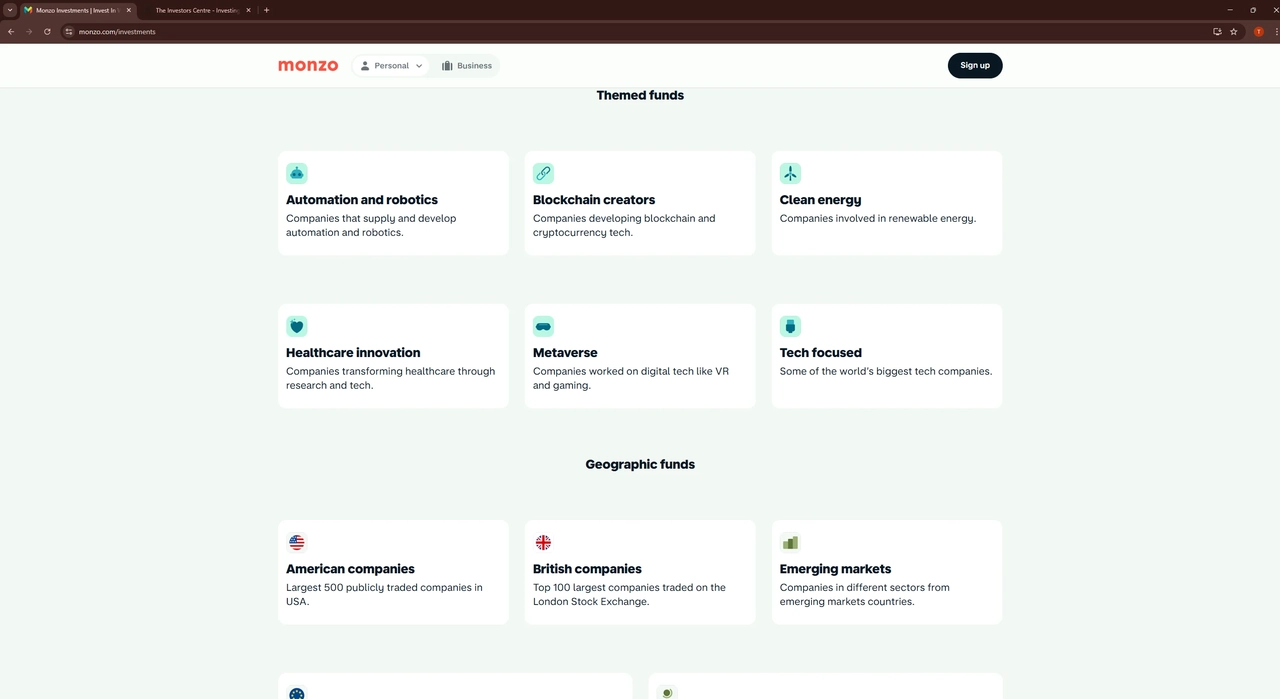
Monzo offers three categories of BlackRock funds:
Ready-made funds — These are risk-based portfolios that do the thinking for you:
- Careful: Lower risk, roughly 80% bonds and 20% shares
- Balanced: Medium risk, roughly 34% bonds and 66% shares
- Adventurous: Higher risk, 100% shares
Themed funds — Sector-focused options for specific interests:
- Automation and Robotics
- Blockchain Creators
- Clean Energy
- Healthcare Innovation
- Metaverse
- Tech Focused
Geographic funds — Regional exposure:
- American Companies (tracks S&P 500)
- British Companies (tracks FTSE 100)
- Emerging Markets
- European Companies
- Global Companies
You can mix and match across categories. Want 50% in Balanced, 30% in American Companies, and 20% in Clean Energy? That works. Monzo lets you build your own allocation from these building blocks.
How Do You Add Money?
Four ways to fund your ISA:
- Lump sum: Transfer any amount (minimum £1) directly from your Monzo account. Instant.
- Scheduled deposits: Set up automatic transfers on whatever schedule suits you — weekly, monthly, or custom dates.
- Round-ups: Turn this on and every card purchase gets rounded up to the nearest pound. The spare change collects in a pot and gets invested once it hits £1. Buy a coffee for £2.60, and 40p goes toward your ISA. It’s surprisingly effective for building the habit without thinking about it.
- Interest investing: If you have savings pots earning interest, you can automatically sweep that interest into your ISA. Another hands-off option.
The auto-investing features are what set Monzo apart. Most ISA providers expect you to actively choose to invest. Monzo makes it passive.
Monzo ISA Fees Explained
Monzo keeps its ISA pricing simple and transparent. There’s one main cost to consider: an annual platform fee on your invested balance. No hidden charges, no dealing fees, no nasty surprises.
Platform Fee Breakdown
Monzo charges 0.25% annually on your invested balance. If you have Monzo Perks or Max, that drops to 0.20%. The fee is calculated daily and collected monthly from your investment account.
In real terms: £10,000 invested costs you £25 per year (or £20 with Perks). Not the cheapest, but not outrageous either.
Fund Management Fees
On top of the platform fee, each fund has its own ongoing charge figure (OCF) from BlackRock. These vary by fund but are typically 0.10%–0.50%. The OCF is deducted from the fund value, not charged separately — you won’t see it as a line item, but it affects your returns.
Total cost of ownership: platform fee + fund OCF. For a typical portfolio, expect to pay around 0.35%–0.75% annually all-in.
What’s the Maximum You’ll Pay?
Monzo caps platform fees once your combined investments and pension exceed £60,000. Above that threshold, you pay nothing on the excess. Maximum annual fee: £270 (or £210 with Perks/Max). This cap becomes meaningful for larger portfolios. At £100,000 invested, a 0.25% fee would normally cost £250. With the cap, you still pay just £270.
What Monzo Doesn’t Charge
No dealing fees. No withdrawal fees. No account maintenance fees. No transfer-in fees. No minimum balance requirements after opening. This simplicity is refreshing. Some providers nickel-and-dime you with charges that add up. Monzo keeps it straightforward: one percentage fee, that’s it.
ISA Fee Comparison
| ISA Provider | Platform Fee | Dealing Fee | Min Investment | Fund Range |
|---|---|---|---|---|
| Monzo | 0.25% | £0 | £1 | Limited (BlackRock) |
| Trading 212 | 0% | £0 | £1 | Wide (13,000+ stocks/ETFs) |
| Vanguard | 0.15% (£48 min) | £0 | £1 | Vanguard funds only |
| Hargreaves Lansdown | 0.45% | £11.95 | £100 | Very wide |
| Interactive Investor | £4.99/month | £3.99 | £1 | Very wide |
The fee comparison tells a clear story. Trading 212 is cheapest. Vanguard is cheapest for larger balances. Monzo sits in the middle — not expensive, but not the value leader either.
How Does Monzo’s ISA Compare?
Monzo sits in a unique space between budget platforms and traditional brokers. It’s not trying to be the cheapest or the most fully featured — it’s aiming for the easiest. Here’s how that plays out against the main competitors.
Monzo vs Trading 212 ISA
Trading 212 wins on fees (0% platform charge) and fund choice (13,000+ stocks and ETFs). But it’s a DIY platform — you pick your own investments from a huge catalogue, which can overwhelm beginners.
Monzo wins on simplicity. The ready-made funds do the thinking for you. The auto-investing features remove the need for active decisions. If you’re confident picking investments, Trading 212 is better value. If you want someone else to handle the complexity, Monzo is easier.
For a full breakdown, see our Trading 212 ISA review.
Monzo vs Vanguard ISA
Vanguard charges 0.15% — less than Monzo’s fee. But Vanguard recently introduced a £4/month minimum fee for balances under £32,000, making it less competitive for small portfolios. At £5,000 invested, Vanguard costs £48/year; Monzo costs £12.50.
Vanguard also only offers Vanguard funds (excellent funds, but limited to one provider). Monzo only offers BlackRock funds. Neither gives you wide choice.
For larger portfolios, Vanguard is cheaper. For smaller portfolios with regular contributions, Monzo’s fee structure works out better. And Monzo’s app experience is noticeably slicker.
Best Alternative ISAs
If Monzo isn’t right for you, consider:
- Trading 212: Best for cost-conscious investors who want to pick their own stocks
- Vanguard: Best for long-term passive investors with larger balances
- Hargreaves Lansdown: Best for investors who want maximum research and fund choice
- Nutmeg: Best for fully managed investing (they pick everything for you)
For more options, see our guide to the best stocks and shares ISAs.
Transferring an ISA to Monzo
Can You Transfer In?
Yes. Monzo accepts transfers from both cash ISAs and existing stocks and shares ISAs. The transfer preserves your tax-free status — you’re not “using” any of your current year’s £20,000 allowance.
One catch: if you’re transferring a stocks and shares ISA, your existing holdings get sold and transferred as cash, then reinvested in Monzo’s funds. You can’t transfer shares in-specie (keeping the same investments). For some people, this creates a taxable event outside the ISA or just feels wasteful. Something to consider.
How Long Does It Take?
Transfers typically take 2–4 weeks, though it depends on your old provider. Cash ISAs are usually faster than stocks and shares ISAs. Monzo will keep you updated in the app.
Will You Pay Fees?
Monzo doesn’t charge transfer-in fees. Your old provider might charge exit fees — check with them before initiating. Many providers have dropped exit fees, but a few legacy platforms still charge.
Who Is Monzo’s ISA Best For?
Ideal User Profile
Existing Monzo customers: The integration with your banking app is the whole point. If you already use Monzo daily, adding the ISA feels natural.
Complete beginners: If phrases like “ETF”, “asset allocation”, and “dividend yield” make your eyes glaze over, Monzo’s simplicity is a feature, not a bug. Pick Careful, Balanced, or Adventurous based on your risk tolerance. Done.
Small, regular investors: The £1 minimum and round-up features suit people contributing £50–£200 per month rather than dropping £10,000 lump sums.
Hands-off investors: If you want to set it and forget it, Monzo’s auto-investing and ready-made portfolios deliver exactly that.
Who Should Look Elsewhere
Cost-focused investors: If fees matter most, Trading 212 at 0% beats Monzo at 0.25%.
Stock pickers: If you want to buy individual company shares, Monzo doesn’t offer that. Full stop.
Experienced investors: If you want research tools, technical analysis, or a wide ETF selection, Monzo is too basic.
Non-Monzo customers: Opening a bank account just to access an ISA is friction. Unless you’re actually interested in Monzo for banking, consider standalone ISA providers.
Monzo ISA Pros and Cons
What We Like and What We Don’t
Pros
- £1 minimum makes it properly accessible — no need for hundreds to start
- Auto-investing features (round-ups, interest investing) make contributions effortless
- Clean, well-designed app experience with no clutter
- BlackRock fund management from a world-class provider
- Zero dealing fees — buy and sell without transaction charges
- Tax-free wrapper with no capital gains or income tax on returns
- Bite-sized in-app lessons for beginners who want to learn
Cons
- Limited fund selection — only BlackRock funds, no individual stocks or third-party ETFs
- Requires Monzo current account — not a standalone ISA product
- No individual stocks — can’t buy shares in specific companies
- Higher fees than some rivals — Trading 212 charges 0%, Vanguard charges 0.15%
- No in-specie transfers — existing investments get sold during transfer
Final Verdict – Should You Open an ISA with Monzo?
Monzo’s stocks and shares ISA does one thing exceptionally well: it makes investing feel effortless for people who’ve never done it before. The round-ups, scheduled deposits, and ready-made funds remove every excuse not to start.
It’s not the cheapest ISA. It’s not the most flexible. The fund range is limited, and you can’t buy individual stocks. If any of those matter to you, better options exist.
But for Monzo customers who want to start investing small amounts regularly without thinking too hard about it — this delivers. The app integration is tight. The fees are reasonable (not great, reasonable). The funds are professionally managed. And the barrier to entry is as low as it gets.
I’d recommend it for beginners who already bank with Monzo and want the simplest possible path to getting their money invested. For everyone else, shop around. Read our full Monzo investing review for a complete breakdown of the platform beyond just the ISA.
Capital at risk. The value of your investments can go down as well as up, and you may get back less than you invest. Past performance is not a reliable indicator of future results.
Discuss the Monzo ISA
Invested through the Monzo ISA? Share your experience, ask questions, or help other investors decide. Our community earns Equity for quality contributions.
Discussion 0 comments
Be the first to start discussing this topic! Log in or create an account to share your thoughts.
Log In Create AccountFAQs
References
You need a Monzo current account to use Investments. UK residents 18+. Ts&Cs apply.
Capital at risk. Investments can go down as well as up.
You may get back less than you invest.
No comments yet. Be the first to start discussing this topic!