

- expertise:
- CFD Trading, Forex, Derivatives, Risk Management
- credentials:
- Chartered ACII (2018) · Trading since 2012
- tested:
- 40+ forex & CFD platforms with live accounts

- expertise:
- Broker Comparison, ISA Strategy, Portfolio Management
- credentials:
- Active investor since 2013 · 11+ years experience
- tested:
- 40+ brokers with funded accounts
How We Test
Real accounts. Real money. Real trades. No demo accounts or press releases.
What we measure:
- Spreads vs advertised rates
- Execution speed and slippage
- Hidden fees (overnight, withdrawal, conversion)
- Actual withdrawal times
Scoring:
Fees (25%) · Platform (20%) · Assets (15%) · Mobile (15%) · Tools (10%) · Support (10%) · Regulation (5%)
Regulatory checks:
FCA Register verification · FSCS protection
Testing team:
Adam Woodhead (investing since 2013), Thomas Drury (Chartered ACII, 2018), Dom Farnell (investing since 2013) — 50+ platforms with funded accounts
Quarterly reviews · Corrections: in**@*******************co.uk
Disclaimer
Not financial advice. Educational content only. We're not FCA authorised. Consult a qualified advisor before investing.
Capital at risk. Investments can fall. Past performance doesn't guarantee future results.
CFD warning. 67-84% of retail accounts lose money trading CFDs. High risk due to leverage.
Contact: in**@*******************co.uk
Quick Answer — Is Monzo Good for Investing?
Monzo is good for investing if you’re a beginner who values simplicity over choice, already bank with Monzo, and want to invest small amounts regularly without overthinking it. For that specific profile, it’s excellent. It’s not good if you want the lowest possible fees, individual stock picking, research tools, or a wide fund selection — other platforms beat Monzo on all those fronts.

You could get back less than you invest.
Note: You need a Monzo current account to use Investments. If you’re not already a Monzo customer, you’ll need to open one first – it’s free and takes around 10 mins.
You need a Monzo current account to use Investments. UK residents 18+. Ts&Cs apply.
The Short Version
| Aspect | Verdict |
|---|---|
| For Beginners | ✓ Excellent |
| For Experienced Investors | ✗ Limited |
| Value for Money | ✓ Good (small portfolios) |
| Fund Choice | ✗ Restricted |
| Ease of Use | ✓ Excellent |
| Safety | ✓ FCA regulated, FSCS protected |
| Overall | Good for specific users, not universal |
What Is Monzo Investments?
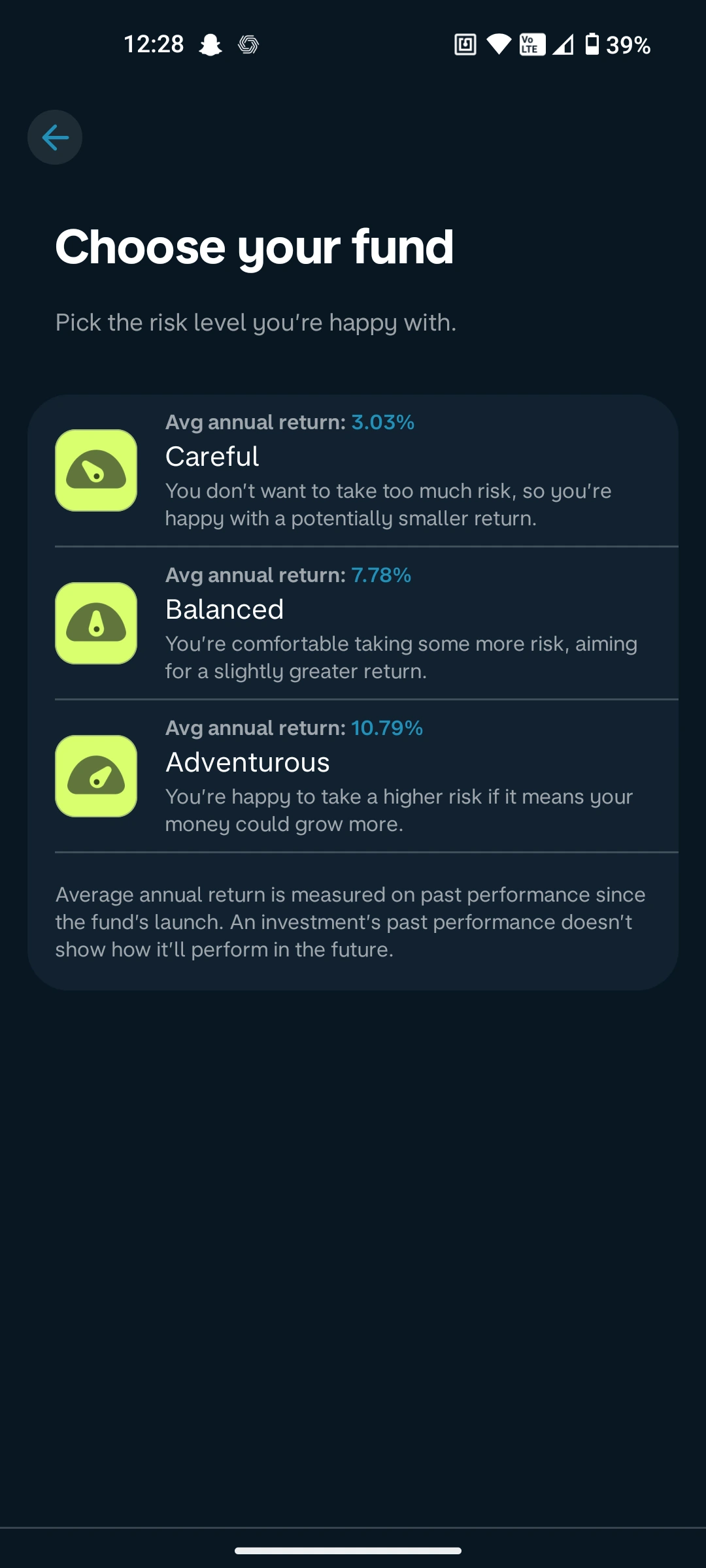
Monzo Investments is an investment platform built directly into the Monzo banking app. It offers a focused selection of BlackRock funds — including ready-made portfolios labelled “Careful”, “Balanced”, and “Adventurous” — alongside themed and geographic fund options. All investing happens within a Stocks & Shares ISA wrapper.
How Does Monzo Work for Beginners?
Beginners can start investing from just £1 and choose from ready-made portfolios that match their risk appetite. The app handles fund selection and rebalancing through BlackRock, so you don’t need to pick individual investments. Auto-investing features like round-ups and interest investing make contributions automatic, removing the need for willpower or regular manual action.
What Are the Costs and Fees on Monzo?
- 0.25% annual platform fee (0.20% with Monzo Perks or Max)
- Fee capped on first £60,000 invested
- No dealing charges or exit fees
- No withdrawal fees
- Underlying fund management fees (OCF) apply on top of the platform fee
Click here for more information on Monzo’s investment fees.
What Makes Monzo Good for Investing?
Monzo is good for investing because of its simplicity, low entry point, automation features, and professional fund management. These tools help first-time investors build confidence, start with small amounts, and grow their portfolio without needing advanced financial knowledge.
Simplicity Done Right
Most investment platforms give you thousands of options and expect you to figure out what to do with them. Monzo takes the opposite approach: a small, focused selection of funds with clear labels. The app itself is clean and intuitive — no clutter, no confusing menus, no financial jargon thrown at you without explanation. If you can use a banking app, you can use Monzo Investments.
The £1 Minimum Changes Things
Most traditional platforms require £100+ to start. Even “accessible” options like Vanguard recently introduced a £4/month minimum fee that makes small balances uneconomical. Monzo lets you start with a single pound. The psychological barrier between “I should invest” and “I am investing” is enormous — a £1 minimum means you can cross that line today.
Auto-Investing Features
Round-ups and interest investing are genuine differentiators. Turn on round-ups and every card purchase automatically contributes spare change to your investments. Set up interest investing and your savings pot interest flows into your ISA without you lifting a finger. No other major UK investment platform offers round-ups directly into investments.
BlackRock Expertise
Your money is managed by BlackRock, the world’s largest asset manager. The funds are from their iShares range — the same products used by pension funds and institutional investors globally. You’re getting professional-grade fund management packaged in a beginner-friendly wrapper.
What Are the Pros and Cons for New Investors?
Pros
- £1 minimum investment removes financial barriers
- Auto-investing features like round-ups and interest investing
- Ready-made portfolios managed by BlackRock
- Clean, intuitive app design — no learning curve
- Seamless integration with Monzo banking
- FCA regulated with FSCS protection up to £85,000
Cons
- Requires a Monzo current account — no standalone option
- Limited to roughly 15 BlackRock funds only
- No individual stocks, bonds, or ETFs from other providers
- Fees higher than Trading 212 (0%) and Vanguard (0.15%)
- No research tools, stock screeners, or market analysis
- Not suitable for experienced or active investors
If you’re looking for a broader range of beginner-friendly platforms, see our guide to the best investment platforms for beginners.
How Does Monzo Compare to Other UK Investment Platforms?
Monzo wins on simplicity and automation but trades off fund choice and fees. Trading 212 and Vanguard offer cheaper alternatives with wider selection, while Hargreaves Lansdown provides comprehensive research tools. The right choice depends on your experience level and priorities.
| Feature | Monzo | Trading 212 | Vanguard | Hargreaves Lansdown |
|---|---|---|---|---|
| Best For | Beginners | DIY investors | Long-term passive | Research & choice |
| Platform Fee | 0.25% | 0% | 0.15% | 0.45% |
| Fund Choice | Limited (~15 funds) | Very wide (13,000+) | Vanguard only | Very wide |
| Individual Stocks | No | Yes | No | Yes |
| Auto-Investing | Round-ups & interest investing | Pies (auto-rebalance) | Regular investing | Regular investing |
| Ease of Use | ★★★★★ | ★★★★☆ | ★★★☆☆ | ★★★★☆ |
Monzo vs Trading 212
Trading 212 wins on fees (0% vs 0.25%) and choice (13,000+ stocks and ETFs vs ~15 funds). If you’re comfortable picking your own investments, Trading 212 is objectively better value. Monzo wins on simplicity and automation — the round-ups feature doesn’t exist on Trading 212, and ready-made portfolios remove decision-making entirely.
Monzo vs Nutmeg
Nutmeg is a robo-advisor that manages your investments based on your risk profile. Similar concept to Monzo’s ready-made funds, but with more sophisticated portfolio construction. Nutmeg fees start around 0.75% for smaller portfolios, making Monzo cheaper. But Nutmeg offers socially responsible portfolios, more risk levels, and a longer track record in managed investing.
Monzo vs Vanguard
Vanguard charges 0.15% (with a £48/year minimum for balances under £32,000). Cheaper than Monzo for most portfolio sizes. Vanguard’s LifeStrategy funds are similar to Monzo’s ready-made options. But Vanguard’s app is clunkier, and there’s no round-ups or interest investing automation. For larger portfolios, Vanguard is the better deal. For small, regular contributions with maximum automation, Monzo edges ahead.
How Do You Start Investing with Monzo?
1. Open a Monzo Current Account
Download the Monzo app and open a free current account if you don’t already have one. You’ll need to verify your identity with a photo ID. The process takes just a few minutes.
2. Navigate to Investments
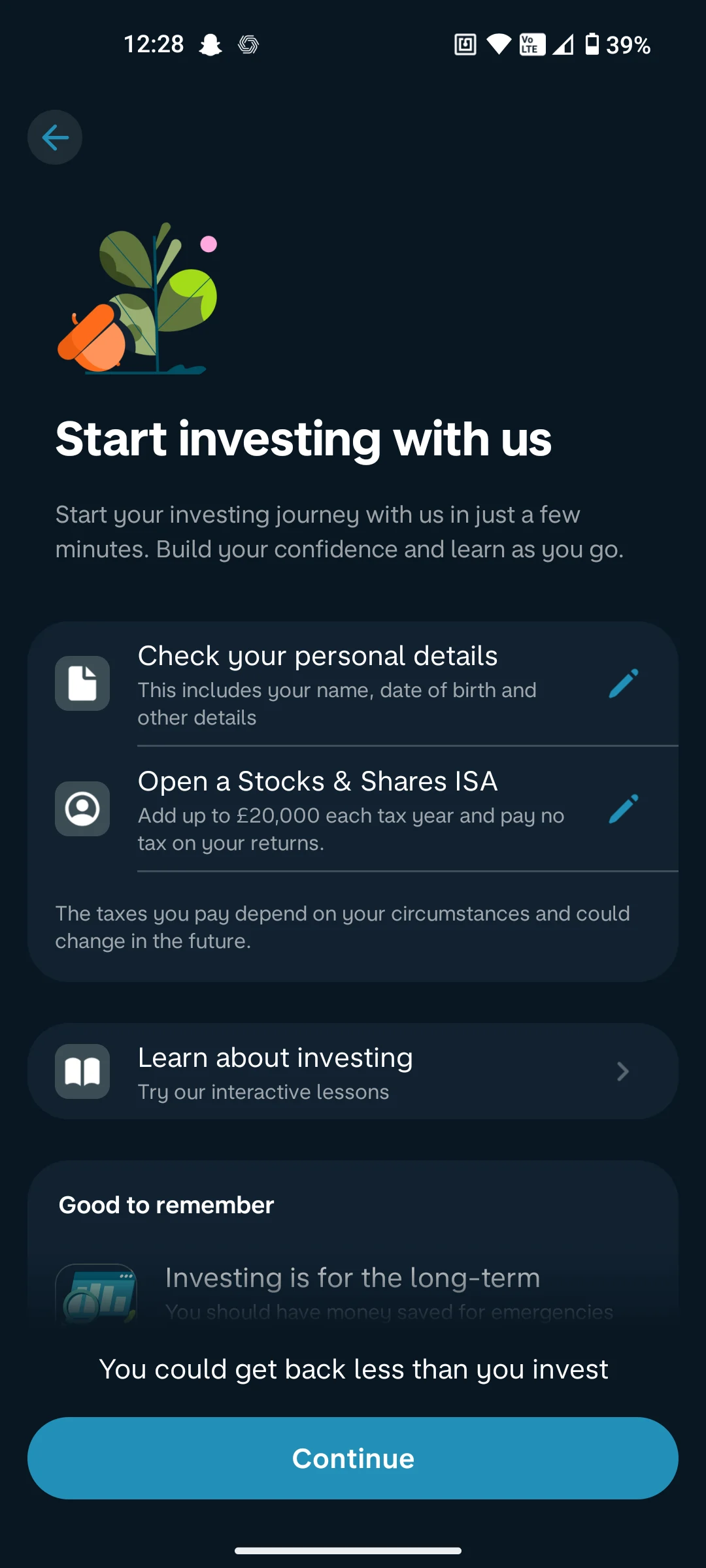
Once your account is set up, find the Investments section within the Monzo app. You’ll be guided through opening a Stocks & Shares ISA with a few taps.
3. Choose Your Fund
Pick from ready-made portfolios (Careful, Balanced, or Adventurous) or browse themed and geographic funds. Each option includes a clear risk description so you know what to expect.
4. Add Money and Set Up Automation
Invest from as little as £1. Then set up round-ups, interest investing, or scheduled contributions to automate future investments. Your portfolio grows whether you remember to contribute or not.
What Beginner Mistakes Should You Avoid?
- Investing money you’ll need in the short term — investments should be held for at least 3–5 years
- Checking your portfolio daily and panicking at normal market movements
- Choosing “Adventurous” when your risk tolerance is actually low
- Expecting Monzo to replace a full investment platform as your knowledge grows
Is Monzo Right for Your Investor Type?
Monzo suits complete beginners, existing Monzo customers, small regular investors contributing £50–£200 per month, and hands-off investors who want to set up and forget. The ready-made portfolios do the thinking for you, and the automation features keep contributions consistent.
It’s less suitable for experienced investors who want control over portfolio allocation, cost-conscious investors prioritising the lowest fees, active investors wanting individual stocks and real-time trading, and non-Monzo customers who would need to open a current account just to access the investment platform.
What’s Changed in 2026?
Monzo Investments launched in 2024 and has continued to expand its fund range. The platform now offers roughly 15 funds across ready-made, themed, and geographic categories — all managed by BlackRock. Auto-investing features including round-ups, interest investing, and scheduled contributions are fully available. The 0.25% platform fee remains competitive for small portfolios, and the fee cap on the first £60,000 invested provides cost certainty for growing balances. ISA transfers into Monzo are now supported, making it easier for investors to consolidate their holdings.
Making the Decision
Choose Monzo If
- You’re already a Monzo banking customer
- You’ve never invested before and want the simplest possible start
- You’re investing small amounts regularly (£25–£200/month)
- You want auto-investing features like round-ups
- You prefer ready-made portfolios over picking individual funds
- You value app design and user experience
Choose Elsewhere If
- You want the lowest possible fees (Trading 212, Vanguard)
- You want to buy individual company stocks (Trading 212, HL, ii)
- You want research tools and market analysis (HL, ii)
- You want a wide range of ETFs and funds (HL, ii, Trading 212)
- You’re not a Monzo customer and don’t want to become one
- You’re investing large lump sums where fee percentage matters more
Final Verdict: Is Monzo Good for Investing?
For the right person, yes. For everyone, no. Monzo excels at one thing: getting beginners to actually start investing. The £1 minimum removes the financial barrier. The round-ups remove the willpower barrier. The ready-made portfolios remove the knowledge barrier. If you’re someone who’s been meaning to invest but hasn’t got around to it, Monzo might be exactly what you need.
But it’s not a platform you’ll grow into. The fund selection is too limited. The fees are higher than alternatives. The lack of individual stocks and research tools means you’ll eventually outgrow it — or at least want to supplement it with something more flexible.
For our complete assessment of the platform, see our full Monzo investing review. For ISA-specific details, check our Monzo ISA review. And for safety concerns, read Is Monzo safe for investing?
Capital at risk. The value of your investments can go down as well as up, and you may get back less than you invest.
Discuss Monzo
Invested through Monzo? Share your experience, ask questions, or help other beginners decide. Our community earns Equity for quality contributions.
Discussion 0 comments
Be the first to start discussing this topic! Log in or create an account to share your thoughts.
Log In Create AccountFAQs
References
You need a Monzo current account to use Investments. UK residents 18+. Ts&Cs apply.
Capital at risk. Investments can go down as well as up.
You may get back less than you invest.
No comments yet. Be the first to start discussing this topic!