



Selling shares can seem straightforward on the surface. You place an order, the trade executes, and the money appears in your account. In reality, there are several costs and tax considerations that affect how much you actually walk away with. Understanding these details is essential for making informed decisions and avoiding surprises, especially if you are investing regularly or planning to sell a large holding.
This guide breaks down the key costs involved, how brokerage fees work, and what you need to know about capital gains tax when selling shares.
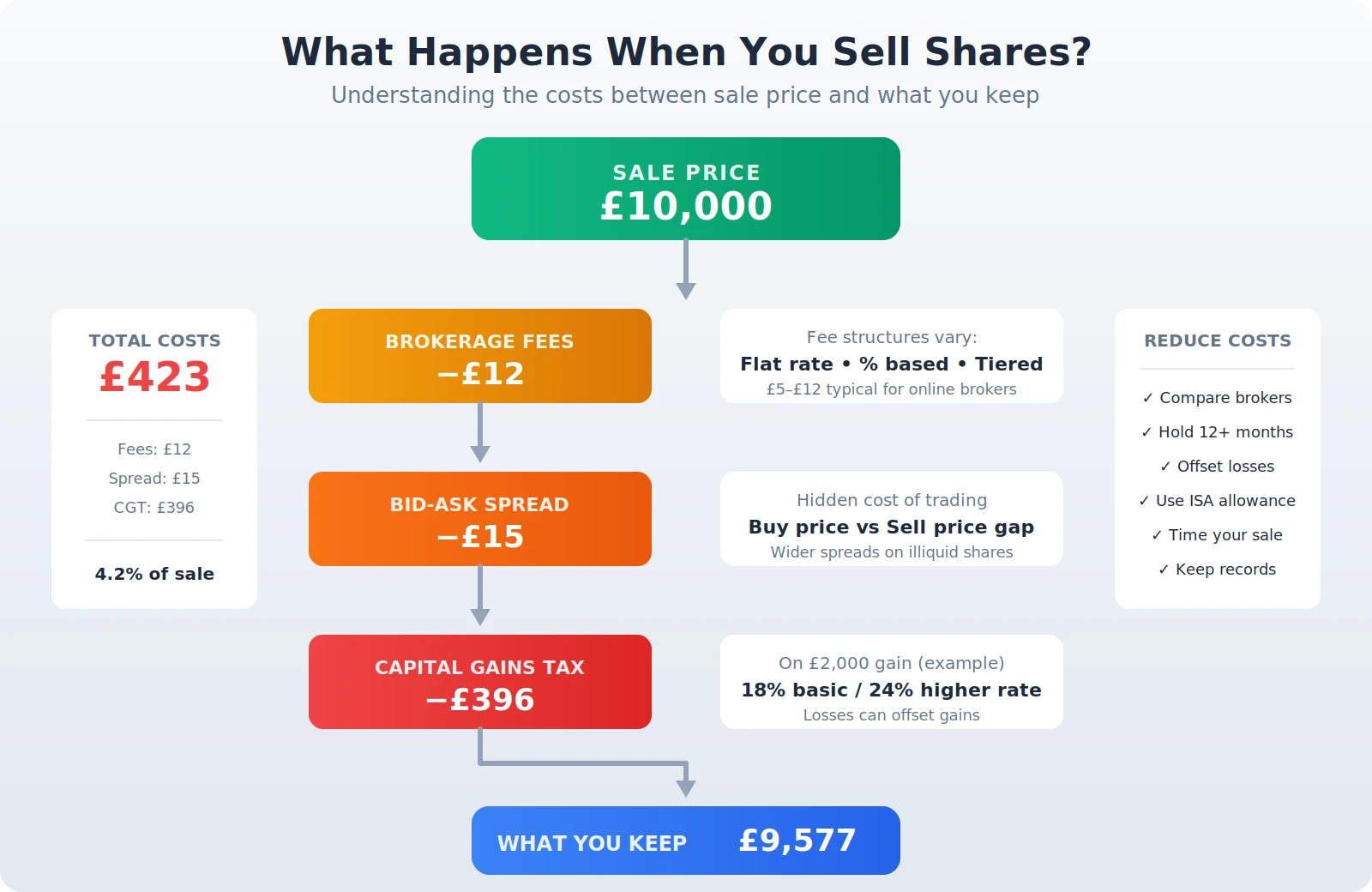
What happens when you sell shares
When you sell shares, you are transferring ownership of your shares to another buyer through a stock exchange. This is done via a broker or trading platform, which acts as the intermediary. Once the trade settles, the proceeds are credited to your account, minus any applicable fees and charges.
While the process is fast and largely automated, the financial outcome depends on more than just the sale price. Brokerage fees, market spreads, and tax obligations all play a role in determining your net return.
Brokerage fees explained
Brokerage fees are the most visible cost when selling shares. These are charged by your broker for executing the trade on your behalf. The structure of brokerage fees varies depending on the platform you use.
Common fee structures include:
- Flat fees per trade, often used by online brokers
- Percentage-based fees calculated on the value of the trade
- Tiered pricing where fees reduce as trade size increases
For small trades, flat fees can represent a significant percentage of the sale value. For larger trades, percentage-based fees may become more expensive. This is why it is important to understand your broker's pricing model before placing an order.
When selling shares frequently, brokerage costs can add up over time and have a noticeable impact on overall returns.
Other trading-related costs
In addition to brokerage fees, there are other costs that may apply depending on the market and platform.
One of these is the bid-ask spread. Shares are quoted with a buy price and a sell price. The difference between the two is the spread, and it effectively represents a hidden cost of trading. Highly liquid shares usually have tight spreads, while less frequently traded shares may have wider spreads.
Some international trades may also involve foreign exchange fees if you are selling shares listed in another currency. These conversion costs can reduce your final proceeds, particularly for large transactions.
Capital gains tax and how it works
Capital gains tax is often the most significant consideration when selling shares. A capital gain occurs when you sell shares for more than you paid for them. If you sell for less than your purchase price, you incur a capital loss.
The capital gain is generally calculated as:
Sale price minus purchase price minus allowable costs (such as brokerage fees)
The resulting amount is your capital gain, which may be subject to tax depending on your circumstances and local tax laws.
In many jurisdictions, including Australia, capital gains are added to your assessable income and taxed at your marginal tax rate. However, discounts may apply if you have held the shares for a certain period, commonly 12 months or more.
Selling shares within an ISA
One of the most effective ways to avoid capital gains tax entirely is to hold shares within a Stocks and Shares ISA. Any gains made on investments held inside an ISA wrapper are completely tax-free, meaning you keep the full proceeds when you sell.
The annual ISA allowance for the 2024/25 tax year is £20,000, and while this limits how much you can contribute each year, the long-term tax savings can be substantial. If you are building a portfolio with the intention of selling in the future, holding shares within an ISA where possible can significantly reduce the overall cost of selling.
Capital losses and offsetting gains
Capital losses can be used strategically. If you sell shares at a loss, that loss can often be used to offset capital gains from other investments. This can reduce your overall tax liability.
For example, if you have a capital gain from one share sale and a capital loss from another, the loss can be applied to reduce the taxable gain. Unused capital losses may also be carried forward to future years, depending on tax rules.
Understanding how gains and losses interact is an important part of managing the tax impact of selling shares.
Timing and tax planning considerations
The timing of a sale can influence how much tax you pay. Selling just before the end of a financial year may result in tax being payable sooner, while selling after the new financial year begins may defer the tax obligation.
Holding shares for long enough to qualify for any available capital gains discounts can also make a significant difference to the after-tax outcome. This is particularly relevant for long-term investors who are not under pressure to sell immediately.
While tax should not be the only factor driving investment decisions, it is an important consideration when planning exits.
Record keeping and documentation
Accurate records are essential when selling shares properly. You should keep documentation showing:
- Purchase dates and prices
- Sale dates and prices
- Brokerage fees paid
- Any corporate actions affecting the shares
These records support your capital gains calculations and make tax reporting much simpler. Most online brokers provide transaction histories, but it is still wise to maintain your own records as a backup.
Choosing the right platform for selling shares
Different trading platforms offer different fee structures, tools, and levels of support. Some are designed for frequent traders, while others suit long-term investors who trade only occasionally.
When choosing a platform, consider:
- Brokerage costs for selling
- Ease of use and reliability
- Access to reporting and tax summaries
- Support for domestic and international markets
The right platform can help you manage costs when selling shares efficiently and improve your overall investing experience.
Understanding the true cost of selling
Selling shares is not just about the headline sale price. Brokerage fees, spreads, and capital gains tax all influence the final outcome. By understanding these elements in advance, you can make more informed decisions, plan sales strategically, and avoid unexpected costs.
Whether you are trimming a portfolio, taking profits, or exiting an investment entirely, a clear understanding of the costs and tax implications of selling shares puts you in a stronger position to protect and grow your wealth over time.