

- expertise:
- CFD Trading, Forex, Derivatives, Risk Management
- credentials:
- Chartered ACII (2018) · Trading since 2012
- tested:
- 40+ forex & CFD platforms with live accounts

- expertise:
- Platform Testing, Cryptocurrency, Retail Investing
- credentials:
- Active investor since 2013 · 11+ years experience
- tested:
- 50+ platforms · 200+ guides authored
How We Test
Real accounts. Real money. Real trades. No demo accounts or press releases.
What we measure:
- Spreads vs advertised rates
- Execution speed and slippage
- Hidden fees (overnight, withdrawal, conversion)
- Actual withdrawal times
Scoring:
Fees (25%) · Platform (20%) · Assets (15%) · Mobile (15%) · Tools (10%) · Support (10%) · Regulation (5%)
Regulatory checks:
FCA Register verification · FSCS protection
Testing team:
Adam Woodhead (investing since 2013), Thomas Drury (Chartered ACII, 2018), Dom Farnell (investing since 2013) — 50+ platforms with funded accounts
Quarterly reviews · Corrections: in**@*******************co.uk
Disclaimer
Not financial advice. Educational content only. We're not FCA authorised. Consult a qualified advisor before investing.
Capital at risk. Investments can fall. Past performance doesn't guarantee future results.
CFD warning. 67-84% of retail accounts lose money trading CFDs. High risk due to leverage.
Contact: in**@*******************co.uk
Quick Answer: Should You Invest in Bitcoin Right Now?
Bitcoin remains the benchmark of digital assets in 2026. It's matured into a recognised store of value with global institutional adoption, regulated ETFs, and growing mainstream credibility. Despite occasional volatility, Bitcoin continues to hold its position as the most resilient and trusted cryptocurrency for long-term investors.
Author's Comments
After years of watching Bitcoin evolve, I see it as more than speculation — it's digital infrastructure. Institutional adoption and limited supply give it strength, but investors must accept volatility as part of the journey. Bitcoin isn't risk-free, but it's no longer just an experiment either.
Summary Table – Bitcoin Investment Verdict (2026)
| Category | Rating | Verdict |
|---|---|---|
| Utility | 4.4/5 | Used globally as a store of value and payment option |
| Regulation | 4.4/5 | Strengthened under clearer global frameworks and ETF approvals |
| Volatility | 3.8/5 | Still present but increasingly stable compared to earlier years |
| Accessibility | 5/5 | Widely available through major exchanges and regulated ETFs |
| Overall | 4.7/5 | Proven, institutional-grade asset with long-term potential |
What Is Bitcoin and How Does It Work?
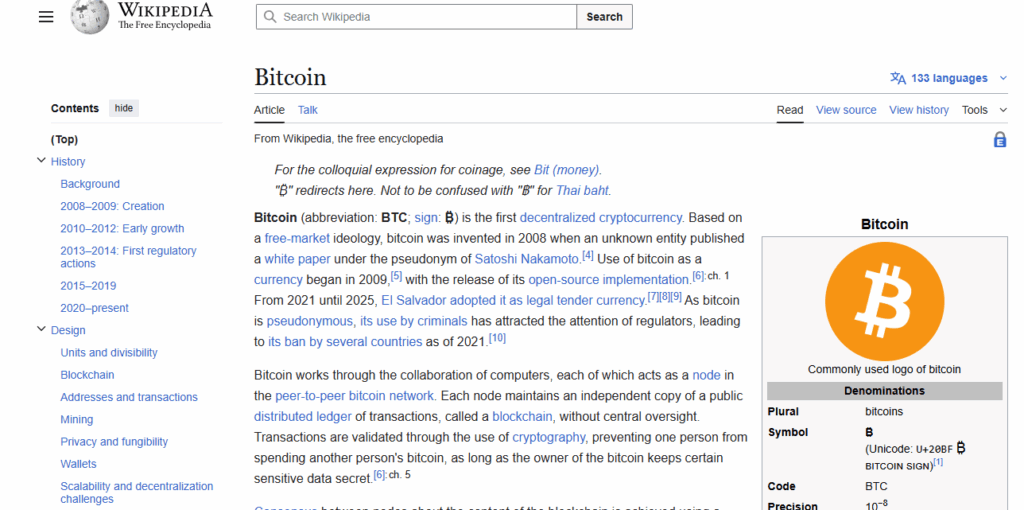
Bitcoin is a decentralised digital currency created to operate without banks or governments. It runs on the Bitcoin blockchain, a distributed ledger secured by miners who validate transactions using Proof-of-Work. With only 21 million coins ever to exist, its scarcity underpins its long-term value.
How Bitcoin Differs from Other Cryptocurrencies
Unlike Ethereum or Solana, which focus on applications and smart contracts, Bitcoin prioritises security, stability, and decentralisation. It's slower but far more robust, earning its reputation as "digital gold." Its role is less about innovation and more about preserving value across global markets.
What Gives Bitcoin Its Real-World Value?
Bitcoin's value comes from scarcity, security, and independence from central control. With a capped supply of 21 million coins, it acts as a hedge against inflation. Its decentralised structure and global recognition make it a credible alternative to traditional financial systems.
How Is Bitcoin Being Used in the Real World?
Bitcoin is used for remittances, payments, and as a savings tool worldwide. In economies facing inflation or capital controls, it serves as a financial lifeline. Its increasing acceptance by businesses and online platforms has made it one of the most versatile digital assets available.
Why Do Institutions Treat Bitcoin as a Store of Value?
Institutional investors now view Bitcoin as a macro asset similar to gold. The introduction of regulated ETFs and large-scale holdings by corporations have legitimised it as a hedge against fiat risk. This institutional recognition supports Bitcoin's long-term credibility and market strength.
Table – Bitcoin Utility at a Glance
| Use Case | Description | Adoption Example |
|---|---|---|
| Store of Value | Held as digital gold and inflation hedge | BlackRock ETF, MicroStrategy, Tesla |
| Remittances | Low-cost, fast global transfers | Strike, Bitnob, BitPay |
| Institutional Investment | Adopted by funds, ETFs, and corporations | Fidelity, ARK, iShares |
| Payment Integration | Accepted by merchants and payment apps | PayPal, Cash App, Shopify |
Is Bitcoin Safe and Regulated in 2026?
Buying Bitcoin today is safer and more regulated in major markets like the UK and US due to robust rules, exchange oversight, and institutional custody solutions. However, Bitcoin itself remains fully decentralised and beyond direct regulation, with protections applying mainly to services, not the asset.
How Do Regulators View Bitcoin Around the World?
Most regulators classify Bitcoin as a commodity rather than a security. It's legal in most major markets and subject to existing financial rules covering anti-money laundering and tax compliance. This global clarity helps reduce uncertainty and improve investor confidence.
What Does Regulation Mean for UK Bitcoin Investors?
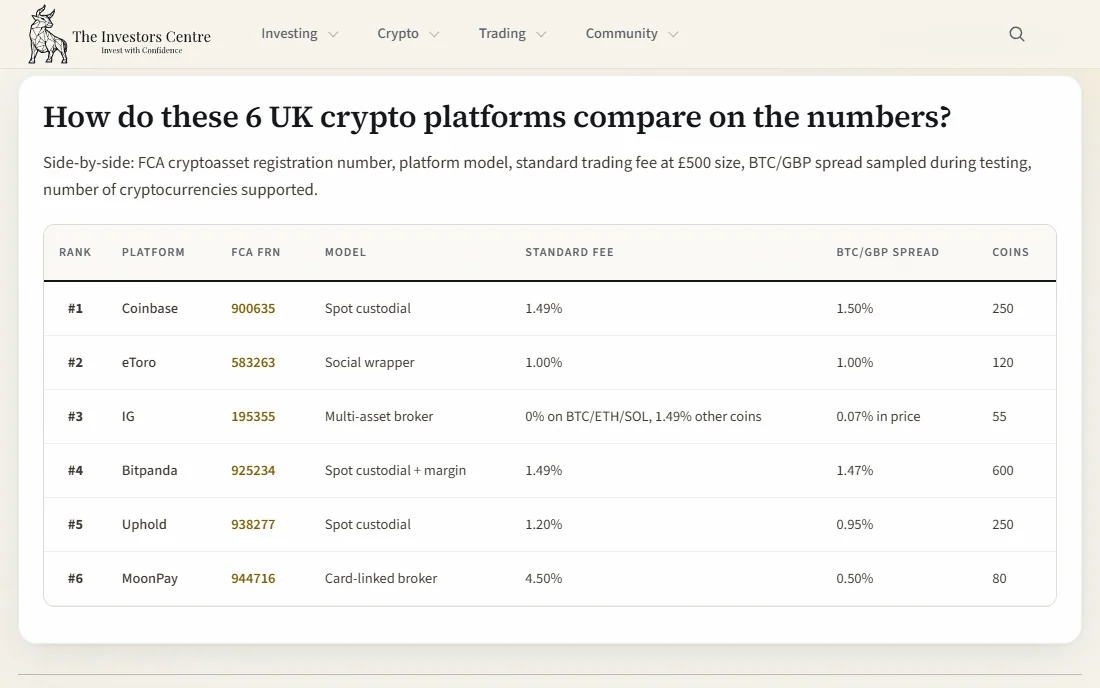
UK investors can buy and hold Bitcoin through FCA-registered platforms such as Coinbase, eToro, and Uphold. Although holdings aren't FSCS-protected, robust compliance standards are in place. Investors should keep records for tax purposes and use trusted or self-custody wallets for added safety.
What Are the Pros and Cons of Investing in Bitcoin?
| Pros | Cons |
|---|---|
| Widely recognised and globally traded | Still highly volatile |
| Fixed supply creates long-term scarcity | Price sensitive to regulation and sentiment |
| Growing institutional adoption and ETFs | Environmental impact from mining persists |
| Simple to buy, sell, and store | Competition from stablecoins and CBDCs |
How Has Bitcoin Performed Recently?
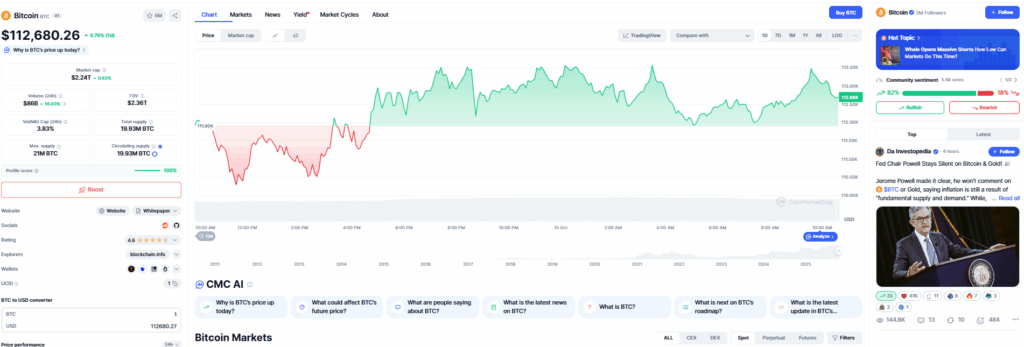
Bitcoin has shown strong performance throughout 2025, trading near $72,000 after ETF approvals and growing institutional inflows. Despite several pullbacks, its long-term trend remains bullish, driven by scarcity, wider acceptance, and post-halving supply dynamics that continue to tighten the market.
Why Does Bitcoin's Price Move So Much?
Bitcoin's volatility is shaped by global liquidity cycles, interest rate changes, and investor sentiment. News on regulation, ETF inflows, or macroeconomic uncertainty can trigger large swings. While volatility has eased compared to early years, it still presents both risk and opportunity for investors.
Is Bitcoin's Growth Sustainable?
Bitcoin's long-term growth depends on continued institutional adoption, broader regulatory acceptance, and its role as a hedge against inflation. With ETFs, corporate holdings, and sovereign-level adoption increasing, the fundamentals look stronger than ever — though macroeconomic pressures may still create short-term volatility.
Table – Bitcoin Historical Overview
| Year | Average Price (USD) | Major Event | Impact |
|---|---|---|---|
| 2021 | 47437 | Institutional adoption and market maturity | Bitcoin reached new highs as corporate and fund participation surged |
| 2022 | 21000 | Crypto bear market and liquidity crisis | Severe correction across digital assets following global tightening |
| 2024 | 60000 | Spot Bitcoin ETF approvals and renewed demand | Strong rebound driven by institutional inflows and regulatory clarity |
| 2025 | 72000 | Post-halving supply shock and macro adoption | Sustained price strength amid limited supply and broader investor participation |
What Do Experts Think About Bitcoin?
Analysts largely agree Bitcoin has evolved into a credible asset class. Supporters see it as a hedge against fiat currency and inflation, while sceptics highlight its volatility and limited real-world use beyond investment. The overall consensus: speculative, but with growing long-term legitimacy.
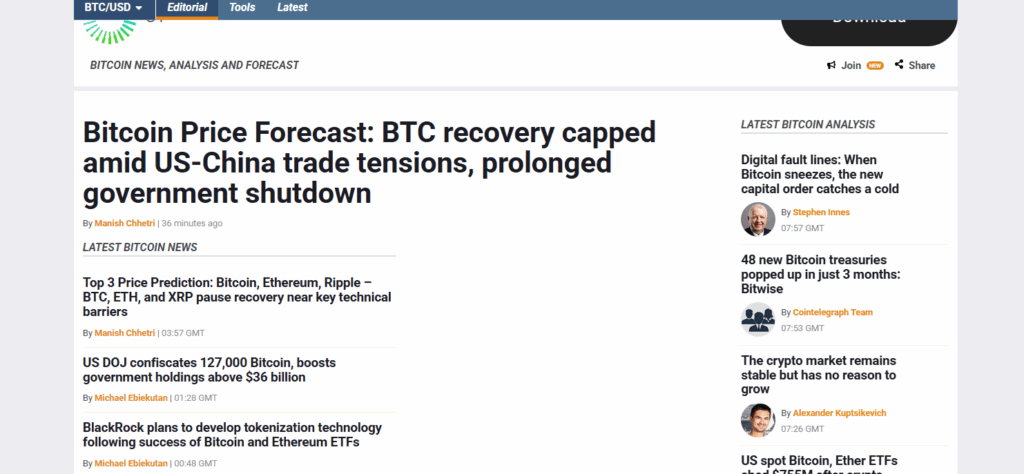
Should You Add Bitcoin to Your Portfolio?
Many investors use Bitcoin for diversification and growth potential within a balanced portfolio. Its established track record, growing institutional adoption, and increasing role as a hedge against inflation make it attractive to investors seeking alternative assets — though it should only form a modest portion of total holdings.
Who Is Bitcoin Best Suited For?
Bitcoin suits investors with a medium to long-term horizon who understand market cycles and can tolerate volatility. It's best for those who want exposure to digital assets, not for short-term speculators chasing price spikes. Allocating 1–5% of a diversified portfolio is typical.
What's the Author's Take?
After tracking Bitcoin through multiple market cycles, I view it as a credible but cautious addition to a diversified portfolio. It's established, highly liquid, and globally recognised, yet still subject to significant price swings. Consider it a long-term strategic holding rather than a short-term speculation.
Discuss Bitcoin as an Investment
Bullish or bearish on Bitcoin for 2026? Share your thesis, position size, and time horizon with the community. Our community earns Equity for quality contributions.
Discussion 0 comments
Be the first to start discussing this topic! Log in or create an account to share your thoughts.
Log In Create AccountFAQs
References

Don’t invest unless you’re prepared to lose all the money you invest. This is a high-risk investment and you should not expect to be protected if something goes wrong. Take 2 mins to learn more
No comments yet. Be the first to start discussing this topic!