

- expertise:
- CFD Trading, Forex, Derivatives, Risk Management
- credentials:
- Chartered ACII (2018) · Trading since 2012
- tested:
- 40+ forex & CFD platforms with live accounts

- expertise:
- Platform Testing, Cryptocurrency, Retail Investing
- credentials:
- Active investor since 2013 · 11+ years experience
- tested:
- 50+ platforms · 200+ guides authored
How We Test
Real accounts. Real money. Real trades. No demo accounts or press releases.
What we measure:
- Spreads vs advertised rates
- Execution speed and slippage
- Hidden fees (overnight, withdrawal, conversion)
- Actual withdrawal times
Scoring:
Fees (25%) · Platform (20%) · Assets (15%) · Mobile (15%) · Tools (10%) · Support (10%) · Regulation (5%)
Regulatory checks:
FCA Register verification · FSCS protection
Testing team:
Adam Woodhead (investing since 2013), Thomas Drury (Chartered ACII, 2018), Dom Farnell (investing since 2013) — 50+ platforms with funded accounts
Quarterly reviews · Corrections: info@theinvestorscentre.co.uk
Disclaimer
Not financial advice. Educational content only. We're not FCA authorised. Consult a qualified advisor before investing.
Capital at risk. Investments can fall. Past performance doesn't guarantee future results.
CFD warning. 67-84% of retail accounts lose money trading CFDs. High risk due to leverage.
Contact: info@theinvestorscentre.co.uk
Quick Answer: Which Broker Should You Choose?
City Index offers deeper features, stronger regulation, and competitive costs compared with Plus500. While Plus500 is easy for beginners, City Index provides UK traders with greater flexibility, advanced tools, and better long-term value in 2026.
Author's Comments
City Index feels more suited to serious traders. It delivers advanced charting, MetaTrader access, and a transparent cost structure that gives confidence. Plus500's simplicity is appealing for newcomers, but if you want more professional features and depth in 2026, City Index is the stronger pick.
 40+ Years Experience
CFDs are complex instruments and come with a high risk of losing money rapidly due to leverage. 68% of retail investor accounts lose money when trading CFDs with this provider. You should consider whether you understand how CFDs work, and whether you can afford to take the high risk of losing your money.
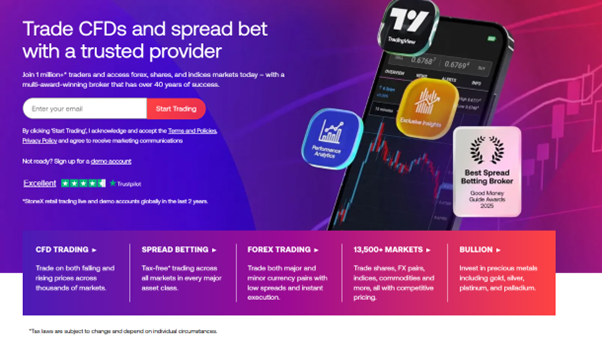
How Do City Index and Plus500 Compare in Platform Features?
| Feature | City Index | Plus500 |
|---|---|---|
| Web Platform | Yes | Yes |
| Mobile App | Yes (iOS/Android) | Yes (iOS/Android) |
| MT4 / MT5 Access | MT4 | No |
| Charting Tools | Advanced, 80+ indicators | Basic, limited indicators |
| Alerts & Notifications | Yes (price alerts, risk tools) | Yes (basic alerts) |
| Customization | High (layouts, workspaces) | Low (fixed interface) |
Who Has the Edge in Platform Features?
City Index clearly has the edge. It offers MT4, advanced charting, and highly customizable layouts. Plus500 is easy to use but lacks professional depth. For UK traders who value robust platforms and flexibility, City Index provides a more complete and scalable trading environment.
Which Broker Offers Better Costs for UK Traders?
| Cost Element | City Index | Plus500 |
|---|---|---|
| Spreads | From 0.5 pips (FX majors) | From 0.8 pips (FX majors) |
| Commissions | None (excluding shares CFDs) | None |
| Overnight Fees | Competitive, transparent | Higher, less transparent |
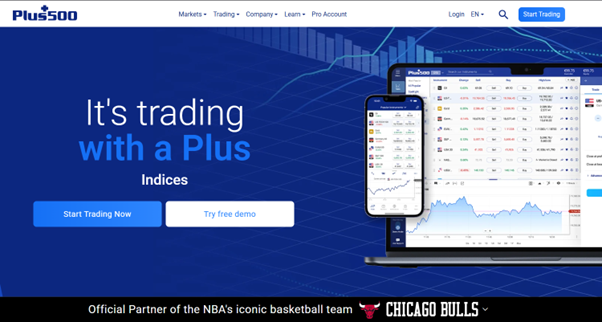
Who Has the Edge in Trading Costs?
City Index takes the win on costs. With tighter spreads and rebates for active traders, it's better value for frequent UK users. Plus500's model is simple, but higher overnight fees can add up. Overall, City Index delivers more competitive and transparent pricing.
How Do City Index and Plus500 Compare in Account Types and Funding Options?
| Account Feature | City Index | Plus500 |
|---|---|---|
| Account Types | Standard, Professional | Single standard account |
| Minimum Deposit | £100 | £50 |
| Leverage (UK Retail) | Up to 1:30 | Up to 1:30 |
| Funding Methods | Bank transfer, cards | Bank transfer, cards, PayPal |
| Demo Accounts | Yes (unlimited) | Yes (limited time) |
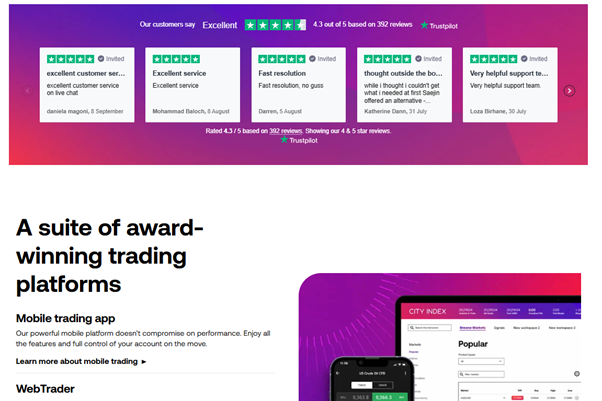
Who Has the Edge in Account Flexibility?
City Index stands out with multiple account types and a more professional structure. Funding is fast and flexible, and the demo account has no expiry. Plus500 is straightforward, but for traders seeking tailored options, City Index offers greater flexibility and scalability.
Which Broker is Safer and More Regulated?
| Regulation & Safety | City Index | Plus500 |
|---|---|---|
| FCA (UK) | Yes | Yes |
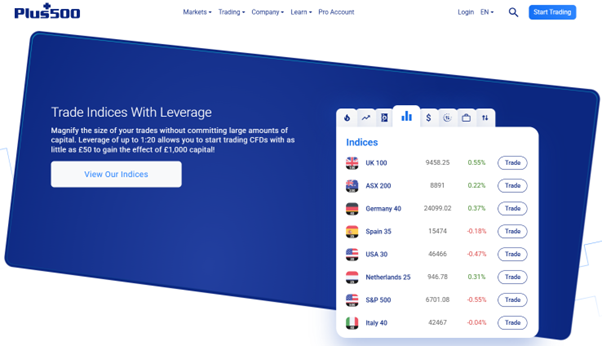
| Client Fund Protection | FSCS up to £85,000 | Investor Compensation up to €20,000 |
| Financial Strength | Owned by StoneX Group (NASDAQ: SNEX) | Public company listed in London |
Who Has the Edge in Safety and Regulation?
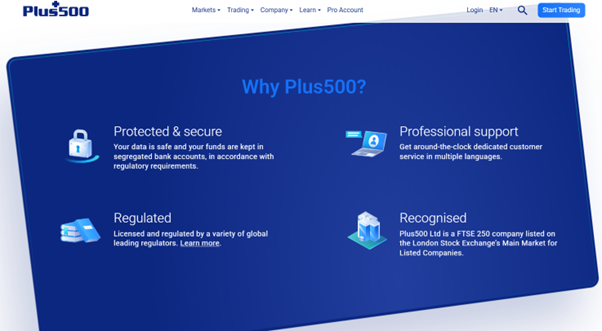
City Index takes the edge due to its strong backing from StoneX Group and higher client fund protection through FSCS. While both are FCA-regulated, City Index's broader regulatory coverage and stronger financial stability inspire greater confidence for UK traders.
How Do City Index and Plus500 Compare for Trade Execution and Experience?
| Execution Factors | City Index | Plus500 |
|---|---|---|
| Order Types | Market, limit, stop, OCO | Market, limit, stop |
| Execution Speed | Fast, institutional-grade | Fast but less transparent |
| Reliability | High (low downtime) | Generally good |
| Slippage Control | Advanced tools | Limited |
Who Has the Edge in Trade Execution?
City Index provides a more professional execution environment with a wider range of order types and better slippage controls. Plus500 is reliable for straightforward trades, but City Index is more robust for active or high-volume traders seeking smoother execution.
What Are the Overall Pros and Cons of Each Broker?
| Broker | Pros | Cons |
|---|---|---|
| City Index | Strong regulation, tight spreads, advanced platforms (MT4, web, mobile), flexible accounts | Slightly higher learning curve for beginners |
| Plus500 | Very simple to use, commission-free model, accessible mobile app | Limited platforms, fewer features, higher overnight fees, less cost transparency |
Who Has the Overall Advantage?
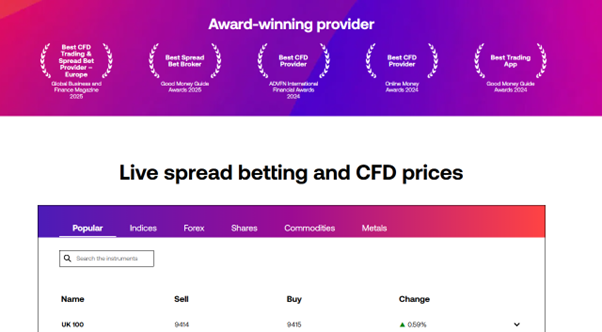
City Index holds the overall advantage. Its advanced platforms, regulatory strength, and competitive costs make it the better long-term partner for UK traders. Plus500 works for beginners seeking simplicity, but it lacks the professional depth serious traders often require.
Final Verdict: Should I Choose City Index or Plus500?
For UK traders in 2026, City Index emerges as the stronger choice. It offers deeper platforms, tighter costs, stronger regulation, and more account flexibility than Plus500. While Plus500 is simple for new traders, City Index is better equipped to support growth and long-term success.
68% of retail investor accounts lose money when trading CFDs with this provider