

- expertise:
- CFD Trading, Forex, Derivatives, Risk Management
- credentials:
- Chartered ACII (2018) · Trading since 2012
- tested:
- 40+ forex & CFD platforms with live accounts

- expertise:
- Platform Testing, Cryptocurrency, Retail Investing
- credentials:
- Active investor since 2013 · 11+ years experience
- tested:
- 50+ platforms · 200+ guides authored
How We Test
Real accounts. Real money. Real trades. No demo accounts or press releases.
What we measure:
- Spreads vs advertised rates
- Execution speed and slippage
- Hidden fees (overnight, withdrawal, conversion)
- Actual withdrawal times
Scoring:
Fees (25%) · Platform (20%) · Assets (15%) · Mobile (15%) · Tools (10%) · Support (10%) · Regulation (5%)
Regulatory checks:
FCA Register verification · FSCS protection
Testing team:
Adam Woodhead (investing since 2013), Thomas Drury (Chartered ACII, 2018), Dom Farnell (investing since 2013) — 50+ platforms with funded accounts
Quarterly reviews · Corrections: in**@*******************co.uk
Disclaimer
Not financial advice. Educational content only. We're not FCA authorised. Consult a qualified advisor before investing.
Capital at risk. Investments can fall. Past performance doesn't guarantee future results.
CFD warning. 67-84% of retail accounts lose money trading CFDs. High risk due to leverage.
Contact: in**@*******************co.uk
Quick Answer: What do eToro fees look like?
eToro's core trading model is commission-free, but users pay through spreads and conversion costs. The platform remains cost-effective for casual traders, though regular or high-volume users may find certain CFD and currency conversion charges add up.
 Top Rated
Welcome bonus for new UK clients — deposit & receive free shares. Stocks only, 90-day hold applies.
- Deposit £500 – £999Get £40
- Deposit £1k – £4,999Get £100
- Deposit £5k – £9,999Get £300
- Deposit £10,000+Get £500
Get up to £10,000 cashback on your first ISA deposit (min £500) or ISA transfer (£15,000+). Paid into your non-ISA balance.
- Bronze, Silver, Gold2% Cashback
- Platinum, Platinum+2.5% Cashback
- Diamond3% Cashback
eToro is a multi-asset investment platform. The value of your investments may go up or down. Your capital is at risk.
eToro is a multi-asset investment platform. The value of your investments may go up or down. Your capital is at risk. CFDs are complex instruments and come with a high risk of losing money rapidly due to leverage. 55% of retail investor accounts lose money when trading CFDs with this provider. You should consider whether you understand how CFDs work, and whether you can afford to take the high risk of losing your money.
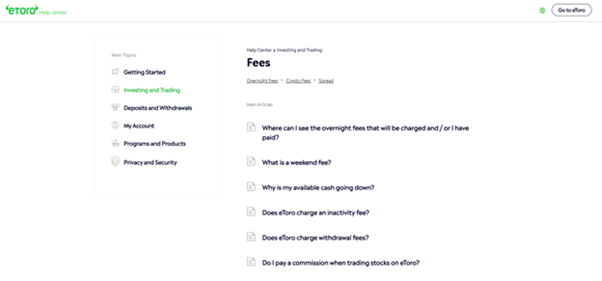
How Much Does It Cost to Trade on eToro?
Real stock and ETF trades are commission-free if unleveraged, while CFDs, forex, and crypto carry variable spreads. Overnight and weekend fees apply to leveraged positions. Overall, eToro is transparent, though less competitive on spreads than specialist forex brokers.
eToro Fees: What's Changing in 2026?
As we move into 2026, eToro has kept its core fee structure largely consistent, but made a few updates to improve transparency and user value. Spread costs remain the main trading charge, with occasional seasonal promotions reducing them on select markets. Withdrawal and inactivity fees still apply, but eToro now displays all costs more clearly during order entry. There are no major hikes; the focus is on clearer pricing and better cost visibility for UK users.
eToro 2026 Trading Fees Breakdown
| Category | Type of Fee | Fee Amount | When It Applies | Notes & Conditions |
|---|---|---|---|---|
| Equities (Real Stocks) | Commission | $0 | All real stock trades | Commission-free for unleveraged trades |
| Equities (Real Stocks) | Spread | From 0.05% | Implicit in price | Varies by liquidity |
| Stock CFDs | Spread | From 0.15% | Per trade | Higher for volatile stocks |
| Forex | Spread | From 1.0 pip (EUR/USD) | Each trade | Varies by pair |
| Commodities (CFDs) | Spread | From 2 points | At trade | Gold ~0.45 pts, Oil ~0.05% |
| Indices (CFDs) | Spread | ~0.75 points (S&P 500) | Per trade | Depends on volatility |
| Cryptocurrency | Trading Fee | 1% buy + 1% sell | Each trade | Transparent 2% round-trip cost |
Key Takeaways
- $0 commission for real stocks and ETFs.
- Spreads vary widely by asset class.
- Overnight fees only apply to leveraged positions.
- Crypto trades incur a flat 2% round trip.
One of the best tips I can give is to decide whether you're a short-term or long-term trader before diving in. If you're in it for the long haul, real stocks are the way to go. But if you're into CFD trading, you need to factor in spreads and overnight fees, which brings me to my next point.
Do Overnight & Weekend Fees apply?
Yes. Overnight fees (swap/financing costs) apply on leveraged positions — especially CFDs, forex, and crypto. These are based on market interest rates plus an eToro markup, and shown transparently before confirming a trade.
What Are Non-Trading Fees?
Non-trading fees are costs unrelated to placing trades — such as withdrawal and conversion fees. While eToro keeps these low, some, like currency conversion, can impact users funding in GBP or EUR. UK clients are not charged an inactivity fee.
eToro 2026 Non-Trading Fees Breakdown
| Category | Type of Fee | Fee Amount | When It Applies | Notes & Conditions |
|---|---|---|---|---|
| Deposit | Deposit Fee | $0 | Every deposit | No eToro fee; currency conversion may apply |
| Withdrawal | Withdrawal Fee | $5 | Per withdrawal | Flat fee per transaction |
| Currency Conversion | Conversion Fee | ~0.5% (~150 pips) | GBP/EUR deposits & withdrawals | Avoid by funding in USD |
| Inactivity | Inactivity Fee | None (UK) | N/A | eToro does not charge UK clients an inactivity fee |
| Account Opening | Setup Fee | $0 | One-time | No opening or maintenance fee |
| Management | Management Fee | $0 | Ongoing | eToro does not charge management costs |
Does eToro apply Deposit & Withdrawal Fees?
Deposits are free. Withdrawals cost a flat $5 per transaction, regardless of amount. While small, frequent withdrawals can add up, so larger, less frequent transfers are more efficient.
Does eToro Charge an Inactivity Fee?
UK clients are not charged an inactivity fee on eToro. There is no monthly charge for leaving your account dormant, so you can hold positions or cash long-term without worrying about additional costs eroding your balance.
Are There Any Hidden Fees?
No hidden charges, but indirect costs like spreads, conversion, and overnight funding can accumulate. Funding in USD and avoiding leveraged trades helps minimise fees. Transparent pricing remains a strong point compared to many CFD competitors.
Final Thoughts
eToro remains cost-effective for casual and multi-asset traders in 2026, with zero-commission stock and ETF investing and no inactivity fee for UK clients. The main drawbacks are currency conversion and overnight fees. For users who fund in USD and avoid leverage, it continues to be one of the more transparent and accessible brokers available.
eToro is a multi-asset platform which offers
both investing in stocks and cryptoassets, as well as trading CFDs.
Please note that CFDs are complex instruments and come with a high risk of
losing money rapidly due to leverage. 55% of retail investor accounts lose
money when trading CFDs with this provider. You should consider whether you
understand how CFDs work, and whether you can afford to take the high risk of
losing your money. This communication is intended for information and educational purposes only
and should not be considered investment advice or investment recommendation.
Past performance is not an indication of future results.
Copy Trading does not amount to investment advice. The value of your
investments may go up or down. Your capital is at risk.
Don’t invest unless you’re prepared to lose all
the money you invest. This is a high-risk investment and you should not expect
to be protected if something goes wrong. Take 2 mins to learn more
Discuss eToro
Traded with eToro? Share your experience, ask questions, or help other traders decide. Our community earns Equity for quality contributions.
Discussion 0 comments
Be the first to start discussing this topic! Log in or create an account to share your thoughts.
Log In Create AccountFAQs
References
55% of retail CFD accounts lose money when trading CFDs with this provider.
No comments yet. Be the first to start discussing this topic!