

- expertise:
- CFD Trading, Forex, Derivatives, Risk Management
- credentials:
- Chartered ACII (2018) · Trading since 2012
- tested:
- 40+ forex & CFD platforms with live accounts

- expertise:
- Broker Comparison, ISA Strategy, Portfolio Management
- credentials:
- Active investor since 2013 · 11+ years experience
- tested:
- 40+ brokers with funded accounts
How We Test
Real accounts. Real money. Real trades. No demo accounts or press releases.
What we measure:
- Spreads vs advertised rates
- Execution speed and slippage
- Hidden fees (overnight, withdrawal, conversion)
- Actual withdrawal times
Scoring:
Fees (25%) · Platform (20%) · Assets (15%) · Mobile (15%) · Tools (10%) · Support (10%) · Regulation (5%)
Regulatory checks:
FCA Register verification · FSCS protection
Testing team:
Adam Woodhead (investing since 2013), Thomas Drury (Chartered ACII, 2018), Dom Farnell (investing since 2013) — 50+ platforms with funded accounts
Quarterly reviews · Corrections: in**@*******************co.uk
Disclaimer
Not financial advice. Educational content only. We're not FCA authorised. Consult a qualified advisor before investing.
Capital at risk. Investments can fall. Past performance doesn't guarantee future results.
CFD warning. 67-84% of retail accounts lose money trading CFDs. High risk due to leverage.
Contact: in**@*******************co.uk
Quick Answer: Who is the Best Copy Trading Broker in the UK?
Pepperstone is the best copy trading platform in the UK for 2026: FCA-regulated, with the tightest underlying spreads I measured (0.1 pips EUR/USD) and advanced copy tools via DupliTrade and Myfxbook. eToro is the best pure copy trading experience: its CopyTrader™ system is the most polished social trading product I've tested, and it posted the lowest retail loss rate of all 17 brokers in my Q1 2026 dataset. I funded and tested both between 14 January and 7 April 2026; which one wins for you depends on whether you want the cheapest execution under your copied trades (Pepperstone) or the best trader-discovery and social experience (eToro).
Best Copy Trading Platforms in the UK 2026: Ranked & Tested

Pepperstone
- Best For
- Advanced copy trading tools
- TIC Copy Trading Rating
- 4.9 / 5
- Community Rating
- 4.4 (204 ratings) Have Your Say →
- Min Deposit
- £0
- Platform
- DupliTrade, Myfxbook
72.9% of retail CFD accounts lose money.

eToro
- Best For
- Social copy trading
- TIC Copy Trading Rating
- 4.8 / 5
- Community Rating
- 4.3 (196 ratings) Have Your Say →
- Min Deposit
- $50
- Platform
- CopyTrader
52% of retail CFD accounts lose money when trading CFDs with this provider.

AvaTrade
- Best For
- MT4 & MT5 access
- TIC Copy Trading Rating
- 4.7 / 5
- Community Rating
- 3.4 (46 ratings) Have Your Say →
- Min Deposit
- £100
- Platform
- AvaSocial
76% of retail CFD accounts lose money.

FP Markets
- Best For
- MetaTrader users
- TIC Copy Trading Rating
- 4.5 / 5
- FCA Regulated
- Yes
- Min Deposit
- £0
- Platform
- MT4 / MT5 / cTrader
FXTM
- Best For
- Low minimum deposit
- TIC Copy Trading Rating
- 4.4 / 5
- FCA Regulated
- Yes
- Min Deposit
- £10
- Platform
- FXTM Invest

Tickmill
- Best For
- Accessing CFD instruments
- TIC Copy Trading Rating
- 4.3 / 5
- FCA Regulated
- Yes
- Min Deposit
- £100
- Platform
- Myfxbook AutoTrade

IC Markets
- Best For
- MetaTrader copy options
- TIC Copy Trading Rating
- 4.2 / 5
- FCA Regulated
- Varies by entity
- Min Deposit
- £200
- Platform
- Myfxbook AutoTrade
How Do These Copy Trading Brokers Compare?
| Rank | Platform | FCA Regulated | Minimum Deposit | Copy Trading Platform | Platform Usability | Demo Account | Account Types |
|---|---|---|---|---|---|---|---|
| 1 | Pepperstone | Yes | £0 | DupliTrade, Myfxbook | 4.9 | Yes | Advanced tools, low spreads, FCA-regulated |
| 2 | eToro | Yes | $50 | CopyTrader | 4.8 | Yes | Social investing features, user-friendly |
| 3 | AvaTrade | No | £100 | AvaSocial | 4.7 | Yes | Multiple platforms (MT4, MetaTrader 5) |
| 4 | FP Markets | Yes | £0 | Not specified | 4.5 | Yes | MT4 & MT5 integration, cTrader platform |
| 5 | FXTM | Yes | £10 | FXTM Invest (Managed Accounts) | 4.4 | Yes | Offers pre-built investment strategies |
| 6 | Tickmill | Yes | £100 | Myfxbook AutoTrade | 4.3 | Yes | MT4 & MT5 integration, low spreads |
| 7 | IC Markets | Varies | £200 | Myfxbook AutoTrade | 4.2 | Yes | MT4 & MT5 integration, cTrader platform |
A note on the FCA column, because it matters more in copy trading than almost anywhere else: AvaTrade serves UK clients through its Central Bank of Ireland entity and IC Markets through a Seychelles entity. Neither route gives you FSCS compensation cover if the broker fails. That is a deliberate trade-off some experienced traders accept for platform features, but if FSCS protection matters to you, stick to the FCA-regulated names on this list.
The Top 7 Copy Trading Platforms in the UK Reviewed
- Pepperstone – Best for Advanced Copy Trading Tools
- eToro – Best for Social Copy Trading
- AvaTrade – A Top Choice for Access to MT4 & MT5
- FP Markets – Best Option for MetaTrader Users
- FXTM – A Worthy Option with a Low Minimum Deposit Requirement
- Tickmill – A Good Choice for Accessing CFD Instruments
- IC Markets – Targeted for Copy Trading Options
Pepperstone – Best for Advanced Copy Trading Tools
- Fees & Spreads
- 4.1
- Platform & Tools
- 4.4
- Customer Service
- 4.2
- Ease of Use
- 3.9
- Mobile App
- 4.3
Pros
- FCA-regulated with strong investor protection
- DupliTrade and Myfxbook integration for advanced copy trading
- Low spreads and fast execution
- No minimum deposit requirement
- Excellent customer support and educational resources
Cons
- Copy trading tools rely on third-party integrations
- No proprietary social trading network like eToro
- May require separate sign-ups for copy trading services
What I Found Testing Pepperstone
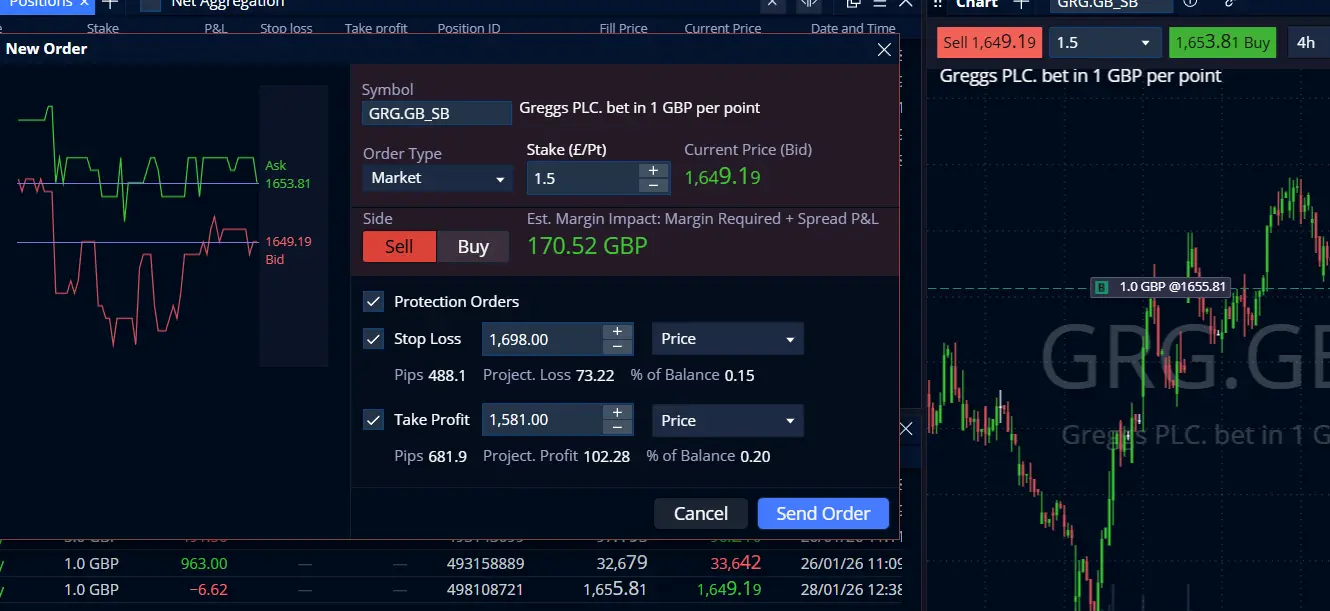
I ran a funded £500 Razor ECN account at Pepperstone from 14 January to 7 April 2026 as part of my Q1 broker test round. EUR/USD averaged 0.1 pips at London open, median execution came in at 47 ms, and 78% of my market orders filled with zero slippage. Those numbers matter for copy trading specifically: every trade your copied strategy fires goes through the same spreads and execution, so a tight underlying account compounds into real savings across hundreds of mirrored trades. A bank withdrawal landed the next working day, and live chat responded in around 90 seconds. Full figures are in my UK trading brokers dataset.
What Are the Fees?
| Feature | Copy Trading with Pepperstone (UK) |
|---|---|
| Copy Trading Fee | Varies by platform (DupliTrade subscription or Myfxbook performance fees) |
| Spread Cost | From 0.0 pips on Razor account (plus commission), or from 1.0 pips on Standard |
| Commission | $3.50 per side per lot (Razor account only) |
| Inactivity Fee | None |
| Withdrawal Fee | None |
What Trading Tools Are Available?
- DupliTrade for automated strategy replication
- Myfxbook AutoTrade integration
- MT4/MT5 and cTrader platform support
- Advanced charting, analytics, and risk management tools
How Safe is the Platform?
Pepperstone is FCA-regulated in the UK and also holds ASIC authorisation. The platform offers segregated client accounts, negative balance protection, and robust encryption for data security.
eToro – Best for Social Copy Trading
- Fees & Spreads
- 3.8
- Platform & Tools
- 3.8
- Customer Service
- 3.7
- Ease of Use
- 4.8
- Mobile App
- 4.1
Pros
- No extra fee for copy trading
- Excellent social and community features
- Intuitive for beginners
Cons
- Limited technical analysis tools
- CFD exposure for some instruments
- $5 withdrawal fee may deter smaller accounts
What I Found Testing eToro
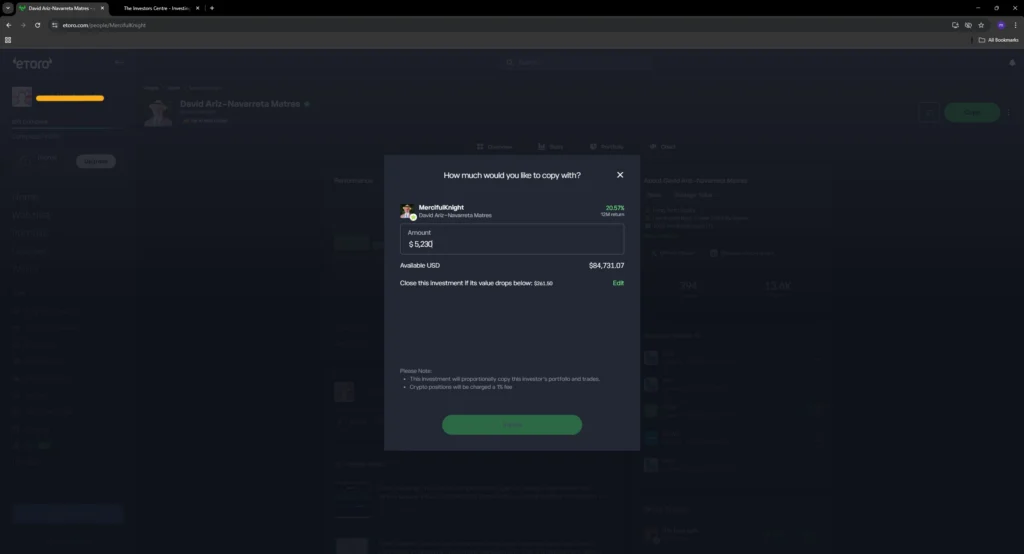
Adam Woodhead led our funded eToro account over the same 14 January to 7 April 2026 window, testing CFDs, cash equities and CopyTrader™ itself, and I cross-checked his logs. The trade-offs versus Pepperstone are real: EUR/USD averaged 1.0 pips and median execution was 160 ms, so the raw dealing costs under your copied trades are higher. What you get in exchange is the best copy trading experience we tested: trader discovery, risk scores and drawdown history are genuinely usable rather than decorative. One stat stood out in the dataset: eToro's published retail loss rate (51% in Q1 2026) was the lowest of all 17 brokers tracked, roughly 20 points better than the CFD-only average, which is at least suggestive that copying vetted investors loses people less money than solo leveraged trading. Bank withdrawals took 3 working days with a $5 fee.
What Are the Fees?
| Feature | Copy Trading with eToro (UK) |
|---|---|
| Copy Trading Fee | No additional fee to copy traders |
| Spread Cost | Variable, depending on asset |
| Commission | £0 on stocks and ETFs (real assets only) |
| Inactivity Fee | $10/month after 12 months of inactivity |
| Withdrawal Fee | $5 flat fee |
What Trading Tools Are Available?
- CopyTrader™ and Popular Investor Program
- User performance stats, risk scores, and portfolio tracking
- Watchlists, mobile alerts, and simple charting tools
How Safe is the Platform?
eToro is FCA-regulated, uses segregated client accounts, and offers two-step login for account protection. It is a well-known platform trusted by millions globally.
AvaTrade – A Top Choice for Access to MT4 & MT5
- Fees & Spreads
- 3.6
- Platform & Tools
- 2.5
- Customer Service
- 3.1
- Ease of Use
- 2.7
- Mobile App
- 2.8

Pros
- No extra fee for copy trading functionality
- Nasdaq-listed company with strong financials ($192M net income 2024)
- Copy up to 100 traders simultaneously
- Excellent social and community features
- Pro Investor Program allows top traders to earn up to 1.5% of AUC monthly
- New public APIs for developer access (October 2025)
Cons
- Limited advanced technical analysis tools
- CFD exposure for some instruments
- $5 withdrawal fee may deter smaller accounts
What Are the Fees?
| Feature | Copy Trading with AvaTrade (UK) |
|---|---|
| Copy Trading Fee | Included in spreads or third-party service commission |
| Spread Cost | From 0.9 pips (major forex pairs) |
| Commission | None on standard accounts |
| Inactivity Fee | £50/€50 after 3 months, plus £100 after 12 months |
| Withdrawal Fee | None |
What Trading Tools Are Available?
- ZuluTrade & DupliTrade integration
- MT4/MT5 automated trading
- Risk settings and performance tracking dashboards
How Safe is the Platform?
AvaTrade is regulated by the Central Bank of Ireland (not the FCA) and has a strong global presence. Funds are segregated, and the platform offers encryption and standard account protection protocols.
FP Markets – Best Option for MetaTrader Users
Pros
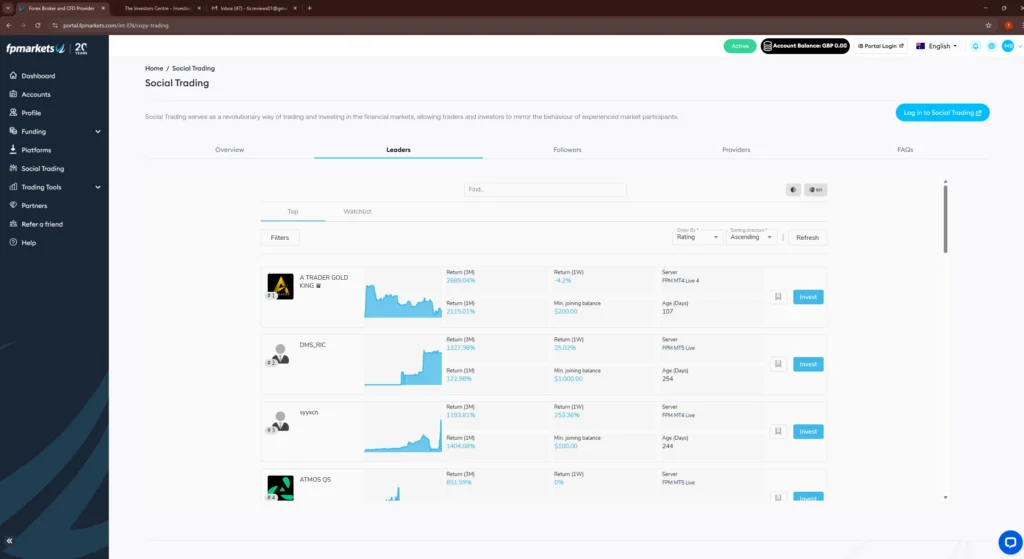
- Multiple copy trading options (AutoTrade, Signals, native app)
- Tight spreads and fast execution for active traders
- Excellent support for MetaTrader users
Cons
- Copy trading fees can vary based on provider
- Not as beginner-friendly as some social-focused platforms
- Limited asset variety outside forex and CFDs
What Are the Fees?
| Feature | Copy Trading with FP Markets (UK) |
|---|---|
| Copy Trading Fee | Varies by provider or strategy (typically included in spreads or via subscription) |
| Spread Cost | From 0.0 pips on Raw account (plus commission), or from 1.0 pips on Standard account |
| Commission | $3 per side (Raw account only) |
| Inactivity Fee | None |
| Withdrawal Fee | Free for most methods; some international bank fees may apply |
What Trading Tools Are Available?
- MetaTrader 4 & 5 with full copy trading support
- Myfxbook AutoTrade & MT Signals
- FP Markets Social Trading App (iOS & Android)
- Integrated charting, economic calendar, and trading calculators
How Safe is the Platform?
FP Markets is authorised and regulated by the FCA in the UK (via its European entity) and offers segregated client funds and strong compliance practices. Data security and operational transparency are key pillars of its service.
FXTM – A Worthy Option with a Low Minimum Deposit Requirement
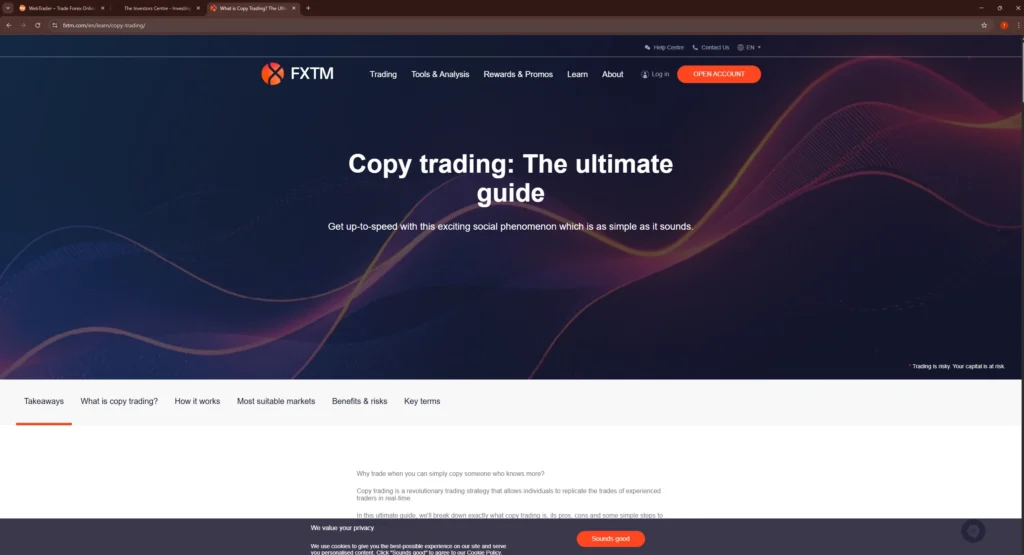
Pros
- Very low entry point (£10 minimum deposit)
- Simple copy trading via FXTM Invest
- FCA-regulated with a focus on beginner accessibility
Cons
- Copy traders must pay performance fees
- Limited range of tradable assets outside forex and CFDs
- Some withdrawal methods include processing fees
What Are the Fees?
| Feature | Copy Trading with FXTM (UK) |
|---|---|
| Copy Trading Fee | Performance-based fee (set by strategy manager, typically 10–30%) |
| Spread Cost | From 1.5 pips (Standard); from 0.0 pips + commission (Advantage account) |
| Commission | From $0 to $4 per lot depending on account type |
| Inactivity Fee | $5/month after 6 months of inactivity |
| Withdrawal Fee | Yes – varies by method (e.g., $3 for cards, bank fees for wires) |
What Trading Tools Are Available?
- FXTM Invest platform for copy trading
- MT4/MT5 with full signal support
- Performance filtering by risk, returns, and trading style
- Beginner-friendly dashboards with key trader stats
How Safe is the Platform?
FXTM is FCA-regulated and offers segregated client accounts with robust risk management systems. Though it is a global broker, its UK presence ensures compliance with local standards and strong client fund protections.
Tickmill – A Good Choice for Accessing CFD Instruments
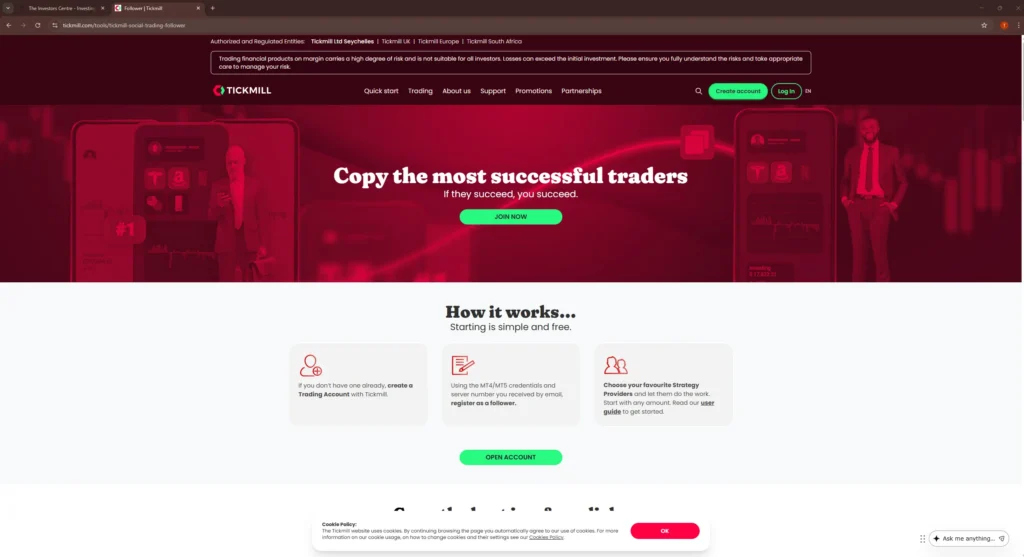
Pros
- Access to a wide range of CFD instruments
- Multiple copy trading options, including MT4 Signals
- Competitive spreads and execution speed
- Regulated by the FCA
Cons
- Copy trading tools rely on external integrations
- Limited support for non-MetaTrader platforms
- Asset selection focuses on CFDs, with no stocks or ETFs directly available
What Are the Fees?
| Feature | Copy Trading with Tickmill (UK) |
|---|---|
| Copy Trading Fee | Depends on platform or signal provider (may include monthly or performance fees) |
| Spread Cost | From 0.0 pips (Pro account) or from 1.6 pips (Classic account) |
| Commission | $2 per side per lot (Pro account); none on Classic |
| Inactivity Fee | None |
| Withdrawal Fee | None for most methods; bank wire may incur fees depending on region |
What Trading Tools Are Available?
- MetaTrader 4 with support for MT4 Signals
- AutoTrade via Myfxbook (in supported regions)
- Advanced charting, economic calendar, and trading calculators
- Fast execution infrastructure ideal for CFD traders
How Safe is the Platform?
Tickmill is FCA-regulated in the UK and offers segregated client accounts, SSL encryption, and negative balance protection. The broker adheres to strict operational standards and serves both retail and professional clients.
IC Markets – Targeted for Copy Trading Options
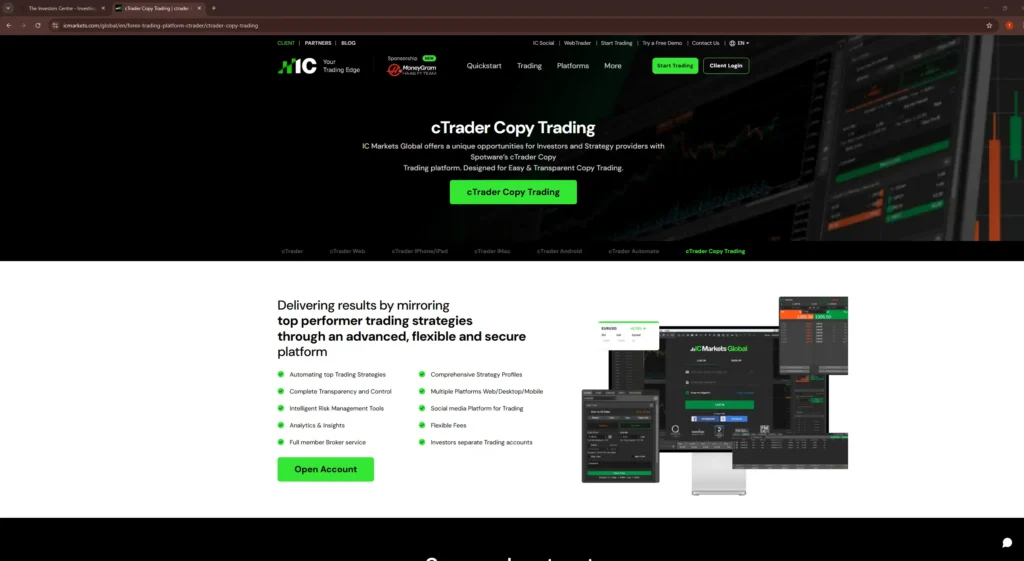
Pros
- Multiple copy trading platforms to choose from
- Tight spreads and low-latency execution
- Great for advanced users who want platform flexibility
- No inactivity or withdrawal fees
Cons
- Not beginner-focused; platforms may feel technical
- Some copy trading services require separate sign-ups
- No tax-efficient UK accounts (e.g., ISA, SIPP)
What Are the Fees?
| Feature | Copy Trading with IC Markets (UK) |
|---|---|
| Copy Trading Fee | Varies by platform (e.g., ZuluTrade subscription, MT4 Signals commission, performance fees) |
| Spread Cost | From 0.0 pips (Raw Spread account) or from 1.0 pips (Standard account) |
| Commission | $3.50 per side per lot (Raw account only) |
| Inactivity Fee | None |
| Withdrawal Fee | None (except for certain international bank wires) |
What Trading Tools Are Available?
- cTrader Copy, MT4/MT5 Signals, ZuluTrade, and Myfxbook AutoTrade
- Advanced technical analysis and charting across all platforms
- Trade performance tracking and risk management dashboards
- Low-latency execution ideal for strategy replication
How Safe is the Platform?
IC Markets is regulated by multiple financial authorities, including oversight for UK traders via its FCA-compliant structure through its global entities. It offers segregated accounts, negative balance protection, and bank-grade encryption.
How I Tested These Copy Trading Platforms
The rankings above aren't compiled from other websites. In my Q1 2026 funded test round (14 January to 7 April 2026), we held live accounts at Pepperstone (£500, Razor ECN, which I ran myself), eToro (CopyTrader account, led by Adam Woodhead) and AvaTrade (£500 Standard, also Adam), and measured the things that actually hit a copy trader's returns: the spreads and execution latency underneath every mirrored trade, withdrawal speed, and support response times.
| Measured (Q1 2026) | Pepperstone | eToro | AvaTrade |
|---|---|---|---|
| EUR/USD spread (London open) | 0.1 pips | 1.0 pips | 0.9 pips |
| Median execution latency | 47 ms | 160 ms | 120 ms |
| Zero-slippage fill rate | 78% | 70% | 75% |
| Bank withdrawal time | 1 working day | 3 working days | 3 working days |
| Live chat response | ~90 seconds | ~300 seconds | ~140 seconds |
| Published retail loss rate | 73% | 51% | 71% |
The full 147-column dataset behind these numbers, covering 17 UK brokers with FCA register links, test windows and lead testers per row, is open on my UK trading brokers dataset page.
Where honesty is due: FP Markets, FXTM, Tickmill and IC Markets have not been through a funded test round yet; their positions are based on published terms, platform walkthroughs and community feedback, and I've kept them below the funded-tested brokers partly for that reason. And on the Pepperstone-vs-eToro call at the top: eToro actually edges Pepperstone on overall broker score in my dataset, and its 51% retail loss rate is remarkable. Pepperstone takes P1 on this page because this is a copy trading ranking weighted toward the costs under your copied trades, where its 0.1-pip spreads and 47 ms execution are in a different league. If the social side of copy trading is why you're here, start with eToro and you won't be disappointed.
What is Copy Trading? A Beginner-Friendly Overview
Copy trading is a simple yet powerful way to participate in financial markets by mirroring the trades of experienced investors. For beginners, it removes the steep learning curve often associated with trading. Instead of analysing charts, tracking market trends, or making complex decisions, you can simply select a seasoned trader whose strategies align with your goals and automatically replicate their trades.
I remember when I first stumbled upon copy trading; it felt like a lifeline. As someone overwhelmed by technical analysis and market jargon, the idea of leveraging the expertise of others seemed like the perfect entry point. It’s essentially a shortcut for beginners, offering exposure to trading without requiring in-depth knowledge. Beyond ease, it’s also a time-saver, making it ideal for those with busy schedules who want to invest without spending hours on research.
How Does Copy Trading Work?
The process of copy trading is straightforward, yet it relies on sophisticated technology to function seamlessly. Here’s how it typically works:
- Choose a Trader to Copy: Platforms provide performance stats, risk profiles, and trading history for you to evaluate.
- Allocate Funds: Decide how much capital you want to dedicate to copying a trader.
- Automatic Replication: Once set up, the platform mirrors the trader’s positions in your account, proportionate to your allocation.
- Monitor and Adjust: Regularly review the trader’s performance and adjust your strategy if needed.
For instance, I vividly recall my first experience with copy trading: after selecting a high-performing trader with a solid track record, I saw my account reflect their trades in real-time. It was fascinating and felt like having a mentor guide me through the markets. That said, monitoring performance is critical to ensure alignment with your goals.
Copy Trading vs Social Trading: What's the Difference?
The terms get used interchangeably, but they're not the same thing. Copy trading is the mechanical part: your account automatically mirrors another trader's positions, proportional to the amount you allocate. Social trading is the broader community layer around it: feeds, discussion, shared watchlists and the ability to see what other investors are thinking before you commit.
The distinction matters when choosing a platform. eToro is a social trading network with copy trading built in, which is why its trader profiles, comment threads and sentiment data are so much richer than anyone else's. Pepperstone approaches it from the opposite direction: pure copy execution through DupliTrade and Myfxbook with no social layer at all, but tighter costs underneath. Decide which half you actually want before you pick.
Role and Selection of Signal Providers
Signal providers play a pivotal role in copy trading by serving as the traders whose strategies and performance are mirrored by investors. These individuals or entities range from independent professional traders to proprietary trading firms, each bringing varying levels of expertise, strategies, and risk profiles to the table.
How Brokers Select Signal Providers:
Brokers have stringent selection processes to ensure only high-quality signal providers are available on their platforms. Some common selection criteria include:
- Performance Metrics: Brokers analyze historical data, including profitability, drawdown rates, and consistency over time.
- Risk Management Strategies: Evaluation of leverage usage, stop-loss placements, and portfolio diversification.
- Trading Style: Differentiation between scalpers, swing traders, and long-term investors to cater to different copy traders’ needs.
- Verification and Compliance: Ensuring signal providers adhere to regulatory standards, including identity verification and strategy transparency.
- Reputation and Track Record: Examining the trader’s engagement with the community and the reliability of their strategies over extended periods.
By understanding how brokers select signal providers, traders can make better-informed decisions about which brokers align with their risk tolerance and trading goals.
Integration with Third-Party Platforms
In addition to proprietary copy trading systems, many brokers integrate with popular third-party platforms to provide enhanced analytical tools and strategy automation. These platforms offer traders additional flexibility, in-depth analytics, and community-driven insights, which can be crucial in refining their trading strategies.
Popular Third-Party Platforms for Copy Trading:
- Myfxbook AutoTrade: Allows users to analyse trading performance and automate copying of successful traders.
- ZuluTrade: Features an advanced ranking system for signal providers and includes social trading elements.
- Mirror Trader: Provides semi-automated and fully automated trade copying with detailed analytics.
- DupliTrade: Offers seamless integration with MetaTrader 4 and 5, catering to traders looking for an institutional-level experience.
The integration of these platforms with brokers enhances the overall trading experience, giving users access to sophisticated data analytics, performance tracking, and a wider selection of signal providers.
How to Choose the Best Copy Trading Platform in the UK
Key Criteria for Selecting a Platform
When selecting a copy trading platform in the UK, several key factors can make or break your trading experience. First, regulation and security are paramount. Ensure the platform is regulated by a trusted authority, such as the UK’s Financial Conduct Authority (FCA), which provides legal protection and peace of mind.
Next, fees and costs should be transparent and manageable. Some platforms charge commission, while others earn through spreads or performance fees. For instance, I once started on a platform with unclear fees and saw my profits eroded. Since then, I always check for hidden costs like withdrawal fees or inactivity charges.
Equally important are the platform’s features and usability. A user-friendly interface that simplifies finding traders, assessing their stats, and managing your portfolio is crucial, especially for beginners. Platforms with detailed trader performance analytics and risk metrics help you make better decisions. Finally, consider the range of assets available. Platforms with diverse options like forex, stocks, and crypto enable greater flexibility and portfolio diversification.
My Recommended Copy Trading Platforms
| Platform | Regulation | Fees | Best For | Key Features |
|---|---|---|---|---|
| Pepperstone | FCA, ASIC | Low spreads, commission on CFDs | Experienced Traders | Advanced tools like DupliTrade and Myfxbook integration, robust analytics |
| eToro | FCA, ASIC, CySEC | Commission-free for stocks, competitive spreads for forex | Beginners & Intermediate Traders | Social trading network, CopyTrader™, user-friendly interface |
| AvaTrade | CBI, ASIC, FSCA | Competitive spreads, no hidden fees | All Levels | Integrations with ZuluTrade, educational resources, wide range of assets |
Pepperstone: Advanced Tools for Active Traders
Pepperstone is an FCA-regulated platform that caters to more experienced traders looking for advanced tools and sophisticated strategies. What sets Pepperstone apart is its integration with third-party platforms like DupliTrade and Myfxbook, providing flexibility for those who prefer a tailored trading experience.
The platform’s robust analytics and customization options are a draw for active traders. For example, its low spreads and competitive pricing on CFDs make it cost-effective for frequent trades. In my experience, Pepperstone’s educational resources and customer service were also highly responsive, ensuring I always had the support I needed when navigating their platform. While its tools may seem daunting for beginners, its features make it an excellent choice for those wanting to take their copy trading to the next level.
eToro: A Social Trading Powerhouse
eToro stands out as a leading copy trading platform in the UK, combining a user-friendly design with powerful tools. Regulated by the FCA, eToro provides a safe environment for traders. Its social trading network allows users to interact, share insights, and discuss strategies, creating a community-driven trading experience.
One of its highlights is the CopyTrader™ feature, which lets you copy top-performing traders with just a few clicks. Detailed profiles and performance statistics make it easy to evaluate traders. I personally appreciated how transparent eToro’s fee structure is: no hidden surprises, with commission-free trades for stocks and competitive spreads for forex. For me, its accessibility and focus on education make it a great platform for beginners and intermediate traders alike.
The Legal Side of Copy Trading in the UK
Is Copy Trading Legal and Regulated?
Yes, copy trading is entirely legal and regulated in the UK. The Financial Conduct Authority (FCA) oversees platforms that offer copy trading services, ensuring they adhere to strict guidelines to protect traders. This regulation guarantees that platforms are transparent, honest, and operate within a secure framework.
As someone trading in the UK, I always verify that the platform I use is FCA-regulated. Platforms like eToro and Pepperstone prominently display their regulatory credentials, which provides confidence that my funds are safeguarded.
Compliance and Security Requirements
Compliance with Know Your Customer (KYC) and Anti-Money Laundering (AML) regulations is a cornerstone of secure trading platforms in the UK. When opening an account, platforms require identity verification, which might include submitting documents like a passport or utility bill.
These safeguards ensure that traders are legitimate and protect the platform from fraudulent activities. In my experience, although the verification process may feel tedious, it’s an essential step that reinforces the platform’s reliability. Furthermore, platforms implementing secure encryption methods add another layer of protection for user data and funds. These measures create a trading environment where you can focus on your strategies without worrying about security.
Weighing the Pros and Cons of Copy Trading
The Benefits of Copy Trading
Copy trading offers several advantages, especially for beginners or those with limited time to actively trade. One of the biggest benefits is time-saving. Instead of analyzing markets and developing strategies, you can rely on experienced traders to make those decisions. I’ve personally found this approach helpful when I was new to trading and short on time to dedicate to research.
Another key advantage is accessibility. Copy trading lowers the entry barrier for those intimidated by the complexities of financial markets. Platforms like eToro even provide performance stats and community discussions, making the learning curve less daunting.
Lastly, diversification is a standout benefit. By copying multiple traders with different strategies, you can spread your risk across various asset classes, which I’ve seen lead to more balanced results over time. For me, this diversification has been a critical factor in reducing the volatility of my portfolio.
Incentive Programs for Skilled Traders
To attract and retain skilled signal providers, brokers offer various incentive programs that reward top-performing traders based on their trading success and the number of followers they attract. Understanding these incentives is crucial for copy traders, as they shed light on the motivations driving the strategies of the traders they follow.
Common Incentive Programs:
- Performance-Based Commissions: Signal providers earn a percentage of the profits generated by their followers.
- Volume-Based Rebates: Rewards for generating a high trading volume, benefiting both the trader and the broker.
- Fixed Subscription Fees: Some platforms allow traders to charge a monthly or quarterly subscription fee for followers.
- Profit-Sharing Models: Traders receive a portion of their followers’ profits, aligning their interests with the success of those copying them.
- Ranking and Exposure Bonuses: Brokers may promote top-performing traders by featuring them more prominently, leading to higher followership and earnings.
These incentive structures ensure that skilled traders remain committed to performance, while also helping copy traders select providers whose interests are aligned with long-term profitability.
Risks to Watch Out For (and How to Mitigate Them)
While copy trading has its perks, there are risks to consider. Over-reliance on traders is a common pitfall. A single trader’s poor decisions can significantly impact your portfolio. To counter this, I always diversify by copying multiple traders with proven track records.
Platform reliability is another risk. Technical issues or poor customer service can hinder your trading experience. I’ve learned to prioritize platforms with strong reviews and reliable support teams to minimize these disruptions.
Finally, market risk remains an inherent challenge. Even the best traders can experience losses during volatile market conditions. To mitigate this, I use platforms that allow me to adjust risk settings, such as setting stop-loss levels. Staying proactive and monitoring trades regularly has been crucial to my long-term success.
My Verdict: Which Copy Trading Platform Should You Pick?
After running funded accounts through the Q1 2026 test round, my answer depends on one question: do you care more about what's underneath your copied trades, or the experience of choosing who to copy?
If it's the costs underneath, Pepperstone is the pick. The 0.1-pip spreads and 47 ms execution I measured are what every mirrored trade rides on, and DupliTrade and Myfxbook give experienced traders serious strategy control. If it's the discovery and social side, start with eToro: CopyTrader™ is the most polished copy trading product I've tested, the trader stats are genuinely decision-grade, and its 51% retail loss rate in my dataset was the lowest of all 17 brokers tracked. Beginners will feel at home on eToro within an hour; Pepperstone rewards you once you know what you're doing. AvaTrade remains the MetaTrader-integration option, with the caveat that UK clients sit outside FSCS cover. Copy trading has earned its place, eToro's Nasdaq listing settled that argument, but the platform you pick should match the trader you are, not the marketing.
FAQs
References
- Financial Conduct Authority – Consumer protections for UK investors
- FCA Register – Pepperstone Limited (FRN 684312)
- FCA Register – eToro (UK) Ltd (FRN 583263)
- eToro CopyTrader – Official product documentation
- Pepperstone – Copy trading via DupliTrade and Myfxbook
- TIC UK Trading Brokers Dataset – Q1 2026 (open data)
Discuss UK Copy Trading Platforms
Copying trades on these UK platforms? Share your copier performance, drawdown experiences, and broker stability. Our community earns Equity for quality contributions.
Discussion 0 comments
Be the first to start discussing this topic! Log in or create an account to share your thoughts.
Log In Create Account
No comments yet. Be the first to start discussing this topic!