
Quick Answer: What Is the Best Gold Trading Platform?
IG is the best gold trading platform in 2026 due to its broad range of gold instruments, consistently reliable execution, and strong regulatory oversight. Spreadex is the top pick for tax-free gold spread betting, Capital.com and CMC Markets stand out for low-cost gold CFDs, while Pepperstone is the top choice for MT4 and MT5 gold trading.


68% of retail CFD accounts lose money.
65% of retail CFD accounts lose money.

62% of Retail CFD Accounts Lose Money

72% of retail CFD accounts lose money.

68% of retail CFD accounts lose money.

64% of retail CFD accounts lose money.
How Do These Gold Trading Brokers Compare?
| Rank | Broker | Typical Gold Spread (XAU/USD) | Other Precious Metals | Platforms Available | Best For |
|---|---|---|---|---|---|
| 1 | IG | ~0.30 points | Silver, platinum, palladium | Web platform, mobile app, MT4 | Wide range of gold instruments |
| 2 | Spreadex | ~0.30 points | Silver, platinum | Web platform, mobile app | Tax-free gold spread betting |
| 3 | Capital.com | ~0.75 points | Silver | Web platform, mobile app | Low-cost gold CFD trading |
| 4 | Pepperstone | ~0.15 points (raw + commission) | Silver, platinum, palladium | MT4, MT5, cTrader | MT4/MT5 gold trading |
| 5 | CMC Markets | ~0.25 points | Silver, platinum | Next Generation platform, MT4 | Tight gold spreads |
| 6 | Saxo | ~0.30 points | Silver, platinum, palladium | SaxoTraderGO, SaxoTraderPRO | Professional gold trading tools |
Top Gold Trading Platforms Reviewed
- IG – Wide range of gold instruments
- Spreadex – Tax-free gold spread betting
- Capital.com – Low-cost gold CFD trading
- Pepperstone – MT4/MT5 gold trading
- CMC Markets – Tight gold spreads
- Saxo – Professional gold trading tools
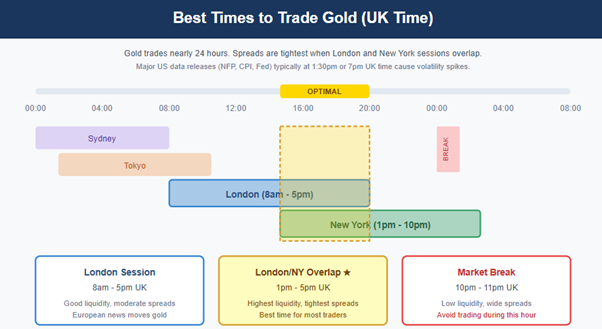
To identify the best gold trading platforms for 2026, we tested each broker using live trading accounts and real gold trades. We placed XAU/USD trades during both peak and off-peak market hours to see how spreads behaved in normal and volatile conditions. We also used each platform across web, mobile, and, where available, MT4 or MT5 to assess charting tools, order execution, and risk controls.
| What We Tested | How It Was Assessed |
|---|---|
| Gold spreads | Live XAU/USD trades at different times |
| Platforms | Web, mobile, MT4/MT5 usability |
| Trading costs | Spreads and overnight fees |
| Execution & risk | Order fills, stops, platform stability |
IG – Best Overall for Gold Instrument Variety
Pros
- Wide choice of gold instruments, including CFDs, futures, options, and gold-backed ETFs
- Reliable order execution during volatile gold trading sessions
- Multiple platforms available, including web, mobile, and MT4
- Strong regulatory track record and long-standing market presence
Cons
- Gold spreads are competitive but not the lowest among CFD brokers
- Overnight financing costs can add up on longer-term gold positions
- Platform depth may feel unnecessary for beginners focused only on simple gold trades
What Makes IG Good for Gold Trading?
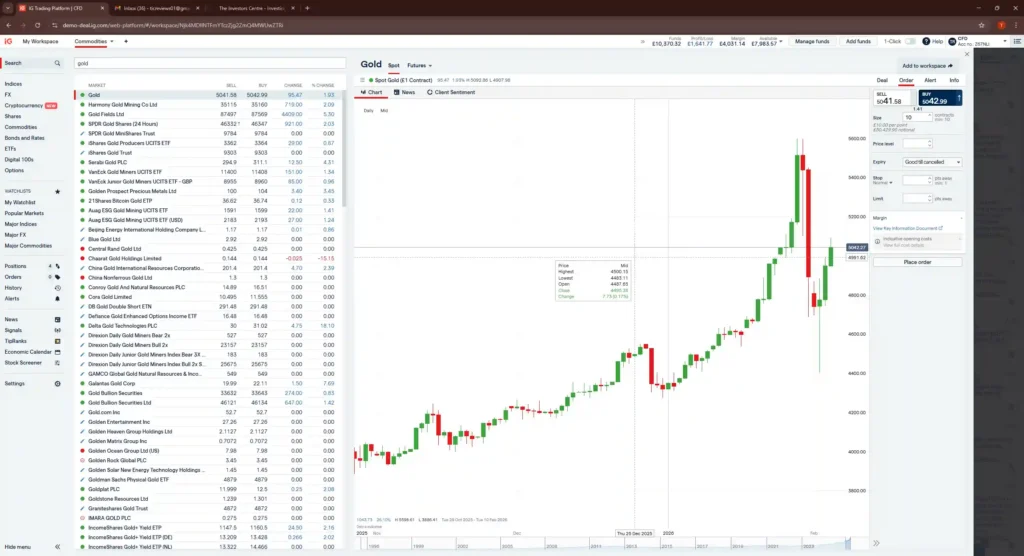
IG is good for gold trading because it offers more ways to trade gold than almost any other platform we tested. In our tests, we were able to trade spot gold, gold CFDs, futures, options, and gold-backed ETFs from a single account. When we traded gold on IG's web platform and MT4, execution was smooth even during busy sessions around major market opens. The charting tools are well suited to gold's volatility, with flexible timeframes and indicators that made it easy to analyse short-term price moves.
Is IG Safe for Gold Traders?
IG is safe for gold traders because it is a well-established broker operating under strict regulatory oversight. Client funds are held separately from company funds, and risk disclosures are clear before you place a trade. This matters for gold traders, as positions are often held during volatile periods when platform reliability and financial strength are critical.
What Are IG's Gold Trading Costs?
IG's gold trading costs are mainly made up of the spread on XAU/USD and overnight financing on leveraged positions. When we monitored gold spreads during peak trading hours, they typically sat around 0.30 points and remained stable in normal market conditions. Overnight financing applies to multi-day positions, but these charges are displayed clearly before you open a trade, which helps avoid unexpected costs.
What Other Precious Metals Can You Trade with IG?
IG lets you trade silver, platinum, and palladium in addition to gold. These metals are available through CFDs and, in some cases, futures or options, making it easy to diversify into other precious metals without opening a separate account.
Who Is IG Best For?
IG is best for traders who want flexibility and depth when trading gold. It suits active traders, hedgers, and those who value access to multiple gold instruments on a stable platform rather than chasing the very lowest spreads.
Spreadex – Best for Tax-Free Gold Spread Betting
Pros
- Tax-free gold spread betting for UK traders
- Competitive gold spreads with no commission
- Straightforward web platform suited to gold trading
- Fixed-risk spread bets available on gold markets
Cons
- No MT4 or MT5 support
- Smaller range of gold instruments than multi-asset brokers
- Platform tools less advanced than some competitors
What Makes Spreadex Good for Gold Trading?
Spreadex is good for gold trading because it combines competitive gold spreads with the tax advantages of spread betting. In our tests, placing gold trades on the Spreadex web platform was fast and straightforward, with clear pricing shown before execution. The platform is well suited to traders who want to speculate on gold price movements without worrying about capital gains tax on their profits.
Is Spreadex Safe for Gold Traders?
Spreadex is safe for gold traders because it is authorised and regulated by the FCA (FRN 190941). Client funds are held separately from company funds, and negative balance protection applies to retail accounts. These protections are important when trading gold with leverage, particularly during volatile market sessions.
What Are Spreadex's Gold Trading Costs?
Spreadex's gold trading costs are built into the spread, with no commission charged on gold spread bets. In our testing, typical gold spreads were around 0.30 points during normal market conditions. Because profits from spread betting are generally free from capital gains tax, the effective cost of trading gold on Spreadex can be lower than on CFD-only platforms.
What Other Precious Metals Can You Trade with Spreadex?
In addition to gold, Spreadex offers spread betting on silver and platinum. While the precious metals range is smaller than some multi-asset brokers, it covers the most popular alternatives for traders looking to diversify beyond gold.
Who Is Spreadex Best For?
Spreadex is best for UK traders who want to trade gold through spread betting and benefit from potential tax advantages. It suits active gold traders who value competitive spreads, a clean platform experience, and the simplicity of having spread betting and CFD access from a single account.
Capital.com – Best for Low-Cost Gold CFDs
Pros
- Consistently low spreads on gold CFDs with no commission
- Simple, fast platform that works well on web and mobile
- Clear cost breakdowns before placing gold trades
- Strong educational tools for newer gold traders
Cons
- Limited range of gold instruments compared to multi-asset brokers
- No access to gold futures or options
- Not suitable for traders who rely on MT4 or MT5
What Makes Capital.com Good for Gold Trading?
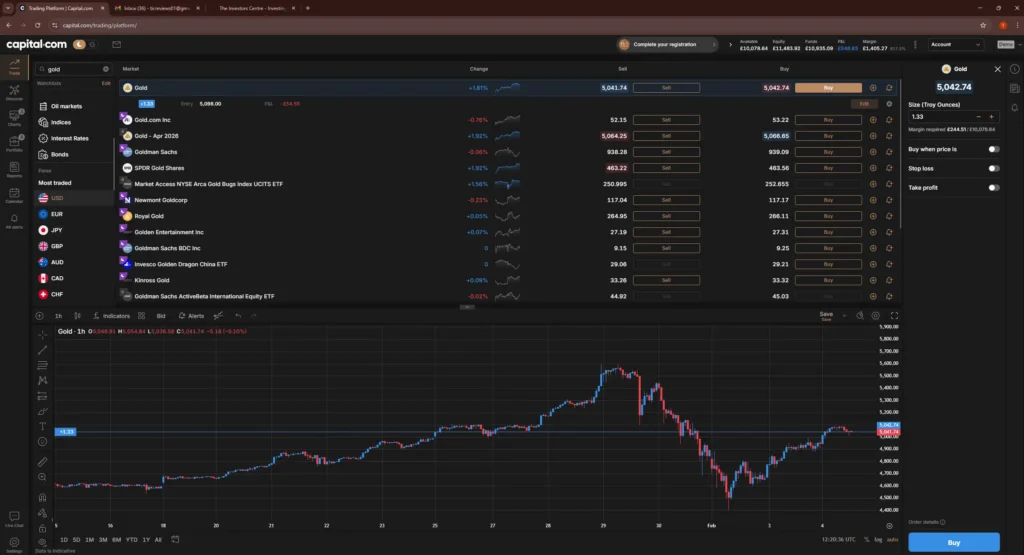
Capital.com is good for gold trading because it keeps costs low and execution simple. In our tests, we placed multiple XAU/USD trades on both the web platform and mobile app, and the experience was fast and intuitive throughout. Order placement is straightforward, charts load quickly, and risk controls like stop losses are easy to apply, which suits active gold traders who want speed without complexity.
Is Capital.com Safe for Gold Traders?
Capital.com is safe for gold traders because it operates under recognised regulatory standards and applies clear client protection measures. Funds are kept separate from operational capital, and risk warnings are clearly displayed before trades are opened. For gold traders using leverage, this transparency helps reduce the chance of unexpected exposure during sharp market moves.
What Are Capital.com's Gold Trading Costs?
Capital.com's gold trading costs are built entirely into the spread, with no additional commission. When we traded gold on the platform, typical XAU/USD spreads were around 0.75 points during normal market conditions. We also checked overnight financing on multi-day positions, and while these fees apply, they are shown clearly in the trade ticket before you commit.
What Other Precious Metals Can You Trade with Capital.com?
In addition to gold, Capital.com allows you to trade silver as a CFD. While the precious metals range is narrower than some competitors, it covers the most actively traded alternatives for those looking to diversify beyond gold.
Who Is Capital.com Best For?
Capital.com is best for traders who want low-cost gold CFD trading without unnecessary platform complexity. It suits beginners and intermediate traders who prioritise tight spreads, clean execution, and a user-friendly trading experience over access to advanced instruments.
CMC Markets – Lowest Gold Spreads
Pros
- Consistently tight gold spreads, especially during peak trading hours
- Advanced charting and analysis tools built into the platform
- Strong range of order types and risk management features
- Long-standing, well-regulated broker with a solid reputation
Cons
- Platform may feel complex for newer gold traders
- Limited range of gold instruments compared to IG
- MT4 offering is more basic than its proprietary platform
What Makes CMC Markets Good for Gold Trading?
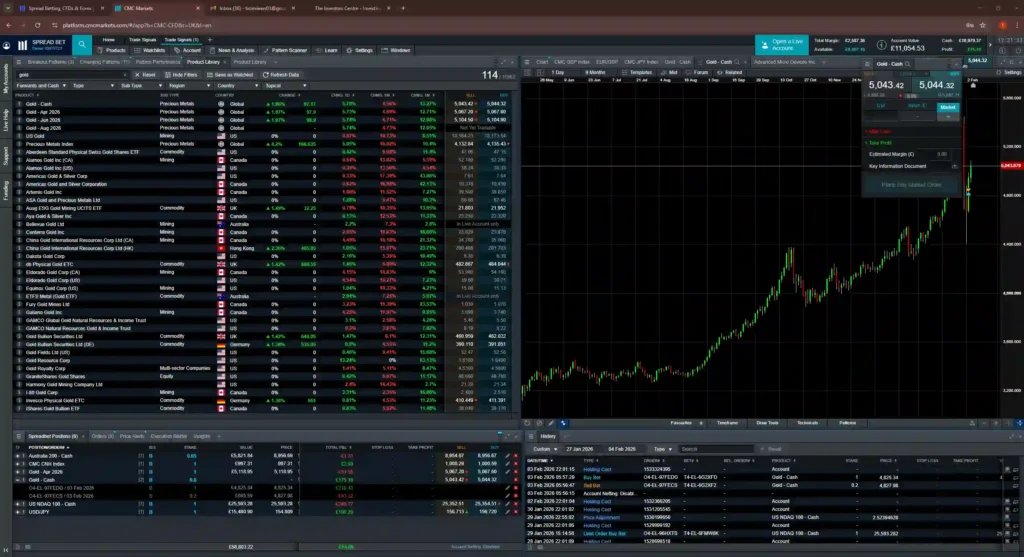
CMC Markets is good for gold trading because it offers some of the tightest spreads we observed during live testing. When we traded gold on CMC's Next Generation platform, spreads on XAU/USD regularly stayed around 0.25 points in normal market conditions. The platform is built with active trading in mind, offering detailed charts, multiple order types, and fast access to gold markets during high-liquidity sessions.
Is CMC Markets Safe for Gold Traders?
CMC Markets is safe for gold traders because it is a long-established broker operating under strict regulatory oversight. Client funds are held separately, and risk controls such as guaranteed stop-loss orders are available on gold trades. This added protection is useful when trading gold during volatile periods driven by economic data or geopolitical events.
What Are CMC Markets' Gold Trading Costs?
CMC Markets' gold trading costs are primarily driven by the spread, with no commission on standard gold trades. In our tests, spreads remained consistently tight during peak hours and widened less than expected during quieter sessions. Overnight financing applies to leveraged positions, but these charges are shown clearly before placing a trade, making total costs easy to track.
What Other Precious Metals Can You Trade with CMC Markets?
Alongside gold, CMC Markets offers trading on silver and platinum. While the precious metals range is smaller than some competitors, it covers the most liquid alternatives for traders looking to branch out beyond gold.
Who Is CMC Markets Best For?
CMC Markets is best for experienced traders who focus on short-term gold trading and care most about tight spreads and advanced tools. It suits those who are comfortable using a feature-rich platform and want precise control over entries, exits, and risk.
Pepperstone – Best for MT4/MT5 Gold Trading
Pros
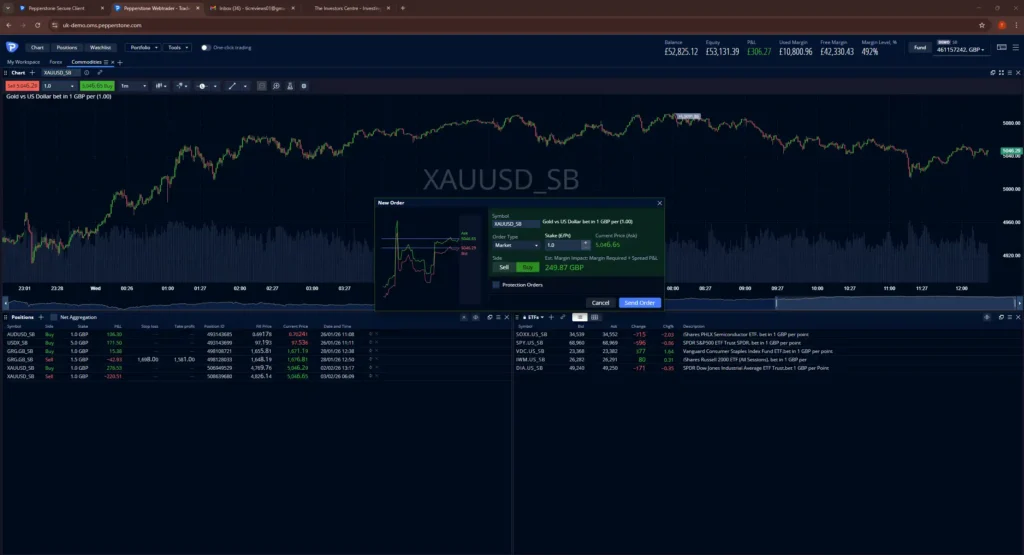
- Excellent support for MT4 and MT5 gold trading
- Very tight raw spreads on gold with commission-based pricing
- Fast execution suited to short-term and automated strategies
- Choice of platforms including cTrader alongside MT4/MT5
Cons
- No proprietary web platform for casual traders
- Gold trading costs depend on commission structure
- Fewer gold-related instruments than multi-asset brokers
What Makes Pepperstone Good for Gold Trading?
Pepperstone is good for gold trading because it offers excellent execution and platform support for MT4 and MT5 users. When we traded gold on MT5 during active market sessions, orders were filled quickly with minimal slippage. The platform setup works well for gold traders who rely on technical indicators, expert advisors, or short-term strategies, especially during periods of high liquidity.
Is Pepperstone Safe for Gold Traders?
Pepperstone is safe for gold traders because it operates under recognised regulatory standards and applies strict client fund protections. Client money is kept separate from company funds, and margin requirements are clearly outlined before trades are placed. For gold traders using leverage, this clarity helps manage risk during sharp price movements.
What Are Pepperstone's Gold Trading Costs?
Pepperstone's gold trading costs depend on the account type you choose. On its raw pricing accounts, we observed very tight gold spreads, often around 0.15 points, with a small commission added per trade. When we monitored spreads during peak trading hours, overall costs remained among the lowest we tested, particularly for active or high-frequency gold traders.
What Other Precious Metals Can You Trade with Pepperstone?
In addition to gold, Pepperstone allows trading in silver, platinum, and palladium. These metals are available as CFDs and integrate seamlessly into MT4, MT5, and cTrader, making it easy to diversify precious metals exposure using the same tools and strategies.
Who Is Pepperstone Best For?
Pepperstone is best for traders who rely on MT4 or MT5 for gold trading. It suits technically focused traders, scalpers, and algorithmic traders who prioritise tight pricing, fast execution, and platform flexibility over access to a wide range of gold instruments.
Saxo – Best for Professional Gold Trading Tools
Pros
- Professional-grade platforms with advanced gold charting
- Wide range of gold instruments including CFDs, futures, and options
- Strong research and analysis tools for precious metals
- Well-regulated broker with robust client fund protections
Cons
- Higher minimum deposit than most competitors
- Gold spreads wider than low-cost CFD specialists
- Platform complexity may feel excessive for casual gold traders
What Makes Saxo Good for Gold Trading?
Saxo is good for gold trading because it offers institutional-quality platforms with deep analytical tools. When we traded gold on SaxoTraderGO, the charting was among the most detailed we tested, with a wide range of technical indicators and drawing tools. Saxo also provides access to gold CFDs, futures, and options from a single account, which suits traders who want flexibility across multiple gold instruments.
Is Saxo Safe for Gold Traders?
Saxo is safe for gold traders because it is authorised and regulated by the FCA (FRN 551422) and operates under strict client fund protections. Client money is held separately from company funds, and risk disclosures are clearly presented before any trade is placed. This regulatory standing provides reassurance for gold traders holding leveraged positions during volatile market periods.
What Are Saxo's Gold Trading Costs?
Saxo's gold trading costs are based on the spread, which varies depending on the account tier. In our tests, typical XAU/USD spreads were around 0.30 points on standard accounts during normal market conditions. Overnight financing applies to leveraged gold positions, and all charges are displayed clearly in the trade ticket before execution.
What Other Precious Metals Can You Trade with Saxo?
Alongside gold, Saxo offers trading in silver, platinum, and palladium. These metals are available as CFDs and, in some cases, futures and options, making Saxo one of the broader precious metals platforms we tested.
Who Is Saxo Best For?
Saxo is best for experienced and professional traders who want advanced tools and multi-instrument access when trading gold. It suits those who value in-depth research, detailed charting, and the ability to trade gold across CFDs, futures, and options from a single platform.
What Is Gold Trading and How Does It Work?
Gold trading is the process of speculating on changes in the price of gold without owning the physical metal. Online platforms let you trade gold using financial instruments that track the market price, which allows traders to react quickly to price movements and manage risk more efficiently than buying physical gold.
Ways to Trade Gold
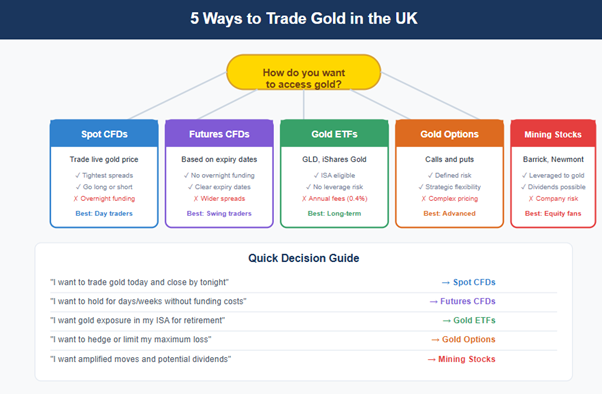
Gold can be traded in several ways, but most online traders use CFDs because they offer flexibility and low upfront costs. CFDs allow you to trade gold prices both up and down using leverage, which makes them suitable for short-term strategies and active trading, especially on platforms designed for gold CFD trading. In our testing, gold CFDs also offered the tightest pricing and fastest execution compared to other methods.
Spot gold trading tracks the real-time price of gold, usually quoted as XAU/USD, and is commonly used for intraday trading. Futures contracts are agreements to buy or sell gold at a future date and are mainly used by professional traders due to fixed expiry dates and larger contract sizes. Gold ETFs track the price of gold and trade like shares, making them better suited to longer-term exposure and investors looking to invest in gold without using leverage.
Physical Gold vs Gold CFDs – What's the Difference?
The key difference is that physical gold involves ownership, while gold CFDs provide price exposure only. Physical gold comes with storage, insurance, and resale costs, which limits its practicality for active trading. Gold CFDs are highly liquid, allow smaller position sizes, and make it easy to enter and exit trades quickly.
Most online traders favour CFDs because they offer leverage, transparent costs, and the ability to trade both rising and falling gold prices. These features make CFDs more practical for active trading than holding physical gold.
Is Gold Spread Betting Tax-Free?
Gold spread betting is often tax-efficient because profits are typically not subject to capital gains tax in some jurisdictions. This is due to spread betting being treated as betting rather than investing. However, tax treatment depends on personal circumstances, and losses cannot usually be offset, so traders should understand both the benefits and limitations before using this approach.
How Do You Choose the Right Gold Trading Platform?
Choosing the right gold trading platform comes down to cost, execution, and how well the platform supports gold-specific trading. From our testing, these are the factors that matter most when comparing brokers:
- Gold spreads and rollover fees: Tight spreads reduce entry costs, while low overnight financing matters if you hold gold positions for more than one day.
- Execution quality: Fast, reliable order execution is critical when gold prices move sharply around economic data or market opens.
- Charting and analysis tools: Gold benefits from strong technical analysis tools, including multiple timeframes and indicators.
- Precious metals range: Access to silver, platinum, or palladium makes it easier to diversify beyond gold. If you want to branch into energy markets as well, see my guide on how to trade oil.
- Risk controls: Features like stop losses and guaranteed stop-loss orders help manage downside risk during volatile periods.
Final Thoughts
Choosing the best gold trading platform comes down to how you plan to trade gold. Platforms like IG stand out for flexibility and depth, while Spreadex is the strongest option for tax-free gold spread betting. Lower-cost providers such as Capital.com and CMC Markets suit traders focused on keeping costs tight, and Pepperstone remains a top choice for MT4 and MT5 gold trading. Saxo rounds out the list with professional-grade tools for experienced traders.
The key is matching the platform to your trading style, risk tolerance, and experience level. Gold markets can move quickly, so choosing a platform with reliable execution, transparent costs, and strong risk controls makes a meaningful difference over time.
FAQs
References
- World Gold Council (Gold Demand Trends)
- FCA – Restricting CFD Products (PS19/18)
- HMRC Capital Gains Manual – Spread Betting (CG56105)
- LBMA – Gold Price Benchmark
- CME Group – Gold Futures Overview
- Bank of England – Gold Statistics
- ICE Benchmark Administration – LBMA Gold & Silver Price