

- expertise:
- CFD Trading, Forex, Derivatives, Risk Management
- credentials:
- Chartered ACII (2018) · Trading since 2012
- tested:
- 40+ forex & CFD platforms with live accounts

- expertise:
- Broker Comparison, ISA Strategy, Portfolio Management
- credentials:
- Active investor since 2013 · 11+ years experience
- tested:
- 40+ brokers with funded accounts
How We Test
Real accounts. Real money. Real trades. No demo accounts or press releases.
What we measure:
- Spreads vs advertised rates
- Execution speed and slippage
- Hidden fees (overnight, withdrawal, conversion)
- Actual withdrawal times
Scoring:
Fees (25%) · Platform (20%) · Assets (15%) · Mobile (15%) · Tools (10%) · Support (10%) · Regulation (5%)
Regulatory checks:
FCA Register verification · FSCS protection
Testing team:
Adam Woodhead (investing since 2013), Thomas Drury (Chartered ACII, 2018), Dom Farnell (investing since 2013) — 50+ platforms with funded accounts
Quarterly reviews · Corrections: info@theinvestorscentre.co.uk
Disclaimer
Not financial advice. Educational content only. We're not FCA authorised. Consult a qualified advisor before investing.
Capital at risk. Investments can fall. Past performance doesn't guarantee future results.
CFD warning. 67-84% of retail accounts lose money trading CFDs. High risk due to leverage.
Contact: info@theinvestorscentre.co.uk
Quick Answer: Which is the Best High Volume Broker for Traders in the UK?
Capital.com takes the top spot for 2026, offering competitive spreads, a user-friendly platform, and strong execution quality across a wide range of markets. High volume traders benefit from no-commission CFD trading (other fees apply), deep liquidity, and an intuitive interface that streamlines rapid order entry—making it the strongest choice for active and large-scale clients in the UK.

62% of Retail CFD Accounts Lose Money

68% of retail CFD accounts lose money.

65% of retail CFD accounts lose money.

68% of retail CFD accounts lose money.

71% of Retail CFD Accounts Lose Money
How Do the Best UK Brokers for High Volume Traders Rank?
| Rank | Broker | Year Founded | Headquarters | Minimum Deposit | Trustpilot Rating |
|---|---|---|---|---|---|
| 1 | Capital.com | 2016 | London, UK / Cyprus | £20 | 4.6 |
| 2 | IG | 1974 | London, UK | £250 | 3.9 / 5 |
| 3 | Spreadex | 1999 | St Albans, UK | £1 | 4.3 |
| 4 | CMC Markets | 1989 | London, UK | £0 | 4.3 |
| 5 | XTB | 2002 | Warsaw, Poland / London, UK | £250 | 4.0 / 5 |
How I Tested These Brokers
I opened live accounts with each broker and deposited my own money to test real trading conditions. Over several weeks, I executed trades during both quiet periods and high-volatility news events to assess execution quality and slippage.
I focused on the metrics that matter most to active traders: typical spreads on major pairs, platform stability under pressure, and how quickly withdrawals were processed. All regulatory details were cross-checked against the FCA register, and Trustpilot ratings were verified at the time of writing.
Top 5 Brokers for High Volume Traders Reviewed
1. Capital.com — Best Overall for High Volume Trading
2. IG — Deep Liquidity & Market Access
3. Spreadex — Simple Platform, Excellent Service
4. CMC Markets — Advanced Tools & Charting for Active Traders
5. XTB — Strong Tools & Volume-Friendly Accounts
Capital.com – Best Overall for High Volume Trading
Pros
- No commission on CFDs (other fees apply)
- Intuitive platform for rapid order entry
- Wide market range across multiple asset classes
- MT4 and TradingView integration
Cons
- CFDs only – no exchange-traded futures
- No cTrader platform
How much do spreads, commissions and rebates cost?
Capital.com charges no commission on CFD trades *other fees apply, with costs built into competitive spreads. FX majors start from around 0.6 pips, and the platform provides transparent pricing with no hidden fees. For high-volume traders, the spread-only model simplifies cost calculations.
How fast is execution and how good is the liquidity?
Capital.com delivers reliable execution across a wide range of markets, with deep liquidity sourced from multiple providers. The platform is designed for fast order entry with minimal latency, making it suitable for active traders executing frequent trades across volatile conditions.
Is the broker safe and regulated for large accounts?
Capital.com is FCA-regulated (FRN 793714), segregates client funds, and provides negative balance protection for retail accounts. The broker maintains strict compliance standards, offering a secure environment for traders managing significant balances.
Who is this broker best suited for?
Capital.com is ideal for active CFD traders who want no-commission trading *other fees apply, an intuitive platform, and access to a broad range of markets. Its user-friendly interface and competitive spreads make it particularly attractive for high-volume traders who value speed and simplicity.
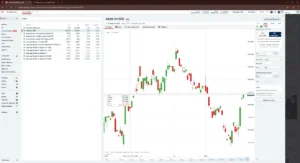
IG – Deep Liquidity & Market Access
Pros
- Established, FTSE 250-listed
- Broad range of assets
- Spreads from ~0.6 pips
- Strong liquidity infrastructure
Cons
- Higher fees than ECNs
- Proprietary platform is not for everyone
How much do spreads, commissions and rebates cost?
Spreads on major FX pairs start from around 0.6 pips, with no commission on many CFDs. Share trades incur commissions, but professionals may qualify for tiered discounts or rebate programmes depending on their trading volume.
How fast is execution and how good is the liquidity?
IG delivers institutional-grade execution with consistently deep liquidity, even during volatile markets. Its infrastructure is tailored for large-ticket orders, offering stability and reduced slippage across asset classes, making it attractive to high-volume traders.
Is the broker safe and regulated for large accounts?
IG is FCA-regulated, FTSE 250-listed, and has decades of operational experience. It provides segregated client funds and transparent reporting, giving high-volume traders strong confidence in the security of their capital.
Who is this broker best suited for?
IG is best for professional traders who need access to a wide range of markets, including FX, indices, commodities, and shares. It suits volume traders who prioritise liquidity depth and a long-standing reputation for trust.
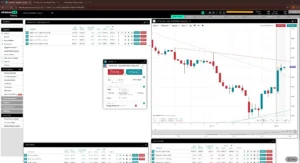
Spreadex – Simple Platform, Excellent Service
Pros
- Competitive spreads
- FCA-regulated UK broker
- Strong client service
- Direct CFD trading
Cons
- Proprietary platform only
- Smaller global footprint
How much do spreads, commissions and rebates cost?
Spreads are competitive across FX, indices, and equities, with no fixed commission model on CFDs. For high-volume traders, bespoke arrangements or preferential terms may be negotiated directly with the broker to further reduce trading costs.
How fast is execution and how good is the liquidity?
Execution quality at SpreadEX is stable, with reliable order handling and access to liquidity in major markets. While not as globally connected as larger brokers, it offers strong fills for UK-focused volume clients.
Is the broker safe and regulated for large accounts?
SpreadEX is FCA-regulated, with financial trading conducted separately from its betting division. Client funds are held in segregated accounts, giving traders reassurance over capital protection.
Who is this broker best suited for?
SpreadEX suits UK-based CFD traders who want competitive spreads, responsive service, and FCA regulation. It's particularly strong for high-volume clients looking for a straightforward UK financial trading partner.
CMC Markets – Advanced Tools & Charting for Active Traders
Pros
- Next Generation platform with 115+ indicators
- Competitive spreads from 0.7 pips
- FTSE 250-listed, strong regulation
- Wide range of markets
Cons
- Steeper learning curve on platform
- £10/month inactivity fee after 12 months
How much do spreads, commissions and rebates cost?
CMC Markets offers competitive spreads from 0.7 pips on major FX pairs with no commission on CFDs or spread bets.* The platform’s transparent pricing model makes it straightforward for high-volume traders to calculate their costs per trade.
How fast is execution and how good is the liquidity?
CMC Markets delivers reliable execution through its proprietary Next Generation platform, with deep liquidity across major markets. The platform handles high-frequency trading well, offering stable fills even during volatile conditions.
Is the broker safe and regulated for large accounts?
CMC Markets is FCA-regulated (FRN 173730) and listed on the London Stock Exchange. Client funds are segregated, and the broker offers guaranteed stop-loss orders for additional risk management on large positions.
Who is this broker best suited for?
CMC Markets suits technically-focused high-volume traders who want deep charting tools, pattern recognition, and a wide range of markets. Its 115+ technical indicators and advanced analysis features make it ideal for traders who rely heavily on chart-based strategies.
XTB – Strong Tools & Volume-Friendly Accounts

Pros
- Pro spreads from 0.1 pips
- xStation 5 platform
- FCA-regulated and listed
- Reliable execution
Cons
- Standard account spreads are wider
- Fewer institutional connectivity options
How much do spreads, commissions and rebates cost?
Pro accounts start from 0.1 pips plus commission, while Standard accounts begin at ~0.9 pips. Equity investors benefit from zero commissions up to a capped monthly threshold, adding value for active clients.
How fast is execution and how good is the liquidity?
XTB's execution speeds are solid, with reliable access to liquidity across FX, indices, and commodities. It performs well under active trading conditions, catering to volume-focused CFD traders.
Is the broker safe and regulated for large accounts?
XTB is FCA-regulated in the UK, publicly listed on the Warsaw Stock Exchange, and segregates client funds, making it a trusted venue for high-volume activity.
Who is this broker best suited for?
XTB is suited for active CFD and FX traders scaling their volume who want a cost-effective broker with an easy-to-use platform and competitive spreads.
What is high volume trading and how does it differ from retail trading?
High volume trading involves placing large trade sizes or frequent orders, often using institutional-grade execution. Unlike retail trading, it emphasises ultra-low costs, deep liquidity, and reliable fills to maximise efficiency when moving significant capital through the markets.
What do high volume traders need in a broker?
High volume traders require brokers offering raw spreads, transparent commissions, and rebates that scale with activity. Execution speed, minimal slippage, and deep liquidity pools are essential, alongside strong regulation to ensure capital safety when trading at size.
Is high volume trading more profitable — or riskier?
High volume trading can increase profits through lower per-trade costs and rebate benefits. However, risks scale equally—large positions amplify losses, while execution delays or slippage can be costly. Effective risk management and strong broker infrastructure are non-negotiable.
Pepperstone's Active Trader Program
While high volume trading carries both greater opportunities and risks, the right broker can help offset costs with rebate programs. Pepperstone stands out here, offering its Active Trader Program, designed specifically to reward professionals and frequent traders.
The scheme provides rebates on FX trades and spread reductions across indices and commodities. The more you trade, the more you save — lowering effective costs and protecting profit margins for active clients.
Here's a breakdown of Pepperstone's tiered rebate structure:
| Tiers | Discount Per FX Lot | Spread Reduction | FX Lots | Commodities Lots | Index Lots |
|---|---|---|---|---|---|
| Tier 1 | $1 | 10% | less than 200 | less than 400 | less than 2000 |
| Tier 2 | $2 | 20% | 200 to 1500 | 400 to 3000 | 2000 to 15000 |
| Tier 3 | $3 | 30% | more than 1501 | more than 3001 | more than 15001 |
Final Thoughts: Which Broker is Best for High Volume Traders?
All five brokers reviewed—Capital.com, IG, Spreadex, CMC Markets, and XTB—offer compelling features for high volume traders, from competitive spreads to advanced tools. Each caters to different trading styles, but cost efficiency and execution quality remain the deciding factors.
For 2026, Capital.com ranks as the best broker for high volume traders. With no commission on CFDs (other fees apply), competitive spreads, and an intuitive platform designed for rapid order entry, it delivers strong value and execution quality for active traders operating at scale.