

- expertise:
- CFD Trading, Forex, Derivatives, Risk Management
- credentials:
- Chartered ACII (2018) · Trading since 2012
- tested:
- 40+ forex & CFD platforms with live accounts

- expertise:
- Broker Comparison, ISA Strategy, Portfolio Management
- credentials:
- Active investor since 2013 · 11+ years experience
- tested:
- 40+ brokers with funded accounts
How We Test
Real accounts. Real money. Real trades. No demo accounts or press releases.
What we measure:
- Spreads vs advertised rates
- Execution speed and slippage
- Hidden fees (overnight, withdrawal, conversion)
- Actual withdrawal times
Scoring:
Fees (25%) · Platform (20%) · Assets (15%) · Mobile (15%) · Tools (10%) · Support (10%) · Regulation (5%)
Regulatory checks:
FCA Register verification · FSCS protection
Testing team:
Adam Woodhead (investing since 2013), Thomas Drury (Chartered ACII, 2018), Dom Farnell (investing since 2013) — 50+ platforms with funded accounts
Quarterly reviews · Corrections: info@theinvestorscentre.co.uk
Disclaimer
Not financial advice. Educational content only. We're not FCA authorised. Consult a qualified advisor before investing.
Capital at risk. Investments can fall. Past performance doesn't guarantee future results.
CFD warning. 67-84% of retail accounts lose money trading CFDs. High risk due to leverage.
Contact: info@theinvestorscentre.co.uk
Why Does Everyone Say Spread Betting Is Better — and Are They Right?
I've traded both spread bets and CFDs since 2018, and the question I get asked more than any other is: "Why would anyone use CFDs when spread betting is tax-free?" It sounds like a slam dunk. One product lets you keep every penny of profit; the other hands a slice to HMRC. Obvious choice, right?
Not quite.
Here's what the broker comparison pages won't tell you: the tax-free advantage of spread betting only matters if you're making money. And most people aren't. The FCA requires every broker to publish what percentage of their retail clients lose money on leveraged products. Those figures sit between 68% and 82% depending on the provider. IG's own disclosure says 68%. eToro's says 51%. Plus500 reports 82%.
If you fall into that majority — and statistically, you probably will in your first year — then "tax-free profits" is an irrelevant selling point. You don't have profits. What you have is losses. And with spread betting, those losses vanish into thin air. With CFDs, you can offset them against other capital gains, potentially saving you real money elsewhere.
That asymmetry is the starting point for any honest comparison between these two products. Not "which one has better spreads?" or "which one is simpler?" but "given where I actually am as a trader, which one costs me less overall?"
Both products let you speculate on financial markets — forex, indices, shares, commodities — without owning the underlying asset. Both use leverage, so a small deposit controls a much larger position. Both can be used to go long or short. If you're getting started with day trading, you'll encounter both almost immediately, and most FCA-regulated brokers offer them side by side.
The mechanical differences are real but manageable. Spread betting works in pounds per point — you decide how much each tick of price movement is worth to you. CFDs work in contracts that mirror the underlying market — one share CFD equals one share, one index CFD equals a fixed value per point. The maths ends up in roughly the same place, but the tax treatment, cost structure, and practical implications diverge enough to affect your bottom line.
I'm going to walk through exactly how each product works, show you the real cost difference on identical trades using actual £ figures, and give you a framework for deciding which suits your situation. No hedging, no "it depends" without an answer. By the end of this page, you'll know which one to open — or whether you need both.
How Does Spread Betting Actually Work?
You pick a market. You decide how much to stake per point of price movement. That's it.
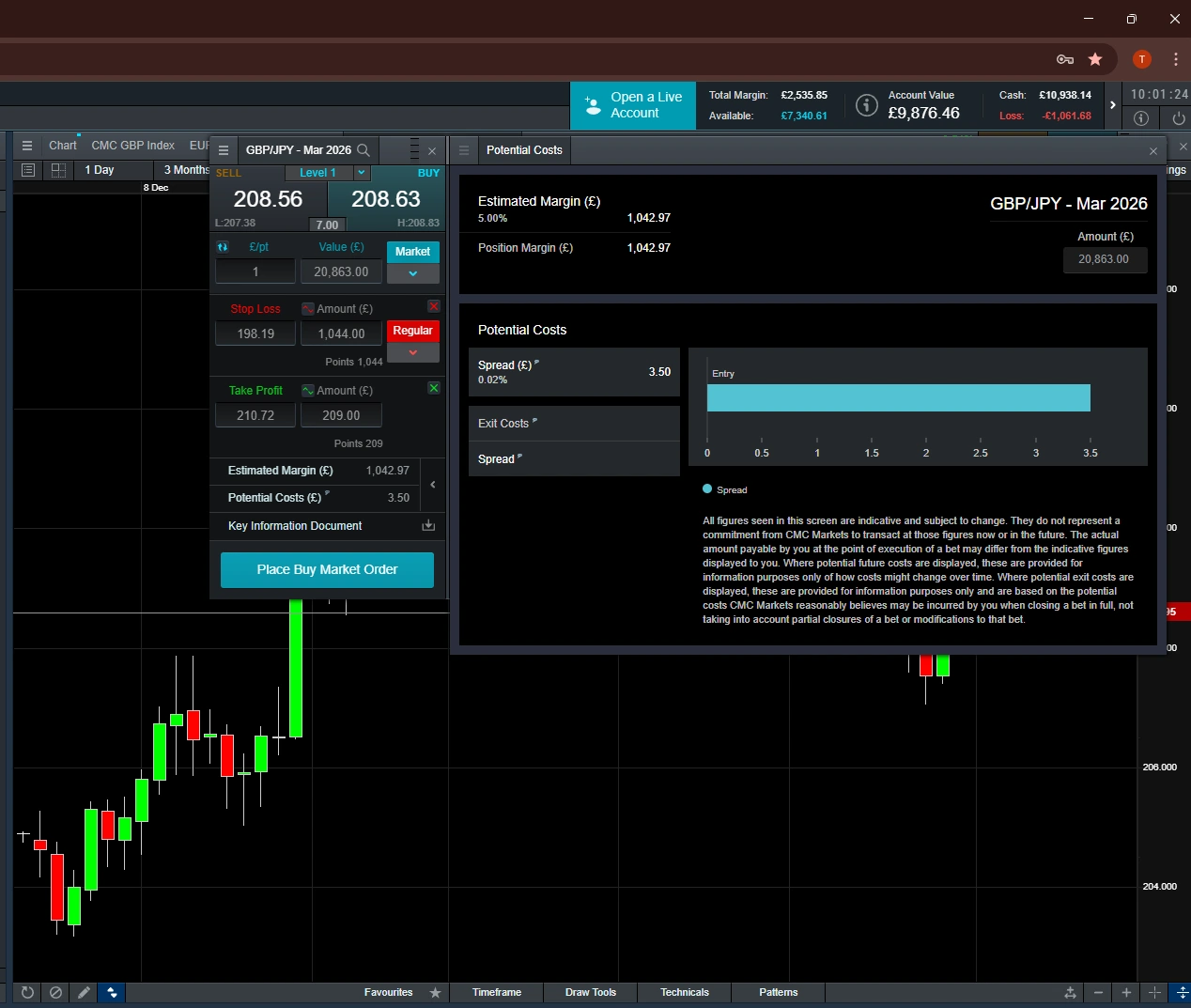
Say the FTSE 100 is trading at 8,250. You think it's going up, so you go long at £5 per point. If the index rises to 8,300, that's 50 points in your favour — £250 profit. If it drops to 8,200, you've lost £250. Your stake multiplied by the point movement. Clean and simple.
Everything is denominated in GBP. Trade the S&P 500 from your living room in Leeds and your profit is still in pounds — no currency conversion, no FX risk on top of your market position. For UK traders who stick to indices and forex, this is a genuine practical advantage that most comparison pages gloss over.
Costs are baked into the spread. The broker quotes you a buy price slightly above the market and a sell price slightly below it. That gap is their fee. No separate commission line on your statement. Most spread bets are structured as daily funded bets (DFBs), which means no fixed expiry but a small overnight financing charge if you hold past the end of each trading day.
How Do CFDs Differ in Practice?
CFDs mirror the underlying asset more directly. One Apple CFD is economically equivalent to holding one Apple share. One FTSE 100 CFD might represent £10 per point. You buy or sell contracts, and your profit or loss is the difference between your opening and closing price.
The critical difference for UK traders: CFDs on international markets are priced in the local currency. Buy an Apple CFD and your exposure is in US dollars. Your P&L gets converted back to GBP at the prevailing exchange rate when you close. That means you're running two bets — one on Apple's share price, one on GBP/USD. I've had trades where Apple moved in my favour but the dollar weakened enough against sterling to eat half the gain. It's a real cost that rarely appears in broker marketing.
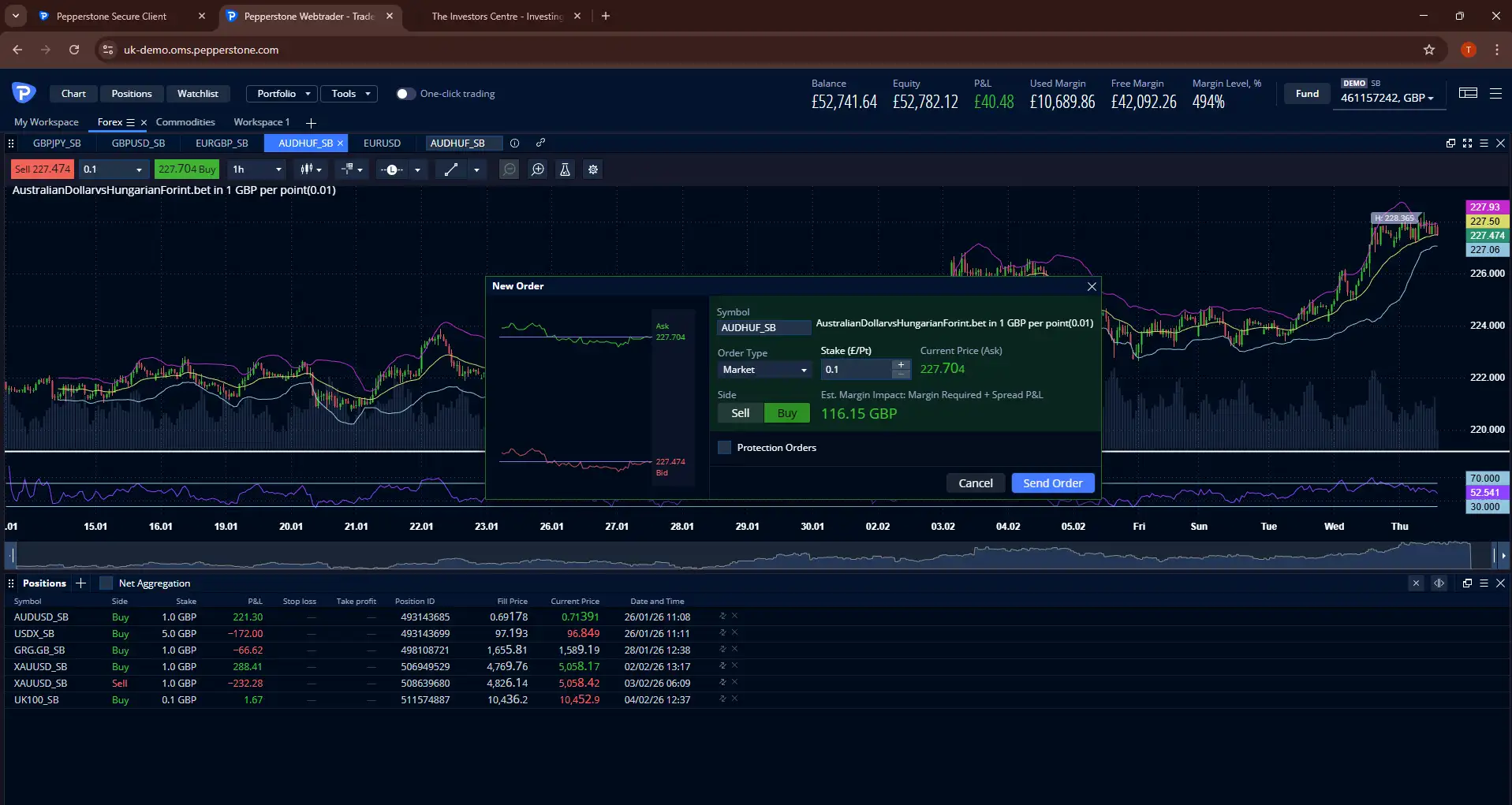
CFD pricing is typically tighter than spread betting — the raw spread is narrower — but many brokers charge a separate commission on share CFDs. IG, for example, charges 0.10% per side on UK shares with a £10 minimum. That commission adds up quickly on smaller positions. On indices and forex, most brokers wrap costs into the spread for both products, so the gap narrows.
What's the Actual Tax Difference in Pounds?
Here's where the theoretical stops and the actual money starts. I'm going to run the same two scenarios through both products so you can see exactly what ends up in your pocket.
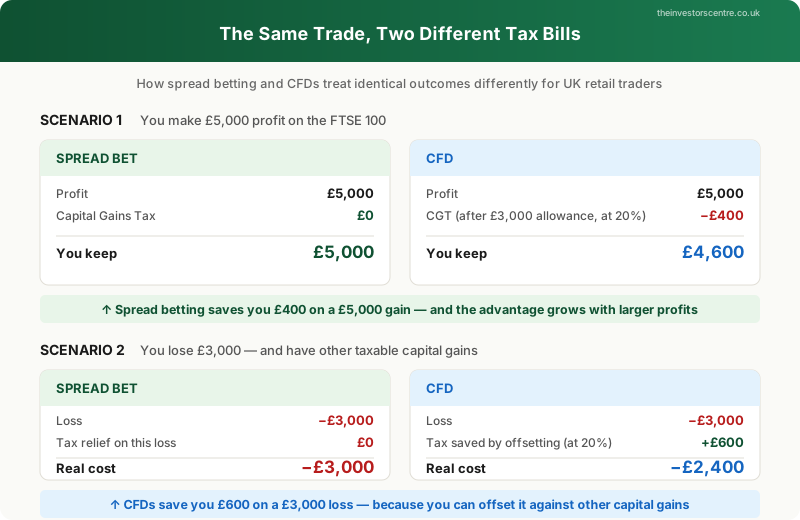
Scenario 1: You make £5,000 profit on the FTSE 100
| Spread Bet | CFD | |
|---|---|---|
| Profit | £5,000 | £5,000 |
| CGT annual allowance (2025/26) | N/A | −£3,000 |
| Taxable gain | £0 | £2,000 |
| CGT at 24% (higher rate) | £0 | −£480 |
| Stamp duty | £0 | £0 |
| You keep | £5,000 | £4,520 |
Clear spread betting win. £480 difference, and it gets wider the larger your profits grow. A trader netting £20,000 per year would pay roughly £4,080 in CGT on CFDs and nothing on spread bets. Over five years, that's potentially over £20,000 — enough to fund a decent trading account on its own.
Scenario 2: You lose £3,000 — and you have other capital gains elsewhere
| Spread Bet | CFD | |
|---|---|---|
| Loss | −£3,000 | −£3,000 |
| Tax relief on this loss | £0 | Offsets other gains |
| Tax saved at 24% | £0 | +£720 |
| Net cost of the loss | −£3,000 | −£2,280 |
Now CFDs win. That £3,000 trading loss becomes £2,280 in real terms because HMRC lets you deduct it from gains you've made elsewhere — selling shares at a profit, disposing of a buy-to-let, anything that triggers CGT. Spread betting losses? Gone. No offset, no carry forward, no tax benefit whatsoever.
This is the bit that matters for the 68-82% of retail traders who are losing money. If you sold some ISA-ineligible investments at a profit this year and your CFD trading went badly, those CFD losses directly reduce your tax bill. Spread betting losses just reduce your account balance.
What About Overnight Financing — Does It Differ Between Products?
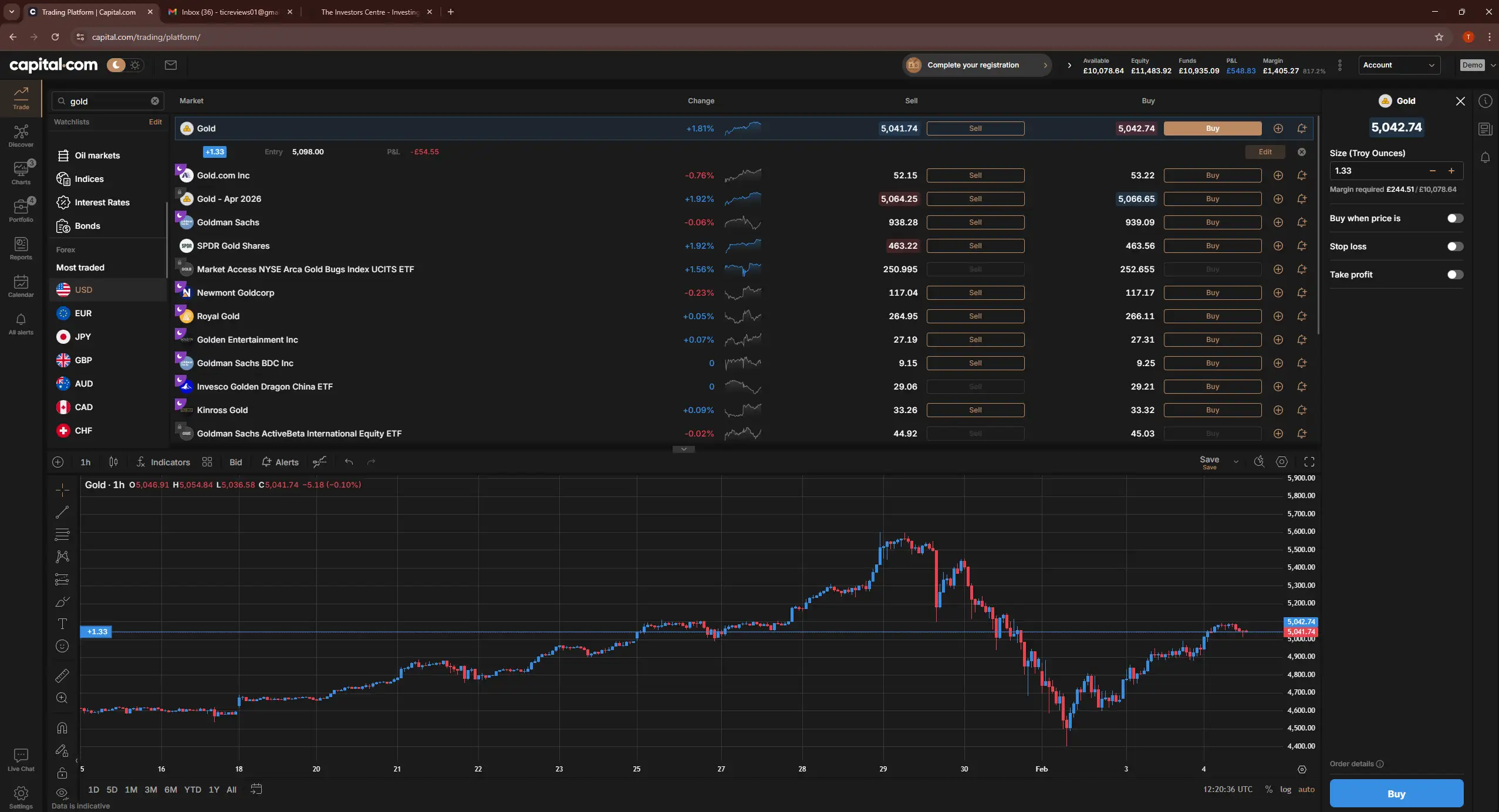
Both products charge you to hold positions overnight, because you're using leverage and the broker is effectively lending you capital. The calculation differs slightly between brokers, but the principle is consistent: it's based on the full notional value of your position, not your margin deposit.
On a £10,000 FTSE 100 position held for 30 days at a benchmark rate of roughly 4.5% (SONIA) plus a 2.5% broker markup:
Daily financing ≈ £10,000 × 7% / 365 = roughly £1.92 per night. Over 30 days, that's about £57.53. This is broadly similar for both products — the difference between brokers matters more than the difference between spread bets and CFDs here.
Where it gets interesting is on share CFDs with a separate commission: you're paying the overnight charge plus the entry/exit commission, which can make CFDs more expensive for short holding periods on individual stocks.
If you're a day trader who closes every position before the market shuts, overnight financing is irrelevant. If you swing trade over weeks, it's a cost you can't ignore on either product. Our reviews of platforms built for day traders flag which brokers charge the least for overnight holds.
When Should You Choose Spread Betting?
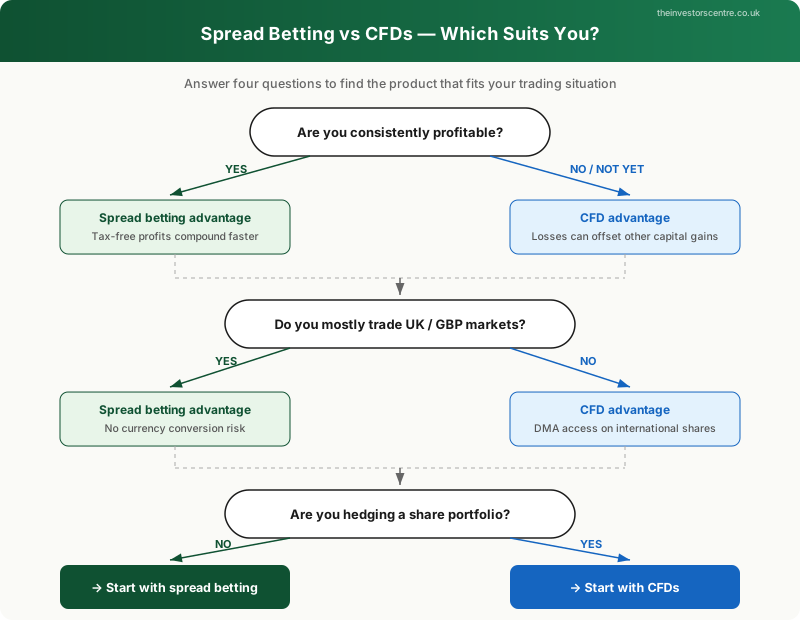
Spread betting is the better product if you're consistently profitable. Full stop. Keeping 100% of your gains versus handing 18-24% to HMRC is an enormous compounding advantage over time. A profitable trader making £15,000 a year on spread bets keeps all of it. The same trader on CFDs keeps roughly £12,120 after CGT at the higher rate.
It also wins on simplicity. No currency conversion on international markets. No separate commission lines. No CGT reporting on your self-assessment — HMRC doesn't want to hear about your spread bets because they're classified as gambling, not investing. That saves you time every January and potentially an accountant's fee.
For short-term traders on UK markets — scalping the FTSE, day trading GBP pairs — spread betting is hard to beat. You're already in pounds, costs are transparent in the spread, and the tax treatment is unambiguous. If that sounds like your setup, our spread betting platform reviews compare the brokers worth considering.
When Do CFDs Make More Sense?
CFDs pull ahead in three situations most comparison pages ignore.
First, if you're learning. Your first year of active trading will almost certainly produce net losses. That isn't pessimism — it's what the FCA's disclosure data shows across every major broker. If you trade CFDs during that period and you have taxable capital gains elsewhere, those losses work for you at tax time. Spread betting losses are just... losses.
Second, if you trade US or European stocks. A CFD on Tesla gives you direct dollar exposure, and many brokers offer Direct Market Access (DMA) on share CFDs, meaning your order goes straight to the exchange's order book. Spread betting on Tesla routes through the broker's own pricing. For liquid markets it's fine, but DMA gives you tighter pricing and better fills on larger orders. If you're building positions in individual overseas equities, CFDs and a broker offering DMA — like those in our CFD broker reviews — are worth the commission.
Third, hedging. If you hold a portfolio of UK shares in a general investment account and want to protect against a market downturn, selling index CFDs is the standard approach. The CFD losses offset gains on the shares you sell — the tax treatment aligns neatly. Hedging with spread bets works mechanically, but the losses aren't tax-deductible, so you're paying for insurance you can't claim on.
Is One Product Riskier Than the Other?
No. The risk is identical. Don't let the tax discussion distract you from the first-order problem: not blowing up your account.
Spread bets and CFDs carry exactly the same leverage, the same margin requirements, and the same capacity to wipe out your deposit in a single session. The FCA's leverage caps apply equally to both: 30:1 on major forex pairs, 20:1 on indices, 5:1 on individual shares. If you're trading the FTSE at £10 per point with a 5% margin requirement, a 200-point drop costs you £2,000 on either product. The tax wrapper doesn't change the size of the hole in your account.
Margin calls work the same way too. If your equity drops below the maintenance margin, the broker will start closing positions — it doesn't matter whether those positions are spread bets or CFDs. I've been margin-called twice in my career. Both times on spread bets. The experience is identical, and equally unpleasant.
Negative balance protection is mandatory for UK retail accounts on both products, so you can't owe the broker more than your deposit. That's an FCA requirement under PS19/18, not a broker feature — if a provider advertises it like a selling point, they're claiming credit for a legal obligation.
If you're new to leveraged trading and want to test how both products feel before committing real capital, every major UK broker offers risk-free simulations. Our guide to demo accounts worth using covers which ones most accurately reflect live conditions.
The practical takeaway: pick the product that fits your situation using the framework above. Then spend 95% of your energy on risk management, position sizing, and reading the market. The tax treatment of your winning trades is a luxury problem. Getting to the point where you have winning trades is the actual challenge, and our trading guides are built around exactly that.
FAQs
References
- HMRC Capital Gains Manual CG56100: Spread Betting — Confirms no chargeable gains or allowable losses arise from spread betting. Updated July 2025.
- HMRC Business Income Manual BIM22017: Gambling — Clarifies that systematic spread betting does not automatically constitute a trade.
- GOV.UK: Capital Gains Tax Rates and Allowances — Confirms the £3,000 annual exempt amount for 2025/26 and CGT rates of 18% (basic) / 24% (higher).
- FCA PS19/18: Restricting contract for difference products — Full text of the FCA's permanent leverage caps, 50% margin close-out rule, and negative balance protection requirements.
- Bank of England: SONIA Benchmark — The benchmark rate used to calculate overnight financing charges on leveraged positions.