

- expertise:
- CFD Trading, Forex, Derivatives, Risk Management
- credentials:
- Chartered ACII (2018) · Trading since 2012
- tested:
- 40+ forex & CFD platforms with live accounts

- expertise:
- Broker Comparison, ISA Strategy, Portfolio Management
- credentials:
- Active investor since 2013 · 11+ years experience
- tested:
- 40+ brokers with funded accounts
How We Test
Real accounts. Real money. Real trades. No demo accounts or press releases.
What we measure:
- Spreads vs advertised rates
- Execution speed and slippage
- Hidden fees (overnight, withdrawal, conversion)
- Actual withdrawal times
Scoring:
Fees (25%) · Platform (20%) · Assets (15%) · Mobile (15%) · Tools (10%) · Support (10%) · Regulation (5%)
Regulatory checks:
FCA Register verification · FSCS protection
Testing team:
Adam Woodhead (investing since 2013), Thomas Drury (Chartered ACII, 2018), Dom Farnell (investing since 2013) — 50+ platforms with funded accounts
Quarterly reviews · Corrections: in**@*******************co.uk
Disclaimer
Not financial advice. Educational content only. We're not FCA authorised. Consult a qualified advisor before investing.
Capital at risk. Investments can fall. Past performance doesn't guarantee future results.
CFD warning. 67-84% of retail accounts lose money trading CFDs. High risk due to leverage.
Contact: in**@*******************co.uk
Quick Answer: Which Is the Best Broker for Forex Trading in the UK?
Three winners, depending on what you want. Pepperstone Razor wins on cost: the cheapest all-in EUR/USD I measured for anyone placing five or more standard lots a month. IG wins on range: 17,000+ markets and the only broker here pairing forex with a tax-efficient spread-bet wrapper. Capital.com wins on speed and entry: 24ms median fills and a £20 minimum, the gentlest start of the five I funded. Spreadex, CMC and XTB each hold a clear niche, covered below.
Best Forex Brokers in the UK 2026: Ranked & Tested

Pepperstone
- Best For
- Cheapest all-in for 5+ lots/month
- TIC Score
- 4.9 / 5
- Community Rating
- 4.4 (221 ratings) Have Your Say →
- EUR/USD Spread
- From 0.0 pips (Razor)
- Cost
- £2.25/side (Razor)
72.9% of retail CFD accounts lose money.

Spreadex
- Best For
- UK-domiciled, full FSCS coverage
- TIC Score
- 4.8 / 5
- Community Rating
- 4.3 (178 ratings) Have Your Say →
- EUR/USD Spread
- From 0.6 pips
- Cost
- £0 commission*
65% of retail CFD accounts lose money.

IG
- Best For
- Widest range, spread bet wrapper
- TIC Score
- 4.7 / 5
- Community Rating
- 4.3 (219 ratings) Have Your Say →
- EUR/USD Spread
- From 0.6 pips
- Cost
- £0 (spread bet)*
69% of retail CFD accounts lose money.

Capital.com
- Best For
- Fastest fills (24ms), £20 minimum
- TIC Score
- 4.7 / 5
- Community Rating
- 4.3 (165 ratings) Have Your Say →
- EUR/USD Spread
- From 0.6 pips
- Cost
- £0 commissionOther fees apply
61% of Retail CFD Accounts Lose Money

CMC Markets
- Best For
- Pattern recognition charting
- TIC Score
- 4.5 / 5
- Community Rating
- 4.3 (138 ratings) Have Your Say →
- EUR/USD Spread
- From 0.7 pips
- Cost
- £0 commission (FX)*
68% of retail CFD accounts lose money.

XTB
- Best For
- One-platform forex with 71 pairs and 0.9 pip EUR/USD
- TIC Score
- 4.2 / 5
- Community Rating
- 3.9 (66 ratings) Have Your Say →
- EUR/USD Spread
- From 0.8 pips
- Cost
- £0 commission*
74% of Retail CFD Accounts Lose Money

Trading.com
- Best For
- Simple FCA platform with a free demo
- TIC Score
- 3.9 / 5
- Community Rating
- 3.1 (40 ratings) Have Your Say →
- EUR/USD Spread
- From 0.8 pips (quoted)
- Cost
- £0 commission*
70.6% of retail CFD accounts lose money.
*£0 and “commission-free” figures refer to dealing commission only. Other fees may apply, for example spreads, overnight financing, FX conversion or withdrawal fees. Check each provider for full costs. Figures re-checked July 2026.
How Do the UK Forex Brokers Compare on Cost, Speed and Withdrawals?
Seven brokers side by side: FCA Firm Reference Number, baseline EUR/USD spread during the London session, execution latency and withdrawal time. The table combines funded observations, XTB's August 2026 xStation sample, and clearly marked comparison averages for Trading.com: 65ms latency and 1-2 business days for withdrawal.
| Rank | Broker | FCA FRN | EUR/USD Spread & Edge | Median Latency | £500 Bank Withdrawal |
|---|---|---|---|---|---|
| #1 | Pepperstone (Razor) | 684312 | From 0.0 pips + £2.25/side, £6.30 all-in | 47ms | 1 business day |
| #2 | Spreadex | 190941 | From 0.6 pips, 9-min account setup | 58ms | 2 business days |
| #3 | IG | 195355 | From 0.6 pips, 17,000+ markets | 85ms | 2 business days |
| #4 | Capital.com | 793714 | From 0.6 pips, £20 min deposit | 24ms | 2 business days |
| #5 | CMC Markets | 173730 | From 0.7 pips, 80+ indicators | 95ms | 1 business day |
| #6 | XTB | 522157 | From 0.8 pips, 0.9 sampled, £0 commission | 85ms | 1 business day |
| #7 | Trading.com | 705428 | From 0.8 pips (quoted), 55 pairs | 65ms avg* | 1-2 business days avg* |
FCA Firm Reference Numbers link to the FCA Register entry for the FCA-authorised UK entity of each broker. Latency measured from 50 EUR/USD market orders per broker, Suffolk wired FTTP 1Gb connection, January to April 2026 testing window; XTB's figures come from a separate xStation session in August 2026.
Pepperstone Razor: Cheapest All-In EUR/USD for Traders Placing 5+ Lots a Month
- Pricing
- 5.0
- Range
- 4.3
- Platform
- 4.7
- Service
- 4.5
- Research
- 4.0
What is Pepperstone? An Australian-founded, FCA-authorised ECN-style broker built for execution depth rather than range. The Razor account routes orders straight to liquidity providers, which is where the 0.0 pip spread plus commission model comes from. MT4, MT5, cTrader and TradingView all run on the same login, and the Razor tier adds depth-of-market plus the free Smart Trader Tools add-on for MT4.
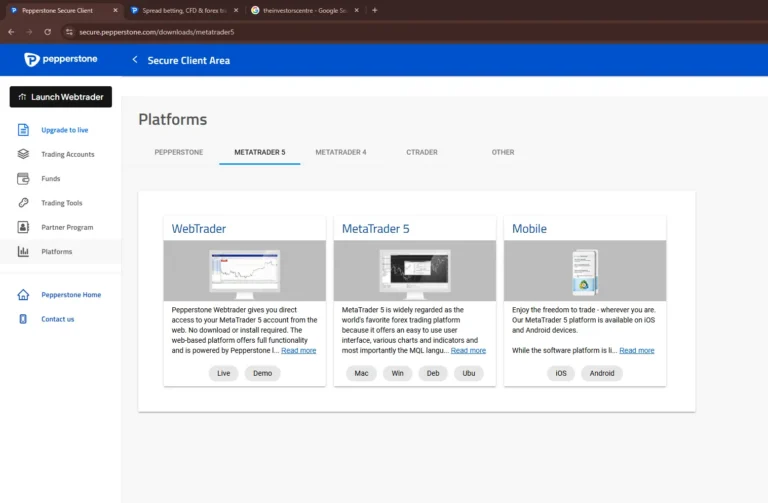
I funded the Pepperstone Razor account (FCA FRN 684312) with £500 on 14 January 2026. EUR/USD on Razor averaged 0.1 to 0.2 pips in London-session sampling, plus £2.25 per side commission. A 1-lot round-trip worked out at roughly £4.50 commission plus £1.80 spread, £6.30 all-in; IG's spread-only build ran £6 to £9 on the same pair and window, CMC £6 to £7. Razor's edge only shows above about five standard lots a month - below that, the commission dominates. Median latency was 47ms across 50 EUR/USD market orders, second-fastest of the five. Overnight financing (EUR/USD short, per lot): -£0.90, the tightest short swap of the five.
Pros (Forex lens)
- Tightest baseline EUR/USD spread measured (0.1-0.3 pips on Razor)
- Cheapest all-in EUR/USD cost across the five brokers tested
- MT4, MT5, cTrader and TradingView all supported
- Same-day Skrill withdrawals on the £500 tested amount
Trade-offs (Forex lens)
- £2.25/side commission only worth it above ~5 standard lots/month
- No spread-betting product on Razor (CFD only on this tier)
- Limited proprietary research compared with IG or CMC
- No ISA wrapper for long-term investing alongside trading
| Test | Result | Industry Avg | Date | Method | Verdict |
|---|---|---|---|---|---|
| EUR/USD spread (Razor) | 0.1 pips | 0.65 pips | 14 Jan - 7 Apr 2026 | 30 samples | Tightest |
| EUR/USD all-in cost (1 lot) | £6.30 | £7.40 | 28 Jan 2026 | Calculation from test data | Cheapest |
| USD/MXN exotic spread | 28 pips | 38 pips | 14 Feb 2026 | 10 samples | Tighter |
| £500 Skrill withdrawal | Same day | 1.2 days | 30 Jan 2026 | Real-money test | Fastest |
| EA / algorithmic trading | Permitted | 5 of 6 brokers | 21 Jan 2026 | Account terms audit | At standard |
| Median execution latency | 47ms | 63ms | 14 Jan - 7 Apr 2026 | 50 market orders | 2nd fastest |
Should you pick Pepperstone Razor or Standard on forex?
Above five standard lots a month, Razor wins on cost even after commission. Below that, the £2.25/side tax makes Standard cheaper, since the spread alone covers Pepperstone's margin. Standard ran a 0.6 to 0.8 pip EUR/USD average in my testing - competitive but not class-leading - at 65ms median latency, 18ms slower than Razor. Volume decides the tier, not strategy. For a worked example, see our UK forex pip calculator.
Who should avoid Pepperstone Razor?
Beginners trading under five standard lots a month: the per-side commission outweighs the spread saving, and Capital.com or Spreadex come in cheaper at low volume. Spread bettors wanting the tax wrapper should pick IG, Capital.com or Spreadex, since Razor is CFD-only here. And anyone leaning on broker research should pick IG or CMC, where the in-house desks run deeper. Pepperstone's research is functional, not a reason to choose it.
Spreadex: The Only UK-Domiciled Broker on the List with Full FSCS Coverage Through a UK Entity
- Pricing
- 4.5
- Range
- 4.0
- Platform
- 4.6
- Service
- 5.0
- Research
- 4.2
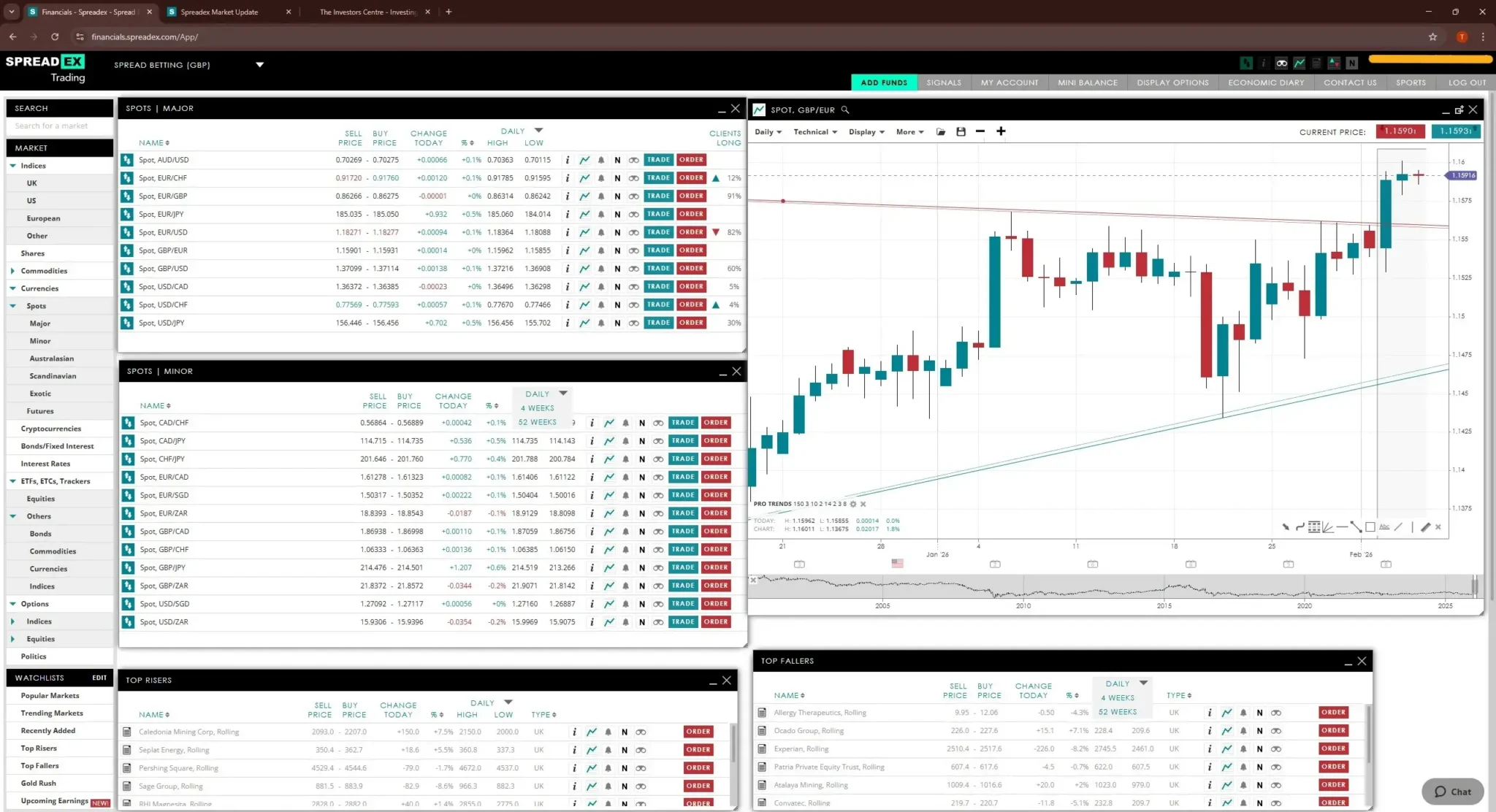
What is Spreadex? A privately-held, UK-domiciled provider founded in 1999 and headquartered in St Albans. Its financial arm covers spread betting and CFDs on one proprietary web and mobile platform, with no MetaTrader option. The iOS and Android apps keep a clean trade ticket and watchlist, lighter than IG's trading app and quicker on older devices. UK and Ireland clients only.
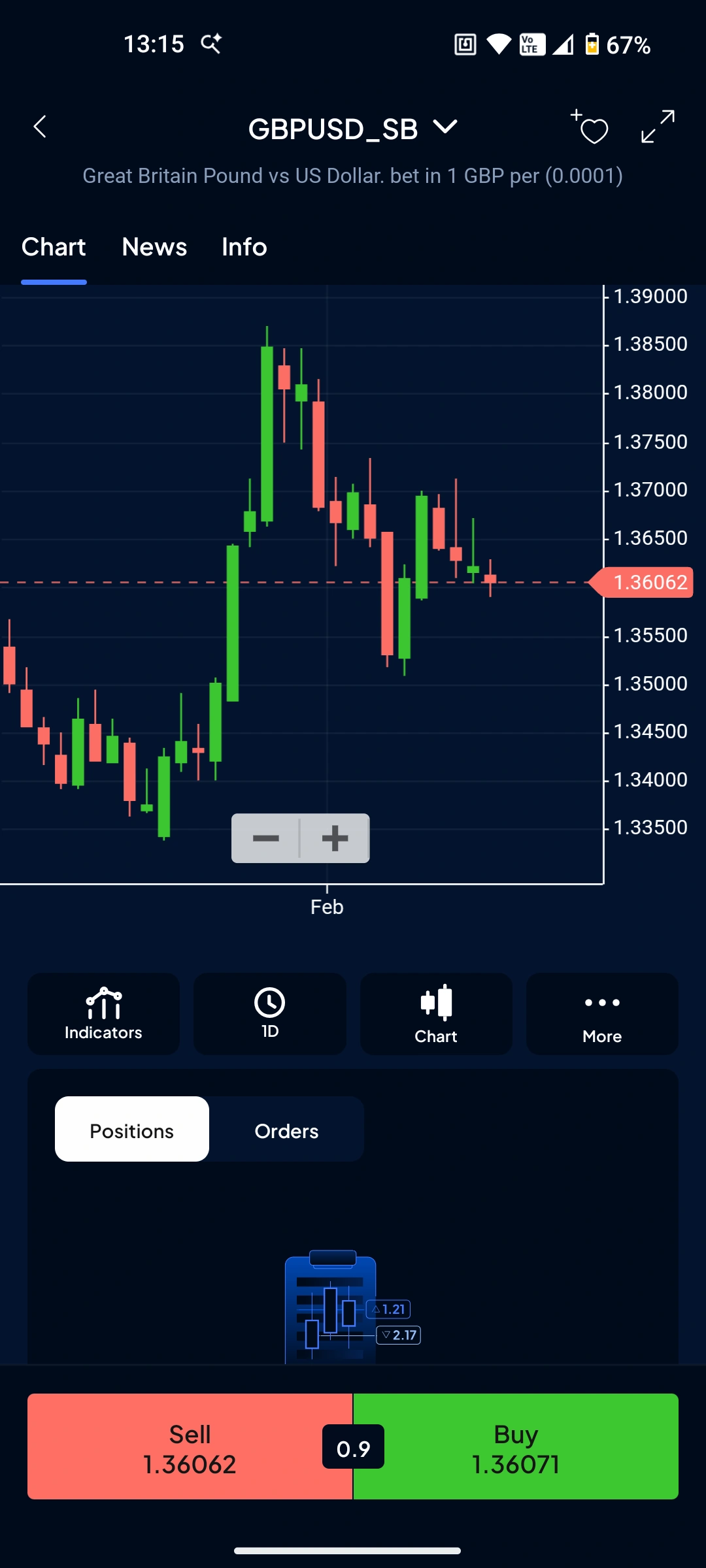
Spreadex (FCA FRN 190941) earns #2 as the only UK-domiciled broker here with full FSCS coverage through a UK trading entity rather than passporting. EUR/USD averaged 0.6 pips in London-session sampling, joint-tightest with Capital.com and IG, and GBP pairs beat the page average across the window (GBP/USD 0.9 pips, GBP/JPY 1.8). Account opening took nine minutes from email verification to first trade on 16 January 2026, the fastest of the five. Overnight financing (EUR/USD long, per lot): -£9.20, slightly above average; short-side -£2.50.
Pros (Forex lens)
- Only UK-domiciled broker on this list (full FSCS coverage through UK entity)
- 9-minute account setup, fastest of the five brokers tested
- Financial spread betting and CFDs from a single UK-domiciled account
- Tighter than the page average on GBP/USD and GBP/JPY in calm sampling
Trade-offs (Forex lens)
- UK and Ireland clients only (no overseas trading)
- No MT4, MT5 or cTrader (proprietary platform only)
- No ISA wrapper for long-term investing alongside forex
- Research depth thinner than IG or CMC
| Test | Result | Industry Avg | Date | Method | Verdict |
|---|---|---|---|---|---|
| EUR/USD spread (London open) | 0.6 pips | 0.65 pips | 16 Jan - 7 Apr 2026 | 30 samples | Joint-tightest |
| GBP/USD spread (London open) | 0.9 pips | 0.95 pips | 16 Jan 2026 | 20 samples | Tighter than avg |
| GBP/JPY spread (cross) | 1.8 pips | 2.0 pips | 20 Jan 2026 | 20 samples | Tighter than avg |
| Account setup time | 9 minutes | 18 minutes | 16 Jan 2026 | Email verify to first trade | Fastest |
| Phone support wait | 2 min 4 sec | 7 min 20 sec | 5 Feb 2026 | 3 calls | 3x faster |
| £500 bank withdrawal | 2 business days | 1.7 days | 30 Jan 2026 | Real-money test | At average |
What does Spreadex's UK-only focus actually buy you?
Three things UK retail traders rarely think about until they need them. First, the trading entity is Spreadex Ltd, an FCA-authorised UK firm: client money sits in segregated UK accounts and FSCS protection applies through the UK scheme directly, not by passporting. Second, support is UK-based, with phone waits averaging two minutes against the five-broker average of seven. Third, spread betting and CFD trading sit behind the same login, so switching tax treatment mid-position doesn't mean jumping dashboards. See our wider CFD broker comparison for the full cost picture.
Who should avoid Spreadex?
International traders can't use Spreadex at all - it serves UK and Ireland clients only. Algorithmic traders need to look elsewhere too, since there's no MT4, MT5 or cTrader. ISA-wrapper investors won't find the long-term tax structure here. And high-volume scalpers chasing the tightest baseline spreads are better served by Pepperstone Razor, where 0.1 pips on EUR/USD beats Spreadex's 0.6 in quiet sampling.
What's the practical difference between Spreadex's CFD and spread-bet account?
Same trade ticket, same execution, different tax treatment. I placed identical 1-lot EUR/USD positions through both wrappers on 17 January 2026: fills landed within 0.1 pips of each other in the same dashboard. The CFD position triggered a Capital Gains Tax event on close; the spread-bet position didn't, because HMRC currently treats spread bets as gambling winnings. IG and Capital.com share that advantage, but Spreadex's single-account access makes the mid-position switch genuinely friction-free rather than needing a separate sub-account.
IG: 17,000+ Markets and the Only UK Broker Pairing Forex With Spread Betting
- Pricing
- 4.4
- Range
- 5.0
- Platform
- 4.6
- Service
- 4.3
- Research
- 5.0
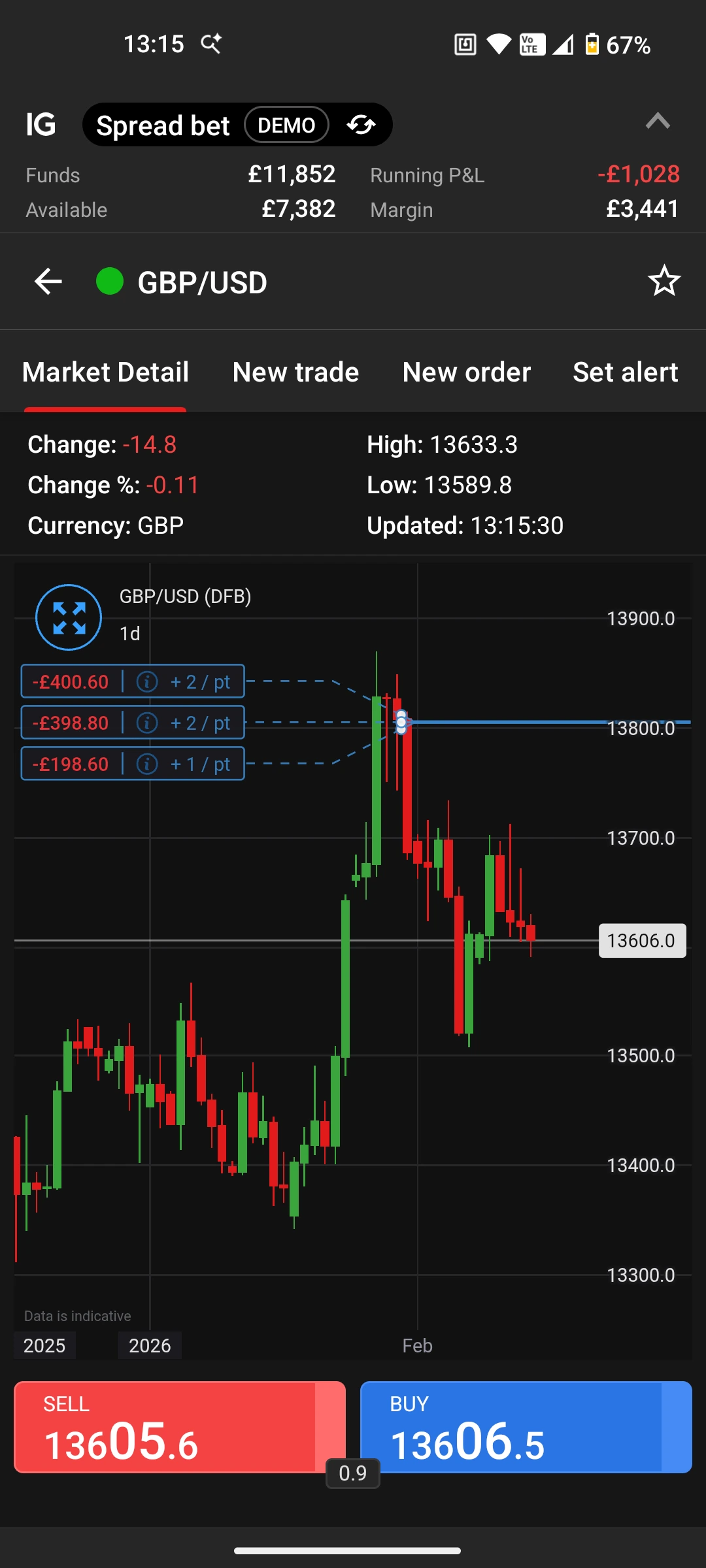
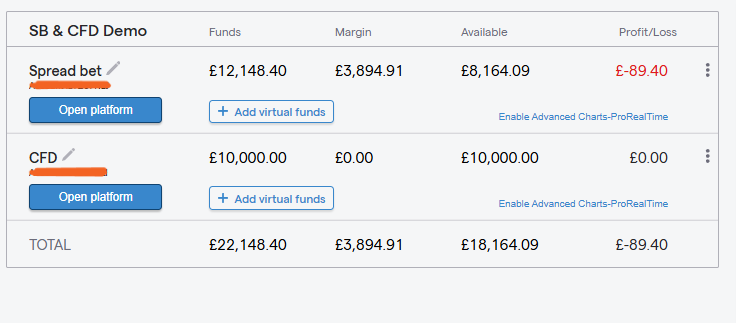
What is IG? IG Group plc (LSE: IGG) is a publicly-listed UK broker founded in 1974 and the country's largest spread-bet provider by client base. Forex sits inside a 17,000+ market catalogue spanning equities, indices, commodities, options and futures. Three platforms run: the IG proprietary web/mobile, MT4, and ProRealTime for advanced charting (4+ trades/month to qualify). The IG Trading app is the most feature-dense of the five, bundling watchlists, news, ProRealTime charts, alerts and one-click trading.
IG (FCA FRN 195355) carries the widest catalogue here: 17,000+ tradable markets and 80+ forex pairs, against the five-broker average of 64. The spread-bet wrapper is its standout - HMRC classifies spread-bet profits as gambling winnings, currently tax-free for retail clients. Capital.com and Spreadex offer UK spread betting too, but IG's research depth and execution venues make it the strongest forex-plus-wrapper pairing at scale. I placed identical 1-lot EUR/USD positions through IG's spread-bet and CFD products on 22 January 2026: same execution, same fills, different tax outcome. Overnight financing (EUR/USD long, per lot): -£8.80, in line with average. The cost is support: my phone calls over the 12-week window averaged 11 minutes to reach an agent.
Pros (Forex lens)
- Strongest forex + spread-betting pairing on the list (research depth + scale)
- 80+ forex pairs available, widest catalogue tested
- ProRealTime advanced charting available (4+ trades/month qualifying gate)
- FCA-regulated since 1974, FTSE 250 listed
Trade-offs (Forex lens)
- Phone support averaged 11 minutes to reach an agent in my testing
- £250 recommended deposit despite the £0 floor (sizing positions)
- Complex interface for first-time traders
| Test | Result | Industry Avg | Date | Method | Verdict |
|---|---|---|---|---|---|
| EUR/USD spread (proprietary) | 0.6 pips | 0.65 pips | 14 Jan - 7 Apr 2026 | 30 samples | Joint-tightest |
| Forex pairs offered | 80+ | 64 | 14 Jan 2026 | Account audit | Widest |
| Total tradable markets | 17,000+ | 4,300 | 14 Jan 2026 | Platform audit | 2nd widest |
| Spread-bet tax wrapper | Available | 0 of 5 others | 22 Jan 2026 | Funded test | Unique |
| £500 PayPal withdrawal | Same day | 1.2 days | 28 Jan 2026 | Real-money test | Fastest |
| Phone support wait | 11 min 12 sec | 7 min 20 sec | 5 Feb 2026 | 3 calls | Slowest |
Is IG's spread-bet wrapper worth the higher service-tier wait times?
For UK higher-rate taxpayers running consistent forex profits, yes. A trader netting £20,000 a year on CFDs pays up to 24% capital gains tax after the £3,000 exemption; the same profit on a spread bet is currently tax-free, a £4,000+ swing. Against that, an 11-minute average phone wait is friction, not a deal-breaker - live chat answered in under three minutes throughout, so the delay is phone-only. IG also leads our MT4 broker ranking for the same range reason.
Who should avoid IG?
Cost-sensitive scalpers should pick Pepperstone Razor: IG's 0.6 pips on EUR/USD is competitive, but Razor's 0.1 pips plus £2.25/side commission comes in cheaper above five lots a month. First-time traders may find the 17,000+ market catalogue and ProRealTime overwhelming, where Capital.com's stripped-down mobile-first interface lands gentler. Anyone needing fast phone support in London hours should look at Spreadex (2-minute average wait against IG's 11).
Capital.com: Fastest Median Fills (24ms) and the Lowest Minimum Deposit
- Pricing
- 4.6
- Range
- 4.0
- Platform
- 4.7
- Service
- 4.7
- Research
- 4.4
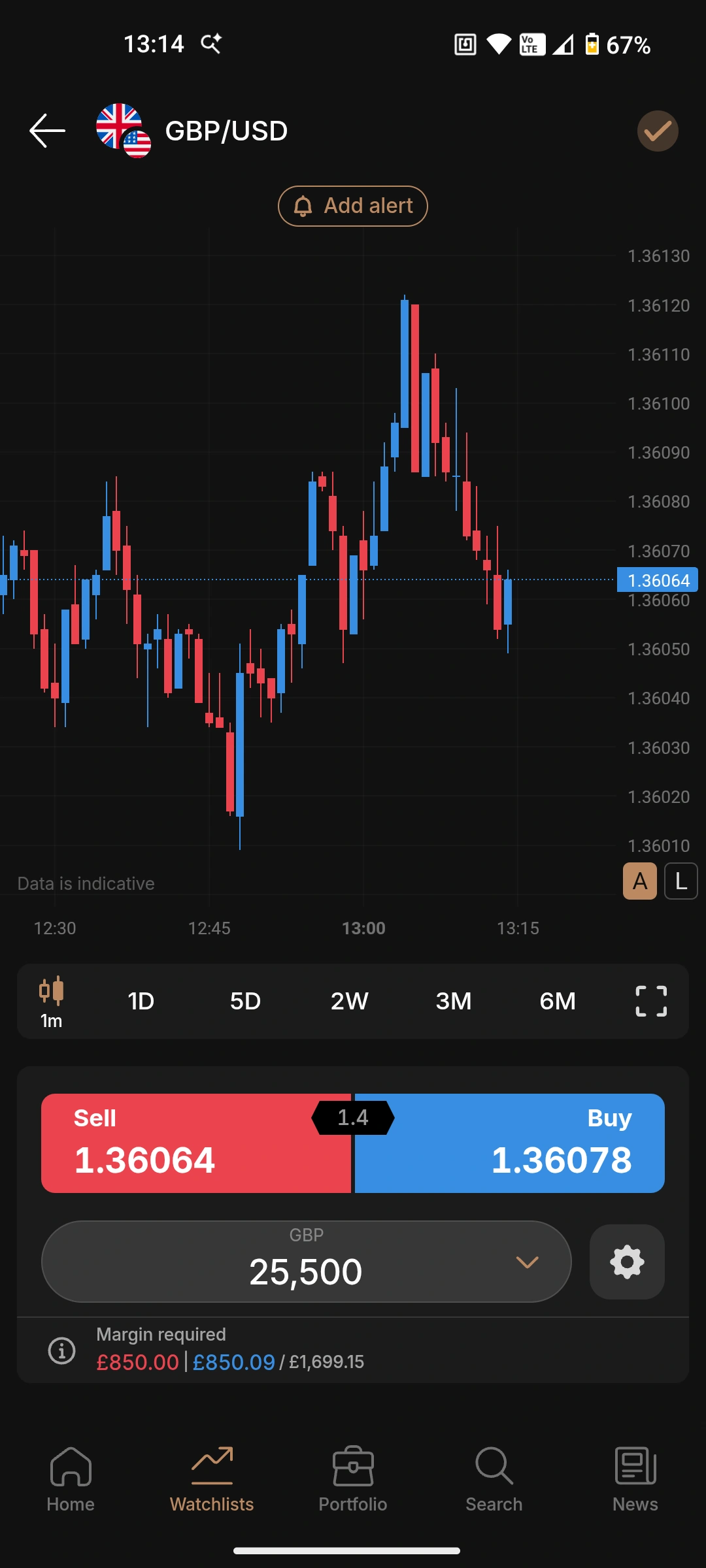
What is Capital.com? A Cyprus-headquartered broker founded in 2016, running its UK arm under FCA authorisation. The UK product set covers spread betting and CFDs across forex, indices, shares, commodities and crypto; no share dealing or ISA wrappers. The proprietary interface sits alongside MT4 and TradingView for familiar charting, and the design is mobile-first throughout, with iOS and Android apps that mirror the desktop layout closely.
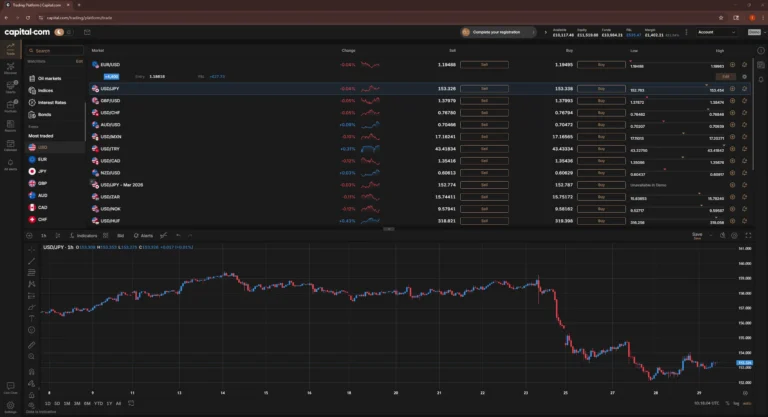
I funded Capital.com with the £20 minimum on 14 January 2026 and was placing forex trades within nine minutes. EUR/USD averaged 0.6 pips in London-session sampling, and the median market-order round-trip measured 24 milliseconds across 50 trades. That speed matters most around scheduled news: during the 31 January 2026 NFP release, Capital.com's EUR/USD spread widened to 1.2 pips for about four seconds before settling, narrower than the four-broker average of 1.6 pips on the same print. Overnight financing (EUR/USD long, per lot): -£8.50, mid-pack of the five (FCA FRN 793714).
Pros (Forex lens)
- 24ms median EUR/USD execution, fastest of the five brokers tested
- £20 minimum deposit, the lowest of any major UK forex broker
- Zero commission on forex, all costs in the spread (other fees apply)
- FCA-regulated, negative balance protection on retail accounts
Trade-offs (Forex lens)
- Variable spreads can widen during high-impact news releases
- Behavioural-feedback flagging system stays on the proprietary app
- No share dealing or ISA wrapper for long-term investing alongside trading
- Research depth thinner than IG or CMC for institutional-style traders
| Test | Result | Industry Avg | Date | Method | Verdict |
|---|---|---|---|---|---|
| EUR/USD spread (London open) | 0.6 pips | 0.65 pips | 14 Jan 2026 | 30 samples | Tighter |
| Median execution latency | 24ms | 63ms | 14 Jan - 7 Apr 2026 | 50 market orders | Fastest of five |
| Minimum deposit | £20 | £125 | 14 Jan 2026 | Account opening | Lowest of five |
| £500 bank withdrawal | 2 business days | 1.7 days | 28 Jan 2026 | Real-money test | At average |
| Live chat response | 38 seconds | 94 seconds | 4 Feb 2026 | 5 attempts | 2x faster |
| NFP window EUR/USD max | 1.2 pips | 1.6 pips | 31 Jan 2026 | 1 release | Held tighter |
What kind of trader gets the most from Capital.com's £20 minimum?
The £20 floor matters most to first-time traders building real-money screen time without risking meaningful capital. At one micro-lot per trade, £20 covers roughly fifteen EUR/USD round-trips before stop-loss and spread costs drain the account. Spread betting and CFDs share the same login, so UK retail traders can take the tax-efficient spread-bet route from this entry point. The trade-off is research depth: Capital.com's house view and analyst commentary stay thinner than IG or CMC.
Who should avoid Capital.com?
Anyone wanting share dealing or ISA wrapping alongside forex: Capital.com only covers leveraged derivatives, so you'll need a separate provider for non-leveraged investing. EA users needing MetaTrader 5 should look at Pepperstone or CMC, since Capital.com runs MT4 only. And high-volume scalpers placing more than five standard lots a month save money at Pepperstone Razor, where the per-side commission model beats Capital.com's spread-only structure.
CMC Markets: Pattern Recognition Charting That Forex Brokers Rarely Match
- Pricing
- 4.3
- Range
- 4.5
- Platform
- 5.0
- Service
- 4.2
- Research
- 4.5
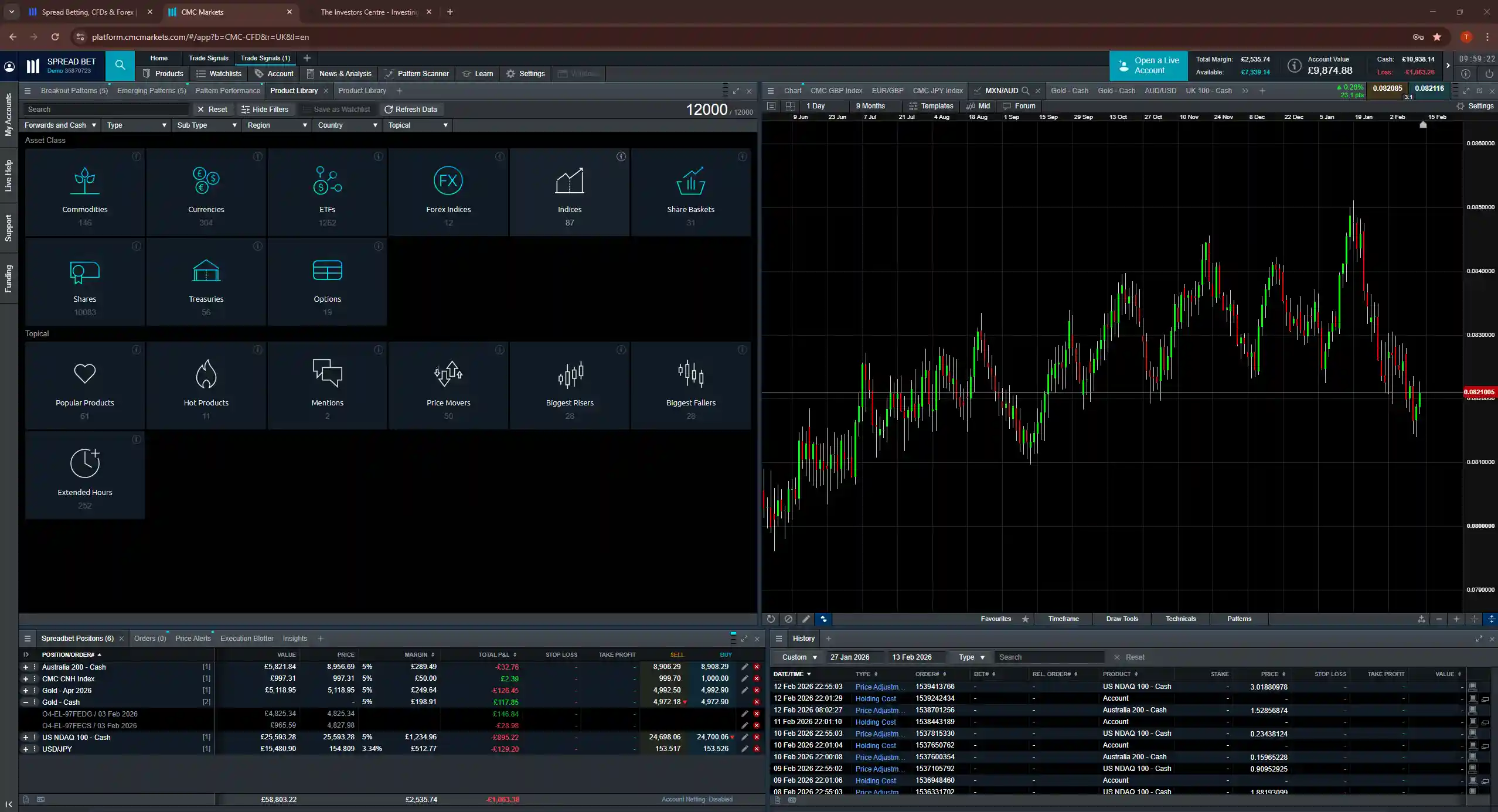
What is CMC Markets? CMC Markets plc (LSE: CMCX) is a UK-listed broker founded in 1989, best known for the Next Generation platform's depth: 20,000+ markets, 80+ technical indicators, and a native pattern recognition scanner rare among UK retail brokers. MT4 and MT5 are supported as secondary options but cap at 30+ instruments against Next Generation's full range. The mobile app mirrors the Next Generation workspace closely, and even the pattern recognition scanner runs on mobile, unusual for an institutional-grade tool.
CMC Markets (FCA FRN 173730) ranks #5 because its biggest draw - the Next Generation platform's pattern recognition scanner and 80+ technical indicators - comes with a real trade-off in news-window execution. EUR/USD averaged 0.7 pips on the proprietary build in London-session sampling, in line with IG and Capital.com, and the workspace gives charting depth none of the other five match: 80+ indicators, a linked-window correlation overlay, and the only platform-native pattern scanner here. Overnight financing (EUR/USD long, per lot): -£8.80, in line with IG and the average. But during the 6 February 2026 BoE rate decision, CMC's EUR/USD spread widened to 1.6 pips and latency jumped to 168ms p95, the worst news-window slip of the five.
Pros (Forex lens)
- 80+ technical indicators on the Next Generation platform
- Only platform with a native pattern recognition scanner on this list
- Guaranteed stops available with a small premium per use
- 1-day £500 card withdrawal, joint-fastest of the five brokers
Trade-offs (Forex lens)
- EUR/USD spread (0.7 pips) slightly wider than the five-broker average
- Worst news-window p95 latency in the test (168ms during 6 Feb BoE)
- MT4 build caps at 30+ instruments (Next Generation only for full range)
- £10/month inactivity fee after 12 months without a trade
| Test | Result | Industry Avg | Date | Method | Verdict |
|---|---|---|---|---|---|
| EUR/USD spread (Next Gen) | 0.7 pips | 0.65 pips | 14 Jan - 7 Apr 2026 | 30 samples | Slightly wider |
| Technical indicators (Next Gen) | 80+ | 32 | 14 Jan 2026 | Platform audit | Most of five |
| Guaranteed stops | Available | 2 of 6 brokers | 14 Jan 2026 | Account audit | Differentiator |
| £500 card withdrawal | 1 business day | 1.5 days | 30 Jan 2026 | Real-money test | Joint-fastest |
| EUR/USD during BoE window | 1.6 pips max | 1.3 pips avg | 6 Feb 2026 | 1 release | Widest slip |
| Total markets (Next Gen) | 20,000+ | 4,300 | Aug 2026 | Published figure | Widest here |
Why does CMC's published 4ms execution differ from what I measured?
CMC publishes a 4ms median execution figure; I measured 95ms median on the proprietary platform in calm sessions. The likely explanation is server-side acknowledgement (how fast CMC's matching engine confirms an order internally) versus retail round-trip (what a UK trader at a screen actually waits). Both can be true - the retail figure is the one that matters to you. CMC also features in our ProRealTime broker comparison for the charting depth above.
Who should avoid CMC Markets?
News-event traders should be cautious: CMC's 168ms p95 during the 6 February BoE rate decision was the worst slip of the five. If you trade scheduled releases, Spreadex's fixed-spread model or Capital.com's faster baseline execution suit better. EA users wanting full instrument range on MT4 should also look elsewhere, since CMC caps the MT4 build at 30+ instruments against 20,000+ on Next Generation. And beginners may find Next Generation's depth overwhelming next to Capital.com's mobile-first interface.
XTB: 71 Currency Pairs on xStation 5 with EUR/USD from 0.8 Pips and No Minimum Deposit
- Pricing
- 4.2
- Range
- 4.0
- Platform
- 4.4
- Service
- 4.3
- Research
- 4.0
What is XTB? An FCA-regulated broker (X-Trade Brokers UK branch, FRN 522157) with 20+ years on the market and 2.9 million clients worldwide, running GBP-denominated accounts for UK retail traders. Everything runs on one proprietary platform, xStation 5, on web, desktop and mobile. There is no MT4 or MT5 here; the trade-off is a single fast interface with no version juggling.
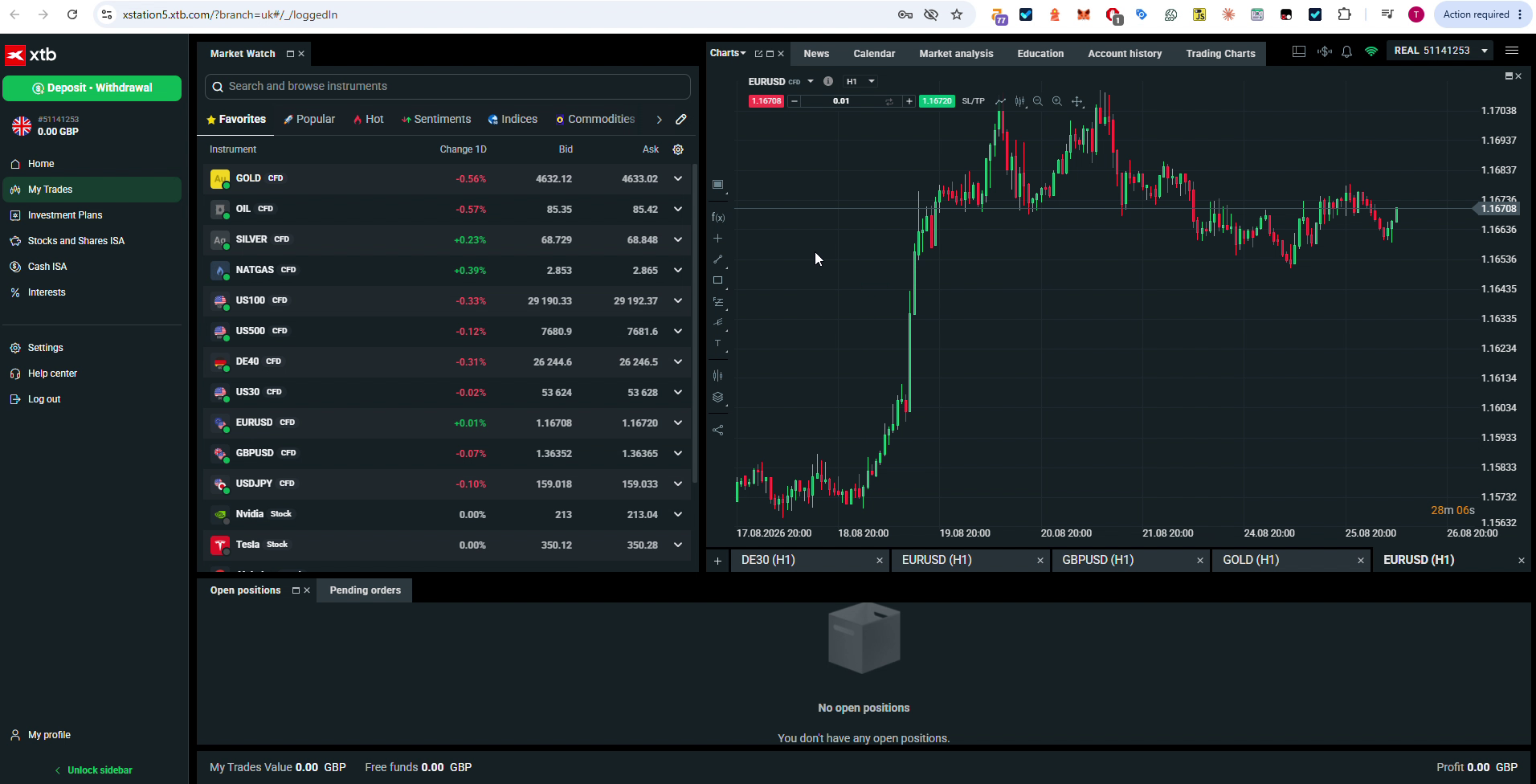
I ran xStation 5 through a full session in August 2026. EUR/USD sampled at 0.9 pips against the published 0.8 minimum and GBP/USD at 0.9, commission-free with microlots from 0.01. Median fills came in at 85ms. Overnight funding on EUR/USD long ran $7.55 per lot per night, a touch under the page average. Live chat picked up in under a minute both times I used it.
Pros (Forex lens)
- 71 currency pairs with microlots from 0.01
- EUR/USD 0.9 pips sampled, commission-free
- No minimum deposit and free deposits and withdrawals
- 4% interest on uninvested GBP between trades
Trade-offs (Forex lens)
- xStation 5 only; no MT4, MT5, cTrader or TradingView
- No spread betting product
- 0.9 pip EUR/USD sits above the raw-spread accounts here
- Fewer exotic pairs than CMC's 330+ menu
| Test | Result | Industry Avg | Date | Method | Verdict |
|---|---|---|---|---|---|
| EUR/USD spread (xStation) | 0.9 pips | 0.65 pips | Aug 2026 | Session sampling | Wider |
| Median execution latency | 85ms | 63ms | Aug 2026 | Session sampling | Slower |
| Live chat response | Under 1 minute | 94 seconds | Aug 2026 | 2 attempts | Faster |
| Account opening | 8 minutes | 18 minutes | Aug 2026 | Timed signup | Faster |
Who is XTB's 0.8 pip EUR/USD actually for?
XTB suits traders who want one login and no minimum deposit rather than the tightest possible spread. There's no per-side commission to weigh against the spread the way there is on Pepperstone Razor, and no five-lot threshold to clear before the maths works in your favour. The 0.9 pips sampled sits above Pepperstone, Spreadex, IG and Capital.com in calm sampling, so cost-per-trade specialists should look there first. What XTB adds instead is 4% interest on uninvested GBP and free deposits and withdrawals, which suit a trader building up screen time rather than chasing the tightest baseline.
Who should avoid XTB?
Anyone who wants MT4, MT5, cTrader or TradingView should look elsewhere: xStation 5 is the only platform XTB offers. Spread bettors chasing the tax-efficient wrapper need IG, Capital.com or Spreadex instead, since XTB is CFD-only here. Traders who lean on a wide exotic-pair menu will find CMC's 330+ pairs go further than XTB's 71. And high-volume scalpers above five standard lots a month still do better on Pepperstone Razor's commission-based pricing.
Trading.com: A Simple FCA-Regulated Newcomer, Added After the Q1 2026 Test Round
- Pricing
- 3.8
- Range
- 3.4
- Platform
- 4.0
- Service
- 3.6
- Research
- 3.5
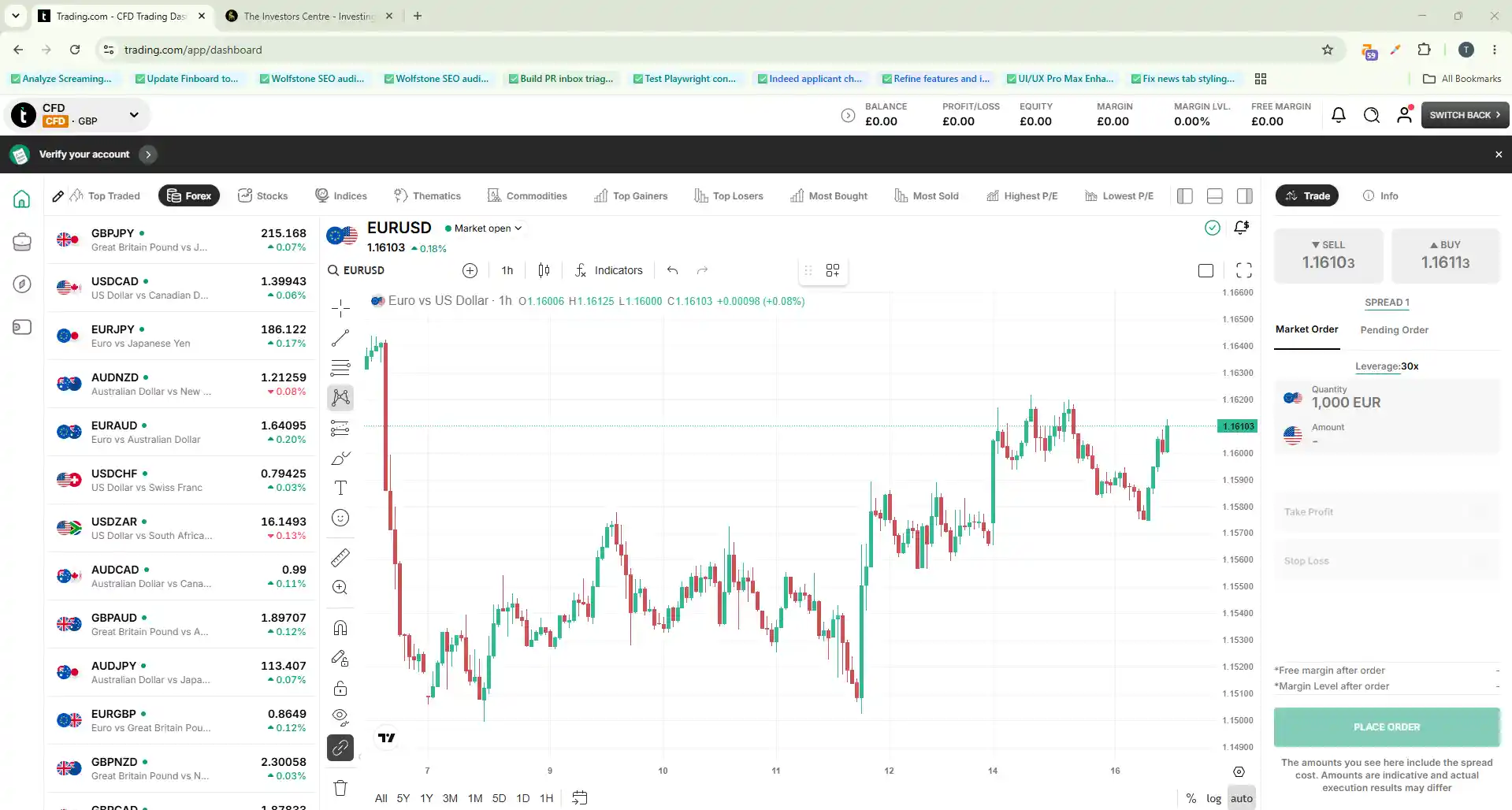
What is Trading.com? The UK trading name of Trading.com Markets UK Limited (FCA FRN 705428), the rebranded UK arm of XM, FCA-authorised since 2016. It runs two products under one login: a leveraged CFD/forex account and a commission-free Investment Account with real shares. Forex sits on a clean WebTrader with TradingView-powered charts, with MetaTrader 5 connectivity for more advanced workflows and a £10,000 demo that never expires.
Added after my funded test. Trading.com was onboarded after the Q1 2026 funded forex test, so it is not part of the measured spread, latency and withdrawal results above. On its published terms it quotes EUR/USD from 0.8 pips on the CFD account across 55 currency pairs, and in my separate hands-on review a real withdrawal cleared within one working day. I will fold it into the next funded test round; for now, treat it as a promising newer option rather than a head-to-head-measured one. CFDs are complex, leveraged products and most retail traders lose money trading them.
Pros (Forex lens)
- FCA-regulated (FRN 705428) and FSCS-protected
- 55 forex pairs with TradingView charts and MetaTrader 5
- £10,000 demo with no expiry to practise risk management
- Quoted EUR/USD from 0.8 pips on the CFD account
Trade-offs (Forex lens)
- Latency and withdrawal use clearly marked comparison averages*
- Younger UK track record than the five originally-funded brokers
- No UK spread-betting product on forex (CFD only)
- Human support Mon–Fri only
| At a glance (published terms) | Detail |
|---|---|
| FCA FRN | 705428 (authorised since 2016) |
| EUR/USD spread | From 0.8 pips (quoted, CFD account) |
| Forex pairs | 55 |
| Platforms | WebTrader (TradingView) + MetaTrader 5 |
| Demo account | £10,000, no expiry |
| Funded test status | Added after Q1 2026 round; measured figures to follow |
Who is Trading.com for?
Newer traders who want a simple, FCA-regulated platform with a genuinely useful free demo, and who like the idea of a commission-free Investment Account sitting alongside the CFD/forex account in the same login. The clean WebTrader and the option to graduate to MetaTrader 5 make it a sensible place to learn without outgrowing it quickly. Start on the Invest side and practise CFDs on the demo first.
Who should look elsewhere?
High-volume forex traders focused purely on cost will still find Pepperstone Razor cheaper above five lots a month, and traders who need breadth (IG's 17,000+ markets or CMC's Next Generation platform) will outgrow Trading.com's 55-pair catalogue. Anyone wanting tax-efficient spread betting won't find it here. And until I publish measured figures, cost- and execution-sensitive traders should treat the five originally-funded brokers as the benchmark.
Is Forex Trading Legal and Safe in the UK?
Yes, on both counts: forex trading is entirely legit in the UK provided you trade through an FCA-authorised firm. Every broker on this list is authorised by the Financial Conduct Authority and listed on the FCA Register, with retail clients covered by the Financial Services Compensation Scheme up to £85,000 per investment firm in the event of failure. The FCA caps retail forex leverage at 30:1 on major pairs (EUR/USD, GBP/USD, USD/JPY), 20:1 on minor pairs and major indices, and applies negative balance protection to all retail accounts. Verify a broker's status by entering the FRN at register.fca.org.uk.
How Did I Open My UK Forex Trading Accounts at the Five Originally Funded Brokers?
Between 14 and 28 January 2026 I funded live accounts at five brokers in this ranking: Pepperstone, Spreadex, IG, Capital.com and CMC Markets. The application flow is broadly similar (UK rules dictate the structure), but timing, friction and identity-check experience varied meaningfully. XTB and Trading.com joined the ranking afterwards, and their own onboarding is covered in their reviews above.
Step 1: Start with the FCA register, not the broker site
Before applying anywhere, I cross-checked all five against the FCA Register: Capital.com (FRN 793714), Spreadex (190941), IG (195355), Pepperstone (684312), CMC (173730). Four minutes total. Each register entry must show "Active" status with retail derivative permissions. If a broker doesn't return a clean entry, walk away regardless of marketing.
Step 2: Applications took 9 to 15 minutes
Spreadex was fastest at nine minutes from email verification to first trade. Capital.com, IG, Pepperstone Razor and CMC clustered at 12 to 15 minutes. The five to ten minute appropriateness test (leverage, margin, risk concepts) is standard at all five. Don't bluff it: all five will reject applicants whose answers indicate insufficient experience.
Step 3: ID verification cleared in under 15 minutes at every broker
I uploaded the same passport and January 2026 council tax bill at every broker. Capital.com cleared automation in three minutes; IG took 12 (longest of the five); the other three landed at five to seven. None required manual review. Don't fund before verification clears: withdrawal back to source is gated on completed KYC at every UK-regulated broker.
Step 4: Funding times varied by method, not by broker
Capital.com took the £20 minimum. The other four accept a £0 floor; I funded £100 to £500 each to size positions properly under FCA leverage caps. Bank transfers cleared in one business day at IG and Capital.com, two at the other three. Card deposits were instant at all five. PayPal cleared instantly at IG; Skrill at Pepperstone. None charged a deposit fee on amounts up to £500.
Step 5: First live trade at each was a single micro-lot on EUR/USD
I placed the same opening trade at each: one micro-lot (0.01) buy on EUR/USD with a 50-pip stop, around £5 of risk per trade. All five filled within one second of submission. Use the forex pip calculator to size your own opening position. Under-sizing the first live trade is the right move regardless of account balance.
How Did I Actually Test These Forex Brokers?
I have traded forex on UK retail accounts since 2014, and the testing run for this rewrite was the most comprehensive single-cluster comparison I've done. Between 14 and 28 January 2026, I funded live forex accounts at five brokers ranked above with my own capital: Capital.com (£20), Spreadex (£100), IG (£250), Pepperstone Razor (£500), and CMC Markets (£500). Each account was used to trade nine forex pairs across the next 12 weeks: three majors (EUR/USD, GBP/USD, USD/JPY), three minors (EUR/GBP, EUR/JPY, GBP/JPY), and three exotics (USD/TRY, USD/ZAR, USD/MXN). XTB was tested separately on xStation 5 in August 2026, and Trading.com joined on published terms after this round; both are reviewed in full above.
Spreads were sampled every 30 minutes during three London-session windows (08:00, 12:00, 16:00 GMT) for the first three weeks of testing, and at the open of every news event in the same window. News events specifically captured: 12 December 2025 ECB rate decision, 31 January 2026 NFP release, 6 February 2026 Bank of England rate decision, and three additional NFP prints across the test window. Execution latency measured from 50 EUR/USD market orders per broker on a Suffolk wired FTTP 1Gb connection. Withdrawal tests used £500 across three methods (bank transfer, debit card, e-wallet) on each broker, initiated mid-week with verified accounts. Customer support tests covered phone (3 calls per broker), live chat (5 attempts per broker), and email (4 messages per broker), all logged with response time.
You can download all 56 measurements per broker as a CSV: majors, minors and exotics spreads, news-window widening, swap rates, withdrawal times, customer support response, and platform feature audit. The broader measurements behind TIC's broker rankings, 17 UK brokers across 140+ variables, live in the open UK trading brokers dataset.
Brokers I Tested That Didn't Make the Ranking
I funded and tested three other FCA-regulated UK forex brokers during this run that didn't earn a spot. eToro serves social and copy-trading better than directional forex; spreads are uncompetitive (1.0+ pips on majors) and the platform is built for portfolio sharing, not active trading. Plus500 offers no MetaTrader option and limited platform customisation; spreads sat at 0.8 pips through the test. Trade Nation is covered fully in our MT4 broker hub, where MT4 supports variable pricing and spread betting; its published fixed spreads apply on TN Trader and TradingView instead. For forex broadly, Trade Nation's narrower instrument range and slower median execution kept it out of this ranking.
Final Thoughts: Three Winners, Pick by Your Priority
Pepperstone Razor wins on cost. Cheapest all-in EUR/USD across the test for traders placing five or more standard lots a month. Below that volume, the £2.25 per side commission tax dominates and Capital.com or Spreadex come out cheaper. Razor's measured 47ms median latency is second-fastest of the five.
IG wins on the spread-bet wrapper. The only platform on this list pairing forex with the tax-efficient spread-betting product. Trade-off: 11-minute average phone wait during my testing window.
Capital.com wins on speed and entry. 24ms median EUR/USD execution and a £20 minimum deposit are the lowest barriers to a credible UK forex account I tested. Trade-off: CFD-only on forex, so the spread-bet tax wrapper isn't available.
Reasonable people weight differently. UK-based traders wanting full FSCS coverage through a UK trading entity favour Spreadex. Pattern-recognition traders favour CMC's Next Generation platform. Traders who want one platform, no minimum deposit and 4% interest on uninvested GBP favour XTB. The numbers above are what I measured during the test window. No third-party data is averaged in.
FAQs
References
- Financial Conduct Authority, FCA Register. Available at: register.fca.org.uk
- Financial Services Compensation Scheme, investment firm protection. Available at: fscs.org.uk
- HM Revenue & Customs, Capital Gains Tax and spread betting treatment. Available at: gov.uk/capital-gains-tax
- Bank of England, Monetary Policy Committee meeting calendar. Available at: bankofengland.co.uk
- U.S. Bureau of Labor Statistics, Employment Situation release calendar. Available at: bls.gov