

- expertise:
- CFD Trading, Forex, Derivatives, Risk Management
- credentials:
- Chartered ACII (2018) · Trading since 2012
- tested:
- 40+ forex & CFD platforms with live accounts

- expertise:
- Platform Testing, Cryptocurrency, Retail Investing
- credentials:
- Active investor since 2013 · 11+ years experience
- tested:
- 50+ platforms · 200+ guides authored
How We Test
Real accounts. Real money. Real trades. No demo accounts or press releases.
What we measure:
- Spreads vs advertised rates
- Execution speed and slippage
- Hidden fees (overnight, withdrawal, conversion)
- Actual withdrawal times
Scoring:
Fees (25%) · Platform (20%) · Assets (15%) · Mobile (15%) · Tools (10%) · Support (10%) · Regulation (5%)
Regulatory checks:
FCA Register verification · FSCS protection
Testing team:
Adam Woodhead (investing since 2013), Thomas Drury (Chartered ACII, 2018), Dom Farnell (investing since 2013) — 50+ platforms with funded accounts
Quarterly reviews · Corrections: info@theinvestorscentre.co.uk
Disclaimer
Not financial advice. Educational content only. We're not FCA authorised. Consult a qualified advisor before investing.
Capital at risk. Investments can fall. Past performance doesn't guarantee future results.
CFD warning. 67-84% of retail accounts lose money trading CFDs. High risk due to leverage.
Contact: info@theinvestorscentre.co.uk
Quick Answer: Should You Invest in XRP Right Now?
XRP enters 2026 as a transformed asset following landmark ETF approvals and major institutional milestones. With spot ETFs now trading, RLUSD stablecoin exceeding $1 billion market cap, and Ripple valued at $40 billion, mainstream legitimacy has arrived — though price volatility and market consolidation mean it remains a speculative, high-conviction bet.
From my perspective, XRP's institutional breakthrough changes everything. ETF access, prime brokerage services, and real bank partnerships validate years of development. However, the 40% price correction from July highs reminds us that momentum swings both ways — diversification remains essential even with regulatory clarity secured. – Thomas Drury
| Category | Rating | Verdict |
|---|---|---|
| Utility | 4.8/5 | Proven institutional adoption |
| Regulation | 4.5/5 | ETF approved and trading |
| Volatility | 3.0/5 | High-risk with sharp swings |
| Accessibility | 4.8/5 | ETFs available via major brokers |
| Overall | 4.3/5 | Legitimate but still volatile asset |
What Is XRP and How Does It Work?
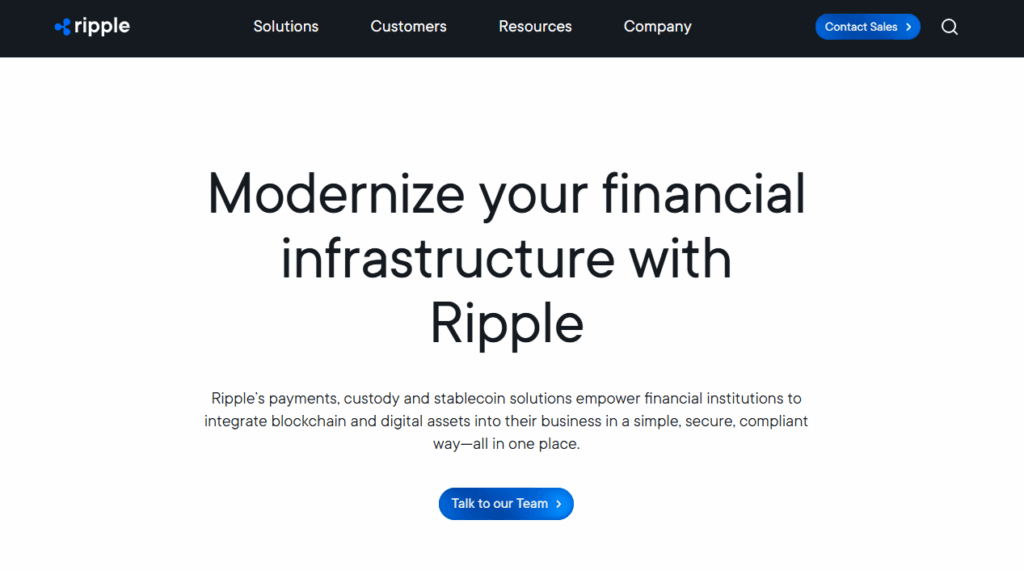
XRP is the native token of the XRP Ledger, launched by Ripple Labs to make international payments faster, cheaper, and more efficient. Unlike traditional banking systems that rely on SWIFT, Ripple's network settles transactions in seconds — enabling global money transfers without the delays or costs of intermediaries.
How Does XRP Differ from Bitcoin and Ethereum?
Unlike Bitcoin's energy-intensive mining or Ethereum's Proof-of-Stake validation, XRP uses a consensus mechanism through trusted validators. Following 2025's Zero-Knowledge Proof integration, it now offers private transactions alongside 1,500 TPS speeds — ideal for payment networks and privacy-conscious financial institutions.
What Gives XRP Its Real-World Value?
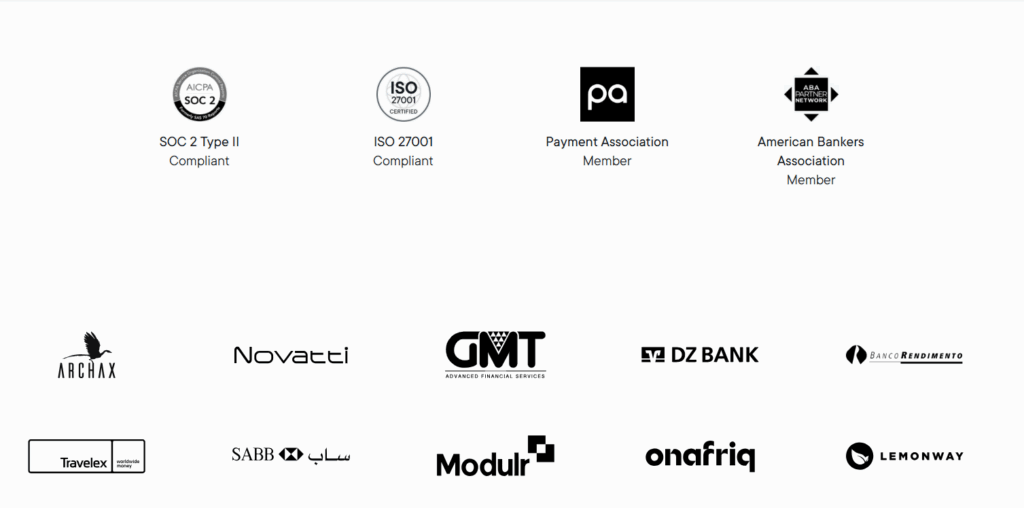
XRP's main strength lies in powering instant, low-cost institutional transfers. Ripple now partners with over 300 financial institutions globally, including BNY Mellon as primary custodian, cutting settlement times from days to seconds.
How Does XRP Provide Liquidity and Enable Micropayments?
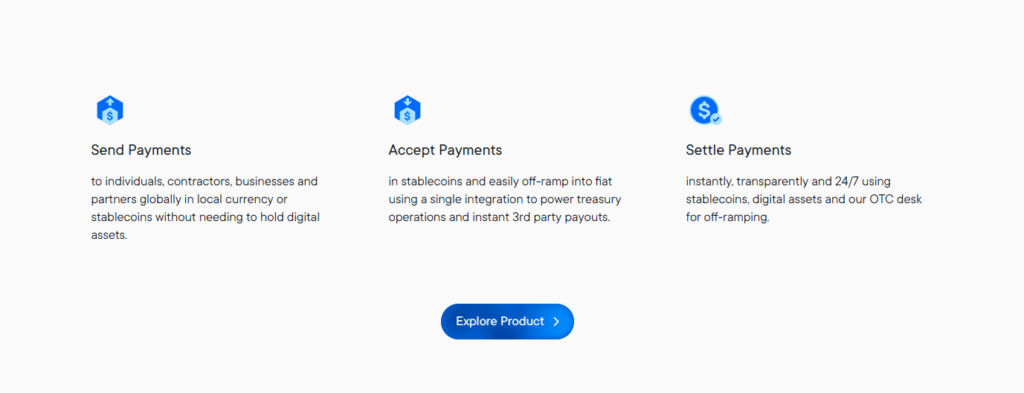
XRP provides liquidity between currencies, removing the need for pre-funded accounts and reducing costs for global businesses. It's also designed for microtransactions, supporting use cases such as tipping, content payments, and in-app transfers.
What New Use Cases Does XRP Support Through Tokenization?
Beyond finance, XRP Ledger (XRPL) supports tokenized assets like NFTs and stablecoins. This positions it for broader adoption across sectors including supply chain, gaming, and healthcare — expanding XRP's long-term value beyond just payments.
| Use Case | Description | Adoption Example |
|---|---|---|
| Cross-Border Payments | Fast, low-cost transfers | RippleNet, Santander |
| Liquidity Provision | Bridge between fiat pairs | On-Demand Liquidity |
| Tokenization | Digital assets on XRPL | Stablecoins, NFTs |
| Micropayments | Sub-cent transfers | Content & gaming payments |
Is XRP Safe and Regulated in 2025?
The SEC lawsuit that began in 2020 formally concluded in August 2025 with Ripple paying a $125 million settlement. The ruling confirmed XRP is not a security when traded on public exchanges. Within months, spot XRP ETFs launched — Canary's XRPC debuted with $58 million first-day volume. Vanguard now offers XRP ETFs to clients, marking full institutional legitimacy.
How Do Global Regulators View XRP?
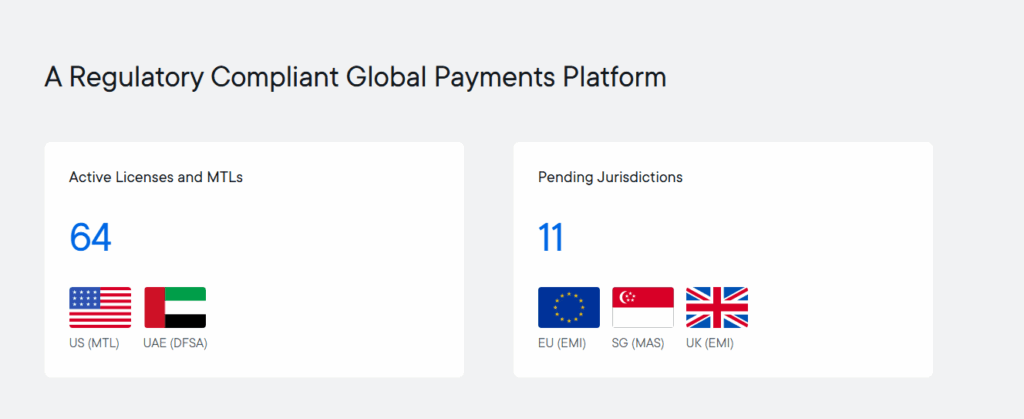
Globally, XRP's regulatory standing has strengthened considerably. Singapore's MAS expanded Ripple's Major Payment Institution licence in December 2025, enabling broader token-based settlements. Japan's SBI Holdings is bringing RLUSD stablecoin to market by 2026. These approvals reflect XRP's growing acceptance in mainstream finance.
What Does This Mean for UK Investors?
For UK investors, XRP is fully accessible via FCA-registered crypto exchanges, making it easier to trade or hold within compliant frameworks. However, investors should still remain cautious — regulatory conditions can change, and XRP's association with Ripple continues to attract scrutiny from traditional financial regulators.
What Are the Pros and Cons of Investing in XRP?
| Pros | Cons |
|---|---|
| ETF access secured – Spot XRP ETFs now trade on major exchanges with nearly $1B in early inflows, opening institutional doors. | Price volatility persists – XRP dropped 40% from July highs to December lows, demonstrating sharp swings remain common. |
| $40B valuation confirmed – Ripple raised $500M from Citadel and Fortress affiliates, validating enterprise-grade infrastructure. | Centralisation concerns linger – Ripple still holds 39.6 billion XRP tokens, roughly 40% of total supply. |
| Prime brokerage launched – Ripple Prime (formerly Hidden Road) offers institutional clearing, custody, and OTC trading. | Competition intensifying – Stablecoins like USDC and emerging CBDC rails compete directly for payment market share. |
| 300+ bank partnerships – Over 300 financial institutions now use RippleNet, including BNY Mellon as primary custodian. | RLUSD cannibalisation risk – Ripple's own stablecoin may reduce direct demand for XRP in payment settlements. |
How Has XRP Performed Recently?
As of December 2025, XRP trades around $2.10 per token after reaching $3.65 in July — a 40% correction reflecting broader crypto consolidation. Its market cap stands near $130 billion. Despite the pullback, ETF inflows approaching $1 billion demonstrate sustained institutional demand following regulatory breakthrough.
Why XRP's Price Moves So Much
XRP's volatility remains pronounced despite institutional progress. The July peak followed Ripple's SEC settlement, while December's correction tracked Bitcoin-led liquidations. ETF launches created short-term spikes but haven't prevented consolidation. Whale movements — including 216 million XRP leaving exchanges — continue driving sharp price swings.
Is XRP's Growth Sustainable?
Sustainability now hinges on converting ETF inflows into lasting demand. Ripple Prime's institutional trading infrastructure and RLUSD's $1.1 billion market cap demonstrate real utility. However, success requires proving payment volumes — something Ripple hasn't disclosed — while fending off stablecoin competition.
| Year | Avg Price | Major Event | Impact |
|---|---|---|---|
| 2020 | $0.25 | SEC lawsuit filed | Sharp decline |
| 2023 | $0.85 | Partial court victory | Recovery begins |
| 2024 | $1.90 | Exchange relistings | Renewed confidence |
| 2025 | $2.40 | Spot ETF approval | Institutional access |
What Do Experts Think About XRP?
Bullish Views: Analysts project XRP ETFs could reach $5 billion AUM within quarters. Ripple's $40 billion valuation, Citadel-backed funding, and 300+ bank partnerships position XRP as institutional-grade infrastructure. Some forecasts target $3.50–$5.00 by late 2026 if momentum sustains.
Bearish Views: Skeptics note XRP's 40% correction from July highs despite positive news. Ripple's 40% supply control raises centralisation concerns. RLUSD's growth may cannibalise XRP demand. Some analysts see $2.00 support as fragile, risking cascading liquidations if breached.
Analyst Consensus
Most analysts see XRP as a speculative but credible crypto asset — valuable in a diversified portfolio but not a core holding. It's best suited for investors comfortable with volatility and long-term uncertainty in exchange for potential institutional-driven upside.
Should You Add XRP to Your Portfolio?
XRP offers a blend of innovation and risk. Its growing adoption in cross-border payments and Ripple's expanding partnerships make it one of the more utility-driven cryptocurrencies. However, high volatility and lingering regulatory uncertainty mean it's best approached as a high-risk, high-reward asset.
Ideal Investor Profile
XRP suits medium to long-term investors comfortable with crypto risk and volatility. It's ideal for those seeking exposure to blockchain utility and institutional adoption, not short-term speculation. Investors should diversify and use XRP as part of a broader digital asset allocation.
Author's Take
From my experience, XRP is useful but speculative. I view it as a satellite holding — worth holding in moderation within a diversified portfolio but not as a core asset. Its potential is undeniable, but so are the risks tied to regulation and competition.
Top 5 Exchanges





FAQs
References

Don’t invest unless you’re prepared to lose all the money you invest. This is a high-risk investment and you should not expect to be protected if something goes wrong. Take 2 mins to learn more