

- expertise:
- CFD Trading, Forex, Derivatives, Risk Management
- credentials:
- Chartered ACII (2018) · Trading since 2012
- tested:
- 40+ forex & CFD platforms with live accounts

- expertise:
- Broker Comparison, ISA Strategy, Portfolio Management
- credentials:
- Active investor since 2013 · 11+ years experience
- tested:
- 40+ brokers with funded accounts
How We Test
Real accounts. Real money. Real trades. No demo accounts or press releases.
What we measure:
- Spreads vs advertised rates
- Execution speed and slippage
- Hidden fees (overnight, withdrawal, conversion)
- Actual withdrawal times
Scoring:
Fees (25%) · Platform (20%) · Assets (15%) · Mobile (15%) · Tools (10%) · Support (10%) · Regulation (5%)
Regulatory checks:
FCA Register verification · FSCS protection
Testing team:
Adam Woodhead (investing since 2013), Thomas Drury (Chartered ACII, 2018), Dom Farnell (investing since 2013) — 50+ platforms with funded accounts
Quarterly reviews · Corrections: in**@*******************co.uk
Disclaimer
Not financial advice. Educational content only. We're not FCA authorised. Consult a qualified advisor before investing.
Capital at risk. Investments can fall. Past performance doesn't guarantee future results.
CFD warning. 67-84% of retail accounts lose money trading CFDs. High risk due to leverage.
Contact: in**@*******************co.uk
Quick Answer: Is XTB Good for Investing?
Better than most people expect from a name they know for trading. The investing side gives you 9,100+ real stocks and ETFs with 0% commission up to EUR 100,000 of monthly turnover, fractional investing from small amounts, a flexible Stocks and Shares ISA that Boring Money ranked best for low cost in 2025, and 4% interest on GBP cash while it waits to be invested. The costs to understand before you commit are the 0.5% currency conversion on US and European shares and the fact that this is self-directed investing only, with no advice layer. For a cost-conscious DIY investor, XTB has quietly become one of the more interesting ISA homes in the UK.
74% of retail investor accounts lose money when trading CFDs with this provider. You should consider whether you can afford to take the high risk of losing your money.
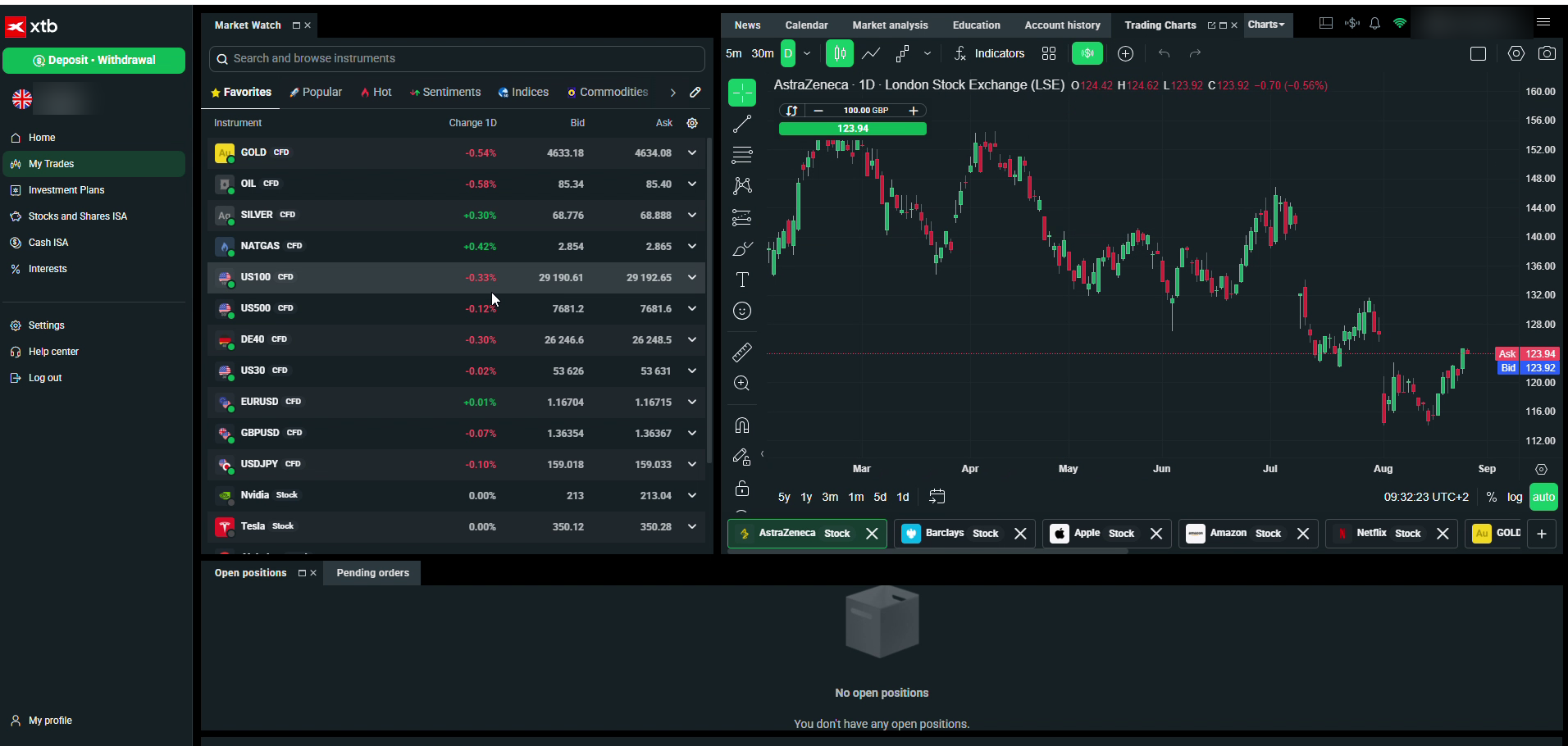
What Do You Get as an Investor?
The essentials in one place, checked against xtb.com on 26 August 2026, with the account itself opened and tested in August 2026:
| Detail | XTB |
|---|---|
| Investable range | 9,100+ real stocks and ETFs (UK, US and Europe) |
| Dealing commission | 0% up to EUR 100,000 monthly turnover, then 0.2% (min £10) |
| Fractional shares | Yes, invest from small amounts |
| Stocks and Shares ISA | Yes, flexible, free to open, 0% commission inside |
| Cash ISA | Also available as a separate product |
| Interest on GBP cash | 4.00% at the 26 August 2026 rate, paid monthly |
| Auto-investing | Investment Plans (self-directed ETF portfolios with automatic payments) |
| Custody fee | Free up to EUR 250,000 |
Notice what is missing from that table: platform fees, account fees, dealing charges at normal volumes. For a buy-and-hold investor making a handful of purchases a month, the running cost of an XTB portfolio rounds to zero, which very few UK platforms with this much range can say.
What Makes the ISA Worth Having?
The ISA is the strongest single reason to invest here, and the word doing the work is flexible. Withdraw money from a flexible ISA and put it back within the same tax year, and your £20,000 allowance is untouched. Plenty of well-known platforms still run inflexible ISAs where every withdrawal permanently burns allowance; XTB's does it properly, which matters most in the exact years when life makes you dip into savings.
| Feature | Detail |
|---|---|
| Cost to open and hold | Free, with 0% commission inside (same EUR 100k threshold) |
| Flexibility | Withdraw and replace within the tax year without losing allowance |
| Interest on ISA cash | Up to 4% on GBP free funds inside the wrapper |
| Transfers in | Supported from existing ISAs |
| Recognition | "Best for low cost ISA 2025", ranked by Boring Money |
The interest line deserves a second look, because it solves a real ISA problem: cash sitting inside the wrapper waiting for its moment usually earns nothing, so investors feel pushed to deploy it. Here it earns close to a savings rate while keeping its tax shelter, which makes drip-feeding into the market a comfortable strategy rather than a wasteful one. A Cash ISA sits alongside if you want a dedicated cash pot too.
What Does Investing Actually Cost Here?
Three worked examples cover most real situations:
| Investor | Activity | Cost |
|---|---|---|
| UK shares, monthly | £500 into FTSE stocks each month | £0 |
| US shares, monthly | £500 into US stocks each month | £2.50 conversion per purchase (0.5%) |
| Large or frequent dealing | Above EUR 100,000 turnover in a month | 0.2% (min £10) on the excess |
The 0.5% conversion is the honest cost of the account. It applies each way on anything not priced in sterling, so a £5,000 position in Apple costs about £25 to open and the same again to close years later. For long-hold investing that is modest against what percentage-based platform fees quietly take every single year; for someone churning US shares weekly it adds up, and the trading side of my XTB review covers that angle. UK stocks and GBP-priced ETFs dodge the charge entirely, which is a genuinely useful planning lever.
Can It Run Itself Once You Are Set Up?
Mostly, yes. Investment Plans let you build ETF portfolios that invest automatically on a schedule: pick the funds, set the split and the payment, and the platform does the buying. It is self-directed rather than advice (you choose the ETFs, nobody recommends them), but as a low-effort way to run a monthly investing habit it does the job well, and paired with the flexible ISA it becomes a tidy little system: money in on payday, invested automatically, interest on whatever waits.
Dividends from holdings land as cash on the account, where the interest rate picks them up until you reinvest, manually or through a plan. It is a small mechanical detail that keeps every pound working somewhere at all times.
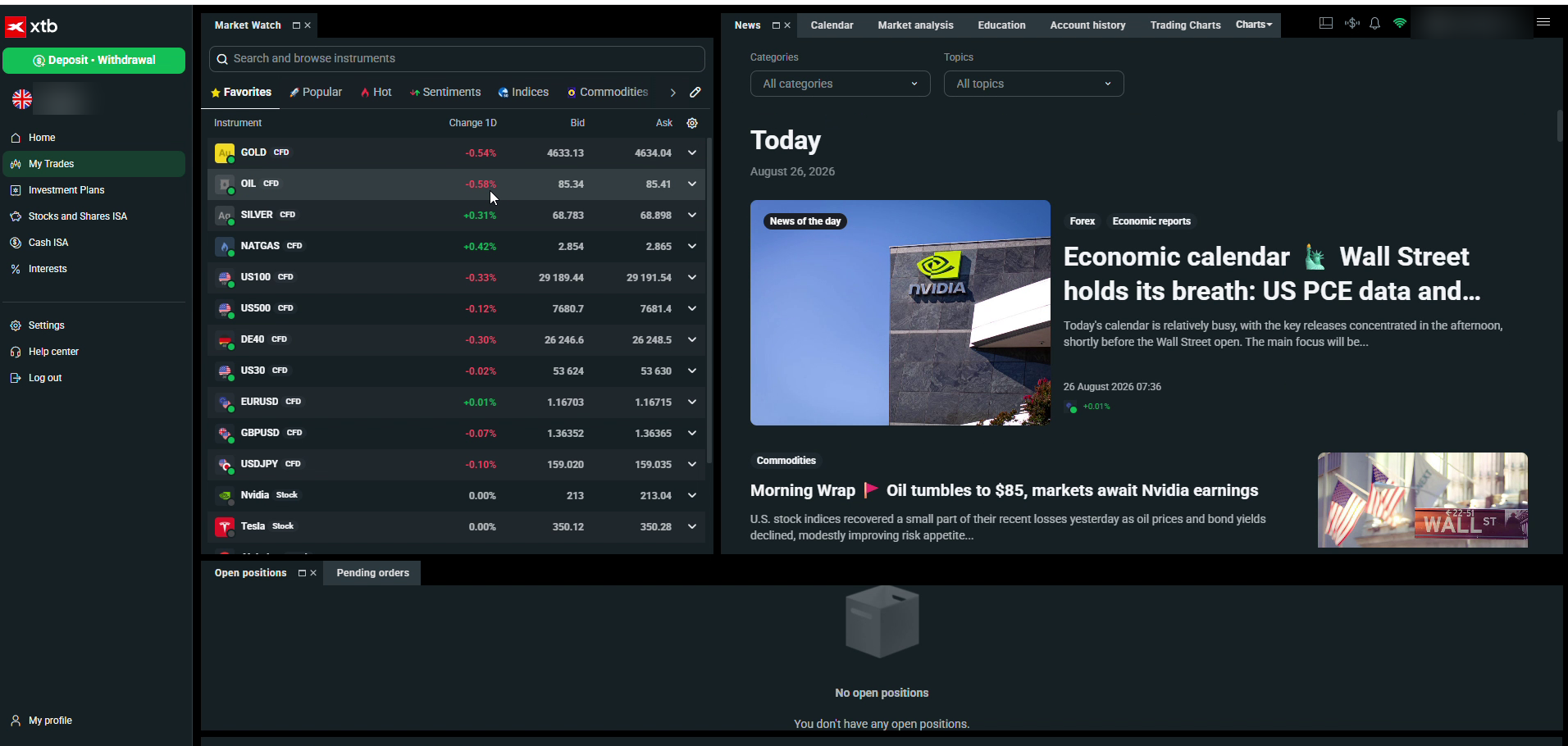
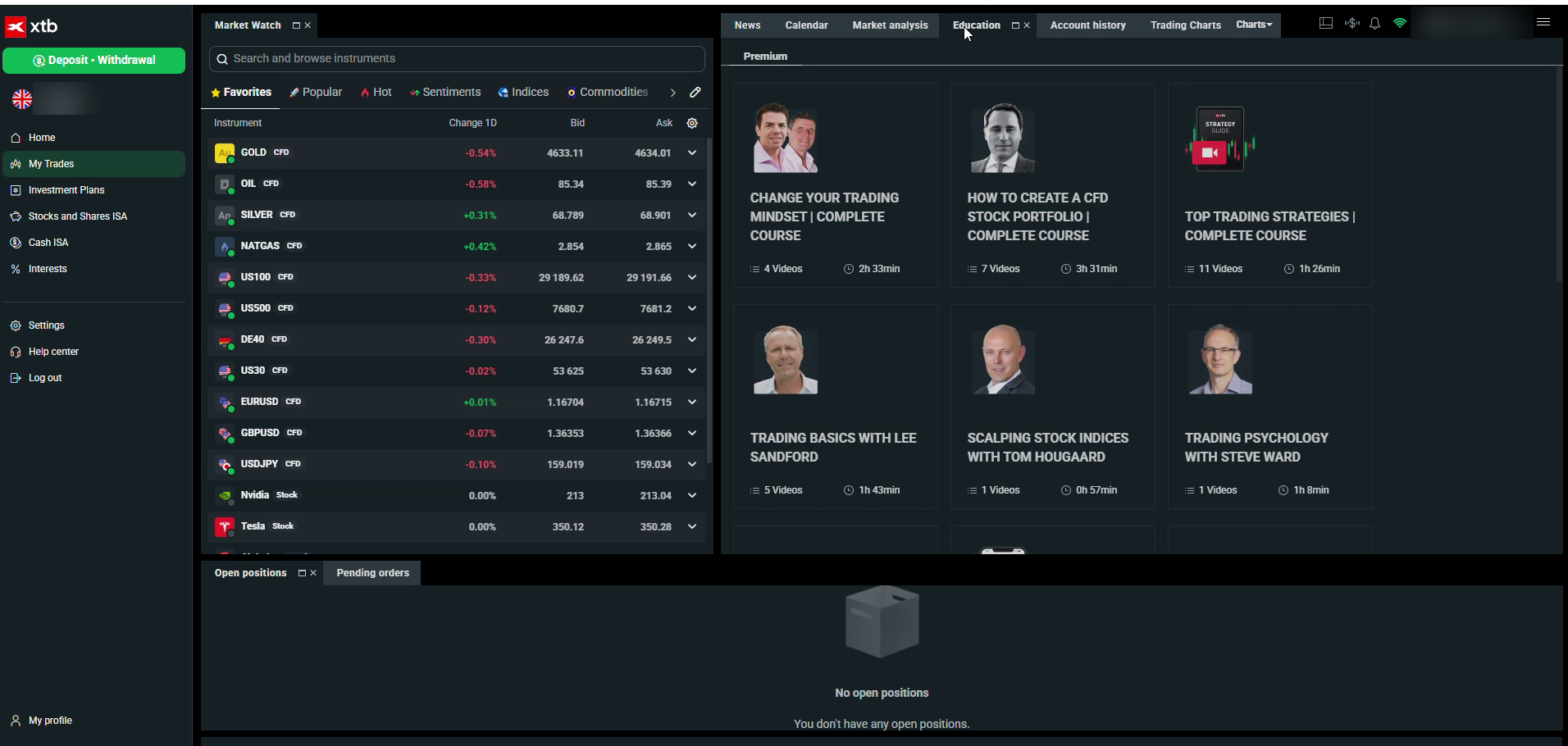
The research side is stronger than an investing-only platform would give you. The same screens that serve XTB's traders (live news, an economic calendar, market analysis and a proper education library) sit behind the investing account too, so checking on a holding never means leaving the platform.
How Easy Is Buying Your First Share?
Genuinely easy, and I say that having watched plenty of investing platforms make it needlessly hard. Search the company name, open the quote, and the ticket asks one meaningful question: how much. Because fractional investing is supported, the answer can be £50 rather than one whole share of something expensive, and the ticket shows any conversion cost before you confirm. The share lands in your portfolio, dividends accrue to the account, and the interest rate applies to whatever cash remains uninvested.
The one habit worth building from day one is checking the currency line. A FTSE share settles in sterling and costs nothing beyond the market price; a US share carries the 0.5% conversion each way. Neither is hidden, but the difference belongs in your buying decisions, especially for smaller regular purchases where a fixed habit compounds.
How Does It Stack Up Against Percentage-Fee Platforms?
The arithmetic is where XTB's investing case gets loud. A £50,000 ISA on a platform charging a 0.45% annual custody fee pays £225 a year before a single trade; the same portfolio here pays £0 in platform charges, and the cash portion earns 4% instead. Over a decade of contributions, the difference between a percentage fee and no fee compounds into thousands of pounds, which is money that stays invested rather than paying for the furniture.
Percentage-fee platforms earn their keep for investors who want managed portfolios, advice or pension wrappers, and our platform rankings weigh those trade-offs properly. But for the self-directed investor whose needs are shares, ETFs, an ISA and low cost, paying a percentage of your wealth annually for what XTB provides free is a hard spend to justify.
What Should You Weigh Up Before Moving Your Money?
Three things, honestly stated. The 0.5% conversion means a US-heavy portfolio pays an entry and exit toll that a GBP-heavy one does not, so think about your mix. Everything is self-directed, so anyone wanting managed portfolios or advice is on the wrong platform entirely. And the investing account lives inside a platform built by a trading firm, which cuts both ways: you get better tools and live data than most ISA providers offer, alongside markets you may have no interest in touching. None of these moved my overall view much, but they are the questions I would want answered before transferring an ISA.
Who Should Invest With XTB?
The self-directed, cost-conscious investor gets the most: someone building an ETF or share portfolio monthly, who wants a flexible ISA, zero platform fees and interest on waiting cash, and who is happy choosing their own investments. The fractional dealing makes it equally workable at £50 a month or £5,000, and the automatic Investment Plans suit anyone who wants the discipline without the admin.
Investors wanting hand-holding, ready-made portfolios or pension wrappers should look at the platforms built around those services in our investment platform rankings. For everyone comfortable driving themselves, XTB's combination of range, cost and the flexible ISA is hard to beat at this price, which is to say, at no price at all for a GBP portfolio. The 20+ years behind the firm and the 2.9 million clients worldwide add the reassurance that this is a grown-up home for serious money, not a startup experimenting with yours.
What Didn't I Test?
I did not test an ISA transfer in from another provider, so I cannot speak to how long that process takes. Dividend handling across a full payment cycle and the Investment Plans over a long run were outside the scope of this check. Rates and thresholds move: the 4% interest figure and commission threshold were read from xtb.com on 26 August 2026, and this page gets re-checked monthly.
FAQs
Is the XTB ISA really free?
Free to open, free to hold, and 0% commission on dealing inside it up to EUR 100,000 of monthly turnover. The 0.5% currency conversion still applies to non-GBP holdings, which is the one cost most people miss.
Can I buy fractional shares in the ISA?
Yes. Fractional investing works across the 9,100+ stocks and ETFs, so a £50 monthly contribution can still spread across several holdings.
Do I earn interest on cash inside the ISA?
Yes, up to 4% on GBP free funds at the rate displayed on 26 August 2026, calculated daily and paid monthly. The rate is variable, so check the current figure.
Is there a SIPP or pension option?
No pension wrapper is part of the UK offering as of my August 2026 check. The wrappers are the Stocks and Shares ISA and the Cash ISA.
Are Investment Plans the same as a robo-adviser?
No. Plans automate the buying of ETFs you choose yourself; nobody selects investments for you or gives advice. Think standing order with a brain, not a manager.
Can I transfer an existing ISA in?
Yes, transfers in are supported. Timing depends on your current provider as much as on XTB, so allow a few weeks and avoid selling down before checking whether an in-specie transfer suits you better.
Is my portfolio protected?
The UK business is FCA authorised (reference 522157) and logins carry two-factor authentication. As with any investment platform, the value of investments can fall as well as rise; regulation protects you from the firm, not from the market.
Discussion 0 comments
Be the first to start discussing this topic! Log in or create an account to share your thoughts.
Log In Create Account
No comments yet. Be the first to start discussing this topic!