

- expertise:
- CFD Trading, Forex, Derivatives, Risk Management
- credentials:
- Chartered ACII (2018) · Trading since 2012
- tested:
- 40+ forex & CFD platforms with live accounts

- expertise:
- Broker Comparison, ISA Strategy, Portfolio Management
- credentials:
- Active investor since 2013 · 11+ years experience
- tested:
- 40+ brokers with funded accounts
How We Test
Real accounts. Real money. Real trades. No demo accounts or press releases.
What we measure:
- Spreads vs advertised rates
- Execution speed and slippage
- Hidden fees (overnight, withdrawal, conversion)
- Actual withdrawal times
Scoring:
Fees (25%) · Platform (20%) · Assets (15%) · Mobile (15%) · Tools (10%) · Support (10%) · Regulation (5%)
Regulatory checks:
FCA Register verification · FSCS protection
Testing team:
Adam Woodhead (investing since 2013), Thomas Drury (Chartered ACII, 2018), Dom Farnell (investing since 2013) — 50+ platforms with funded accounts
Quarterly reviews · Corrections: info@theinvestorscentre.co.uk
Disclaimer
Not financial advice. Educational content only. We're not FCA authorised. Consult a qualified advisor before investing.
Capital at risk. Investments can fall. Past performance doesn't guarantee future results.
CFD warning. 67-84% of retail accounts lose money trading CFDs. High risk due to leverage.
Contact: info@theinvestorscentre.co.uk
Quick Answer: Can AI Sentiment Analysis Improve Your Oil and Gold Trades?
Yes — when used as a contrarian indicator. IG’s Client Sentiment gauge shows the percentage of traders long vs short on gold (XAU/USD) and crude oil. When over 75% of retail traders are positioned in one direction, the market tends to move the other way. I check IG’s sentiment gauge before every gold trade, and the contrarian signal has been my most consistent filter for avoiding bad entries over the past 12 months.

IG — Best Broker for Sentiment Analysis on Oil & Gold
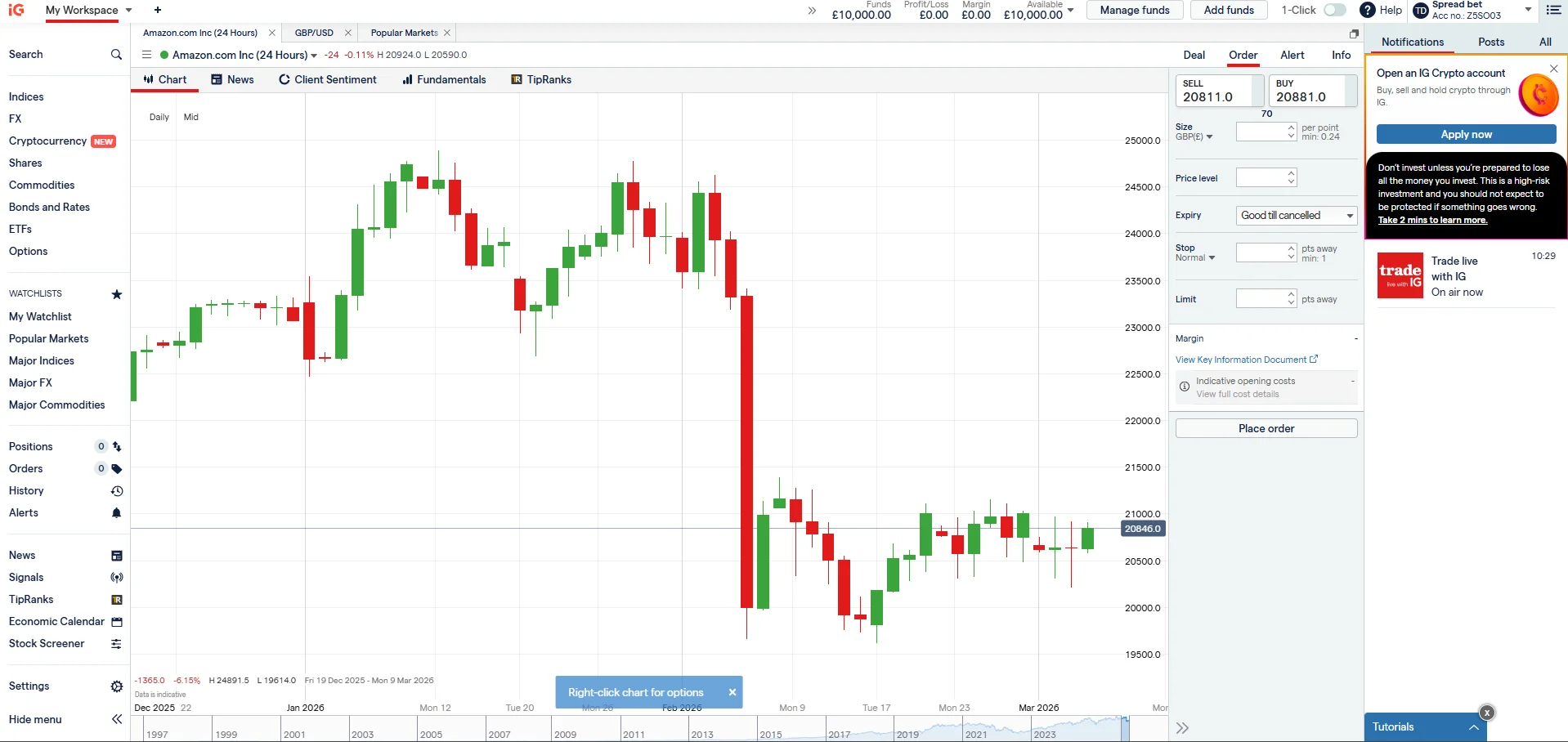
IG’s Client Sentiment tool is built directly into the platform — no third-party subscriptions required. It shows real-time positioning data from IG’s own client base (one of the largest retail brokerages globally), covering gold, crude oil, and dozens of other instruments. Combined with 17,000+ markets and ProRealTime’s charting, IG gives you sentiment and technicals in one place. It also ranks first in our best gold trading platform UK comparison.
- Client Sentiment – Real-time long/short positioning data, free for all account holders
- Gold & oil markets – Spot gold (XAU/USD), US Crude Oil, Brent Crude, gold futures
- ProRealTime charting – Overlay sentiment with technical analysis and automated strategies
- FCA regulated (FRN: 195355) – FSCS protection up to £85,000
68% of retail CFD accounts lose money.
What Is AI Sentiment Analysis in Trading?
Sentiment analysis measures the collective mood of market participants. In trading, it takes two main forms: positioning data (what traders are actually doing with their money) and text-based sentiment (what people are saying on news sites, social media, and analyst reports).
Positioning data is more reliable because it reflects real financial commitments, not opinions. When 80% of retail traders are long on gold, that’s a measurable data point. When a headline says “gold to hit $3,000,” that’s an opinion with no capital behind it.
AI enters the picture in two ways. Broker platforms like IG aggregate client positioning data in real time — no complex AI required, just large-scale data processing. Third-party tools like MarketPsych and alternative data platforms use natural language processing (NLP) to scan news feeds, Twitter/X, Reddit, and earnings calls, scoring each source as bullish, bearish, or neutral. The broker-native tools are more practical for most retail traders because they’re free and already integrated into your trading platform. For a full comparison of broker-integrated AI features, see our best AI trading software UK guide.
How Does IG’s Client Sentiment Tool Work?
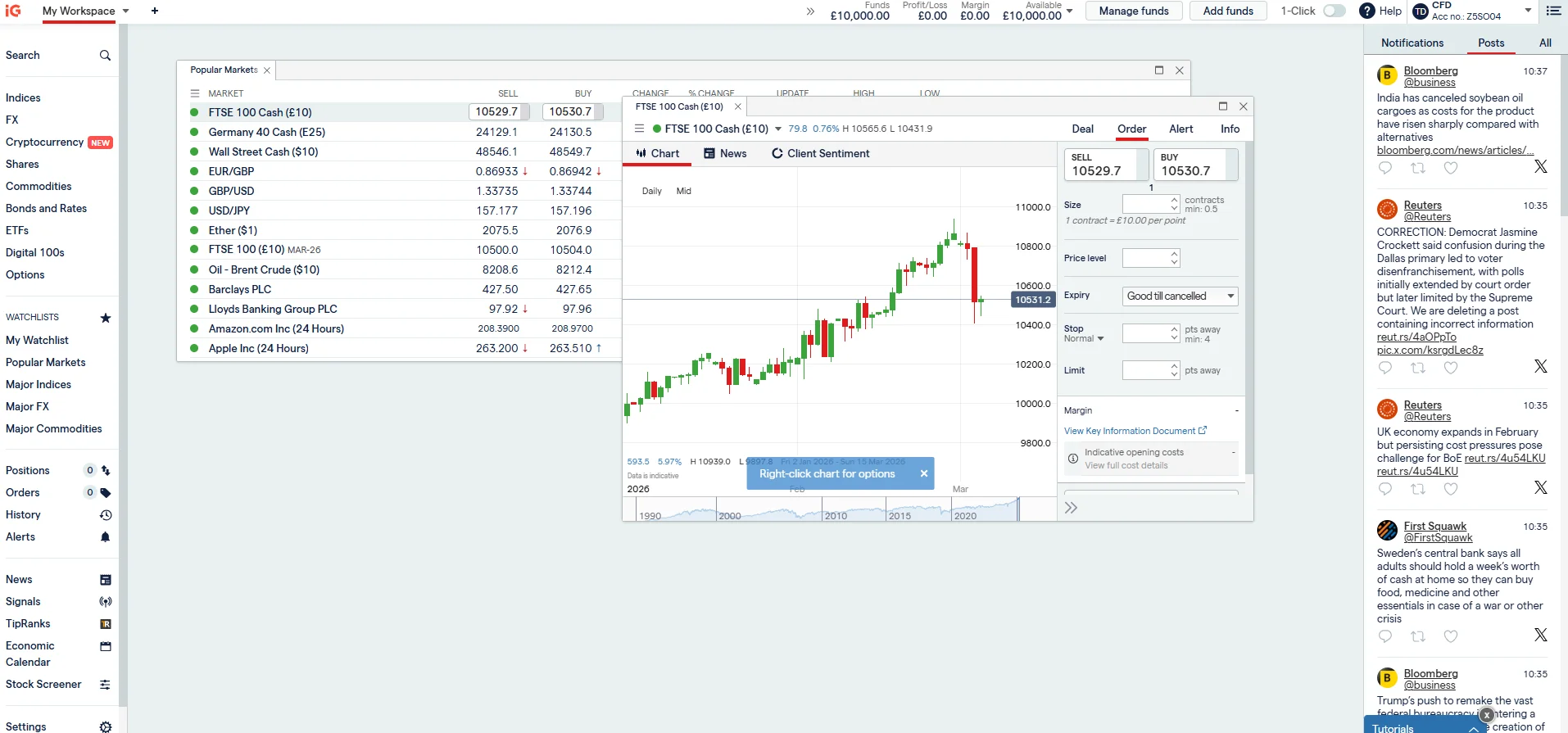
IG’s Client Sentiment gauge displays the percentage of IG clients holding open long positions versus short positions on any given instrument. The data updates in real time and reflects actual positions — not surveys or opinions.
For gold (XAU/USD), the gauge typically shows between 55% and 85% of clients holding long positions. This persistent long bias makes sense — gold is psychologically viewed as a “safe haven,” so retail traders naturally lean bullish. The contrarian signal fires when this bias becomes extreme. If you are new to the gold market, our how to trade gold guide covers the fundamentals.
How Do You Read the Sentiment Gauge?
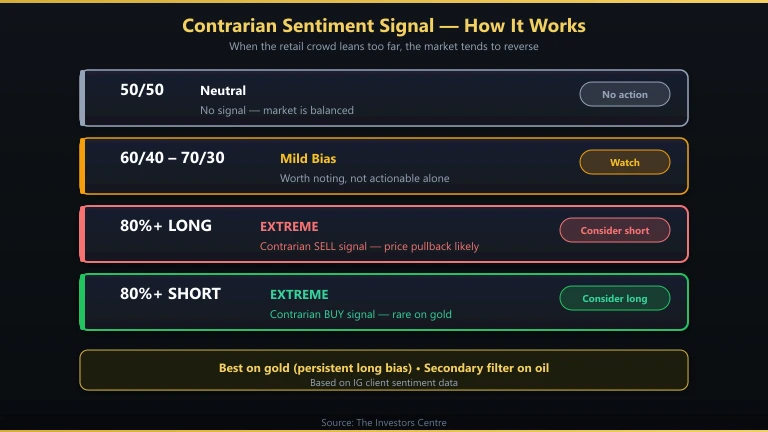
- Below 60% long – Neutral territory. Sentiment is not providing a directional signal.
- 60–75% long – Mild bullish bias. Worth noting but not actionable on its own.
- Above 75% long – Extreme bullish positioning. Historically associated with price pullbacks or reversals. This is the contrarian sell signal.
- Above 75% short – Extreme bearish positioning (rare on gold). Contrarian buy signal.
The same framework applies to crude oil, though oil sentiment tends to be more balanced than gold because traders actively short oil during bearish macro periods.
Can Sentiment Analysis Predict Gold and Oil Reversals?
“Predict” is too strong a word. Sentiment data flags conditions where reversals are more likely — it doesn’t guarantee them.
Here’s a real example from my trading. In late 2025, gold rallied from $2,600 to $2,780 over three weeks. During that rally, IG’s sentiment gauge showed long positioning climb from 62% to 81%. At 81% long, I stopped adding to my gold position and tightened my stop-loss. Gold subsequently pulled back 4.2% over the next 10 trading days before resuming the uptrend.
The sentiment signal didn’t tell me when the pullback would start or how far it would go. What it told me was that the trade was getting crowded, and crowded trades are vulnerable to sharp reversals when positions unwind. That’s the practical value: risk management, not prediction.
Does the Contrarian Signal Work Better on Gold or Oil?
Gold’s persistent retail long bias makes the contrarian signal more reliable. When gold sentiment reaches extreme levels, the snapback tends to be faster and cleaner. Oil is more driven by macro factors — OPEC decisions, inventory data, geopolitical events — which can override positioning signals entirely. An extreme bullish reading on oil before an OPEC meeting is less useful than the same reading on gold during a quiet macro week.
I use sentiment as a primary filter on gold and a secondary filter on oil. For oil, I weight the weekly EIA crude inventory report and OPEC announcements above positioning data. Our how to trade oil guide covers these macro drivers in detail.
Which Other Brokers Offer Sentiment Tools?
IG has the best built-in sentiment tool, but two other FCA-regulated brokers offer useful alternatives.
CMC Markets – Client Sentiment on Next Generation
CMC Markets displays client sentiment data within its Next Generation platform. The format is similar to IG’s — a percentage breakdown of clients long vs short. CMC’s client base is smaller than IG’s, so the sample size is less representative, but it’s still a useful data point. CMC also includes a pattern recognition scanner that can complement sentiment readings with technical signals.
- Sentiment tool: Client positioning percentage
- Additional AI: Pattern recognition scanner, 80+ indicators
- Regulation: FCA (FRN 173730)
68% of retail CFD accounts lose money.
Pepperstone – Capitalise.ai for Sentiment-Triggered Strategies
Pepperstone integrates Capitalise.ai, which lets you build automated strategies triggered by sentiment conditions alongside technical indicators. You can set rules like “If gold RSI drops below 30 AND client sentiment is above 75% long, open a short position.” This is the only platform I’ve tested that lets you combine sentiment with technical conditions in a no-code automation tool.
- Sentiment tool: Via Capitalise.ai conditions
- Additional AI: Smart Trader Tools, Autochartist
- Regulation: FCA (FRN 684312)
72% of retail CFD accounts lose money.
| Broker | Sentiment Tool | Oil & Gold Coverage | Automation | Cost |
|---|---|---|---|---|
| IG | Client Sentiment (built-in) | XAU/USD, US Crude, Brent | ProRealTime ProBuilder | Free |
| CMC Markets | Client Sentiment (Next Gen) | Gold, WTI, Brent | Pattern recognition only | Free |
| Pepperstone | Via Capitalise.ai | XAU/USD, US Oil | Capitalise.ai (no-code) | Free |
How Do You Combine Sentiment Analysis with Technical Analysis?
Sentiment on its own is a filter, not a strategy. It tells you whether conditions favour a trade, not where to enter or exit. You need technical analysis for that.
My Gold Trading Framework
This is the process I follow before entering a gold trade on IG. It combines sentiment with standard technical analysis.
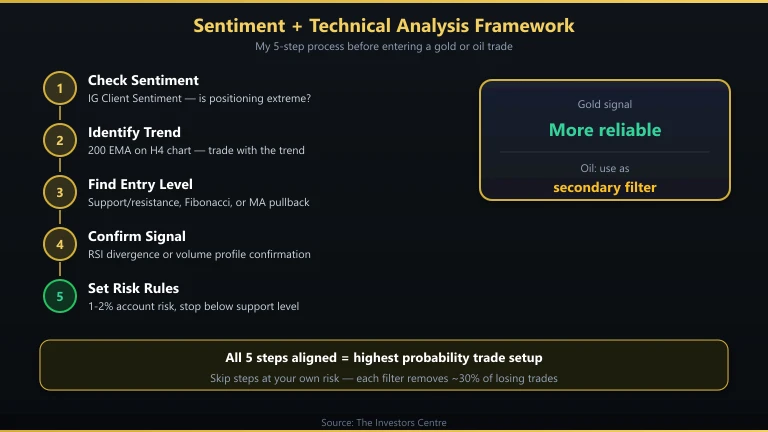
- Check IG Client Sentiment: If positioning is between 60–75% long, proceed. If above 75% long, only look for short setups. If below 60%, treat as neutral.
- Identify the trend: Use the 200-period EMA on the H4 chart. Only trade in the direction of the trend unless sentiment is extreme (above 75%).
- Find a technical entry: Wait for price to reach a support/resistance level, moving average, or Fibonacci retracement zone — our trading chart patterns guide explains how to identify these setups. Don’t enter just because sentiment is extreme.
- Confirm with volume or momentum: Check RSI for divergence or use volume profile to confirm the level is significant.
- Set risk parameters: Stop-loss below the support level (for longs) or above resistance (for shorts). Risk no more than 1–2% of account balance per trade.
My Oil Trading Framework
Oil requires additional macro awareness because supply-side events can override all technical and sentiment signals.
- Check the macro calendar: Avoid opening new oil positions within 24 hours of EIA inventory data, OPEC meetings, or major geopolitical developments.
- Check sentiment: Use IG’s Client Sentiment as a secondary filter. Extreme readings (above 75% in either direction) warrant caution.
- Identify key levels: Oil tends to respect round numbers ($70, $75, $80) and previous swing highs/lows more than most instruments.
- Use wider stops: Oil is more volatile than gold. I use 1.5–2x my normal stop distance and reduce position size accordingly.
FAQs
References
- Financial Conduct Authority (FCA) – Contract for differences | FCA
- IG Group – How to Use Client Sentiment Data
- FCA Register – IG Markets Limited. FRN: 195355
- U.S. Energy Information Administration – Weekly Petroleum Status Report
For more trading guides, explore our full trading hub.
68% of retail investor accounts lose money when trading spread bets and CFDs with this provider.