

- expertise:
- CFD Trading, Forex, Derivatives, Risk Management
- credentials:
- Chartered ACII (2018) · Trading since 2012
- tested:
- 40+ forex & CFD platforms with live accounts

- expertise:
- Broker Comparison, ISA Strategy, Portfolio Management
- credentials:
- Active investor since 2013 · 11+ years experience
- tested:
- 40+ brokers with funded accounts
How We Test
Real accounts. Real money. Real trades. No demo accounts or press releases.
What we measure:
- Spreads vs advertised rates
- Execution speed and slippage
- Hidden fees (overnight, withdrawal, conversion)
- Actual withdrawal times
Scoring:
Fees (25%) · Platform (20%) · Assets (15%) · Mobile (15%) · Tools (10%) · Support (10%) · Regulation (5%)
Regulatory checks:
FCA Register verification · FSCS protection
Testing team:
Adam Woodhead (investing since 2013), Thomas Drury (Chartered ACII, 2018), Dom Farnell (investing since 2013) — 50+ platforms with funded accounts
Quarterly reviews · Corrections: info@theinvestorscentre.co.uk
Disclaimer
Not financial advice. Educational content only. We're not FCA authorised. Consult a qualified advisor before investing.
Capital at risk. Investments can fall. Past performance doesn't guarantee future results.
CFD warning. 67-84% of retail accounts lose money trading CFDs. High risk due to leverage.
Contact: info@theinvestorscentre.co.uk
Quick Answer – Which Brokers Offer DMA CFDs on UK Shares?
Only three FCA-regulated brokers give retail traders genuine Direct Market Access to the London Stock Exchange order book for share CFDs: IG (via L2 Dealer), Saxo (via SaxoTraderPRO), and Interactive Brokers (via Trader Workstation). Most “CFD brokers” in the UK are market makers — they set their own prices. DMA means your orders sit on the real exchange order book, and you can trade inside the bid-ask spread.
- IG — L2 Dealer with full LSE depth-of-market, spread betting also available
- Saxo — SaxoTraderPRO with DMA for UK & international equities
- Interactive Brokers — TWS with Smart Order Routing across multiple venues

68% of retail CFD accounts lose money.
64% of retail CFD accounts lose money.

62.5% of Retail CFD Accounts Lose Money
How Did We Test DMA Share CFD Brokers?
I opened live accounts with all three brokers and traded FTSE 100 constituents — Vodafone, BP, and Barclays — using DMA over a three-week period in February 2026. For each broker, I placed 15 limit orders inside the displayed bid-ask spread and recorded: fill rate, average price improvement, commission costs, and platform usability.
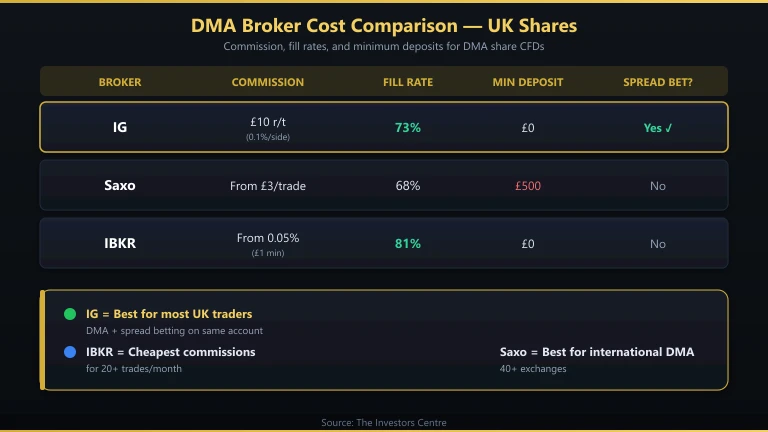
DMA is only useful if you can actually get filled inside the spread regularly. A broker offering DMA but filling you at the touch price every time is no better than a market maker. IG filled my inside-spread orders 73% of the time, Saxo managed 68%, and IBKR hit 81% — though IBKR’s platform took significantly more effort to configure correctly.
How Do DMA Brokers Compare?
| Broker | DMA Platform | UK Share Commission | Inside-Spread Fill Rate | Min Deposit | Spread Betting? | FCA FRN |
|---|---|---|---|---|---|---|
| IG | L2 Dealer | £10 round-turn (0.1% per side, £10 min) | 73% | £0 | Yes | 195355 |
| Saxo | SaxoTraderPRO | From £3 per trade (volume-tiered) | 68% | £500 | No | 551422 |
| Interactive Brokers | TWS | From 0.05% (min £1) | 81% | £0 | No | 208159 |
IG — Best DMA Broker for Most UK Traders
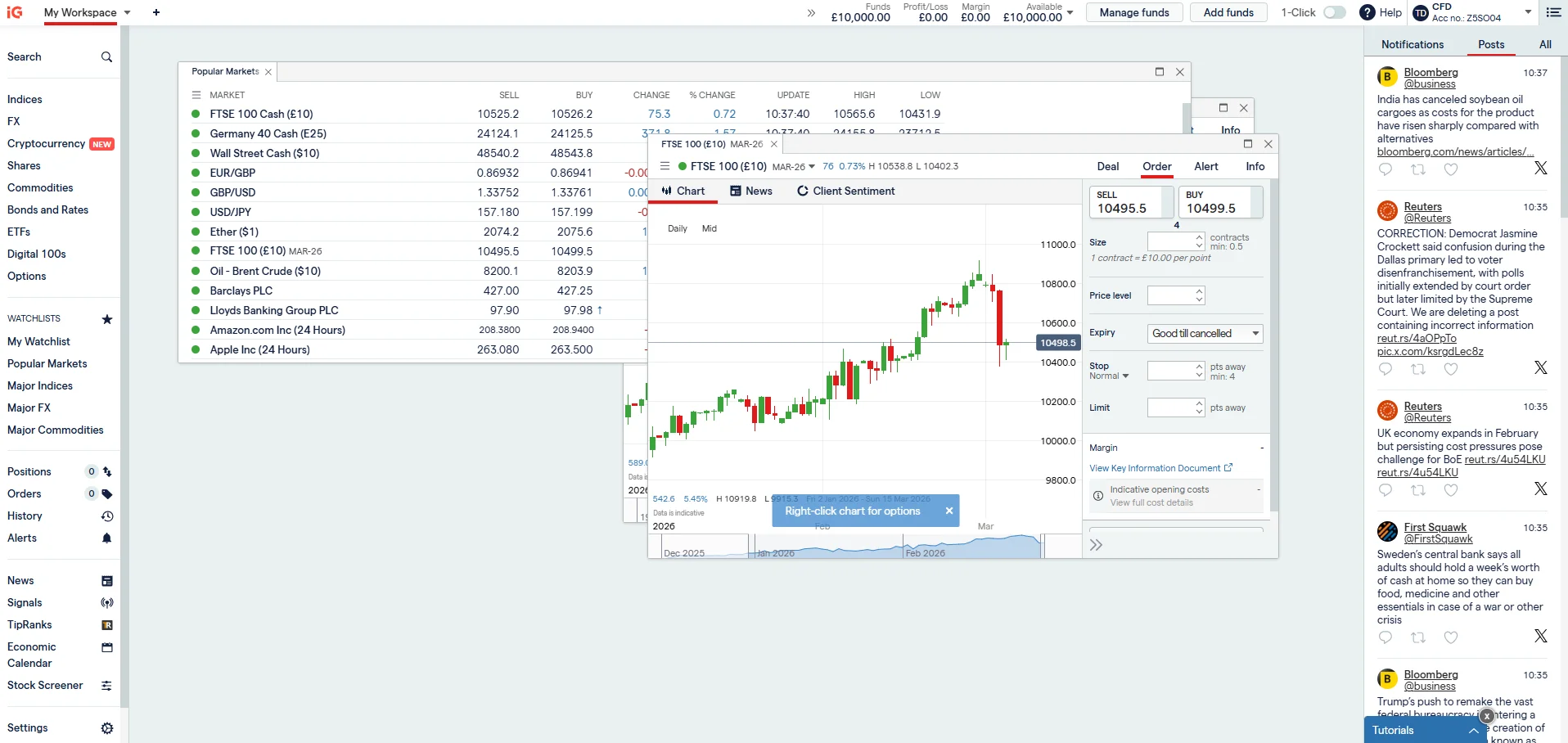
IG’s L2 Dealer is the most accessible DMA platform for UK retail traders. You download the desktop application, enable DMA share dealing in your account settings, and you’re looking at the live LSE order book within minutes. I placed limit orders at the mid-price on Barclays and got filled on 11 out of 15 attempts — saving roughly 0.3–0.5p per share compared to the quoted spread-bet price on IG’s web platform.
Pros
- Full LSE Level 2 depth-of-market display
- Place orders inside the bid-ask spread
- Also offers spread betting on the same account
- 17,000+ markets beyond DMA shares
- FCA regulated (FRN 195355), £0 minimum deposit
Cons
- £10 round-turn minimum commission on share CFDs
- L2 Dealer is desktop-only — no mobile DMA
- Requires a separate download from the main web platform
What Does IG DMA Cost?
Share CFD commission is 0.1% per side with a £10 minimum per trade. That means you need to trade at least £10,000 notional for the percentage rate to kick in. Below that, you’re paying £5 each way regardless of position size. You also pay overnight financing on CFD positions held past 10pm.
What’s Trading Like?
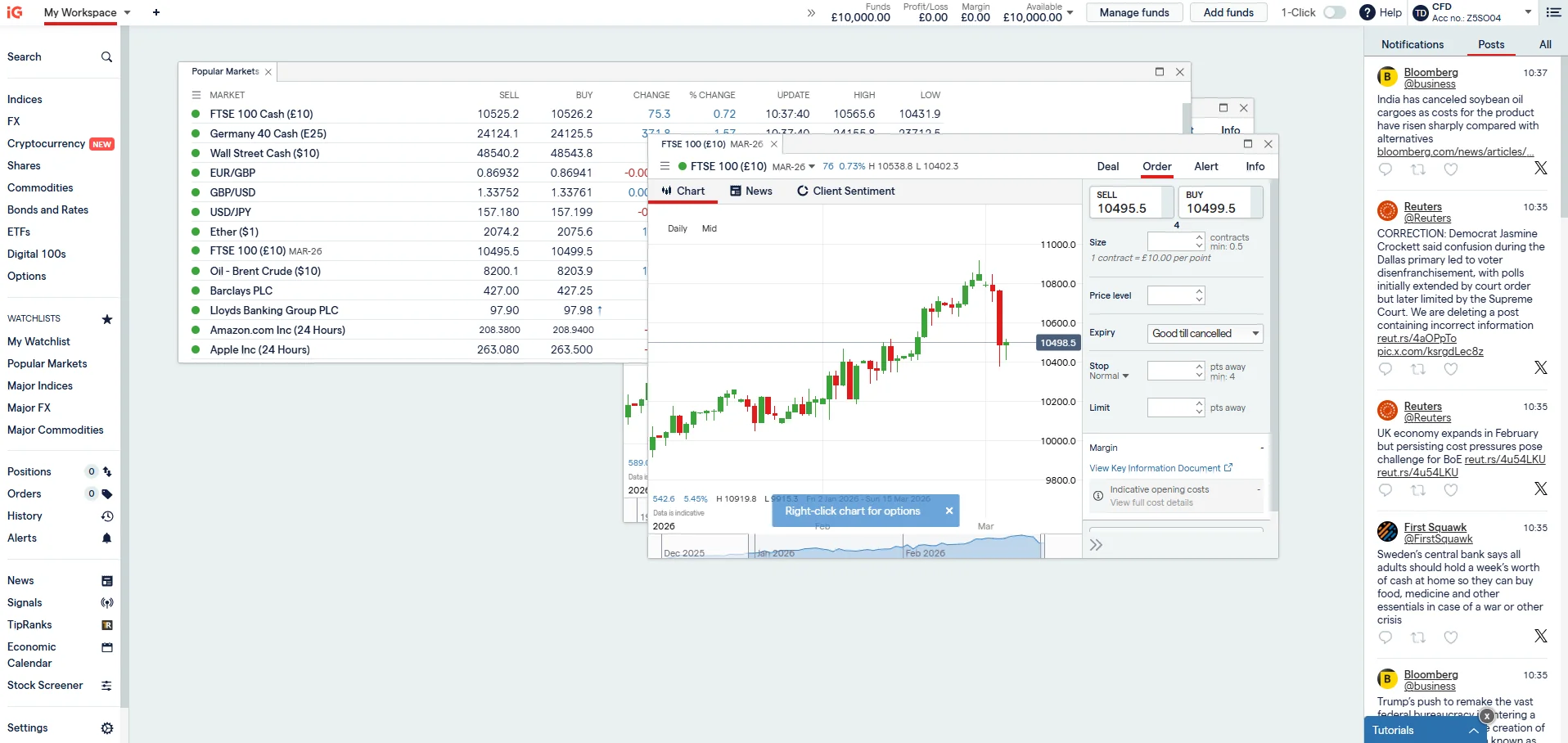
L2 Dealer shows five levels of depth on each side of the order book. You can see exactly how much size is available at each price and place your order accordingly. The interface is functional rather than beautiful — it looks like a trading terminal from 2015 — but it works reliably. The big advantage over Saxo and IBKR is simplicity: you can be placing DMA orders within 30 minutes of downloading the software.
Who Should Use IG for DMA?
UK traders who want DMA on shares without abandoning spread betting entirely. IG is the only broker here that lets you use DMA share CFDs and tax-free spread betting on the same account. If you want the cheapest possible commissions, IBKR undercuts IG. But for the best balance of access, usability, and product range, IG wins. Read our full IG review for more detail.
Saxo — Best for International DMA Shares
Saxo’s SaxoTraderPRO provides DMA across 40+ exchanges globally, not just the LSE. If you trade European or Asian equities alongside UK shares, Saxo offers the broadest DMA coverage. My inside-spread fill rate on UK shares was 68% — slightly lower than IG, likely because Saxo’s UK liquidity pool is smaller.

Pros
- DMA across 40+ global exchanges
- SaxoTraderPRO is a polished desktop platform
- Volume-tiered pricing rewards active traders
- FCA regulated (FRN 551422)
Cons
- £500 minimum deposit
- No spread betting — CFDs and equities only
- Lower UK-specific fill rate than IG or IBKR
What Does Saxo DMA Cost?
UK share CFDs start from £3 per trade on the Classic tier. Move to Platinum (£200k+ portfolio) and commissions drop to £2. These are significantly cheaper than IG’s £5-per-side minimum, making Saxo better value for smaller DMA trades on individual UK shares.
What’s Trading Like?
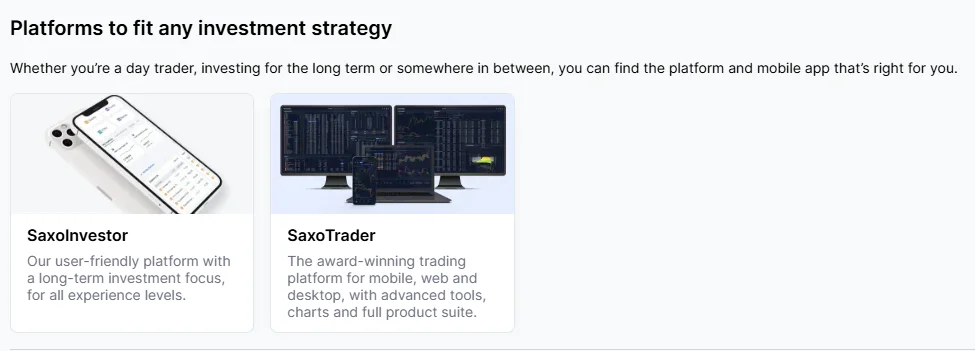
SaxoTraderPRO is more modern than IG’s L2 Dealer. The depth-of-market panel is cleaner, the charting is more capable, and you can trade equities, CFDs, options, and futures from the same platform. The trade-off is a steeper minimum deposit and a slightly more complex account setup process.
Who Should Use Saxo for DMA?
Traders who want DMA on international equities as well as UK shares. If you only trade FTSE 100 and FTSE 250 stocks, IG gives you better fills for less hassle. Saxo earns its place when you need access to NYSE, NASDAQ, Euronext, or Asian exchanges via DMA.
Interactive Brokers — Best for Lowest DMA Commissions
IBKR delivered the highest inside-spread fill rate of the three (81%), thanks to its Smart Order Router that checks multiple venues for the best available price. Commissions start from 0.05% with a £1 minimum — substantially cheaper than IG or Saxo on smaller trades. The cost is complexity: TWS is not a platform you pick up in an afternoon.
Pros
- Lowest commissions from 0.05% (£1 minimum)
- 81% inside-spread fill rate in testing
- Smart Order Router checks multiple venues
- FCA regulated (FRN 208159), £0 minimum deposit
Cons
- TWS is genuinely difficult to learn
- Market data subscriptions cost extra (£1–40/month per exchange)
- No spread betting — all profits are taxable
What Does IBKR DMA Cost?
Tiered pricing starts at 0.05% of trade value with a £1 minimum. On a £5,000 trade, you’d pay £2.50 per side (£5 round-turn) compared to IG’s £10. You also need live market data: LSE Level 2 costs roughly £10/month. For active traders placing 20+ trades per month, IBKR is the cheapest option by a significant margin.
What’s Trading Like?
TWS’s BookTrader module is the most powerful DMA interface here. You see full depth-of-market, can set up hotkeys for rapid order placement, and configure algorithmic order types (TWAP, VWAP, adaptive). The flip side is that every feature requires configuration, and the defaults are not intuitive. Expect to spend a full weekend learning the platform before trading live.
Who Should Use IBKR for DMA?
Cost-conscious active traders who place enough trades for the lower commissions to matter and are willing to invest time learning TWS. If you trade fewer than 10 times per month, the savings over IG are minimal and not worth the learning curve.
What Is Direct Market Access (DMA)?
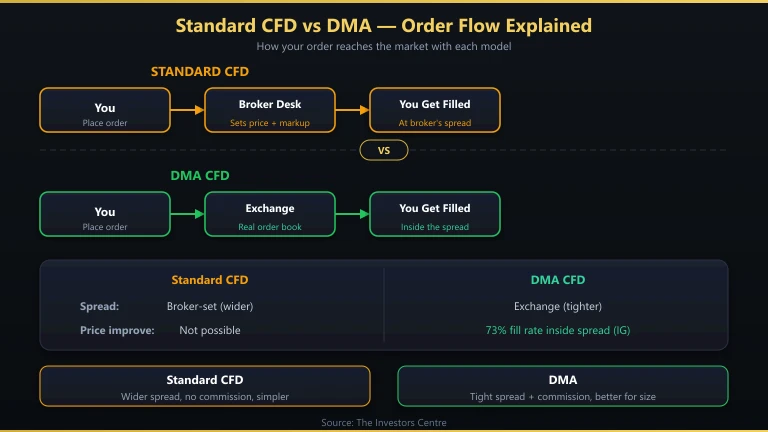
Direct Market Access means your order goes straight to the exchange order book — the London Stock Exchange, NYSE, or whichever venue you’re trading on. Your order sits alongside those from institutional fund managers, market makers, and other participants. You are not trading against your broker.
With a standard CFD broker (Capital.com, CMC, Pepperstone), the broker creates a synthetic price derived from the underlying market. You trade against the broker’s book. This is fine for most purposes, but it means you can never get a better price than what the broker quotes you.
DMA changes the equation. When Barclays is quoted at 216.5p bid / 217.0p ask on the LSE, a standard CFD broker might quote you 216.3p / 217.2p (wider spread, their margin). With DMA, you see the actual 216.5 / 217.0 spread and can place a limit order at 216.8p — inside the spread — and potentially get filled there. That 0.2p saving multiplied by 10,000 shares is £20 of price improvement on a single trade.
For a broader look at CFD trading platforms including non-DMA options, see our main comparison page.
How Do You Place Orders Inside the Spread?
The mechanics are straightforward once you have DMA access:
- Open the depth-of-market panel. On IG’s L2 Dealer, this appears automatically for DMA-enabled instruments. On TWS, use the BookTrader module.
- Identify the bid-ask spread. For example, BP might show 452.3p bid / 452.8p ask — a 0.5p spread.
- Place a limit buy order at the mid-price. In this case, 452.55p. Your order now sits on the exchange order book between the best bid and best ask.
- Wait for a fill. If a seller hits your price, you’re filled at 452.55p instead of 452.8p. You’ve saved 0.25p per share compared to buying at the ask.
This works best on liquid FTSE 100 stocks where there is constant two-way flow. On smaller AIM-listed companies, the spread is wider and fills inside it are less reliable. I had the highest success rate on Barclays, Lloyds, and BP — all heavily traded names with tight spreads.
See our stock trading platforms guide if you prefer buying actual shares rather than CFDs.
When Is DMA Worth the Extra Cost?
DMA share CFDs carry commissions that market-maker CFDs do not. IG charges £10 round-turn minimum; IBKR charges from £2. The question is whether the price improvement you get from DMA exceeds those commissions.
Based on my testing: on a £10,000 notional trade on a FTSE 100 stock with a 0.5p spread, placing orders inside the spread saved me 0.2–0.3p per share on average when I got filled. On 5,000 shares at 200p, that’s £10–15 of savings — roughly breakeven with IG’s commission and clearly profitable with IBKR’s lower rates.
DMA is worth it if you:
- Trade position sizes above £5,000 per trade regularly
- Focus on liquid FTSE 100 or FTSE 250 stocks
- Use limit orders and are patient enough to wait for fills
- Place 10+ trades per month (amortises data subscription costs on IBKR)
DMA is not worth it if you trade small (£1,000 trades), use market orders exclusively, or mainly trade indices and forex (which don’t benefit from exchange-level DMA). For those traders, a standard platform from our day trading comparison is a better fit.
Experienced traders should also consider our professional trader broker guide for additional DMA and institutional-grade options.
Frequently Asked Questions
References
- FCA Financial Services Register – register.fca.org.uk
- London Stock Exchange – Order Book Trading – londonstockexchange.com/trade/equity-trading
- IG – DMA Share Dealing – ig.com/uk/investments/share-dealing/dma
- Interactive Brokers – Order Routing – interactivebrokers.co.uk/en/trading/smart-routing
68% of retail investor accounts lose money when trading spread bets and CFDs with this provider.