

- expertise:
- CFD Trading, Forex, Derivatives, Risk Management
- credentials:
- Chartered ACII (2018) · Trading since 2012
- tested:
- 40+ forex & CFD platforms with live accounts

- expertise:
- Broker Comparison, ISA Strategy, Portfolio Management
- credentials:
- Active investor since 2013 · 11+ years experience
- tested:
- 40+ brokers with funded accounts
How We Test
Real accounts. Real money. Real trades. No demo accounts or press releases.
What we measure:
- Spreads vs advertised rates
- Execution speed and slippage
- Hidden fees (overnight, withdrawal, conversion)
- Actual withdrawal times
Scoring:
Fees (25%) · Platform (20%) · Assets (15%) · Mobile (15%) · Tools (10%) · Support (10%) · Regulation (5%)
Regulatory checks:
FCA Register verification · FSCS protection
Testing team:
Adam Woodhead (investing since 2013), Thomas Drury (Chartered ACII, 2018), Dom Farnell (investing since 2013) — 50+ platforms with funded accounts
Quarterly reviews · Corrections: info@theinvestorscentre.co.uk
Disclaimer
Not financial advice. Educational content only. We're not FCA authorised. Consult a qualified advisor before investing.
Capital at risk. Investments can fall. Past performance doesn't guarantee future results.
CFD warning. 67-84% of retail accounts lose money trading CFDs. High risk due to leverage.
Contact: info@theinvestorscentre.co.uk
Note: Clients sign up for retail accounts by default, with full investor protections. Professional client status can be requested later and comes with fewer protections.
What Is the Best CFD Broker for Professional Traders in the UK?
Capital.com is the best CFD broker for professional traders in the UK for 2026—professional accounts can unlock higher leverage limits (subject to broker approval and internal risk controls), and access to a dedicated account manager. The platform operates a spread-based, commission-free pricing model at both retail and professional tiers, which may help simplify cost structures as position sizes increase. Other fees apply.
Professional trader status removes the ESMA leverage caps that restrict retail clients to 30:1 on major forex pairs. For traders who meet the eligibility criteria, this can reduce margin requirements, allowing capital to be deployed across multiple positions. However, upgrading also means giving up certain regulatory protections—a trade-off that requires careful consideration.
Spreadex offers professional traders the unique combination of financial spread betting and CFD trading, with competitive margins and no minimum deposit requirement. IG provides unmatched instrument range with over 17,000 markets and five decades of operational stability.


62% of Retail CFD Accounts Lose Money

65% of retail CFD accounts lose money.

68% of retail CFD accounts lose money.
Who are these professional accounts for?
Who Qualifies as a Professional Trader in the UK?
To qualify as an elective professional client with any FCA-regulated broker, you must meet at least two of three criteria set out under FCA (MiFID II / COBS) client categorisation rules. These requirements exist because professional status removes protections designed for less experienced traders.
FCA Professional Client Eligibility Criteria
| Criterion | Requirement | Evidence Needed |
|---|---|---|
| Trading Activity | Average of 10 significant-size transactions per quarter over the past four quarters | Trading statements from current and previous brokers |
| Portfolio Size | Financial instrument portfolio exceeding €500,000 (including cash deposits) | Bank statements, brokerage statements |
| Professional Experience | Worked in financial services for at least one year in a role requiring derivatives knowledge | Employment records, professional qualifications |
Note: Meeting just one criterion is not sufficient—you must satisfy at least two. Brokers will request documentation to verify your claims before upgrading your account status.
Here Are The Top 3 CFD Brokers for Professional Traders Reviewed
1. Capital.com — Best Overall for Professional CFD Traders
2. Spreadex — Best for Spread Betting and CFD Professionals
3. IG — Best for Range and Established Infrastructure
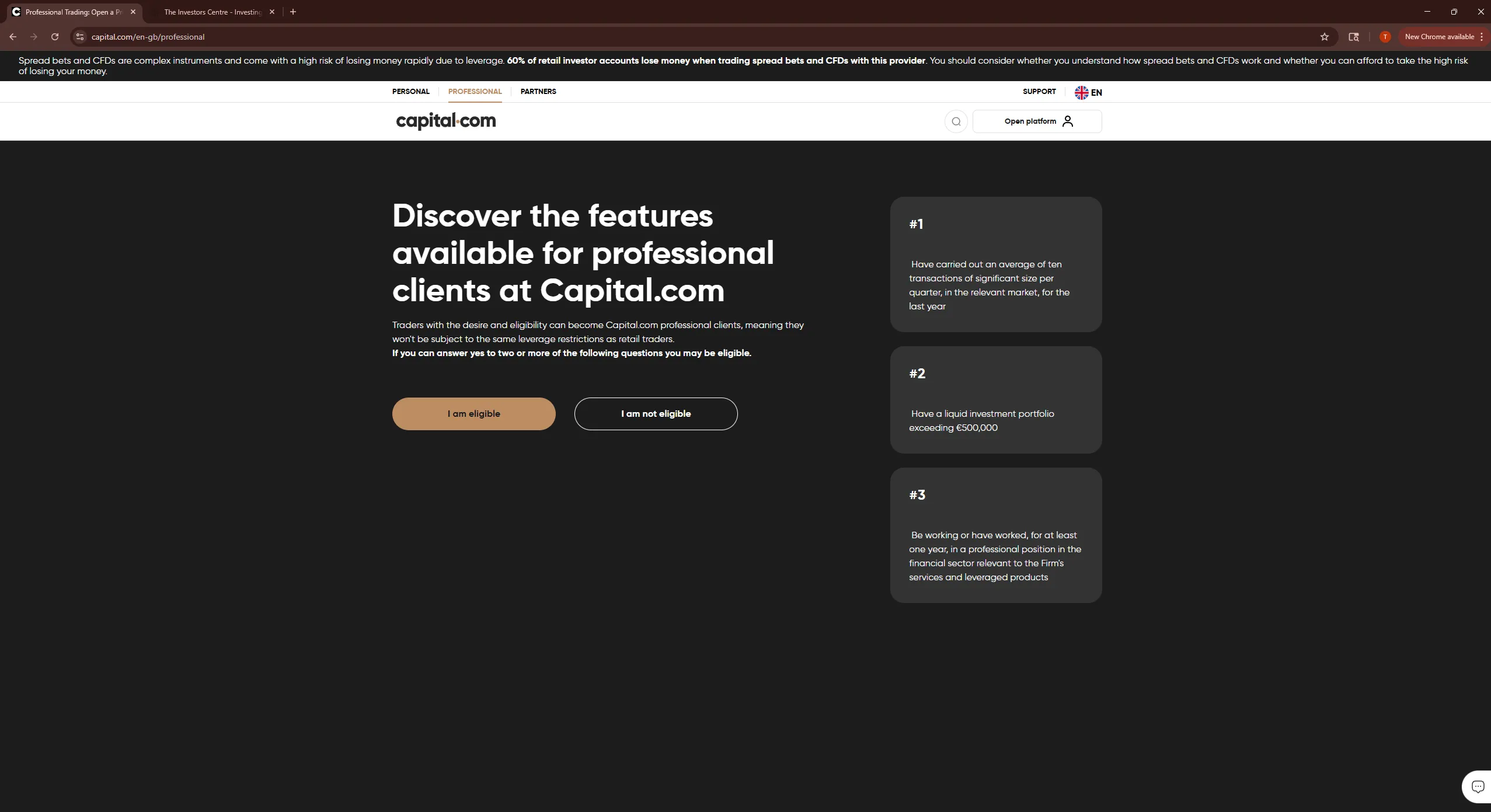
Capital.com — Best Overall for Professional CFD Traders
Capital.com offers professional traders higher leverage limits (subject to eligibility and broker controls) on forex, indices, and commodities, combined with commission-free CFD trading, which can help simplify cost structures as position sizes increase.
Pros
- Higher leverage limits available for eligible professional clients (subject to approval)
- Commission-free* trading on all CFDs
- Eligible clients may receive additional benefits depending on trading activity and account status
- Dedicated account manager and volume-based cash rebates
Cons
- Cannot use shares as collateral
- Smaller instrument range (3,000+) than competitors
How Do You Upgrade to Professional Status at Capital.com?
To apply for professional status, eligible clients must first open a standard retail account. Requests for professional classification can then be submitted via the account area, subject to meeting eligibility requirements. Capital.com requires documentation demonstrating that at least two of the three FCA (MiFID II / COBS) criteria are met. Approval timelines vary depending on the information provided.
What Leverage and Margin Do Professional Traders Get?
Professional accounts at Capital.com provide access to higher leverage limits, subject to internal risk controls and broker discretion. Maximum leverage levels vary by asset class and are higher than those available to retail clients.
Leverage availability is subject to eligibility, broker approval, and may change.
| Asset Class | Retail Leverage | Professional Leverage |
|---|---|---|
| Major Forex | 30:1 | Up to 500:1 |
| Minor Forex | 20:1 | Up to 200:1 |
| Major Indices | 20:1 | Up to 500:1 |
| Commodities | 10:1 | Up to 500:1 |
| Shares | 5:1 | Up to 33:1 |
What Professional-Exclusive Benefits Does Capital.com Offer?
Professional clients may receive additional support features, such as a dedicated account manager, and volume-based rebates, depending on trading activity and account status. Educational resources and market commentary may also differ from retail accounts.
Best For
High-frequency forex and index traders who meet professional eligibility requirements and use higher leverage as part of their trading approach. The availability of higher leverage limits (subject to broker approval) and commission-free execution may suit certain short-term trading styles, provided traders fully understand the increased risks, including how margin efficiency and spread costs affect outcomes.
*other fees may apply.
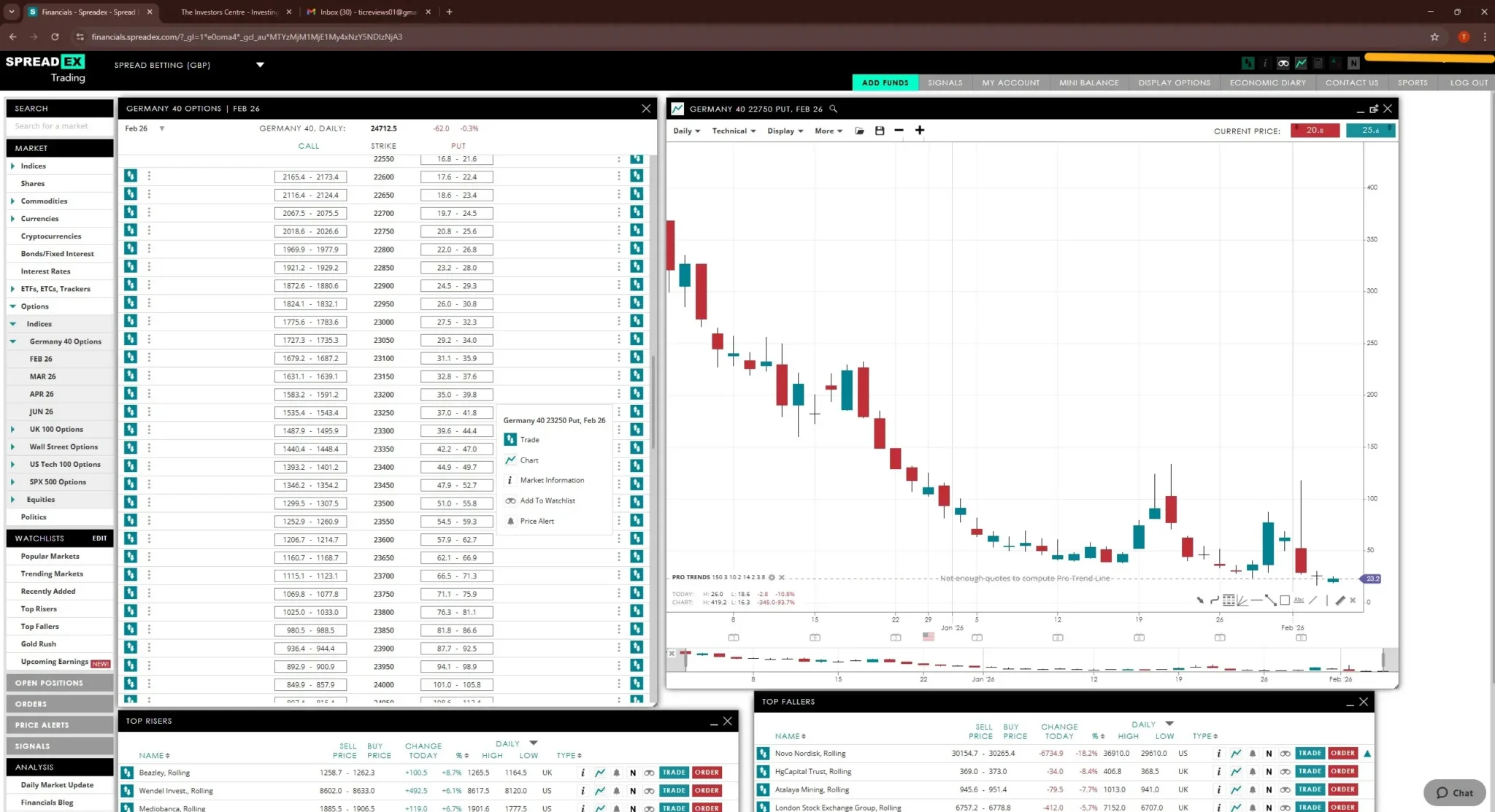
Spreadex — Best for Spread Betting and CFD Professionals
Spreadex combines financial spread betting with CFD trading under one FCA-regulated platform, offering professional traders competitive margins and the flexibility to choose between tax-free spread betting and traditional CFD execution.
Pros
- Combined spread betting and CFD trading from one account
- No minimum deposit requirement
- Competitive professional margin rates
- FCA-regulated with long UK track record
Cons
- Smaller instrument range than IG
- Proprietary platform only—no MT4/MT5
How Do You Upgrade to Professional Status at Spreadex?
Contact Spreadex directly to apply for professional client status. You must meet at least two of the three FCA eligibility criteria. Spreadex reviews applications and requests documentation to verify trading activity, portfolio size, or professional experience.
What Leverage and Margin Do Professional Traders Get?
Professional accounts at Spreadex unlock higher leverage than the retail ESMA caps, with competitive margin rates across forex, indices, and commodities. The combination of spread betting and CFD access means professionals can choose the most appropriate execution method for each strategy.
| Asset Class | Retail Leverage | Professional Leverage |
|---|---|---|
| Major Forex | 30:1 | Up to 200:1 |
| Minor Forex | 20:1 | Up to 100:1 |
| Major Indices | 20:1 | Up to 200:1 |
| Commodities | 10:1 | Up to 100:1 |
| Shares | 5:1 | Up to 20:1 |
What Professional-Exclusive Benefits Does Spreadex Offer?
Professional clients at Spreadex benefit from a dedicated account manager, competitive margin rates, and the unique flexibility to trade both spread bets and CFDs from a single account. The no-minimum-deposit policy allows professionals to allocate capital freely, while commission-free execution on all instruments keeps costs predictable across strategies.
Best For
Professional traders who want the flexibility to switch between tax-free spread betting and CFD trading depending on the strategy. The no-minimum-deposit policy and competitive margins suit active professionals managing multiple positions.
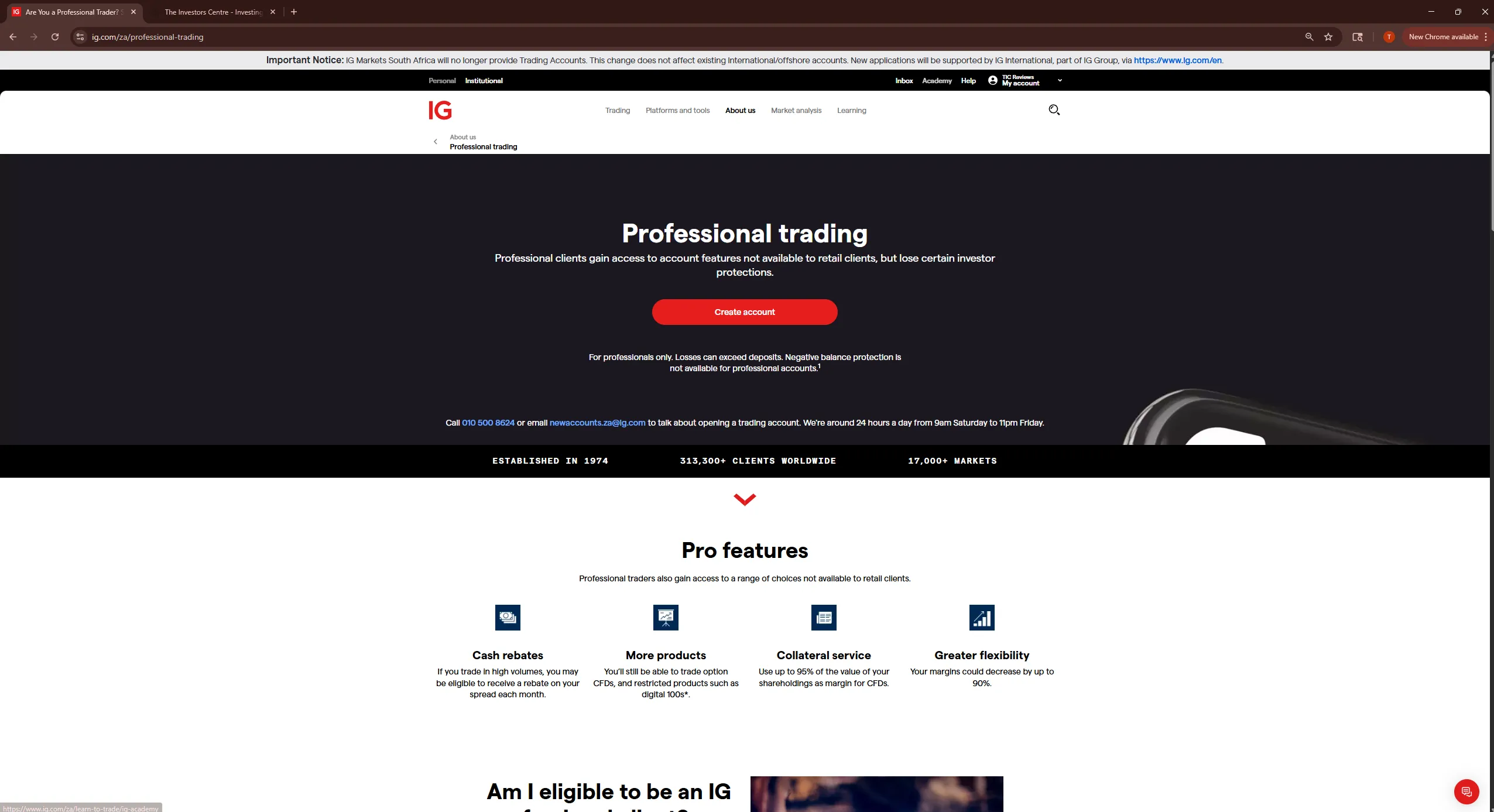
IG — Best for Range and Established Infrastructure
IG combines professional trading accounts with 50 years of operational experience and access to over 17,000 instruments. The platform’s L2 Dealer provides direct market access for professionals who need order book visibility.
Pros
- 50 years operational experience, LSE-listed
- 17,000+ instruments available
- L2 Dealer for direct market access
- Professional margin rates drop over 90%
Cons
- Professional leverage may be lower than some competitors
- £250 minimum deposit
- Dedicated manager requires Select tier
How Do You Upgrade to Professional Status at IG?
Log into My IG and select Settings → Client and Account Status. If you meet the eligibility criteria, the option to apply for professional status appears automatically. IG reviews applications within two hours in most cases and will request supporting documentation to verify your trading history or portfolio size.
What Leverage and Margin Do Professional Traders Get?
Professional accounts at IG offer leverage up to 222:1 on major forex pairs. Margin rates drop significantly across asset classes.
| Asset Class | Retail Margin | Professional Margin |
|---|---|---|
| EUR/USD | 3.33% | ~0.45% |
| FTSE 100 | 5% | ~0.45% |
| Gold | 5% | ~0.45% |
What Professional-Exclusive Benefits Does IG Offer?
Professional clients can negotiate bespoke margin call levels to improve capital efficiency. Volume-based rebates reward active traders, and the absence of custody fees on share dealing accounts benefits those holding positions longer-term. IG’s ProRealTime and L2 Dealer platforms provide Level 2 market data and advanced order types suited to professional execution requirements.
Best For
Multi-asset professionals who need extensive instrument coverage and proven infrastructure. IG’s 50-year track record, LSE-listed parent company, and access to 17,000+ instruments suit traders who prioritise stability and range over maximum leverage.
What Do You Gain and Lose as a Professional Trader?
Upgrading to professional status involves a genuine trade-off between increased trading flexibility and reduced regulatory protections. Understanding both sides is essential before applying.
What Professional Traders Gain
| Benefit | How It Helps |
|---|---|
| Higher Leverage | Access to higher leverage limits (subject to eligibility and broker controls) on forex compared with the 30:1 retail cap, which can reduce margin requirements |
| Lower Margin Rates | Hold larger positions with less capital tied up, while increasing potential losses |
| Fewer Product Restrictions | Access to a broader range of products, subject to broker and regulatory rules |
| Different Communication Standards | Brokers may provide less standardised risk disclosures, assuming a higher level of experience |
| Volume-Based Benefits | Many brokers offer rebates, pricing adjustments,, or dedicated support, depending on trading activity. |
What Professional Traders Lose
| Protection Lost | What It Means |
|---|---|
| Negative Balance Protection | Your account can go below zero— meaning you could be required to cover losses beyond your deposit |
| Financial Ombudsman Access | You may lose access to the FOS for dispute resolution |
| Best Execution Priority | Execution policies may place less emphasis on price as the sole factor, compared with retail accounts |
| Standardised Risk Warnings | Fewer mandatory warnings about leverage and product risks may be provided |
Important: The loss of negative balance protection is the most significant change. During extreme market volatility—such as the 2015 Swiss franc event—accounts without this protection can accumulate losses exceeding deposited funds. Professional traders accept responsibility for monitoring positions and managing this risk independently, and should fully understand the implications before opting up.
How Do These Professional Trading Accounts Compare?
| Feature | Capital.com | Spreadex | IG |
|---|---|---|---|
| Pro Leverage (FX) | Up to 500:1 | Up to 200:1 | Up to 222:1 |
| Pro Leverage (Indices) | Up to 500:1 | Up to 200:1 | Up to 222:1 |
| Pro Leverage (Shares) | Up to 33:1 | Up to 20:1 | Up to 20:1 |
| Commission Model | Commission-free (spread only) | Commission-free (spread only) | Commission-free CFDs (spread only) |
| Joining Bonus | — | None advertised | Up to £5,000 (referrals) |
| Dedicated Manager | ✓ Yes | ✓ Yes | ✓ Yes (Select tier) |
| Volume Rebates | ✓ Cash rebates | ✗ No | ✓ Volume-based rebates |
| Spread Betting | ✓ Yes | ✓ Yes (core offering) | ✓ Yes |
| Platforms | Proprietary, MT4, TradingView | Proprietary | Proprietary, MT4, ProRealTime, L2 Dealer |
| Instruments | 3,000+ | 10,000+ | 17,000+ |
| Years Operating | Since 2016 | Since 1999 | Since 1974 |
Are These Professional Trading Accounts Safe and Regulated?
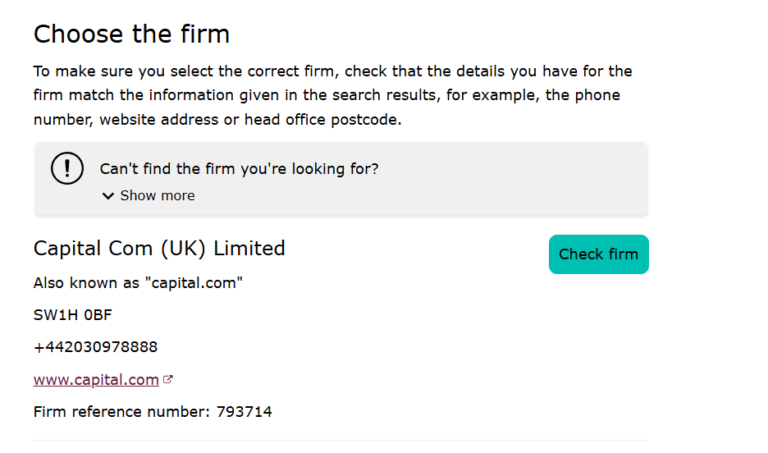
All three brokers hold full FCA authorisation and segregate client funds from company assets. However, professional status changes your compensation coverage.
| Broker | FCA FRN | FSCS Protection | Segregated Funds | Negative Balance Protection |
|---|---|---|---|---|
| Capital.com | 793714 | Up to £85,000 (investments) | ✓ Yes | ✗ No (professional) |
| Spreadex | 202392 | Up to £85,000 (investments) | ✓ Yes | ✗ No (professional) |
| IG | 195355 | Up to £85,000 (investments) | ✓ Yes | ✗ No (professional) |
Important: Professional clients retain FSCS protection for eligible investments (up to £85,000) but lose negative balance protection. This means losses can exceed your deposited funds during extreme market events. The FSCS deposit protection limit of £120,000 applies to cash held with authorised banks—check with each broker how client money is held.
68% of retail investor accounts lose money when trading spread bets and CFDs with IG. 62% lose money with Capital.com. Professional accounts carry additional risks due to higher leverage and the absence of negative balance protection.
What Are the Margin Differences Between Retail and Professional Accounts?
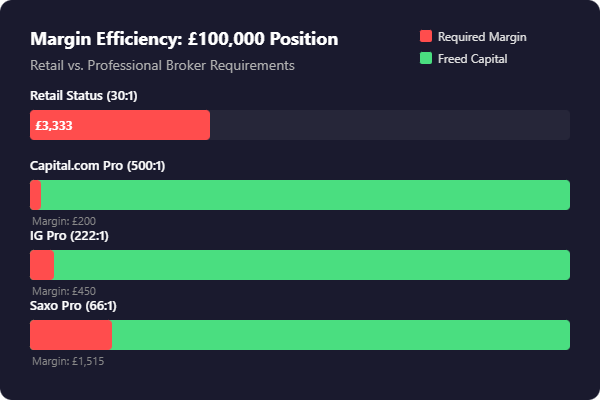
The practical impact of professional status shows most clearly in margin requirements. Here’s how a £100,000 forex position compares:
| Account Type | Leverage | Margin Required | Capital Freed |
|---|---|---|---|
| Retail (30:1) | 30:1 | £3,333 | — |
| Professional (Capital.com 500:1) | 500:1 | £200 | £3,133 |
| Professional (Spreadex 200:1) | 200:1 | £500 | £2,833 |
| Professional (IG 222:1) | 222:1 | £450 | £2,883 |
This freed capital can be deployed across additional positions or held as buffer against drawdowns. However, higher leverage also means the same market move produces proportionally larger profits or losses relative to your margin.
When Should You Consider Upgrading to Professional Status?
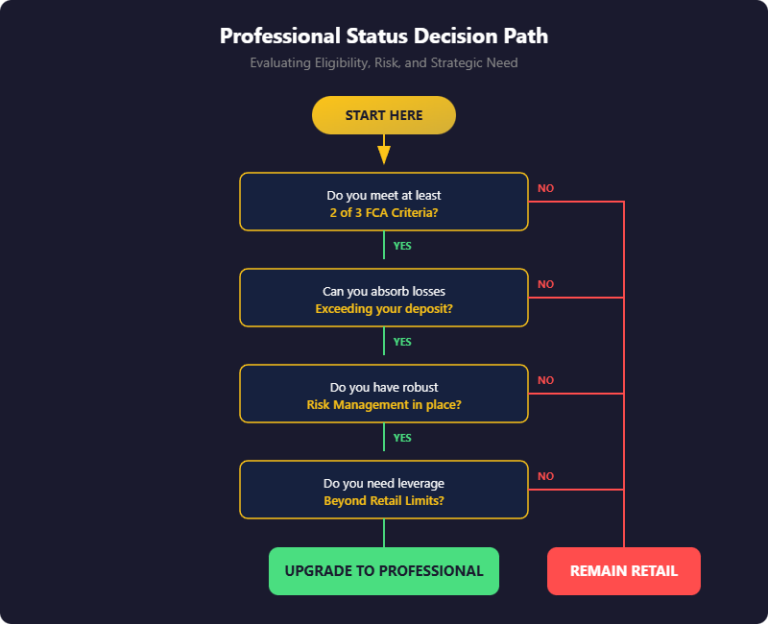
Professional accounts suit traders who genuinely need the additional leverage and understand the risks involved. Consider upgrading if:
You should consider professional status if:
- You meet at least two of the three eligibility criteria
- You have robust risk management systems in place
- You understand and can absorb potential losses exceeding your deposit
- You need margin efficiency to execute your trading strategy
- You have sufficient capital to withstand drawdowns at higher leverage
You should remain retail if:
- You only meet one eligibility criterion
- You rely on negative balance protection as a safety net
- You’re uncertain about managing positions at higher leverage
- Your trading strategy works within retail margin limits
- You value the additional regulatory protections
Final Thoughts
Capital.com offers professional traders access to higher leverage limits (up to 500:1, subject to eligibility and broker controls), commission-free execution, and volume-based account features, depending on trading activity and account status.
For forex and index traders who meet professional eligibility requirements and prioritise margin flexibility and transparent pricing, Capital.com is one option among UK FCA-regulated brokers, provided traders fully understand the increased risks associated with professional client status.
Spreadex provides the unique advantage of combined spread betting and CFD trading with competitive professional margins and no minimum deposit requirement. IG provides unmatched instrument coverage and five decades of operational stability, making it the choice for professionals who need access to 17,000+ markets and value established infrastructure.
Before upgrading, ensure you genuinely meet the eligibility requirements and understand the trade-offs—particularly the loss of negative balance protection. Professional status is designed for experienced traders who can manage the additional risks that come with higher leverage.
*other fees may apply.
References
- Capital.com UK Professional — FRN 793714, leverage details, eligibility criteria
- Spreadex UK — FRN 202392, spread betting and CFD professional accounts
- IG UK Professional — FRN 195355, margin rates, qualification process
- FCA Financial Services Register — Broker authorisation verification
- FSCS Investment Protection — £85,000 investment compensation limit
- ESMA CFD Measures — Leverage restrictions for retail clients under product intervention powers
Disclaimer: Professional account features, leverage limits, and eligibility requirements verified from broker websites, January 2026. Leverage rates are maximum levels and may vary by specific instrument. Professional clients lose certain regulatory protections including negative balance protection.