

- expertise:
- CFD Trading, Forex, Derivatives, Risk Management
- credentials:
- Chartered ACII (2018) · Trading since 2012
- tested:
- 40+ forex & CFD platforms with live accounts

- expertise:
- Broker Comparison, ISA Strategy, Portfolio Management
- credentials:
- Active investor since 2013 · 11+ years experience
- tested:
- 40+ brokers with funded accounts
How We Test
Real accounts. Real money. Real trades. No demo accounts or press releases.
What we measure:
- Spreads vs advertised rates
- Execution speed and slippage
- Hidden fees (overnight, withdrawal, conversion)
- Actual withdrawal times
Scoring:
Fees (25%) · Platform (20%) · Assets (15%) · Mobile (15%) · Tools (10%) · Support (10%) · Regulation (5%)
Regulatory checks:
FCA Register verification · FSCS protection
Testing team:
Adam Woodhead (investing since 2013), Thomas Drury (Chartered ACII, 2018), Dom Farnell (investing since 2013) — 50+ platforms with funded accounts
Quarterly reviews · Corrections: info@theinvestorscentre.co.uk
Disclaimer
Not financial advice. Educational content only. We're not FCA authorised. Consult a qualified advisor before investing.
Capital at risk. Investments can fall. Past performance doesn't guarantee future results.
CFD warning. 67-84% of retail accounts lose money trading CFDs. High risk due to leverage.
Contact: info@theinvestorscentre.co.uk
Quick Answer: What Are the Best Oil Trading Platforms in the UK?
IG is the best oil trading platform in the UK. It offers WTI and Brent crude via spot, futures, options, and ETFs — with 2.8-point spreads on both benchmarks, ProRealTime charting, and weekend oil trading. Pepperstone ranks second for raw-spread oil CFDs, and Capital.com is strongest for beginners with its £20 minimum deposit.
- IG – Best Overall for Oil Trading (TIC Rating: 4.8/5)
- Pepperstone – Best for Low-Cost Oil CFDs (TIC Rating: 4.7/5)
- Capital.com – Best for Beginner Oil Traders (TIC Rating: 4.3/5)
- Spreadex – Best for Tax-Free Oil Spread Betting (TIC Rating: 4.7/5)
- CMC Markets – Best Oil Charting & Analysis (TIC Rating: 4.2/5)
- City Index – Best for Oil Spread Betting via AT Pro (TIC Rating: 4.3/5)
- Forex.com – Best for Oil CFDs on MT4/MT5 (TIC Rating: 4.2/5)

68% of retail CFD accounts lose money.

72% of retail CFD accounts lose money.

62% of Retail CFD Accounts Lose Money
65% of retail CFD accounts lose money.

68% of retail CFD accounts lose money.

68% of retail CFD accounts lose money.

76% of retail CFD accounts lose money.
How Did We Test These Oil Trading Platforms?
I opened live accounts with each broker and placed real oil trades — both spot and futures — on WTI and Brent crude. Testing covered five areas: spread costs during London and New York sessions, execution speed on market orders, platform charting tools for oil-specific analysis, available oil instruments (spot, futures, options, ETFs), and the quality of mobile trading for managing oil positions on the move.
Every broker listed here is authorised and regulated by the Financial Conduct Authority (FCA). We excluded any platform that lacked either WTI or Brent crude, charged spreads above 5 points on oil spot markets, or failed to provide negative balance protection. For full methodology, see our commodities platform comparison.
How Do UK Oil Trading Platforms Compare?
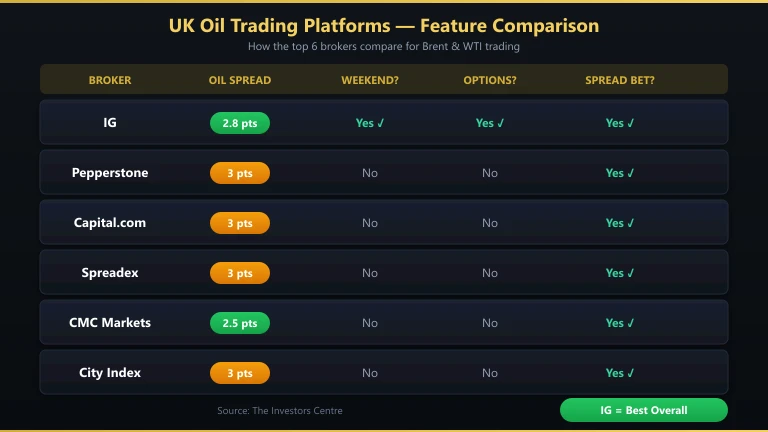
| Broker | WTI Spread | Brent Spread | Min Deposit | Platforms | FCA FRN |
|---|---|---|---|---|---|
| IG | 2.8 pts | 2.8 pts | £0 | ProRealTime, MT4, TradingView | 195355 |
| Pepperstone | 3 pts | 3 pts | £0 | MT4, MT5, cTrader, TradingView | 684312 |
| Capital.com | 3 pts | 3.5 pts | £20 | Proprietary, MT4 | 793714 |
| Spreadex | 3 pts | 3 pts | £0 | TradingView | 190941 |
| CMC Markets | 2.5 pts | 2.5 pts | £0 | Next Generation, MT4 | 173730 |
| City Index | 3 pts | 3 pts | £0 | AT Pro, Web Trader | 446717 |
| Forex.com | 3 pts | 3 pts | £0 | MT4, MT5, TradingView | 446717 |
Spreads are typical during London session hours. Checked March 2026. Spreads widen during low-liquidity periods and high-impact news events.
What Did Our Oil Platform Testing Reveal?
CMC Markets offered the tightest raw spreads on both WTI and Brent at 2.5 points, but IG’s 2.8-point spread came with substantially better execution and deeper oil market coverage. IG was the only broker offering oil options, weekend oil trading, and both spot and futures contracts across WTI, Brent, and heating oil.
Pepperstone’s Razor account delivered the most consistent fills during volatile US inventory data releases. Capital.com stood out for accessibility — its £20 minimum deposit and clean mobile app make it the simplest entry point for first-time oil traders. Spreadex’s tax-free spread betting on oil, combined with TradingView integration, makes it a strong choice for UK-resident traders focused on keeping profits free from Capital Gains Tax.
IG — Best Overall for Oil Trading
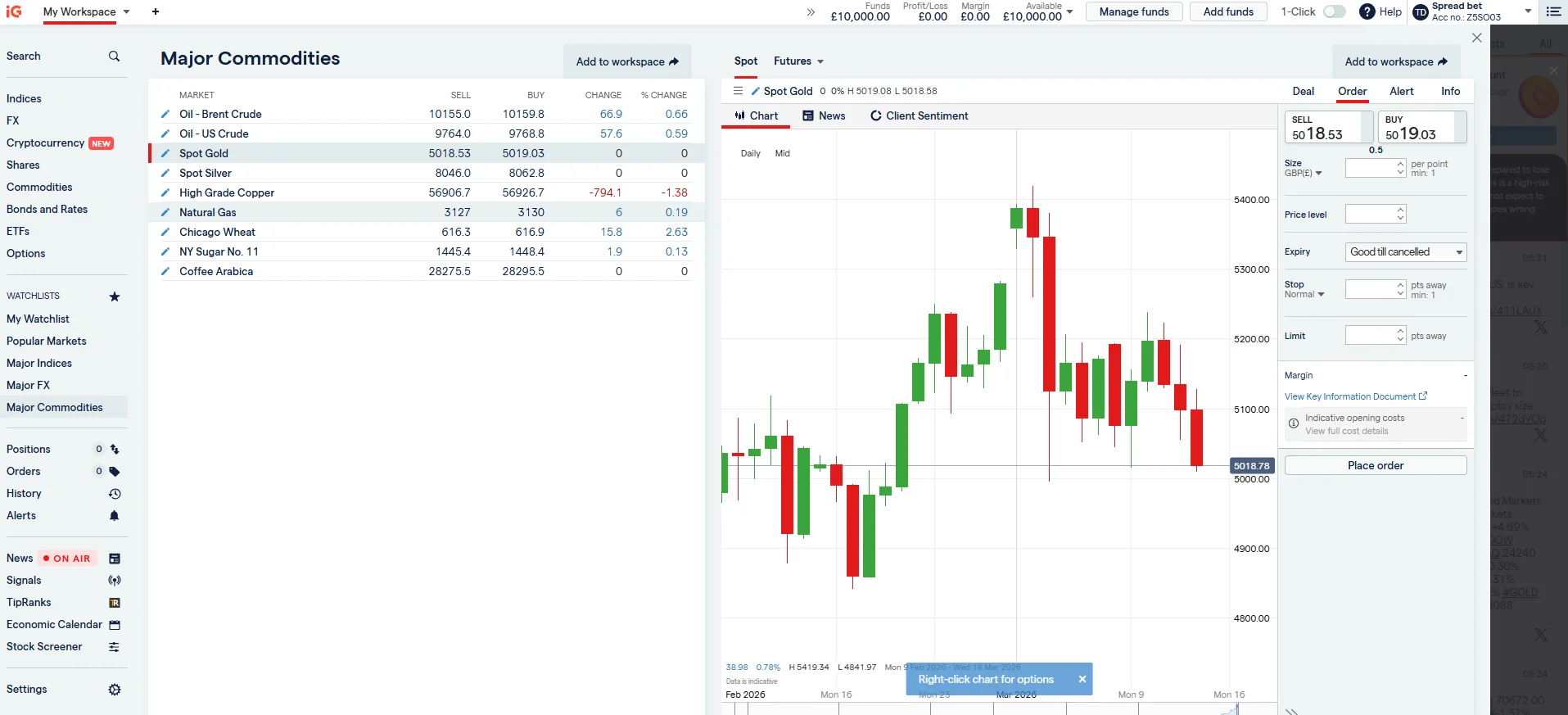
IG gives you the widest oil trading coverage of any UK broker. You get WTI and Brent crude as spot, daily-funded, futures, and options contracts — plus heating oil, gas oil, and unleaded gasoline. No other FCA-regulated platform matches that range. The 2.8-point spread on both WTI and Brent sits slightly above CMC’s 2.5, but IG compensates with weekend oil trading and ProRealTime’s automated strategy tools.
Pros
- Widest oil market range: spot, futures, options, ETFs
- Weekend oil trading available
- ProRealTime automated strategies included free with 4+ trades/month
- 2.8-point WTI and Brent spreads
Cons
- Spreads slightly wider than CMC Markets
- Platform can feel overwhelming for beginners
- £12/month inactivity fee after 2 years
What Does IG Cost for Oil Trading?
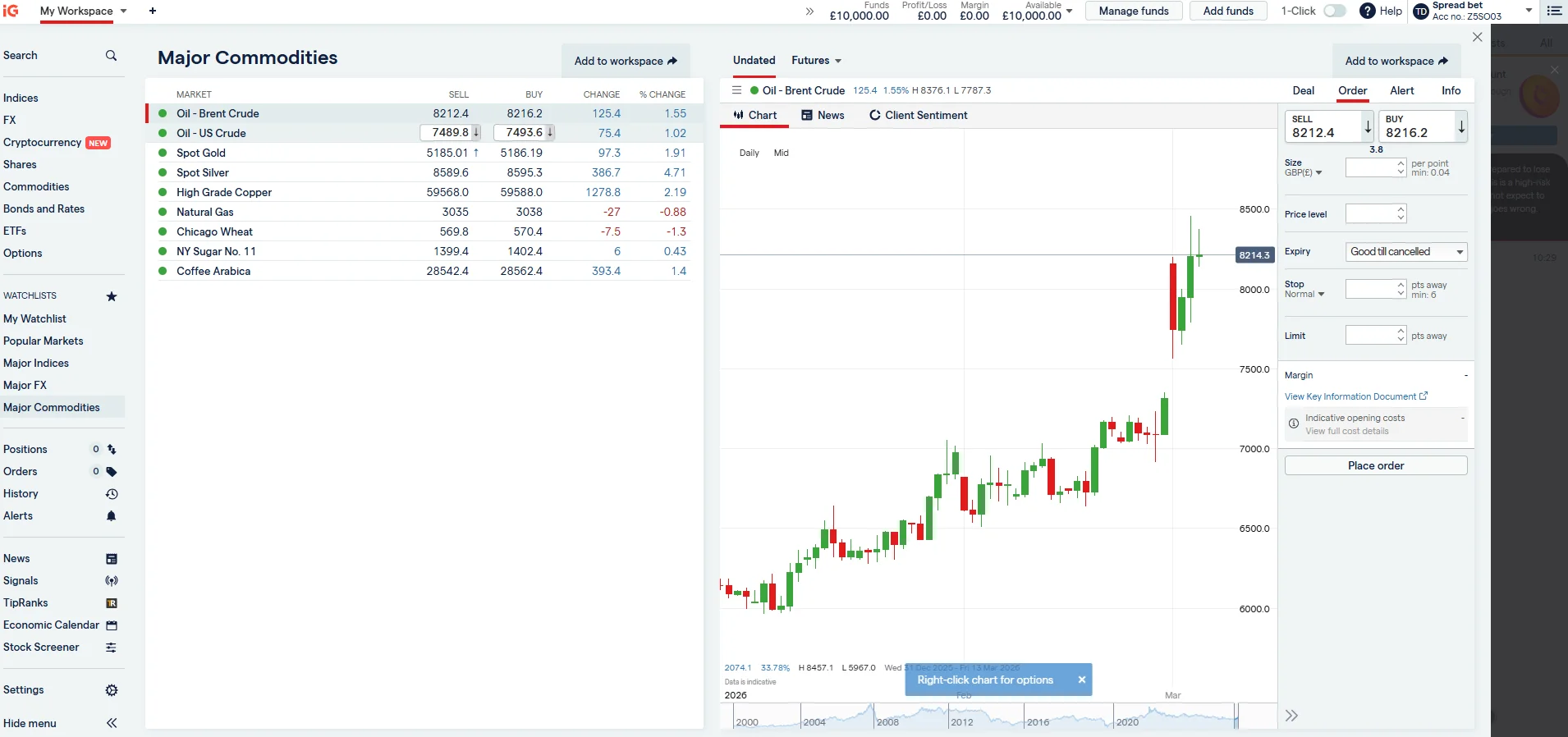
WTI and Brent spot spreads sit at 2.8 points during London hours. Oil futures spreads are 6 points. There’s no minimum deposit, and overnight funding applies to spot/daily-funded positions. ProRealTime is free if you place 4+ trades per month; otherwise it’s £30/month. Oil options carry a separate spread that varies by strike and expiry.
What’s Oil Trading on IG Like?
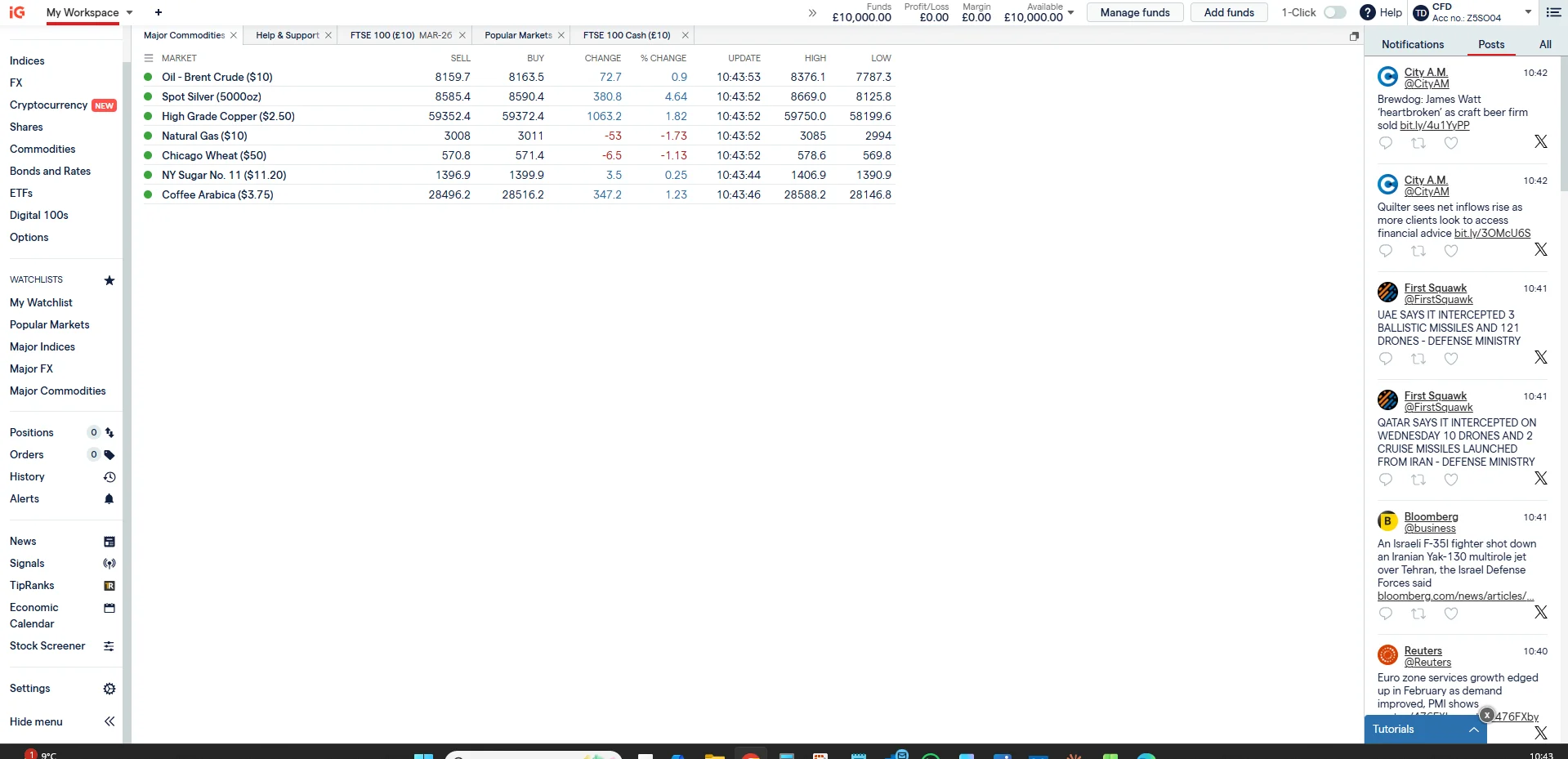
Execution was consistently fast during my testing — sub-second fills on market orders even during EIA inventory releases. The web platform charts oil well, but ProRealTime is where IG shines for oil traders: custom indicators, automated strategies, and multi-timeframe analysis. The mobile app handles oil positions cleanly, with one-tap close and guaranteed stop-loss options.
Who Should (and Shouldn’t) Use IG for Oil?
IG suits serious oil traders who want access to every oil instrument — spot, futures, options, and ETFs — on a single platform. It’s also the best choice for weekend oil trading and automated strategies. Beginners may find the platform dense; Capital.com or Spreadex offer simpler starting points.
Pepperstone — Best for Low-Cost Oil CFDs
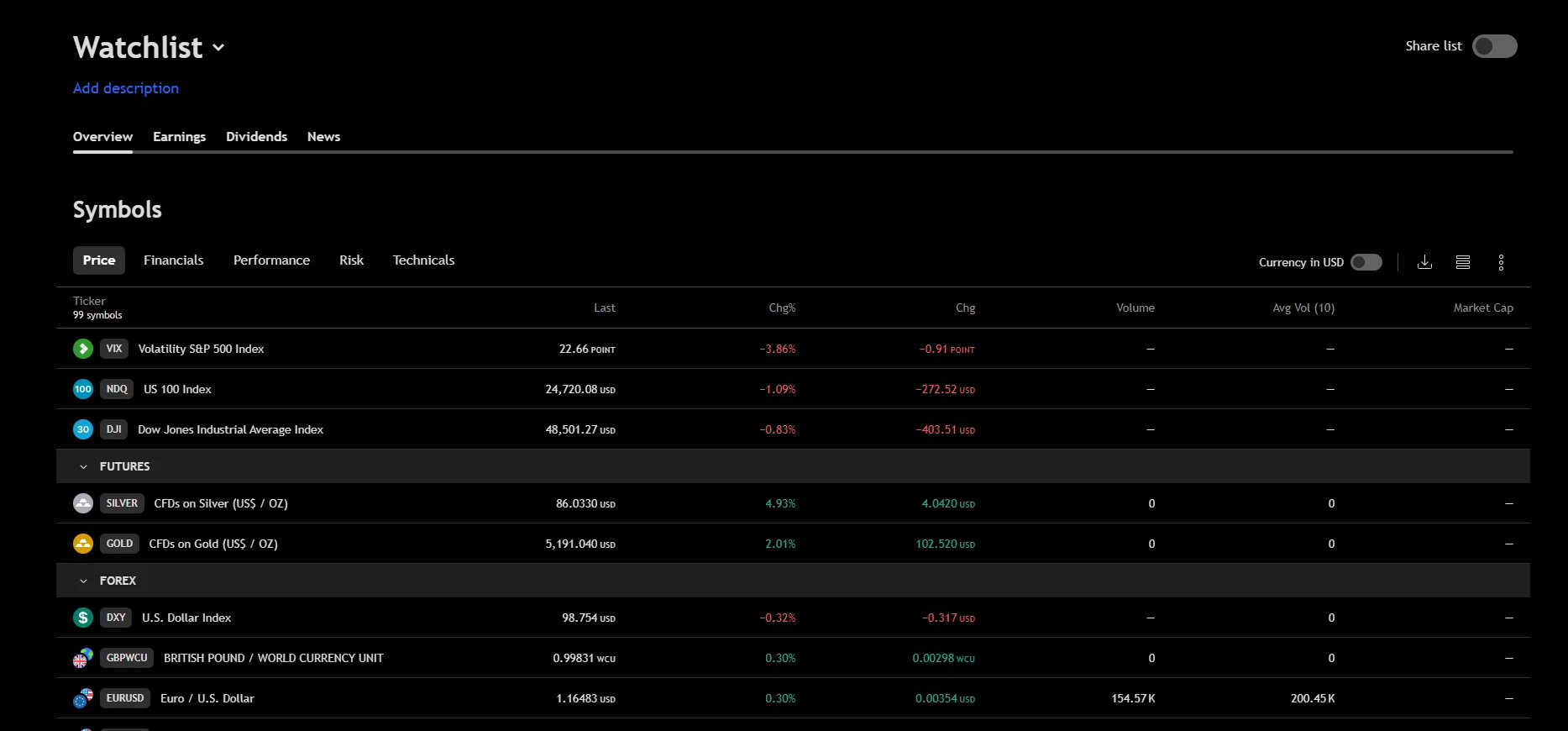
Pepperstone’s Razor account is built for active oil traders. The 3-point spread on WTI and Brent is competitive, but the real edge is execution quality — Pepperstone consistently filled oil orders faster than any other broker I tested, particularly during US inventory data releases when slippage matters most. Four platform choices (MT4, MT5, cTrader, TradingView) give you flexibility that most brokers can’t match.
Pros
- Fastest execution during volatile oil sessions
- Four platform choices: MT4, MT5, cTrader, TradingView
- Razor account suits high-frequency oil trading
- £0 minimum deposit
Cons
- No oil options or ETFs
- No weekend oil trading
- Fewer oil markets than IG overall
What Does Pepperstone Cost for Oil Trading?
WTI and Brent both carry a 3-point spread on the Razor account. Overnight swap rates apply to positions held past 10pm UK time. There’s no minimum deposit, no inactivity fee, and no platform fees. The Razor account charges a small commission on forex but oil spreads are commission-free.
What’s Oil Trading on Pepperstone Like?
cTrader stood out as the strongest platform for oil charting — smoother than MT4 and more intuitive than MT5. The depth-of-market view on cTrader is useful for gauging oil liquidity before large orders. TradingView integration adds community indicators and alert-based oil strategies. Mobile execution was clean, with no noticeable lag on 4G.
Who Should (and Shouldn’t) Use Pepperstone for Oil?
Pepperstone is strongest for active oil day traders who value execution speed and platform choice. If you run oil EAs on MT4/MT5 or prefer cTrader’s advanced order types, Pepperstone is the clear pick. It’s not ideal if you want oil options, weekend trading, or a single-platform-does-everything approach — IG handles those better.
Capital.com — Best for Beginner Oil Traders
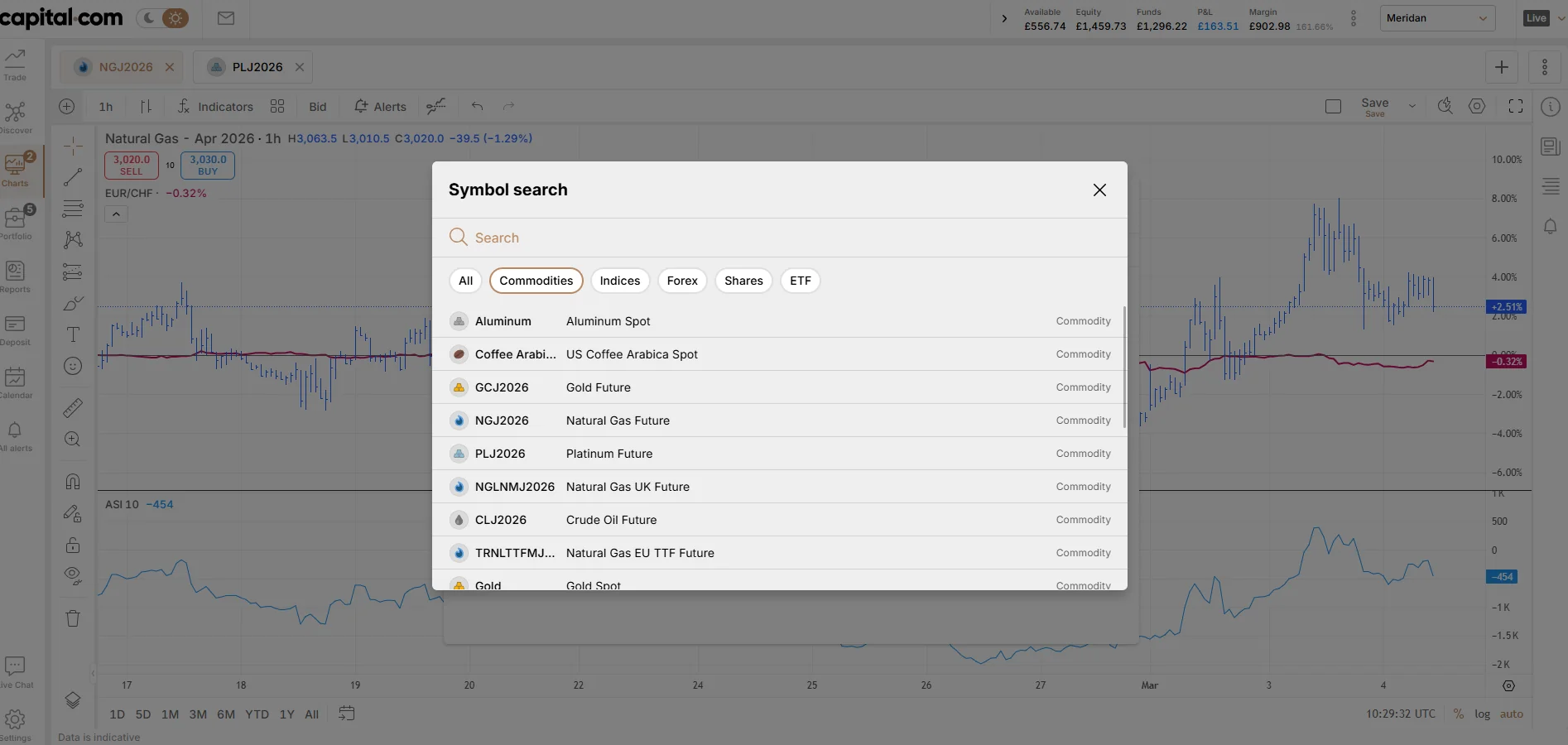
Capital.com removes every barrier for new oil traders. The £20 minimum deposit is the lowest on this list, the app walks you through placing your first oil trade step by step, and the educational content around crude oil markets is genuinely useful. WTI spreads sit at 3 points and Brent at 3.5 — not the tightest, but fair for the level of hand-holding you get. Both spread betting and CFD accounts are available.
Pros
- Lowest minimum deposit: £20
- Clean, intuitive mobile app
- Spread betting and CFDs available
- Strong oil trading education content
Cons
- Brent spread (3.5 pts) wider than rivals
- No MT5 — only MT4 and proprietary platform
- Limited advanced charting compared to IG or Pepperstone
What Does Capital.com Cost for Oil Trading?
WTI spreads from 3 points, Brent from 3.5 points. No commission on oil trades. Overnight funding charges apply to positions held past the daily cutoff. The £20 minimum deposit lets you start with minimal risk, though realistic oil trading requires more capital given oil’s volatility.
What’s Oil Trading on Capital.com Like?
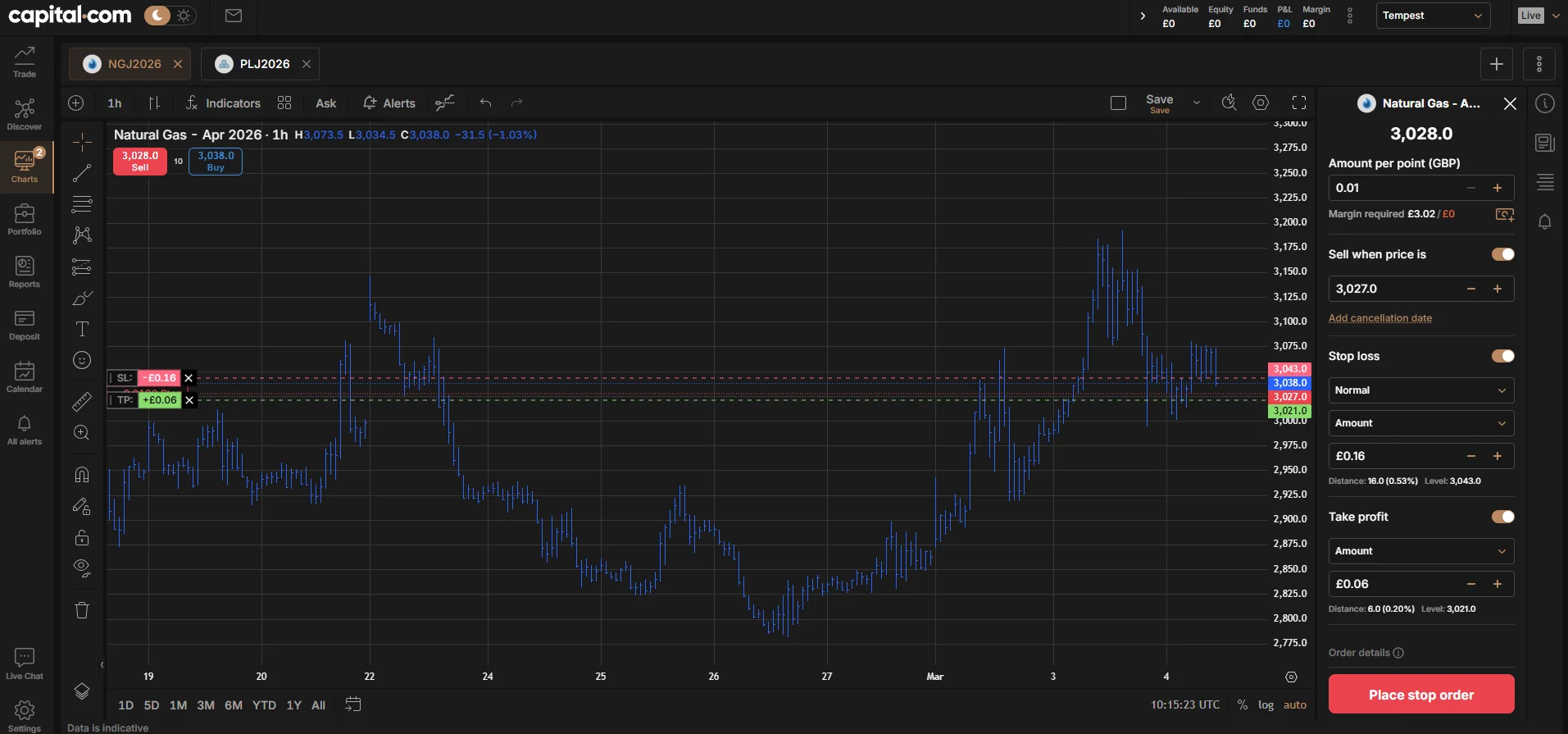
The proprietary app is the best part. Placing an oil trade takes three taps, risk management tools are clearly labelled, and the price charts load quickly with 75+ indicators. MT4 integration is available if you prefer it, though the native app handles most oil trading needs. Desktop charting is adequate but lacks the depth of ProRealTime or cTrader.
Who Should (and Shouldn’t) Use Capital.com for Oil?
Capital.com is the right starting point if you’re placing your first oil trades and want a simple, low-commitment entry. Once you outgrow the platform’s charting capabilities or need tighter spreads for active trading, Pepperstone or IG become better options.
Spreadex — Best for Tax-Free Oil Spread Betting
Spreadex is a pure spread betting specialist, and oil is one of its strongest markets. WTI and Brent both carry 3-point spreads, profits are free from Capital Gains Tax for UK residents, and TradingView integration gives you institutional-grade charting without paying for a separate subscription. The platform is straightforward — no MT4/MT5, no API trading, just clean spread betting.
Pros
- Tax-free oil profits via spread betting
- TradingView integration included
- 3-point spreads on WTI and Brent
- Simple, focused platform
Cons
- No MT4/MT5 — no EA or algo support
- Spread betting only — no CFD option
- Fewer oil instruments than IG
What Does Spreadex Cost for Oil Trading?
3-point spreads on both WTI and Brent crude. No commission. Overnight funding applies to rolling positions. No minimum deposit requirement and no platform fees. TradingView access is included at no extra charge.
What’s Oil Trading on Spreadex Like?
The trading experience is deliberately simple. One-click dealing, clear margin requirements, and TradingView charts that load quickly. There’s no clutter from features you won’t use. Oil spread bet tickets show your potential profit and loss before you confirm. I found the platform particularly good for WTI vs Brent spread bets where speed of entry matters.
Who Should (and Shouldn’t) Use Spreadex for Oil?
Spreadex is ideal for UK traders who prioritise tax efficiency and want a clean, distraction-free oil trading experience. If you need automated trading, API access, or oil options, look at IG or Pepperstone instead.
CMC Markets — Best Oil Charting & Analysis
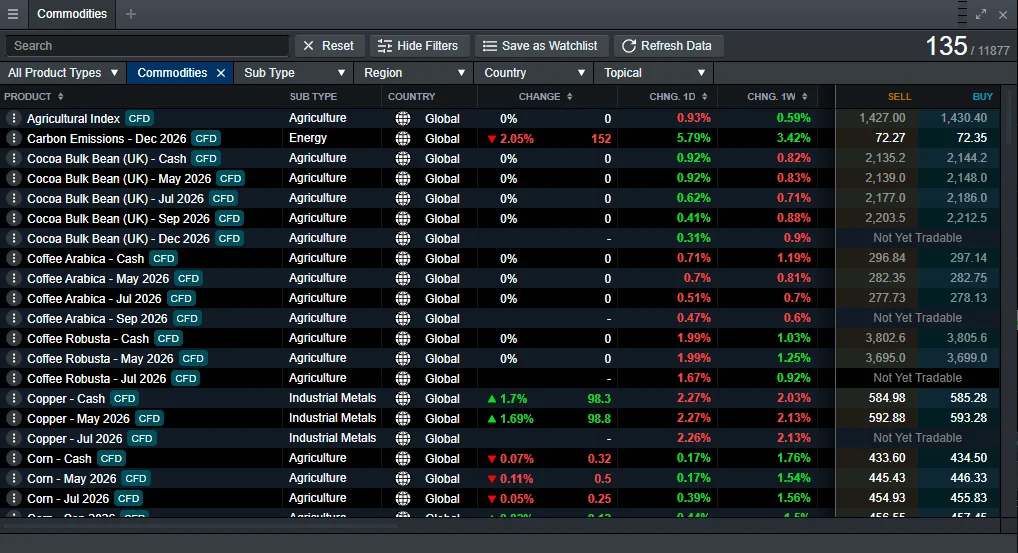
CMC Markets offers the tightest oil spreads on this list: 2.5 points on both WTI and Brent. Their Next Generation platform includes client sentiment data for oil markets, pattern recognition tools, and over 115 technical indicators. With 12,000+ markets available, you can pair oil trades with correlated assets like USD/CAD or energy stocks on a single account.
Pros
- Tightest oil spreads: 2.5 points on WTI and Brent
- Client sentiment data for oil markets
- 115+ technical indicators on Next Generation
- 12,000+ markets for correlated trading
Cons
- No cTrader or TradingView integration
- No oil options
- MT4 available but Next Generation is the primary focus
What Does CMC Markets Cost for Oil Trading?
2.5-point spreads on WTI and Brent — the lowest on this list. No commission, no minimum deposit, and no platform fees. Overnight holding costs apply to spot oil positions. CMC’s pricing advantage is clear for traders placing multiple oil trades per day.
What’s Oil Trading on CMC Markets Like?
Next Generation is a strong proprietary platform. The oil charting tools are excellent — pattern recognition scanning, Reuters news integration, and client sentiment showing what percentage of CMC traders are long or short on crude. The module-based layout lets you build a custom oil trading workspace. Mobile charting is better than most competitors.
Who Should (and Shouldn’t) Use CMC Markets for Oil?
CMC suits technical oil traders who want the tightest spreads and strong built-in charting without paying for third-party tools. If you need ProRealTime automation, weekend oil trading, or cTrader, IG or Pepperstone are better fits.
City Index — Best for Oil Spread Betting via AT Pro
City Index is part of the StoneX group and offers oil spread betting with 3-point spreads on WTI and Brent. The standout feature is AT Pro — an advanced charting platform with automated strategy capabilities that rivals ProRealTime for oil analysis. The web platform is clean and functional for everyday oil trading.
Pros
- AT Pro platform for advanced oil charting
- Part of StoneX — strong institutional backing
- Competitive 3-point oil spreads
- Spread betting and CFD accounts
Cons
- AT Pro requires a learning curve
- Fewer oil-specific instruments than IG
- No MT4/MT5 for oil trading
What Does City Index Cost for Oil Trading?
3-point spreads on WTI and Brent. No commission on spread bets. Overnight funding applies to rolling oil positions. No minimum deposit requirement. AT Pro is available free to active traders.
What’s Oil Trading on City Index Like?
The web platform handles standard oil trading well. AT Pro is where City Index differentiates itself — multi-screen charting, automated oil strategies, and detailed technical analysis tools. Execution was reliable during my testing, with fills comparable to IG’s during normal market hours.
Who Should (and Shouldn’t) Use City Index for Oil?
City Index suits traders who want AT Pro’s advanced capabilities without paying for ProRealTime. If you’re already comfortable with charting platforms, City Index is a solid alternative to IG. Beginners should start with Capital.com or Spreadex instead.
Forex.com — Best for Oil CFDs on MT4/MT5
Forex.com (also part of StoneX) offers oil CFDs with 3-point WTI and Brent spreads across MT4, MT5, and TradingView. The platform is CFD-only — no spread betting — so it suits traders who prefer CFD structures or need MetaTrader compatibility for oil Expert Advisors. Execution quality benefits from StoneX’s institutional liquidity.
Pros
- MT4, MT5, and TradingView for oil trading
- StoneX institutional liquidity
- Competitive 3-point oil spreads
- Strong for oil EA/algo traders
Cons
- No spread betting — CFDs only
- Oil profits subject to Capital Gains Tax
- Fewer oil instruments than IG
What Does Forex.com Cost for Oil Trading?
3-point spreads on WTI and Brent CFDs. No commission on standard accounts. Overnight swap charges apply. No minimum deposit on the standard account. MT4, MT5, and TradingView are all free to use.
What’s Oil Trading on Forex.com Like?
If you already use MT4 or MT5 for forex and want to add oil trading, Forex.com makes it straightforward. The same EAs and indicators work across both asset classes. TradingView integration adds better charting than MT4 alone. The proprietary web platform is functional but unremarkable.
Who Should (and Shouldn’t) Use Forex.com for Oil?
Forex.com is the right choice for MT4/MT5 traders who want to add oil CFDs alongside their forex positions. UK-resident traders who want tax-free profits should choose a spread betting broker like Spreadex, IG, or Pepperstone instead.
Which Other Brokers Offer Oil Trading in the UK?
Saxo
Saxo (FCA FRN 551422) provides oil trading through SaxoTraderGO and SaxoTraderPRO, with access to oil futures and options alongside CFDs. Saxo suits professional traders who want exchange-traded oil futures directly — but the higher minimum deposit and premium pricing make it overkill for most retail oil traders. Visit Saxo.
Interactive Brokers
Interactive Brokers (FCA FRN 208159) offers direct access to NYMEX and ICE oil futures through Trader Workstation (TWS). If you want to trade oil futures at exchange margins rather than through CFDs or spread bets, IBKR is the strongest option. The platform is complex and not beginner-friendly, but experienced futures traders will appreciate the transparency and low commissions. Visit Interactive Brokers.
Which Oil Market Should You Trade?
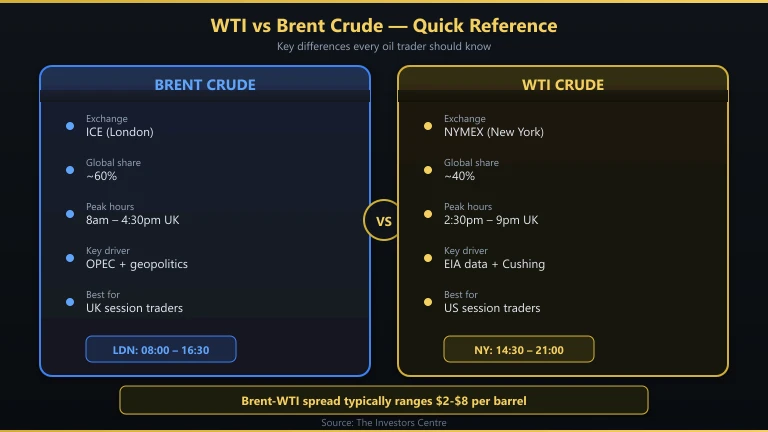
There are two main crude oil benchmarks: Brent Crude and WTI (West Texas Intermediate). Brent is priced in London and represents roughly 60% of global oil pricing. WTI is the US benchmark, traded on NYMEX in New York. For a detailed comparison with spread data, see our guide to WTI vs Brent spread betting.
Most UK traders should start with Brent. It aligns with London trading hours, reacts to geopolitical events that are well-covered by UK news, and tends to have slightly more predictable volatility patterns during European sessions. WTI is better suited to traders who are active during US hours and want to trade around EIA inventory data, which typically moves WTI more sharply than Brent.
Beyond crude, several brokers offer heating oil, gas oil, and natural gas. IG has the widest energy market range. If you’re interested in broader commodity trading, our best commodity trading platforms guide covers gold, silver, and agricultural markets alongside oil.
What Oil Instruments Can You Trade?
Spot/Cash Oil (Daily-Funded Bets)
Spot oil tracks the current price of crude and carries overnight funding charges. This is the most common instrument for day trading oil because there’s no expiry date. All seven ranked brokers offer spot WTI and Brent.
Oil Futures (Forward Contracts)
Oil futures have a fixed expiry date and wider spreads than spot, but no overnight funding. They suit swing traders holding positions for days or weeks. IG, CMC Markets, and City Index offer oil futures spread bets. For exchange-traded futures at NYMEX margins, Interactive Brokers is the specialist.
Oil Options
Oil options let you speculate on price direction with defined risk — your maximum loss is the premium paid. IG is the only mainstream UK broker offering oil options to retail traders. Options require understanding of strike prices, expiry, and implied volatility, so they’re best suited to experienced traders.
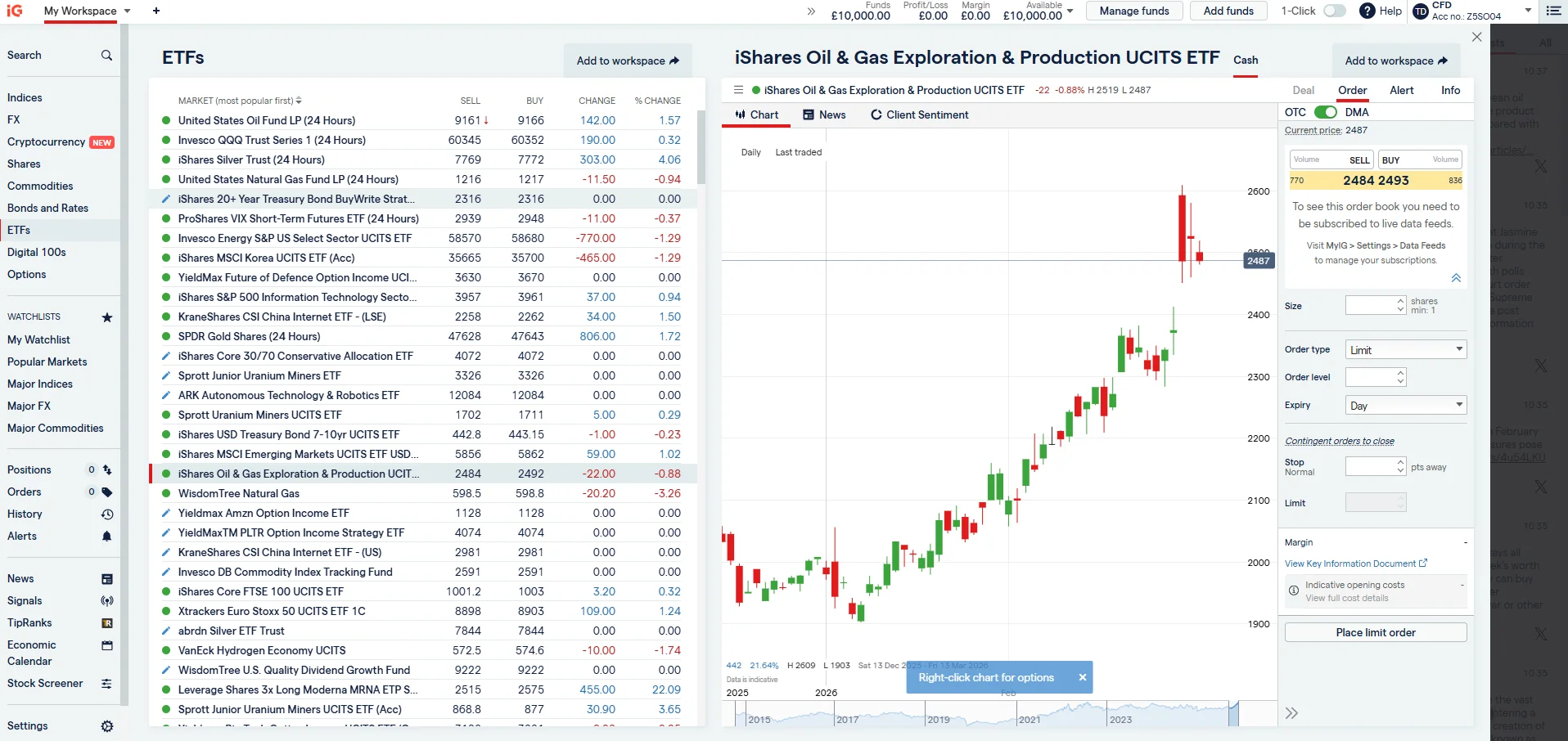
Oil ETFs and Shares
If you prefer investing over trading, oil ETFs like the WisdomTree Brent Crude Oil ETC track crude prices without leverage. You can also trade shares in oil companies like BP and Shell. IG and Interactive Brokers offer the broadest range of oil-related ETFs and shares. For more on how to trade oil, see our dedicated guide.
FAQs
References
68% of retail investor accounts lose money when trading spread bets and CFDs with this provider.