


Quick Answer: Spread-Only or Commission? Which Actually Costs Less?
Run the numbers on a standard lot of EUR/USD and the gap is smaller than either camp admits. A spread-only account like IG's, from 0.6 pips, costs about $6 per round turn at the minimum spread with nothing else to pay. A typical raw-spread account charges a near-zero spread plus roughly $6 to $7 per lot in commission, so call it $7 all-in. At their best prices, the models land within a dollar or two of each other. What actually decides it is when you trade and how you think: minimum spreads only exist in liquid hours, commissions never widen, and only one of these models comes with spread betting and weekend forex attached. The sums below are the ones I wish more people ran before picking a side.

Spread bets and CFDs are complex instruments and come with a high risk of losing money rapidly due to leverage. 70% of retail investor accounts lose money when trading spread bets and CFDs with this provider. You should consider whether you understand how spread bets and CFDs work, and whether you can afford to take the high risk of losing your money.
What Are the Two Pricing Models Really Charging For?
Every forex broker gets paid; the models just put the toll booth in different places, and it is worth seeing both booths clearly before comparing prices.
Spread-only: one number, paid on entry
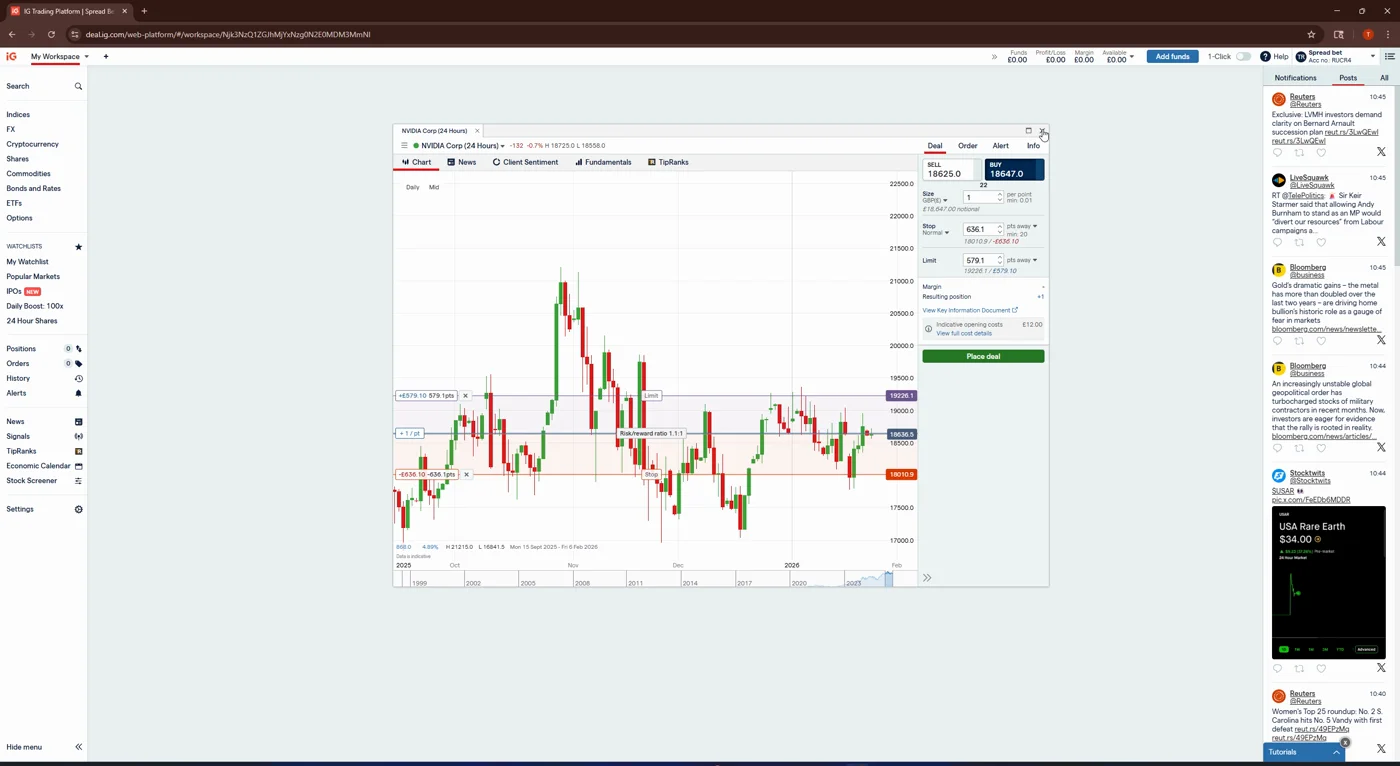
IG's model builds the whole cost into the spread. EUR/USD from 0.6 pips means the price you buy at sits 0.6 pips above the price you could immediately sell at, and that gap is the fee, the entire fee. There is no commission on forex at IG at all; on its books, commission is something charged on share CFDs (0.10% a side there), never on currencies. On a spread bet the same idea runs in pounds per point, and IG's own worked example makes the scale honest: at 0.6 pips on a 10,000-unit mini contract, the cost is sixty cents.
XTB runs the same spread-only model on its CFDs, publishing EUR/USD from 0.8 pips with no separate commission. It is a useful third reference point because the account also holds real shares priced the other way round, at 0% commission up to the equivalent of EUR 100,000 of monthly turnover. Same broker, two pricing models, depending on whether you are trading the CFD or buying the underlying. If you want to understand why the two models exist at all, that contrast inside one account makes it obvious.
Raw-plus-commission: two numbers, same toll
Raw-spread accounts pass through pricing at or near 0.0 pips and charge a fixed commission instead, typically in the region of $6 to $7 per standard lot round turn across the industry. Nothing about that is cheaper by definition; it is the same toll split into a variable part (the raw spread, which is rarely exactly zero) and a fixed part (the commission, which never moves). The model's genuine virtue is predictability of the fixed half, and its genuine vice is that the fixed half is charged even when the market gives you nothing.
The Actual Numbers, Per Lot and Per Month
One standard lot of EUR/USD is 100,000 units, a pip is worth about $10, and a mini lot is a tenth of both.
Best case, liquid hours
IG at its minimum 0.6 pips: about $6 per standard lot round turn, or 60 cents on a mini. The typical raw account: perhaps 0.1 pip of realised spread plus a $6 commission, roughly $7. At the prices both sides advertise, the spread-only account is not the expensive one, which surprises people who have only ever read raw-account marketing.
Quiet hours, when both spreads breathe
Add four-tenths of a pip of widening to each, a normal off-peak drift, and IG sits around $10 while the raw account sits around $11, because its raw spread widens too while its commission stays put. The models move together; neither escapes liquidity.
Across a month at volume
Twenty standard lots a month at best-case prices: roughly $120 spread-only against $140 raw-plus-commission. Two hundred lots: $1,200 against $1,400, at which point a raw account whose realised spread genuinely averages near zero starts clawing back through the sub-pip fills. The crossover exists, but it lives at volumes and trading hours most retail traders do not occupy.
Why the "raw is always cheaper" story falls over
The commission never widens, and that is the raw model's real advantage, but the raw spread is not actually zero, and both models' spreads breathe with liquidity. The raw model wins when its realised spread stays near zero while the spread-only account's realised spread drifts well above its minimum. Whether that describes your account depends on the hours you trade. Anyone quoting you a winner without asking when you trade is selling something.
The small print on both sides
"From 0.6" is a minimum with no guarantee attached; IG's spreads are variable, offered at the minimum in normal conditions and wider at illiquid times and around data, as every broker's are. Equally, commission accounts often quote their raw spread at 0.0 while the fills average 0.1 or more, and the commission applies even on a dead Friday afternoon. Judge both models on the numbers your own screen shows during your own trading hours, and treat anyone's homepage figure, mine included, as the best case.
What Settles It When the Maths Is This Close?
Four things that never appear in the per-lot arithmetic, and together they matter more than the dollar a lot separating the models.
Spread betting only exists on one side
For UK traders the biggest structural difference is that the spread-only world includes spread betting, where profits are free from capital gains tax for most retail traders under current rules. No commission account replicates that. Depending on your tax position, this single line can outweigh every per-lot comparison on this page, and it can make the "cheapest" account on paper the dearer one after tax.
Simplicity is a real cost saving
One number on the ticket means your P&L is your P&L. Commission accounts require you to mentally reattach the commission to every trade to know what a position really cost, and in my experience most people simply do not, which is how traders convince themselves a marginally cheaper account is much cheaper. Costs you do not track are costs you do not control.
The clock and the calendar
IG's forex desk runs from 10pm Sunday to just before 10pm Friday, and EUR/USD, GBP/USD and USD/JPY also trade at the weekend on IG, which the commission-account world does not offer. If your trading happens at the edges of the week, or you want the option of managing a position when Saturday news breaks, availability settles the model question before price enters into it.
The cost the models share: financing
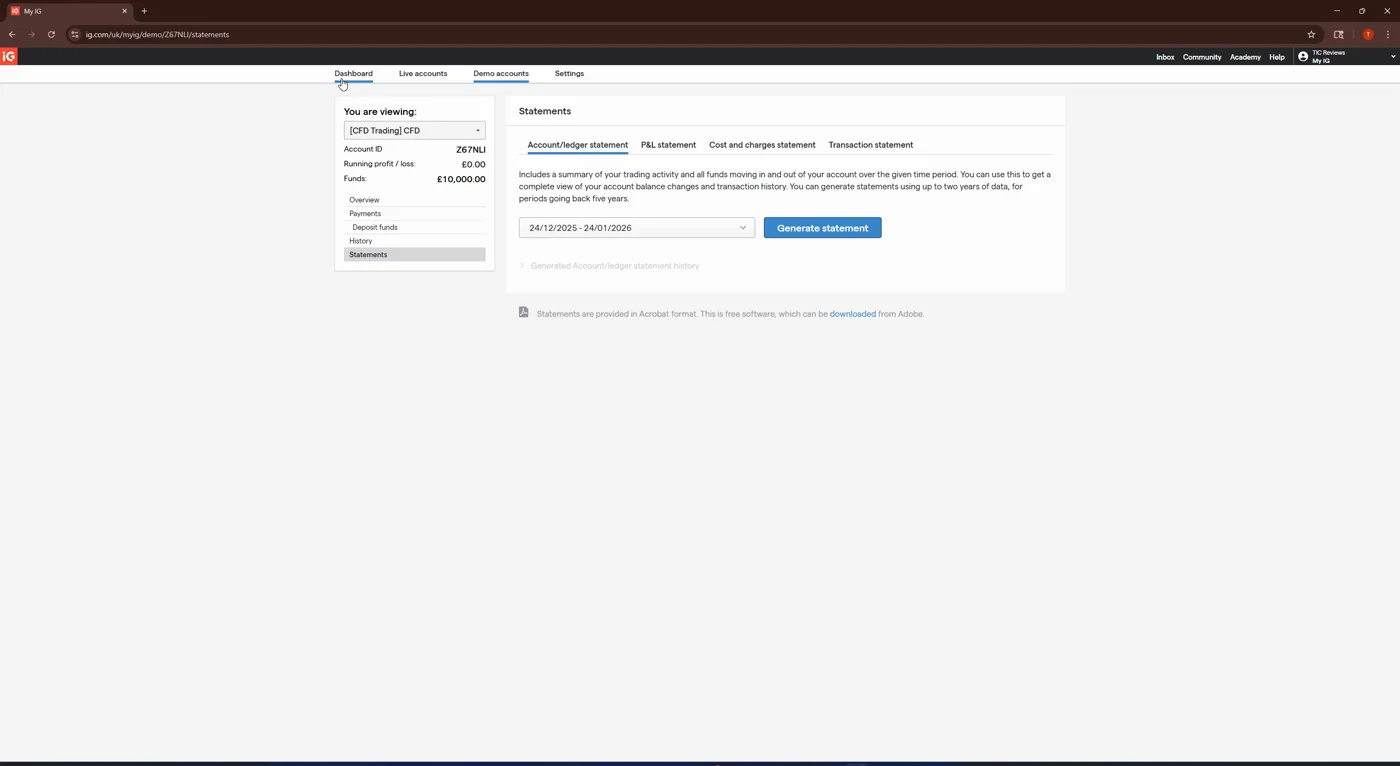
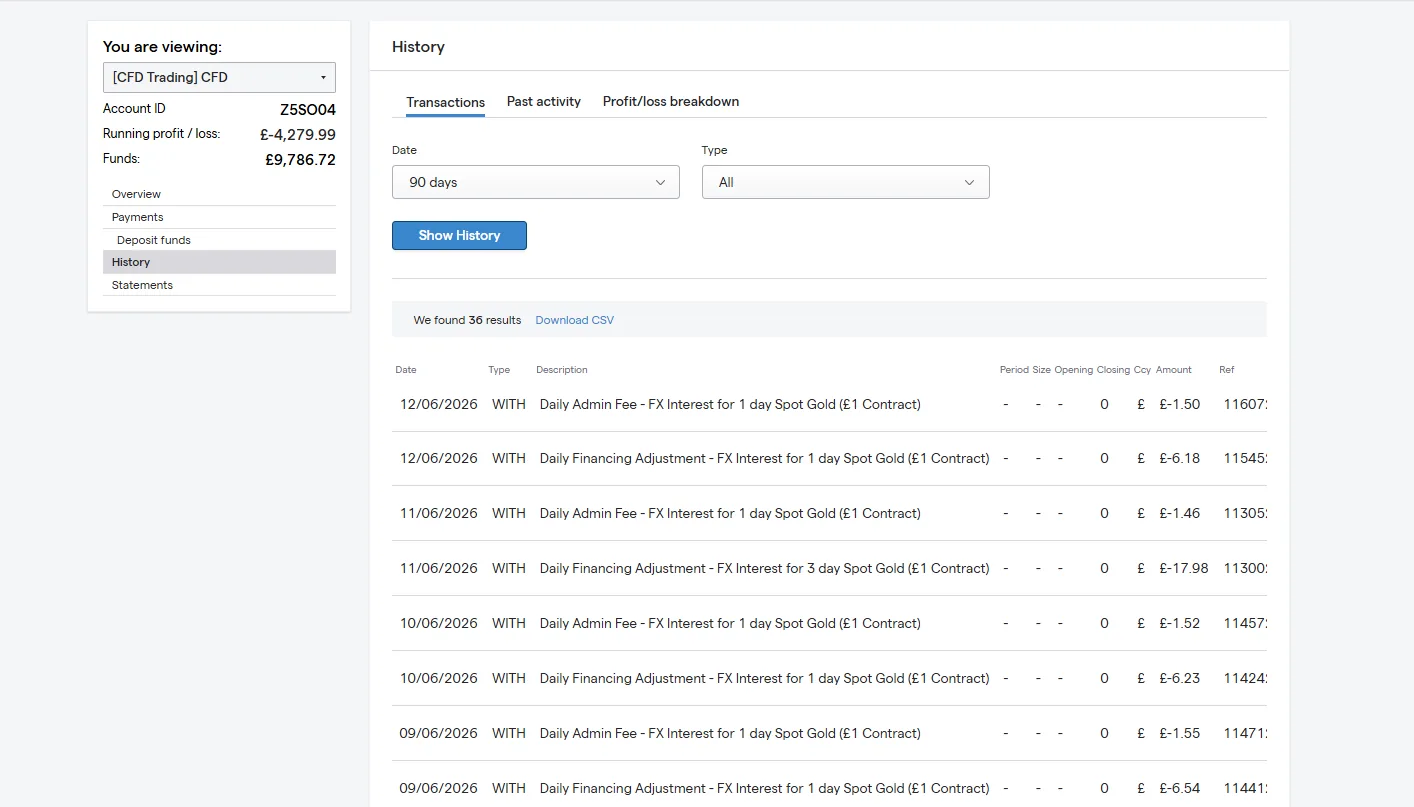
Whichever model you pick, holding a position past the daily rollover incurs overnight financing, and on a multi-week position that line outgrows both the spread and any commission. IG shows indicative funding on the ticket before you deal, so the number is in view before the trade rather than discovered on the statement afterwards.
My Verdict After Running These Numbers for Years
At realistic volumes the two models are close enough that picking a broker on the pricing model alone is a mistake. High-frequency traders who live in the liquid London and New York hours can squeeze real value from raw-plus-commission pricing, and they are the traders those accounts are built for. For most UK retail traders, dealing a few lots a week around a job, the spread-only model's combination of one visible number, weekend forex markets and the spread betting wrapper is worth more than a dollar a lot of theoretical saving. I keep a running cost comparison across every broker I test in my guide to the best forex brokers in the UK, and IG publishes its live forex spreads if you want to check today's numbers against the tables above.