

- expertise:
- CFD Trading, Forex, Derivatives, Risk Management
- credentials:
- Chartered ACII (2018) · Trading since 2012
- tested:
- 40+ forex & CFD platforms with live accounts

- expertise:
- Broker Comparison, ISA Strategy, Portfolio Management
- credentials:
- Active investor since 2013 · 11+ years experience
- tested:
- 40+ brokers with funded accounts
How We Test
Real accounts. Real money. Real trades. No demo accounts or press releases.
What we measure:
- Spreads vs advertised rates
- Execution speed and slippage
- Hidden fees (overnight, withdrawal, conversion)
- Actual withdrawal times
Scoring:
Fees (25%) · Platform (20%) · Assets (15%) · Mobile (15%) · Tools (10%) · Support (10%) · Regulation (5%)
Regulatory checks:
FCA Register verification · FSCS protection
Testing team:
Adam Woodhead (investing since 2013), Thomas Drury (Chartered ACII, 2018), Dom Farnell (investing since 2013) — 50+ platforms with funded accounts
Quarterly reviews · Corrections: in**@*******************co.uk
Disclaimer
Not financial advice. Educational content only. We're not FCA authorised. Consult a qualified advisor before investing.
Capital at risk. Investments can fall. Past performance doesn't guarantee future results.
CFD warning. 67-84% of retail accounts lose money trading CFDs. High risk due to leverage.
Contact: in**@*******************co.uk
Can you run an EA properly on Pepperstone?
Yes, and it is one of the better-equipped UK homes for it. Expert Advisors run without restriction on MT4 and MT5, cTrader users get cBots through cTrader Automate, and Pepperstone executes orders with no dealing desk at an average of around 30 milliseconds, completing 99.87% of the orders it receives. The headline perk is the free VPS: three hosted tiers earned by trading volume, from roughly 10 FX lots per 60 days for the entry plan, hosted across 22 data centres with latency Pepperstone quotes as low as 1 millisecond. Two catches: the VPS renews monthly only if your volume holds up, and no VPS rescues a strategy that only worked in backtest.

73.6% of retail investor accounts lose money when trading spread bets and CFDs with this provider.
Which platform should your automation run on?
Pepperstone supports automation on three of its platforms, and the right one is decided by what your strategy is written in, not by preference.
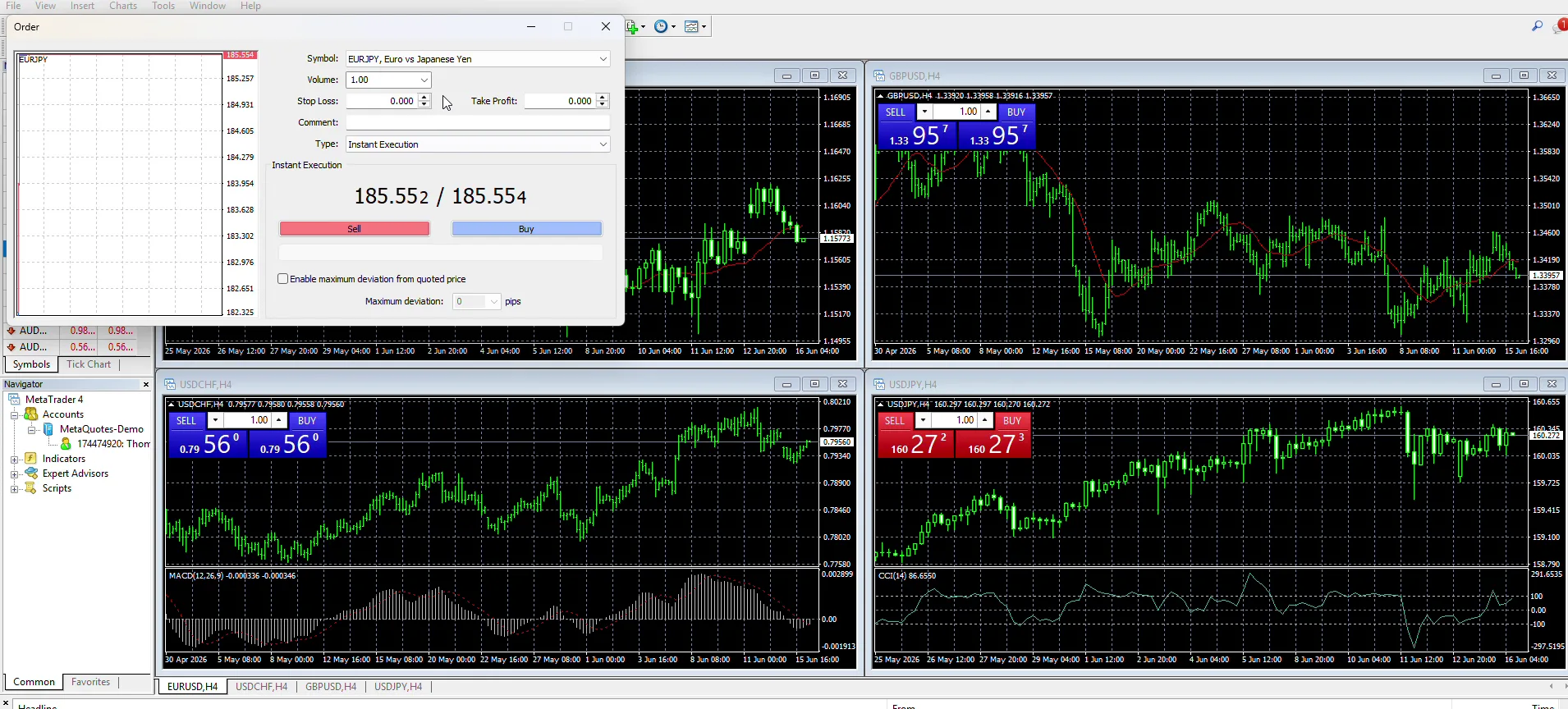
MT4 and MT5: where the EA world lives
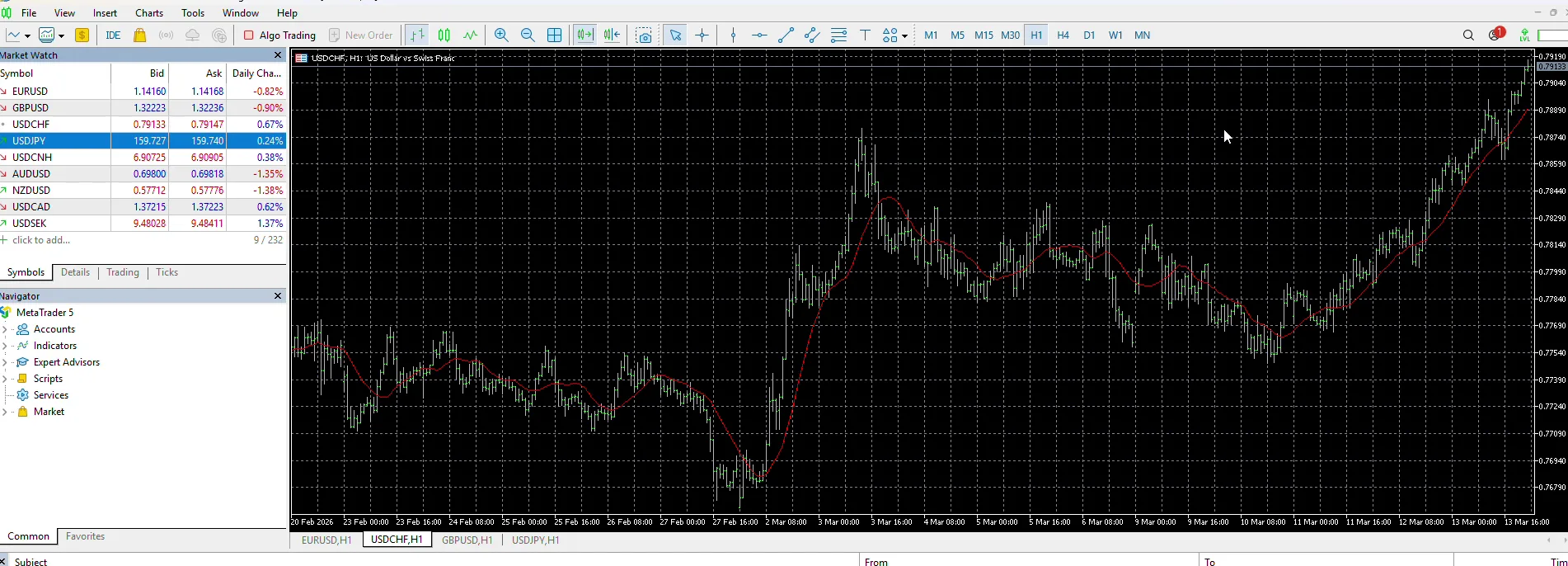
If your strategy is an Expert Advisor, it was almost certainly written for MetaTrader, and Pepperstone runs EAs on both MT4 and MT5 without restriction. MT4 remains the compatibility king for the enormous back catalogue of MQL4 EAs; MT5 backtests dramatically faster, handles more markets and order types, and is where I would build anything new in the MetaTrader world.
Smart Trader Tools: the automation you do not have to write
Pepperstone bundles Smart Trader Tools, a set of 28 add-ons, expert advisors and indicators exclusive to its MetaTrader platforms: trade management, alarm and session tools that cover a surprising amount of what people commission custom EAs to do. Before paying a developer for a break-even-and-trail manager, check whether the bundled toolkit already does it.
cTrader: automation in C#
cTrader Automate lets you build, backtest and optimise cBots in C# against the cTrader API. If you are writing a strategy from scratch and would rather work in a modern language with a proper IDE workflow than in MQL, it is the more pleasant home, and it lives on the platform with the best manual-execution tools if you like to supervise your bot with a human hand on the wheel.
API and FIX: the heavy end
For custom setups beyond the retail platforms, Pepperstone offers API trading on request, subject to eligibility, and a FIX API route for which demo access requires EUR 160 million per month in trading volume. That last number tells you exactly who it is for; most readers of this page want the VPS section below instead.
How does the free VPS actually work?
An EA is only as reliable as the machine it runs on, and a home PC that sleeps, updates or drops Wi-Fi is the classic way automated strategies die at 3am. Pepperstone's answer is a sponsored VPS: a hosted virtual machine, free while you trade enough to earn it.
The three tiers and what they demand
Each plan is earned with notional volume over the previous 60 days, requires at least one trade in the last month to count as an active trader, and renews monthly while the volume holds.
| Plan | 60-day volume to qualify | Spec |
|---|---|---|
| Core | USD 1,000,000 (~10 FX lots) | 2 vCPU, 4GB RAM, 100GB SSD |
| Plus | USD 1,500,000 (~15 FX lots) | 4 vCPU, 6GB RAM, 150GB SSD |
| Pro | USD 2,000,000 (~20 FX lots) | 6 vCPU, 8GB RAM, 200GB SSD |
Is the entry bar realistic?
Ten standard lots across 60 days is one lot a week, give or take, which most people running an EA seriously will clear without noticing; it is a modest bar for what amounts to free 24/7 hosting. The Core spec, two virtual cores and 4GB of RAM, comfortably runs a MetaTrader instance with a handful of EAs; the higher tiers matter if you run multiple platform instances or indicator-heavy setups.
The catch to plan around
If your volume dips, the sponsorship lapses at renewal, so a strategy that trades rarely by design may need paid hosting elsewhere rather than an entitlement that comes and goes underneath it. Treat the volume requirement as a monthly subscription paid in lots.
If your system's natural pace is five lots a month, the free VPS is not really free for you.
What about latency?
Pepperstone offers the VPS across 22 data centre locations worldwide and quotes platform execution latency as low as 1 millisecond from hosted environments, with its servers executing incoming orders at around a 30ms average. Treat the 1ms as the best case it is, but the practical point stands: an EA hosted next to the broker's infrastructure round-trips orders in the time a home connection spends thinking about it. For strategies that trade the opening seconds of a move, that is the difference between the backtest and the live results agreeing; for a slow swing EA, it is a convenience rather than an edge.
Does the execution hold up for automated strategies?
Automation concentrates your execution risk: an EA will happily fire a thousand orders into conditions a human would sit out, so the venue's plumbing matters even more once a robot is trading.
The plumbing an EA actually cares about
There is no dealing desk between the order and the market. Hedging is allowed, with margin charged on the larger leg, which matters for grid and pairs-style systems. The raw-spread Razor account gives an EA the near-zero spreads its logic was probably tested against, and my own Q1 testing recorded a 47ms median fill with roughly 78% of orders slipping nothing at all, numbers boring enough to build a bot on. With a £10 minimum deposit, running a new EA on a tiny live account before scaling it, the single best habit in automated trading, costs almost nothing here.
The costs backtests forget
The costs an EA pays are the same ones I itemise in my EUR/USD cost log: commission on every round turn (£4.50 per lot on a GBP MetaTrader account) and swaps on anything held overnight, which on a long EUR/USD position ran about £7.10 a night in my log. A strategy that trades forty times a month and holds through rollovers pays real money in both lines, so both belong in the backtest before they turn up on the live statement.
The verdict: a proper home for automation?
Yes. Unrestricted EAs on MetaTrader with 28 bundled tools, a modern C# path on cTrader, an API lane for the genuinely big, execution fast and complete enough to trust a robot with, and a free VPS across 22 locations whose entry bar most active EA traders will clear in passing. The requirements are stated plainly: keep trading or lose the sponsorship, and bring a strategy that survives real costs. Pepperstone supplies the infrastructure; the edge remains your problem.
For which platform to build on, my platform comparison covers the trade-offs, and the raw pricing an EA trades against is in my Pepperstone forex review.
FAQs
References
- FCA Register: Pepperstone Ltd. FRN: 684312
- Pepperstone: sponsored VPS tiers and requirements
- Pepperstone: algorithmic trading (EAs and cTrader Automate)
- Pepperstone: API and FIX access
73.6% of retail investor accounts lose money when trading spread bets and CFDs with this provider.