

- expertise:
- CFD Trading, Forex, Derivatives, Risk Management
- credentials:
- Chartered ACII (2018) · Trading since 2012
- tested:
- 40+ forex & CFD platforms with live accounts

- expertise:
- Broker Comparison, ISA Strategy, Portfolio Management
- credentials:
- Active investor since 2013 · 11+ years experience
- tested:
- 40+ brokers with funded accounts
How We Test
Real accounts. Real money. Real trades. No demo accounts or press releases.
What we measure:
- Spreads vs advertised rates
- Execution speed and slippage
- Hidden fees (overnight, withdrawal, conversion)
- Actual withdrawal times
Scoring:
Fees (25%) · Platform (20%) · Assets (15%) · Mobile (15%) · Tools (10%) · Support (10%) · Regulation (5%)
Regulatory checks:
FCA Register verification · FSCS protection
Testing team:
Adam Woodhead (investing since 2013), Thomas Drury (Chartered ACII, 2018), Dom Farnell (investing since 2013) — 50+ platforms with funded accounts
Quarterly reviews · Corrections: in**@*******************co.uk
Disclaimer
Not financial advice. Educational content only. We're not FCA authorised. Consult a qualified advisor before investing.
Capital at risk. Investments can fall. Past performance doesn't guarantee future results.
CFD warning. 67-84% of retail accounts lose money trading CFDs. High risk due to leverage.
Contact: in**@*******************co.uk
What does a EUR/USD round trip really cost on Pepperstone?
On my funded Razor account, an intraday standard lot of EUR/USD cost about £5.30 all-in: a 0.1-pip average raw spread (roughly 80p) plus the £4.50 round-turn commission on a GBP MetaTrader account. Hold overnight and the picture changes fast: my log showed about £7.10 per night in swap on a long, but only 90p per night short, and Wednesday's triple swap catches people out. The commission also depends on your platform: £4.50 round turn on GBP MT4/MT5, $6 USD on cTrader, $7 USD on TradingView and $3.50 a side on Pepperstone's own platform. This page itemises every line from the log, including the day the spread was nine times wider than average.

73.6% of retail investor accounts lose money when trading spread bets and CFDs with this provider.
Which costs actually hit a EUR/USD trade?
Four lines hit a EUR/USD trade, and only two of them appear before you click.
The spread: 0.1 pips when it matters
Across my London-session log, Razor's EUR/USD raw spread averaged 0.1 pips, about 80p per standard lot in sterling terms. That is close enough to interbank that the spread nearly vanishes as a cost in liquid hours. The qualifier is the clock: the same market printed 0.9 pips through US payrolls and drifts wider in the dead hours after New York closes, so a round trip placed at the wrong moment pays several times the average toll. The full news-day behaviour has its own write-up in my scalping through the news log.
The commission: fixed, but platform-dependent
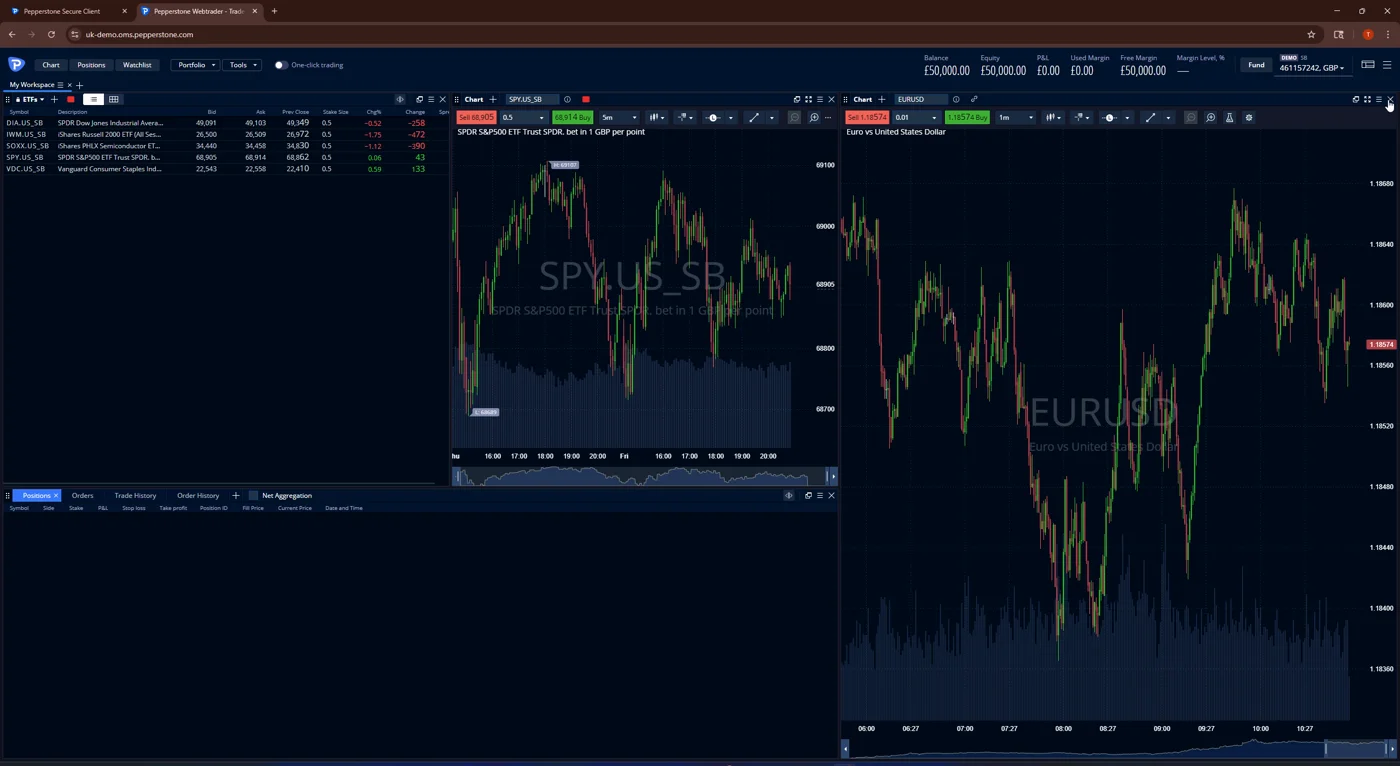
On a GBP account trading MT4 or MT5, the commission is £4.50 per lot round turn: MT4 takes it in full when the position opens, while MT5 charges £2.25 a side. Accounts in other currencies pay the equivalent ($7 on USD accounts, €5.20 on euro accounts), and trades under one lot are charged pro-rata. Trade the same lot elsewhere and the toll changes: $6 USD round turn on cTrader, $7 on TradingView, $3.50 a side on the Pepperstone platform. It is a small spread of outcomes, but a high-volume trader picking a platform purely on feel is also picking a commission rate, whether they realise it or not.
The platform commission table, in one place
| Platform | Commission | Round turn |
|---|---|---|
| MT4 / MT5 (GBP account) | £4.50 at open (MT4) or £2.25 per side (MT5) | £4.50 |
| cTrader | $3.00 per side (USD) | $6.00 |
| TradingView | $3.50 per side (USD) | $7.00 |
| Pepperstone platform | $3.50 per side (USD) | $7.00 |
Slippage: mostly zero, occasionally real
My median fill was 47 milliseconds and roughly 78% of orders filled at the click price. The slips clustered around releases and thin liquidity, exactly where theory says they should. As a budget line, slippage cost my intraday trading close to nothing, but I treat it as a real cost around news because that is where it lives.
Swaps: the cost that dwarfs the others
Hold a standard lot of EUR/USD long past the rollover and my log shows about £7.10 per night in swap; hold it short and the same night cost about 90p. One week long costs nearly £50, ten times the round-turn commission that opened the trade. Wednesdays charge triple to cover the weekend settlement. On this pair, direction decides the holding cost as much as duration does.
What does that add up to per trade?
Putting the log into three realistic shapes of trade, per standard lot, on a GBP MetaTrader account.
| Trade shape | Spread | Commission | Swap | All-in |
|---|---|---|---|---|
| Intraday, liquid hours | ~£0.80 | £4.50 | None | ~£5.30 |
| Three-night hold, long | ~£0.80 | £4.50 | ~£21.30 | ~£26.60 |
| Three-night hold, short | ~£0.80 | £4.50 | ~£2.70 | ~£8.00 |
The line the table teaches
Razor is priced for traders who are in and out. Intraday, EUR/USD on this account is about as cheap as retail forex gets. The moment a position becomes a long hold, the swap becomes the trade's dominant cost, and on this pair it punishes longs far harder than shorts because of where the interest-rate differential currently sits.
Check the swap before the trade, not after
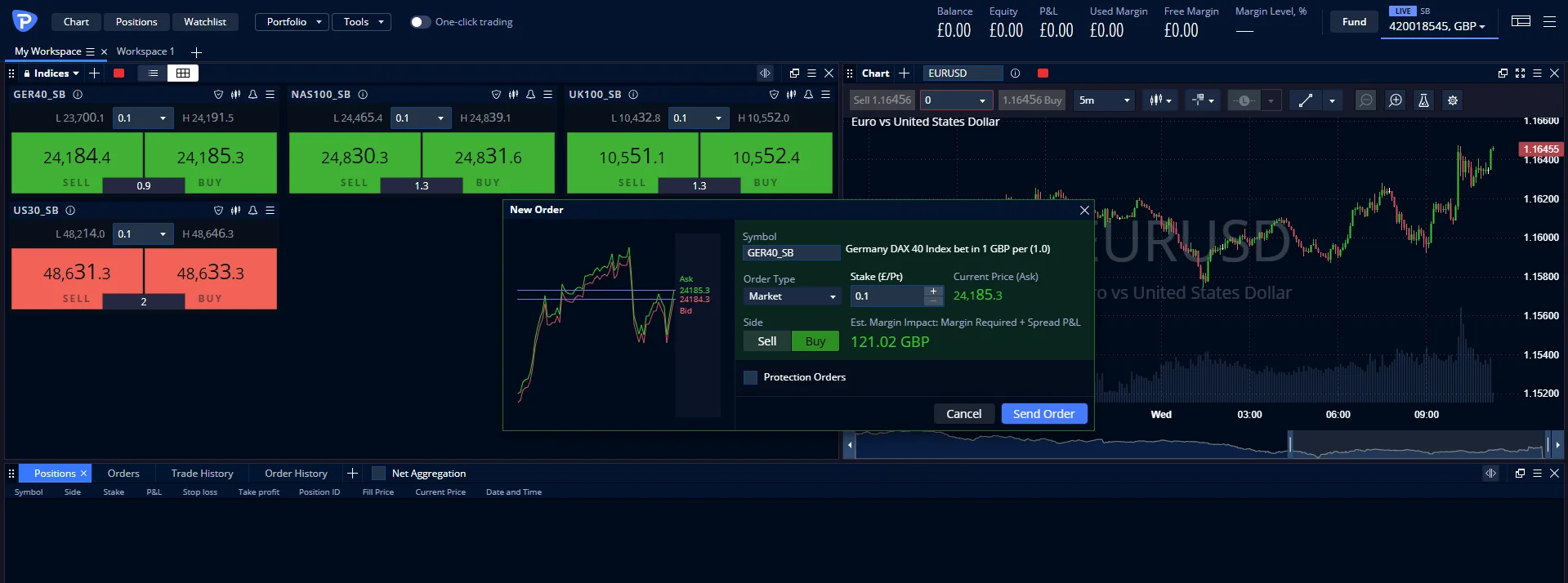
The platform shows the live swap on each instrument, and rates move as central bank expectations move, so my figures are a dated record rather than a promise. One quirk: TradingView only displays the swap after it has been applied, so I check swap rates in cTrader even on days I am trading elsewhere.
Would the Standard account have been cheaper?
Not for how I trade, and the arithmetic is short. Standard prices EUR/USD from 1.0 pip with no commission, call it £8 per lot round trip against Razor's £5.30 all-in. The gap of roughly £2.70 per lot compounds with every trade, so anyone dealing more than a handful of lots a month belongs on Razor.
The case for Standard
It exists, and it is simplicity: one clean number on the statement, no commission line to reconcile, and no per-platform rate table to think about. For a genuinely occasional trader, paying £3 a lot for that clarity is defensible. Two things do not change with the account, though: the swaps are identical on both, so the holding-cost story above applies regardless, and the £10 minimum deposit means trying Razor properly costs almost nothing if you later want to compare them on your own trades.
The verdict from the log
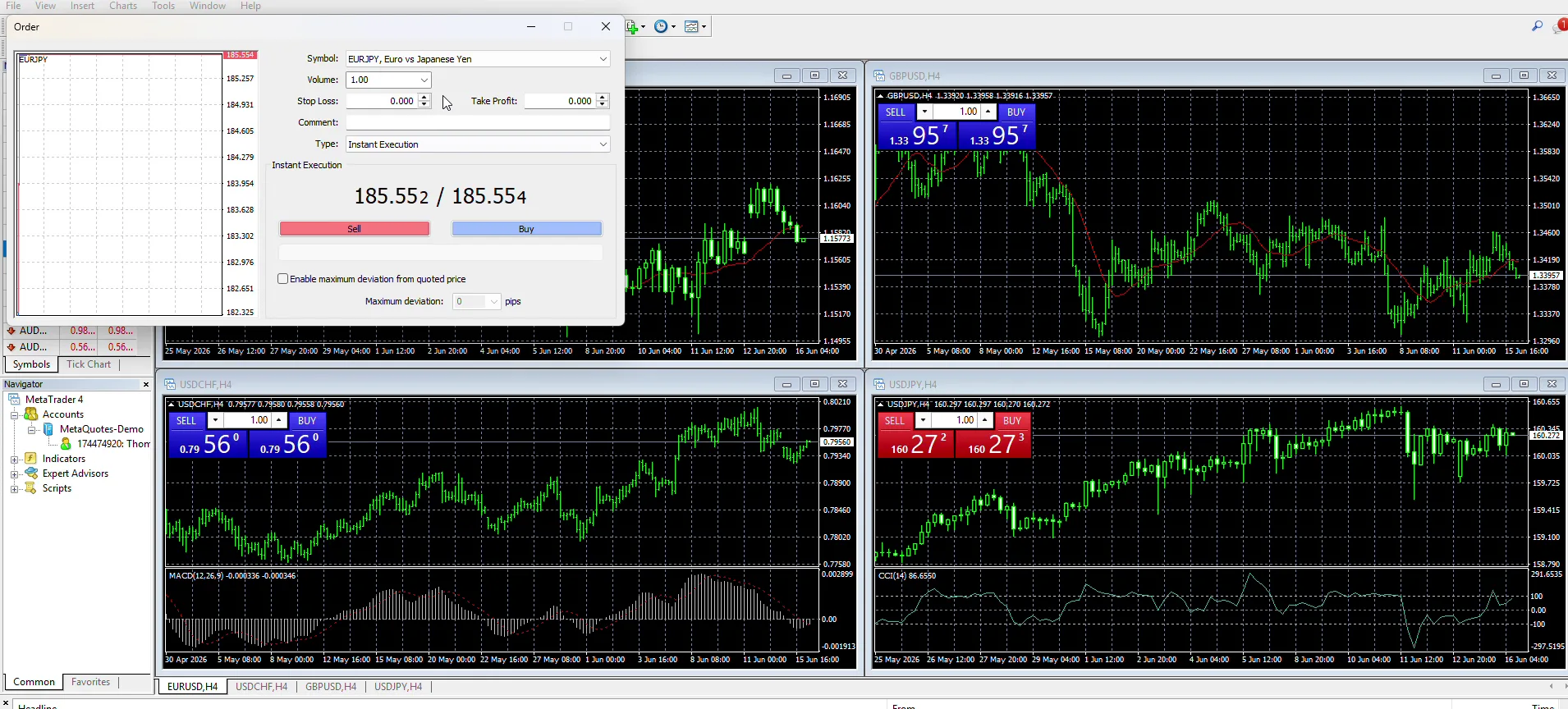
EUR/USD on Pepperstone Razor cost me about £5.30 per standard lot round trip in the hours that matter, held its spread through the loudest data of the quarter better than most accounts I have tested, and only got expensive when I did the one thing the account is not priced for: sitting in a long position for nights at a time. Know those three sentences, and the platform commission table above, and you know what this pair costs here. The same dataset across every major pair is in my Pepperstone forex review, and if your EUR/USD trading runs through an automated strategy, the infrastructure side is covered in my EA and VPS guide.
FAQs
References
- FCA Register: Pepperstone Ltd. FRN: 684312
- Pepperstone: spreads, swaps and per-platform commissions
- The Investors Centre: how we test brokers (Q1 2026 dataset)
73.6% of retail investor accounts lose money when trading spread bets and CFDs with this provider.