

- expertise:
- Platform Testing, Cryptocurrency, Retail Investing
- credentials:
- Active investor since 2013 · 11+ years experience
- tested:
- 50+ platforms · 200+ guides authored

- expertise:
- CFD Trading, Forex, Derivatives, Risk Management
- credentials:
- Chartered ACII (2018) · Trading since 2012
- tested:
- 40+ forex & CFD platforms with live accounts
How We Test
Real accounts. Real money. Real trades. No demo accounts or press releases.
What we measure:
- Spreads vs advertised rates
- Execution speed and slippage
- Hidden fees (overnight, withdrawal, conversion)
- Actual withdrawal times
Scoring:
Fees (25%) · Platform (20%) · Assets (15%) · Mobile (15%) · Tools (10%) · Support (10%) · Regulation (5%)
Regulatory checks:
FCA Register verification · FSCS protection
Testing team:
Adam Woodhead (investing since 2013), Thomas Drury (Chartered ACII, 2018), Dom Farnell (investing since 2013) — 50+ platforms with funded accounts
Quarterly reviews · Corrections: in**@*******************co.uk
Disclaimer
Not financial advice. Educational content only. We're not FCA authorised. Consult a qualified advisor before investing.
Capital at risk. Investments can fall. Past performance doesn't guarantee future results.
CFD warning. 67-84% of retail accounts lose money trading CFDs. High risk due to leverage.
Contact: in**@*******************co.uk
What do indices cost to trade on Pepperstone?
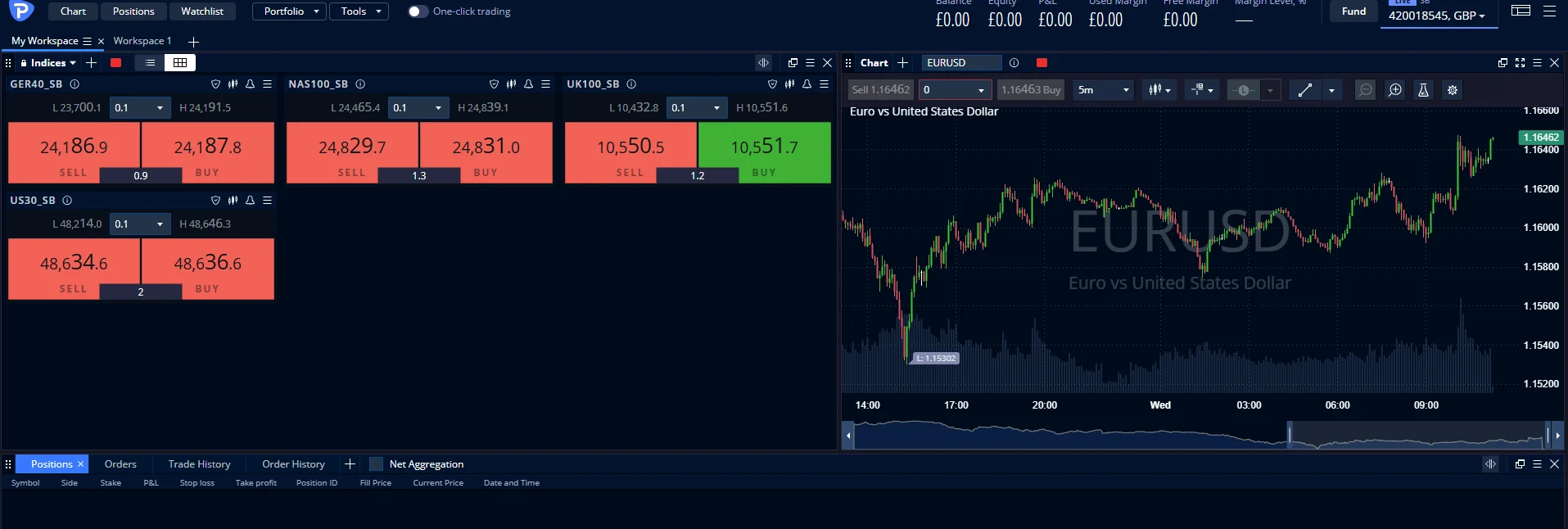
The FTSE 100 from 1 point, the US 500 from 0.4, Germany 40 from 0.9, the Nasdaq from 1 and the Dow from 2, with no commission on index trades and, unusually, exactly the same minimum spreads whether you trade the CFD or the spread bet. The US indices price from 1am to just before midnight platform time, so a UK evening is fully covered, and holding costs are the part to respect: daily-funded positions pay a funding charge built on a 2.5% admin rate plus the benchmark, while the forward contracts trade on a wider spread with no overnight charge at all. Every number, the full hours and the funding formula are below, straight from Pepperstone's published tables.

73.6% of retail investor accounts lose money when trading spread bets and CFDs with this provider.
Which index spreads are you actually paying?
Pepperstone publishes its index pricing openly, with the current table built from spread data sampled across April 2026, and the headline worth pinning is that the minimum spreads apply identically to Razor, Standard and the spread betting account, with no commission on any of the three. Unlike forex, there is no account-type cost puzzle to solve on indices.
| Index | Min spread (points) | Forward contract spread |
|---|---|---|
| US 2000 (US2000) | 0.3 | - |
| US 500 (US500) | 0.4 | 1 |
| Germany 40 (GER40) | 0.9 | 3 |
| FTSE 100 (UK100) | 1 | 3 |
| Nasdaq 100 (NAS100) | 1 | 3 |
| France 40 (FRA40) | 1.0 | - |
| Euro Stoxx 50 (EUSTX50) | 1.6 | - |
| VIX | 1.6 | - |
| Dow (US30) | 2 | 5 |
| Japan 225 (JPN225) | 7 | - |
Reading the table like a trader
Three things stand out. The US 500 at 0.4 points and the small-cap US 2000 at 0.3 are the tightest doors into US equities anywhere on the board. The FTSE and Nasdaq at a single point are honest, competitive prices for their liquidity. And the VIX at 1.6 points is an easy inclusion to miss: direct volatility exposure is rare at retail brokers, and having it beside the equity indices covers the hedge most index traders eventually want.
The line that matters for spread bettors
Identical pricing across wrappers is rarer than it should be. The industry's old habit was to charge spread bettors a wider spread for the tax treatment; Pepperstone pricing the FTSE at 1 point on the bet and the CFD alike means choosing the wrapper on its merits, tax treatment and stake style, rather than paying a toll for it. You stake in pounds per point, and the FCA's illustrative documents work from a pound a point, so small stakes are workable while you learn a market's rhythm. Why the wrapper choice matters is the whole subject of my piece on spread betting and tax.
When can you actually trade them?
Index hours decide whether a market fits your day, and Pepperstone's are close to round-the-clock without quite being 24-hour, which is worth stating precisely because "24-hour indices" is a claim its own pages carefully avoid.
The US indices: nearly all day, every weekday
The US 500, Nasdaq and Dow price from 01:00 to 23:59 platform time Monday to Friday (closing a few minutes early on Fridays), which in UK terms means the market is there from the small hours until late evening. For a UK trader with a day job, the practical reading is simple: the US cash session and your free evening hours are fully covered, with only a brief overnight pause.
The FTSE and Europe: market-shaped hours
The FTSE prices from 03:05 on Mondays (03:00 midweek) to around 23:00 platform time, Germany 40 from 03:15, and France 40 keeps closer to its cash session from 09:00. European indices breathe with their cash markets: the liquid, tight-spread hours are the London and Frankfurt day, and quotes outside them run wider, which is when the minimum spreads in the table above stop being the spreads you pay.
The 23/5 exception
If you want genuinely longer index hours, Pepperstone's newest markets, Hong Kong tech, the US 400 mid-caps and Taiwan, run 23 hours a day, five days a week, though on MT5 and cTrader only. There is no weekend index trading; positions carried past Friday's close simply wait for Monday, which is exactly the gap risk the forwards section below helps you think about.
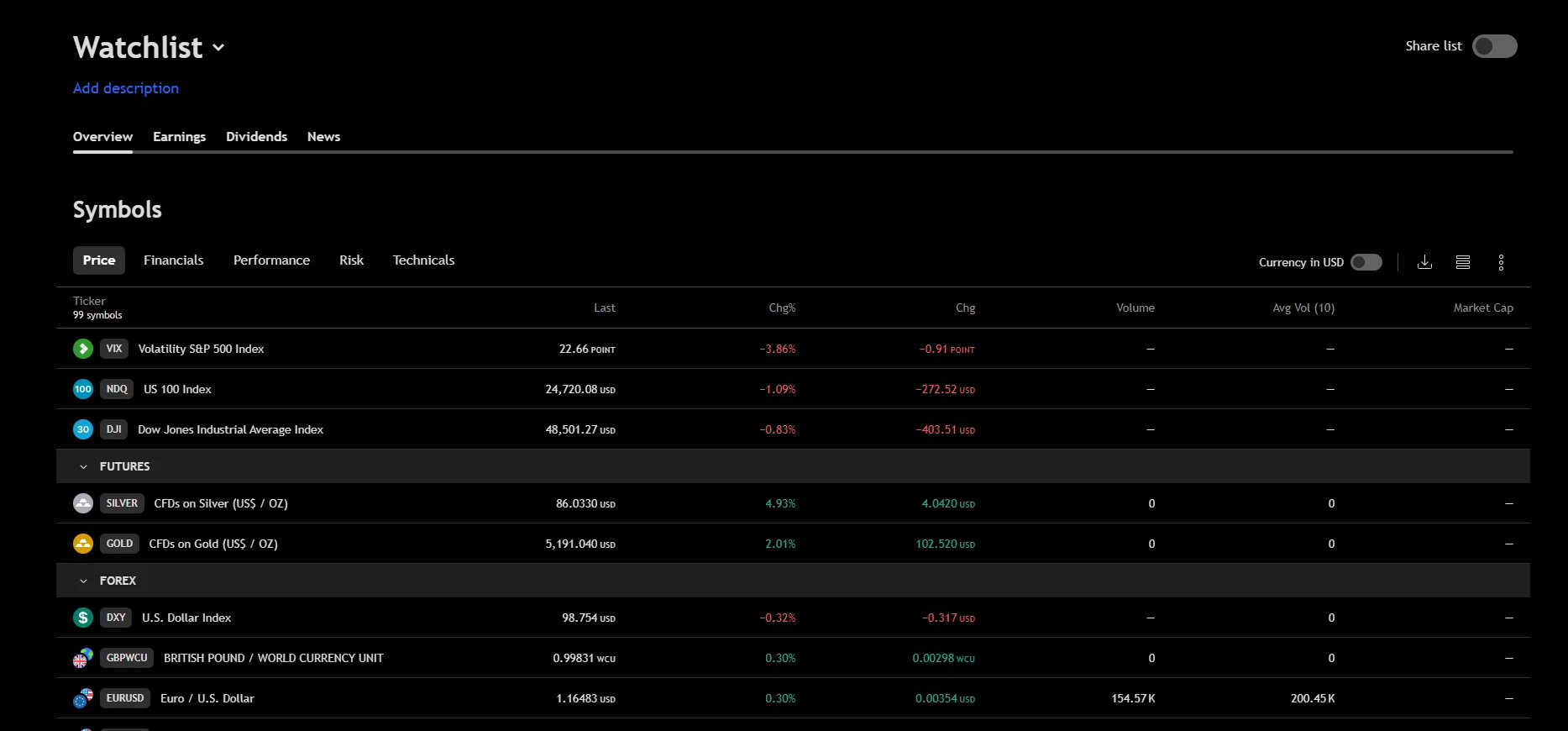
What does holding an index overnight cost?
This is the cost that separates index day trades from index positions, and Pepperstone gives you two ways to pay it, which is a genuine choice rather than a technicality.
Daily-funded positions: the formula
Hold a spot index position past the daily close and the funding charge is calculated as the closing price, times your size, times a 2.5% admin rate plus or minus the relevant benchmark rate, divided by 360. Long positions pay the benchmark; shorts receive it.
The worked example worth doing once
A £2-a-point FTSE position at 8200 is £16,400 of exposure. With the 2.5% admin rate plus a benchmark in the mid-fours, the nightly charge lands around £3, call it £90 a month. Loose change on a two-night swing; the biggest line on the ticket for a position held a quarter. Run this arithmetic once for your own size and the funding decision below makes itself.
Forwards: pay upfront, hold free
The forward contracts flip the deal: a wider spread on entry, the FTSE forward at 3 points against the spot market's 1, the US 500 forward at 1 against 0.4, and no overnight funding at all. The crossover maths is short: if you expect to hold for more than a handful of days, the forward's fixed toll usually beats the daily meter. I trade the spot markets intraday and the forwards for anything I intend to keep, and that one habit is most of what this section has to teach.
The verdict: is Pepperstone good for index traders?
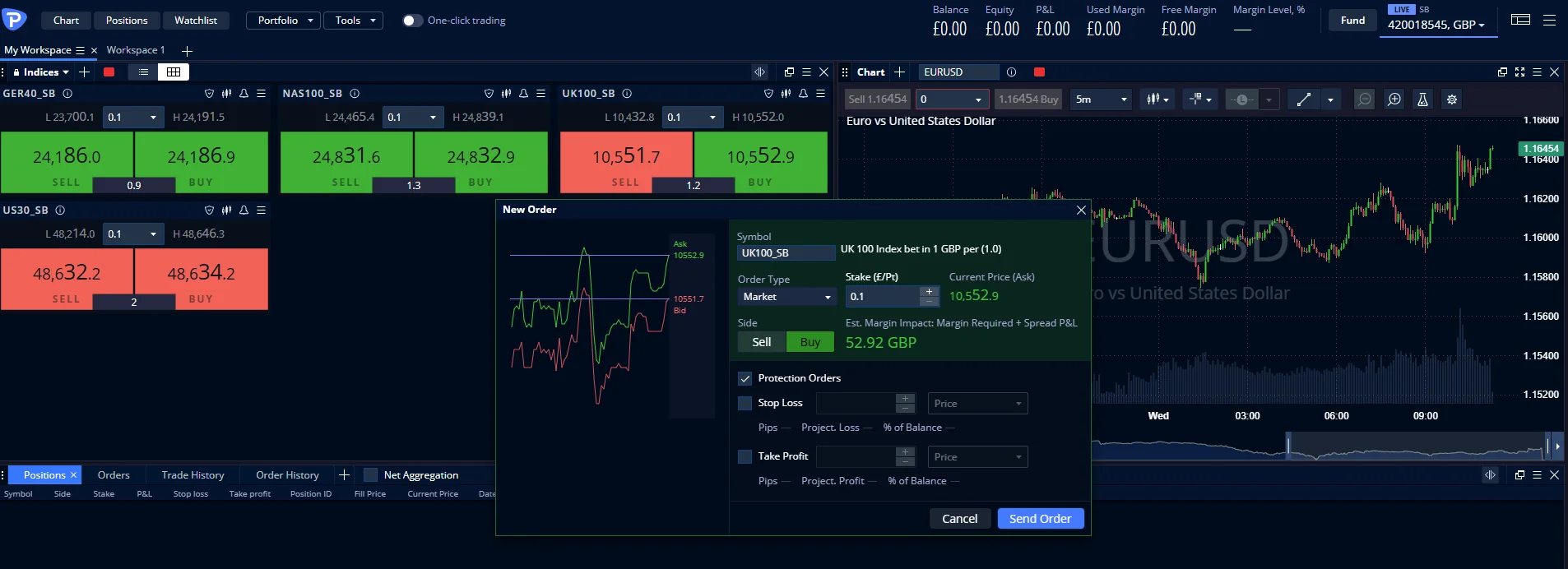
Yes, and the case is specific: a 0.4-point US 500 and a 1-point FTSE with no commission, the same price on the spread bet as the CFD, a market list that stretches from the US 2000 to the VIX, execution from 50 milliseconds with a 99.32% fill rate, and a proper forwards market for holding without the funding meter. The limits are equally specific: hours are near-24 rather than 24 with no weekend markets, the widest-hours 23/5 indices skip TradingView, and daily funding punishes long holds on the spot markets, which is what the forwards are for.
The platform I chart and place these trades on is the subject of my month on TradingView, and the same cost discipline applied to currencies lives in my EUR/USD cost log.
FAQs
References
- FCA Register: Pepperstone Ltd. FRN: 684312
- Pepperstone: index spreads and funding formula
- Pepperstone: index markets and trading hours
73.6% of retail investor accounts lose money when trading spread bets and CFDs with this provider.