

- expertise:
- Platform Testing, Cryptocurrency, Retail Investing
- credentials:
- Active investor since 2013 · 11+ years experience
- tested:
- 50+ platforms · 200+ guides authored

- expertise:
- CFD Trading, Forex, Derivatives, Risk Management
- credentials:
- Chartered ACII (2018) · Trading since 2012
- tested:
- 40+ forex & CFD platforms with live accounts
How We Test
Real accounts. Real money. Real trades. No demo accounts or press releases.
What we measure:
- Spreads vs advertised rates
- Execution speed and slippage
- Hidden fees (overnight, withdrawal, conversion)
- Actual withdrawal times
Scoring:
Fees (25%) · Platform (20%) · Assets (15%) · Mobile (15%) · Tools (10%) · Support (10%) · Regulation (5%)
Regulatory checks:
FCA Register verification · FSCS protection
Testing team:
Adam Woodhead (investing since 2013), Thomas Drury (Chartered ACII, 2018), Dom Farnell (investing since 2013) — 50+ platforms with funded accounts
Quarterly reviews · Corrections: in**@*******************co.uk
Disclaimer
Not financial advice. Educational content only. We're not FCA authorised. Consult a qualified advisor before investing.
Capital at risk. Investments can fall. Past performance doesn't guarantee future results.
CFD warning. 67-84% of retail accounts lose money trading CFDs. High risk due to leverage.
Contact: in**@*******************co.uk
Quick Answer: Is Trading 212 Safe?
Yes, by the tests that matter for a UK platform. Trading 212 UK Ltd is authorised by the FCA under Firm Reference Number 609146, client money is held in segregated accounts, and eligible investments are protected by the FSCS up to £85,000 if the firm itself fails. I have held real money on the platform since 2024, and this page walks through every licence number, what the compensation schemes actually cover, and the two things I would still watch: uninvested cash that sits in money market funds rather than banks, and the leveraged CFD side of the product.
- One number to remember: FSCS covers investments up to £85,000 per person if Trading 212 fails. It never covers your investments falling in value.
- One honest caveat: "safe" means the company holding your assets. The CFD side of Trading 212 is a leveraged product where most retail traders lose money, and no regulator protects you from that.
Every licence number and limit on this page re-checked August 2026.

Welcome bonus for new UK clients — deposit & receive free shares. Stocks only, 90-day hold applies.
- Deposit £500 – £999Get £40
- Deposit £1k – £4,999Get £100
- Deposit £5k – £9,999Get £300
- Deposit £10,000+Get £500
Get up to £10,000 cashback on your first ISA deposit (min £500) or ISA transfer (£15,000+). Paid into your non-ISA balance.
- Bronze, Silver, Gold2% Cashback
- Platinum, Platinum+2.5% Cashback
- Diamond3% Cashback
CFDs are complex instruments and come with a high risk of losing money rapidly due to leverage. 52% of retail investor accounts lose money when trading CFDs with this provider. You should consider whether you understand how CFDs work, and whether you can afford to take the high risk of losing your money.
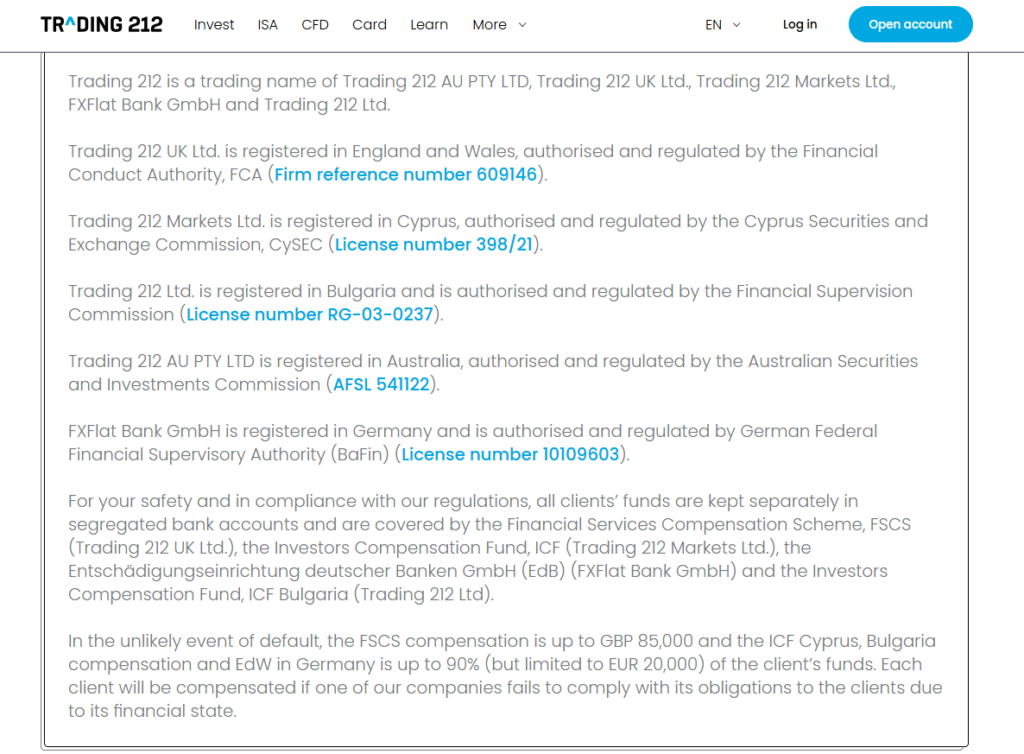
Who Regulates Trading 212? Every Entity and Licence Number
Most safety articles name a regulator or two and move on. That vagueness is exactly why confusion persists, because Trading 212 is not one company: it is a group of five regulated entities, and which one holds your account decides which rules and which compensation scheme protect you. If you signed up in the UK, your account sits with Trading 212 UK Ltd, and the FCA row below is the one that matters.
| Entity | Regulator | Licence | Who it serves |
|---|---|---|---|
| Trading 212 UK Ltd | FCA (UK) | FRN 609146 | UK customers |
| Trading 212 Markets Ltd | CySEC (Cyprus) | Licence 398/21 | EU customers |
| Trading 212 Ltd | FSC (Bulgaria) | Licence RG-03-0237 | Legacy/EU |
| Trading 212 AU PTY Ltd | ASIC (Australia) | AFSL 541122 | Australian customers |
| FXFlat Bank GmbH | BaFin (Germany) | Licence 10109603 | German customers |
Entity structure as published on Trading 212's own regulatory disclosures, re-checked August 2026. The company was founded in 2004 and has operated its FCA-authorised UK entity for over a decade.
Why does the entity matter so much? Because compensation schemes do not travel. FSCS protection applies to clients of the UK entity; EU clients of the Cypriot entity fall under the Investor Compensation Fund instead, which covers up to €20,000, a fraction of the UK scheme. If you moved to the UK from the EU and your account was opened under the Cypriot entity, that difference is worth a support ticket to confirm which entity holds you.
What Does FSCS Protection Actually Cover on Trading 212?
This is the section where most coverage of Trading 212, including an earlier version of this page, gets muddled, because two different FSCS limits are in play and they protect different things.
Your investments: £85,000. Shares, ETFs and fund holdings on Trading 212 fall under the FSCS investment protection limit of £85,000 per person, per firm. This pays out if Trading 212 fails and, after the administrators have recovered the segregated assets, there is still a shortfall in what you are owed. It does not pay out because your shares fell in value. That is market risk, it is yours, and no compensation scheme in the world covers it.
Your uninvested cash: it depends where it sits. Trading 212 holds client cash at partner banks and, for money enrolled in its interest-on-cash feature, can also place it in qualifying money market funds. Cash sitting at a UK partner bank falls under the separate FSCS deposit scheme, whose limit rises to £120,000 from December 2025, applied per person, per bank. Cash in money market funds is an investment, so it sits under the £85,000 investment protection instead, and its value is not bank-guaranteed. You can see how your cash is allocated inside the app, and if that distinction matters to you, it is worth checking before you enrol in interest on cash. Trading 212's own money protection page sets out the split.
Segregation is the first line of defence, FSCS the second. Client funds are held in segregated accounts, separate from Trading 212's own money, under the FCA's client asset rules. In a failure, segregated assets are returned to clients by the administrator; FSCS exists for whatever gap remains. The named partner banks on Trading 212's disclosures include major UK institutions, and your shares are held in nominee structures, which means they remain legally yours rather than an IOU from the company.

For the deeper dive into scheme mechanics, timescales and how claims actually work, I keep a dedicated guide: Is Trading 212 FSCS protected?
What I Found Holding Real Money on Trading 212
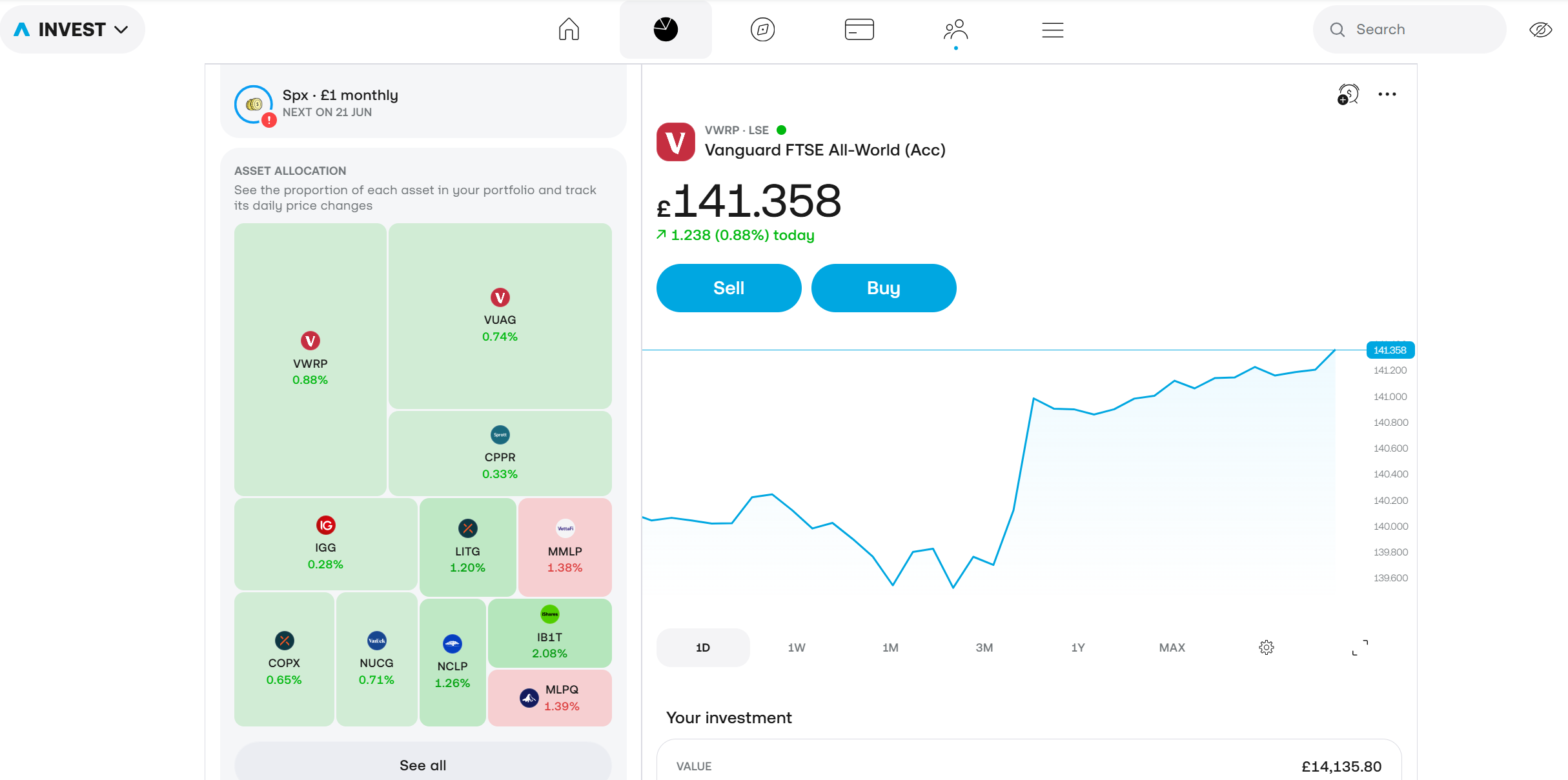
I have kept a funded Trading 212 account since 2024, and the platform went through TIC's measured testing round in January and February 2026. The numbers below are from that testing, not from marketing pages, and the full measurements sit in the open datasets hub.
| What I checked | Result |
|---|---|
| Identity verification | Around ten hours from sign-up to verified (January 2026 round) |
| Withdrawal, Invest account | Same day in the January round |
| Withdrawal, later CFD-side test | Three working days |
| Withdrawal fees | £0 in both tests |
| Interest on uninvested GBP | 3.8% during the test window (see the cash allocation caveat above) |
| Two-factor authentication | Available and used throughout, alongside biometric app login |
Independent sentiment points the same way. Trading 212 holds a 4.6 Trustpilot rating from roughly 99,000 reviews as of August 2026, one of the strongest scores of any UK platform at that volume, and its apps rate 4.8 on iOS and 4.6 on Android across hundreds of thousands of ratings. On TIC's own community, it carries an early 4.0 from verified reviewers; Wolfstone, a Trusted-tier reviewer, scored Ease of Use a perfect 5.0 with fees his main gripe. You can add your own experience on the Trading 212 community page.
Has Trading 212 Ever Had Problems?
A safety review that only lists protections is doing half the job, so here is the record as I know it. The FCA register entry for Trading 212 UK Ltd shows active authorisation with no published disciplinary history as of my August 2026 check, and I am not aware of any client-money failure in the company's two decades of operation.
The episode worth knowing about is January 2021. During the GameStop volatility, Trading 212, like several retail platforms, temporarily restricted buying in a handful of US stocks, and separately paused onboarding new customers for a period when demand overwhelmed its systems. Nobody lost custody of assets and no regulator took action, but it is a fair illustration of the difference between solvency risk, which the protections above address, and operational risk, which they do not. If being able to trade a mania-stock at the peak of a frenzy matters to you, that history is relevant; if you are a long-term investor, it barely is.
It is also why I treat "is it safe?" and "is it good?" as different questions. This page answers the first; my full Trading 212 review answers the second, fees and all, and the fees breakdown covers the costs in detail.
How Does Trading 212's Safety Compare to eToro and IG?
Here is the honest framing an earlier version of this page got wrong: on the core UK protections, the big FCA-regulated platforms are equivalent. All three below are FCA-authorised, all three segregate client funds, and all three carry FSCS investment protection to £85,000. Anyone telling you one FCA platform has "more FSCS" than another is selling something. The genuine differences sit in structure and track record.
| Safety factor | Trading 212 | eToro | IG |
|---|---|---|---|
| FCA FRN | 609146 | 583263 | 195355 |
| FSCS investment cover | Up to £85,000 | Up to £85,000 | Up to £85,000 |
| Segregated client funds | Yes | Yes | Yes |
| Negative balance protection (retail) | Yes | Yes | Yes |
| Founded | 2004 | 2007 | 1974 |
| Listed company | No, private | No, private | Yes, FTSE 250 (IG Group) |
If a public balance sheet and five decades of history are what let you sleep, IG is the conservative pick and I say so in my platform comparison. If you want the comparison in full, including costs and features, see eToro vs Trading 212. On protections alone, none of the three is the weak link.
How Can You Make Your Own Account Safer?
Four things I actually do, rather than a generic checklist. Turn on two-factor authentication and biometric login the day you open the account. Treat any email about your account as suspicious until proven otherwise: log in through the app rather than clicking links, because phishing against known platform brands is the most likely way a retail investor actually loses money to crime. Check how your uninvested cash is allocated if you use interest on cash, per the FSCS section above. And if you trade the CFD side, respect it as a different product: it is leveraged, the platform publishes the percentage of retail accounts that lose money on it, and no compensation scheme applies to trading losses.
So, Is Trading 212 Safe to Use?
For the question people are actually asking, whether the company can be trusted to hold your money, yes: FCA authorisation under FRN 609146, segregated client funds, FSCS protection to £85,000 on investments, a clean regulatory record, and two decades of operation. I keep my own money there and the measured tests above reflect how it behaves in practice.
Is it 100% safe? Nothing in investing is, and I would rather tell you where the real edges are than pretend otherwise: market losses are always yours, cash in money market funds is not bank-guaranteed, leveraged CFDs are a different risk class entirely, and January 2021 showed that operational strain can briefly limit what you can do in extreme markets. Those are the honest terms on which Trading 212 is, for UK investors, one of the better-protected homes for your money.
Discuss Trading 212
Traded with Trading 212? Share your experience, ask questions, or help other traders decide. Our community earns Equity for quality contributions.
Discussion 0 comments
Be the first to start discussing this topic! Log in or create an account to share your thoughts.
Log In Create AccountFAQs
References
52% of retail CFD accounts lose money when trading CFDs with this provider.
No comments yet. Be the first to start discussing this topic!