

- expertise:
- CFD Trading, Forex, Derivatives, Risk Management
- credentials:
- Chartered ACII (2018) · Trading since 2012
- tested:
- 40+ forex & CFD platforms with live accounts

- expertise:
- Broker Comparison, ISA Strategy, Portfolio Management
- credentials:
- Active investor since 2013 · 11+ years experience
- tested:
- 40+ brokers with funded accounts
How We Test
Real accounts. Real money. Real trades. No demo accounts or press releases.
What we measure:
- Spreads vs advertised rates
- Execution speed and slippage
- Hidden fees (overnight, withdrawal, conversion)
- Actual withdrawal times
Scoring:
Fees (25%) · Platform (20%) · Assets (15%) · Mobile (15%) · Tools (10%) · Support (10%) · Regulation (5%)
Regulatory checks:
FCA Register verification · FSCS protection
Testing team:
Adam Woodhead (investing since 2013), Thomas Drury (Chartered ACII, 2018), Dom Farnell (investing since 2013) — 50+ platforms with funded accounts
Quarterly reviews · Corrections: in**@*******************co.uk
Disclaimer
Not financial advice. Educational content only. We're not FCA authorised. Consult a qualified advisor before investing.
Capital at risk. Investments can fall. Past performance doesn't guarantee future results.
CFD warning. 67-84% of retail accounts lose money trading CFDs. High risk due to leverage.
Contact: in**@*******************co.uk
Which UK trading platform has fixed spreads?
The best fixed spread trading platform in the UK is Trade Nation, which kept EUR/USD at 0.5 pips through NFP in my test. I went through every FCA-regulated broker's own pricing pages, and it's the only one fixing a whole platform: forex, indices and commodities (not equities) on TN Trader and through TradingView. GBP/USD held its 0.8 through a Bank of England decision too, with zero requotes logged.
Three others fix one product line. City Index fixes index spread bets from 0.4 points, but leaves the rest variable. Capital.com bands its index spreads by time of day, and Spreadex fixes options. Everyone else quotes variable, whatever you may have read elsewhere.
Every fixed-spread claim on this page was verified against the broker's own published pages on 24 August 2026.
- Trade Nation, my top pick and the only fully fixed platform: EUR/USD at a published 0.5 pips through the main session, held through scheduled news when I tested it.
- Capital.com, the easiest platform of the four: fixed index spreads on the interface I already point beginners to across this site.
- The honest warning: several brokers widely described as fixed-spread providers are not, on their own UK pages. I list them below with their own words.

Financial Spread Bets and CFDs are complex instruments and come with a high risk of losing money rapidly due to leverage. 73.7% of retail investor accounts lose money when trading CFDs with this provider. You should consider whether you understand how CFDs work and whether you can afford to take the high risk of losing your money.
Trade Nation
- Best For
- Fixed spreads on the whole platform
- TIC Fixed Spread Rating
- 4.5 / 5
- Community Rating
- 4.1 (88 ratings) Have Your Say →
- What's fixed
- Forex, indices, commodities (TN Trader & TradingView)
- Example
- EUR/USD 0.5 pips, main session

Capital.com
- Best For
- Beginners wanting fixed index costs
- TIC Fixed Spread Rating
- 4.2 / 5
- Community Rating
- 4.2 (339 ratings) Have Your Say →
- What's fixed
- Index spreads, banded by time of day
- Example
- Tightest during the main share-trading session
65% of retail investor accounts lose money when trading CFDs with this provider.

Spreadex
- Best For
- Fixed spreads on options
- TIC Fixed Spread Rating
- 4.0 / 5
- Community Rating
- 4.2 (373 ratings) Have Your Say →
- What's fixed
- Options up to 3–6 months to expiry
- Example
- Fixed at the time the bet is placed
61% of retail CFD accounts lose money.

City Index
- Best For
- Fixed index spread betting
- TIC Fixed Spread Rating
- 3.8 / 5
- Community Rating
- 4 (61 ratings) Have Your Say →
- What's fixed
- Indices (spread betting)
- Example
- "Fixed spreads from 0.4 points"
68% of retail CFD accounts lose money.
How Do the Fixed Spread Platforms Compare?
| Trade Nation | Capital.com | Spreadex | City Index | |
|---|---|---|---|---|
| Fixed pricing on | Forex, indices, commodities, bonds | Indices | Options | Indices (spread betting) |
| Still variable | MT4 accounts; equities use a fixed add-on over a variable underlying | Forex, metals | Indices, forex, shares | Forex, shares, commodities |
| Example published rate | EUR/USD 0.5 pips · UK 100 0.8pt (main session) | No figures published; tightest during the main share-trading session | Set per option at the point of bet | "From 0.4 points" on indices |
| Spread betting account | Yes | No (CFDs + real shares) | Yes | Yes |
| Platforms | TN Trader, TradingView, MT4 | Own web + app, TradingView | Own web + app, TradingView | Web Trader, app, TradingView charts, MT4 |
| Suits | News and event traders wanting every cost known upfront | Beginners who want simple with fixed index costs | Experienced options spread bettors | Index spread bettors on a big-brand platform |
| FCA FRN | 525164 | 793714 | On the register (not printed on their site) | 446717 |
| TIC Fixed Spread Rating | 4.5 | 4.2 | 4.0 | 3.8 |
Every row checked against the platforms' published pages on 24 August 2026; sources are in the references at the bottom. Only Trade Nation publishes a full per-market spread sheet, which is why its column has hard numbers and most others do not.
Which UK Brokers Do Not Offer Fixed Spreads?
This is the section I most wanted to write, because the fixed-spread lists you find elsewhere are full of brokers whose own UK websites say something different. Before ranking anyone, I read each broker's published pricing pages myself. What they actually say, as of 24 August 2026:
- Pepperstone: the UK site says spreads "vary by market and conditions". Fixed-spread claims you may have seen relate to pages for other regions, not the UK product. Pepperstone remains one of the best raw-spread brokers I have tested; it is simply not a fixed-spread one here.
- CMC Markets: no fixed-spread offering. Their trading costs pages quote minimum spreads ("min spread" is the column heading), which is the opposite promise: a floor, not a ceiling.
- eToro: their own fees page states spreads "are variable and may fluctuate".
- Trading 212: their help centre confirms all CFD instruments have floating spreads.
- IG: publishes spread ranges on its UK product pages rather than any fixed offer. The "fixed or variable" knock-out wording that circulates comes from IG's international entity pages, not the FCA-regulated UK product.
- Plus500: never uses the word. Its help pages describe dynamic spreads, and note that even the non-dynamic kind may move to a new level in volatile or illiquid conditions.
- easyMarkets and AvaTrade: both genuinely market fixed spreads, and neither has an FCA-authorised UK entity. AvaTrade's regulation page lists seven regulators across Ireland, Australia, Japan, South Africa, the BVI, Abu Dhabi and Poland; the FCA is not among them. easyMarkets' legal pages place its operating entity outside the UK regulatory framework. They do not belong on a UK list, so they are not on mine.
None of that is criticism of variable pricing, which can be fractionally cheaper in calm markets and suits high-frequency styles well; my lowest spread forex brokers page covers that side properly. It is simply the difference between what gets repeated by review sites and what brokers publish themselves.
The Fixed Spread Platforms Reviewed
Four platforms earn a place, and they are not interchangeable: one fixes pricing across the board, and three fix one product each. Trade Nation leads because fixed pricing is its default everywhere rather than a feature on one shelf; the other three are ordered by how well the whole platform serves the trader searching for this page. Sources for every claim sit in the references, so you can check my working.
Trade Nation: The Only Platform Where Everything Is Fixed
- Fees & Spreads
- 4.9
- Platform & Tools
- 4.5
- Customer Service
- 3.7
- Ease of Use
- 4.1
- Mobile App
- 4.3
What I tested: Live funded account, spread betting and CFD sides both opened; sign-up screen-recorded in August 2026; spreads watched through an NFP release, a Bank of England decision and an ECB decision; withdrawals and UK phone support timed.
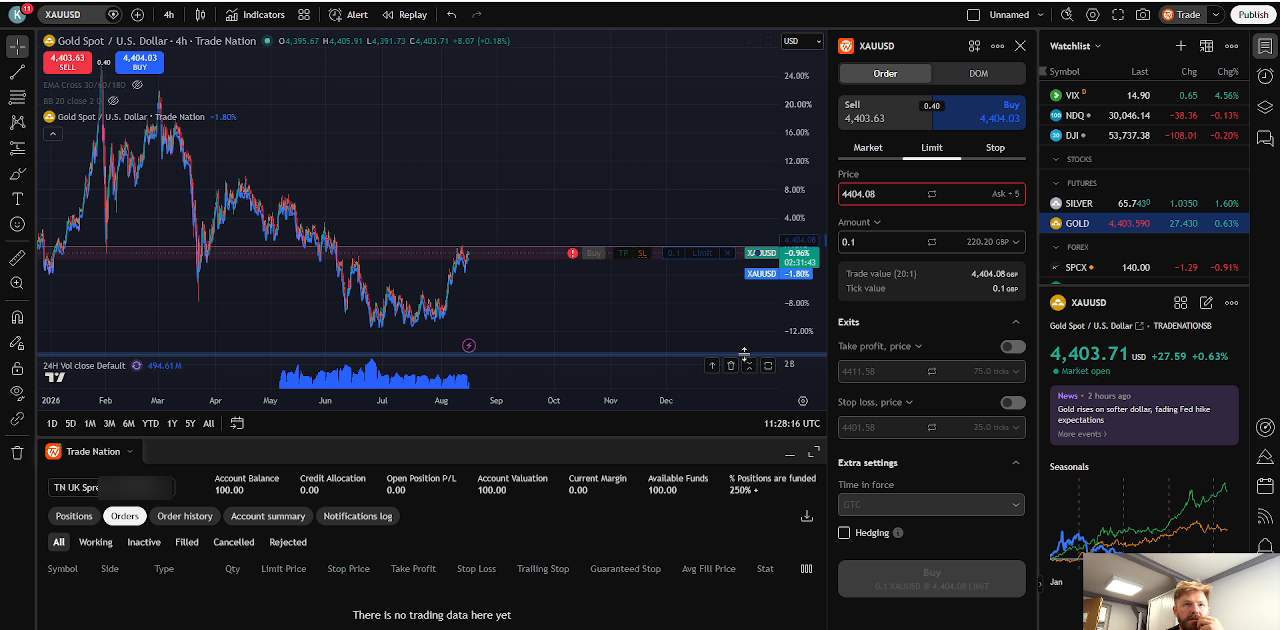
Every other entry on this page fixes one product. Trade Nation fixes the platform. Their trading-costs page puts it plainly: fixed spreads across indices, forex, commodity and bond markets (equities are excluded) on TN Trader and TradingView, with a commitment worthquoting because nobody else makes it: "the spreads will not move inside of those session times". Their market information sheet publishes the exact figure for every market by time of day: EUR/USD 0.5 pips through the main session, GBP/USD 0.8, the UK 100 at 0.8 points through cash hours, the US 500 at 0.4 through the US session. When we held a funded account through the NFP release, the single moment variable spreads blow out hardest, the quote sat exactly where the sheet said it would. We tested the indices and they held as advertised.
| Detail | Info |
|---|---|
| Fixed spreads on | Forex, indices, commodities, bonds (TN Trader & TradingView; MT4 runs variable) |
| Published examples (main session) | EUR/USD 0.5 pips · GBP/USD 0.8 · UK 100 0.8pt · US 500 0.4pt |
| Accounts | Spread betting · CFD · free £10,000 demo |
| Commission | £0, all costs in the spread |
| Minimum deposit | Effectively £0 (£0.01–£5 by method, their terms) |
| Own real shares? | No: trading only, no ISA or SIPP |
| FCA FRN | 525164 |
Pros
- Fixed spreads across the whole platform, published per market
- Held through NFP and BoE announcements when I tested them
- Excellent TradingView integration (featured Platinum broker)
- Zero commission, no fees on deposits or withdrawals (my last test withdrawal was approved in just over an hour)
Cons
- Not the ideal starting point for complete beginners
- No MT5, and MT4 accounts lose the fixed pricing
- No share dealing, ISA or SIPP: trading only
How Fixed Is "Fixed" at Trade Nation?
Fixed to a published timetable, which their own trading-costs page describes as spreads that "adjust at set times during the day". Each market has a main-session figure plus set overnight and rollover bands, all printed on their market information sheet before you trade. What never happens is the spread reacting to volatility: I watched EUR/USD through an NFP release and the quote did not flicker. The practical read: do your sums on the main-session number, know the overnight band from the sheet, and avoid the 22:00 to 22:59 London hour, when the published forex bands are at their widest. I go through the whole model in my fixed spreads deep dive.
Which Platform Route Keeps the Fixed Spreads?
TN Trader (their in-house platform on desktop, web and mobile) and the TradingView connection both carry the fixed pricing; Trade Nation sits inside TradingView as a featured Platinum broker rated 4.8, and connecting my account took one click. MT4 is offered too but runs variable spreads, in their own words, so the fixed model is a reason to skip MT4 here. My full account of the broker, with the screen-recorded onboarding, is in the Trade Nation review.
Who Should Pick Trade Nation From This List?
Anyone whose trading touches news, events or evening hours, and anyone who wants their cost per trade known before clicking. Index and forex spread bettors get the strongest version of the deal: fixed point spreads inside the CGT-free spread betting wrapper (tax treatment depends on individual circumstances and may change). Complete beginners may prefer Capital.com's gentler interface below and can graduate here once costs start driving decisions.
Capital.com: The Easiest Route to Fixed Index Costs
- Fees & Spreads
- 4.4
- Platform & Tools
- 4.4
- Customer Service
- 4.5
- Ease of Use
- 4.8
- Mobile App
- 4.9
What I checked: Capital.com's "how our markets are priced" page, read on 24 August 2026, alongside my funded testing of the platform from our trading platform rankings.
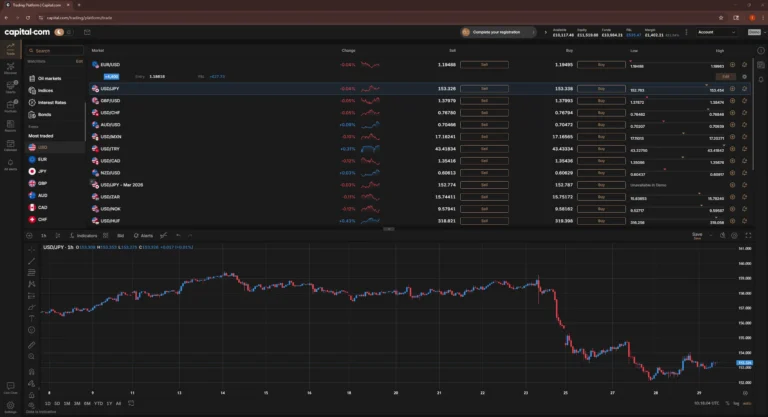
Capital.com barely advertises its fixed offer, so I went to the source. Their pricing methodology page states "We fix our index spreads based on times throughout the day", widest when the underlying futures market is closed and tightest during the main share-trading session. That is the same time-banded structure Trade Nation publishes, applied to indices only; forex and metals stay variable here, and share CFDs carry a fixed markup on a variable underlying, which is not the same thing as a fixed spread. Where Capital.com earns its slot is who it suits: this is the simplest platform on this page by a distance, the one I recommend to beginners across the site, now with a known index cost during trading hours.
| Detail | Info |
|---|---|
| Fixed spreads on | Indices, within published time-of-day bands |
| Everything else | Forex and metals variable; shares priced with a fixed markup on the live market |
| Accounts | CFD trading and real share investing under one login |
| Platforms | Own web + app; TradingView connection ("place trades directly from its charts", their page) |
| Own real shares? | Yes, on the investing side (no ISA) |
| FCA FRN | 793714 |
Pros
- Index spreads fixed in published time bands, per their pricing page
- Far and away the easiest platform here for newcomers
- Real share investing available alongside the CFD side
Cons
- Fixed pricing limited to indices
- No published per-market band sheet as detailed as Trade Nation's
Who Is Capital.com For on This Page?
The beginner who found this page because "fixed spreads" sounded sensible and wants the simplest possible way to get that on index trades. The platform's design does more hand-holding than anything else here, and if you later want to own actual shares, the investing side sits on the same login. Serious fixed-spread traders will still land on Trade Nation for breadth; this is the gentler on-ramp, and it is where I point complete newcomers across this site.
Spreadex: Fixed Spreads on Options
- Fees & Spreads
- 4.5
- Platform & Tools
- 4.2
- Customer Service
- 4.7
- Ease of Use
- 4.2
- Mobile App
- 4.1
What I checked: Spreadex's options trading pricing guide and site footer, read on 24 August 2026, alongside my funded testing of the platform from our trading platform rankings.
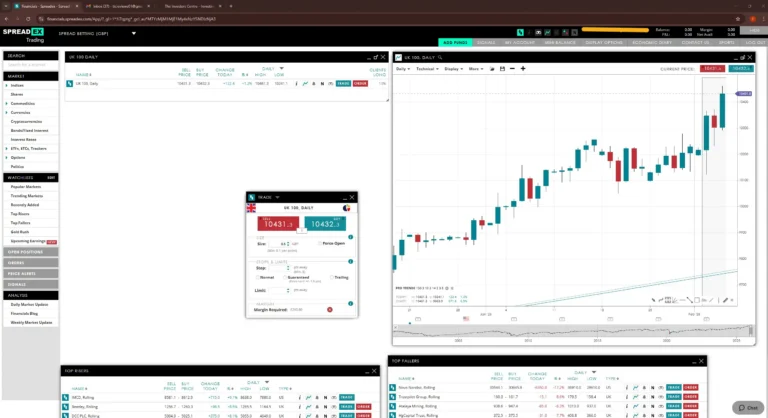
I had a hunch Spreadex belonged on this page and their own pricing guide confirmed it, with an offer nobody else here matches: "Our spreads are fixed on options with an expiry date up to 3 months, or in some cases 6 months, from the time that the bet is placed." Options spread betting is a niche within a niche, and Spreadex is one of the only UK firms doing it at all, let alone with the spread locked at the moment you strike the bet. Their guide is candid that fixed option spreads can vary with volatile conditions, liquidity and time to expiry before you place the bet, so read that page before trading; once placed, your spread is your spread. The rest of the platform (indices, forex, shares spread betting) prices variably, which is why it sits fourth, and its famous simplicity still makes it the easiest pure spread betting product I have used.
| Detail | Info |
|---|---|
| Fixed spreads on | Options (spread betting), up to 3–6 months to expiry, fixed when the bet is placed |
| Everything else | Variable pricing on indices, forex and shares spread betting |
| Accounts | Financial spread betting · CFD |
| Platforms | Own web + app; TradingView connection ("trade directly through TradingView", their page) |
| Own real shares? | No: spread betting and CFDs only |
| Regulation | "Spreadex Ltd is authorised and regulated by the Financial Conduct Authority" (their footer) |
Pros
- The only fixed-spread options offer on this list
- Spread locked at the moment the bet is placed
- Simplest pure spread betting platform I have used
Cons
- Fixed pricing applies to options only
- Options spread betting suits experienced traders
Why Would an Options Bettor Care About Fixed Spreads?
Because option pricing is opaque enough already. An option's value moves with the underlying, time decay and implied volatility all at once, and if your broker's spread also moves, you lose track of your true entry cost. Fixing the spread at the point of bet removes the one variable the broker controls. If you are new to the product itself, learn it on paper first; and if what you actually want is fixed spreads on ordinary index or forex trades, Trade Nation at the top of this page is the straighter route.
City Index: Fixed Index Spreads From a 40-Year Name
- Fees & Spreads
- 4
- Platform & Tools
- 3.3
- Customer Service
- 3.3
- Ease of Use
- 3.5
- Mobile App
- 3.7
What I checked: City Index's indices spread betting pages, read on 24 August 2026, against my funded testing of the broker from our forex broker rankings work.
City Index is the entry that will surprise people who think of it as a general-purpose broker. On its indices spread betting pages, in its own words: "Fixed spreads from 0.4 points", paired with margins from 5%. It comes wrapped in the deepest heritage on this page: four decades of UK spread betting under the Nasdaq-listed StoneX group. It sits fourth because the fixed offer covers indices only, on spread betting accounts, while forex and shares run variable; a pure index spread bettor may still find that is all the fixing they need.
| Detail | Info |
|---|---|
| Fixed spreads on | Indices, spread betting ("Fixed spreads from 0.4 points") |
| Everything else | Variable pricing (forex, shares, commodities) |
| Accounts | Spread betting · CFD · demo |
| Platforms | Web Trader, mobile app, TradingView charts, MT4 |
| Own real shares? | No: leveraged trading only |
| FCA FRN | 446717 (StoneX Financial Ltd, from their own footer) |

Pros
- Fixed index spreads from 0.4 points, stated on their own pages
- StoneX backing and a 40-year UK spread betting heritage
- Strong platform stack with TradingView charting built in
Cons
- Fixed pricing covers indices only
- Forex traders get variable spreads here
When Would I Pick City Index From This List?
If you trade indices only, want fixed pricing on them, and value a household-name platform with a big overall market list around it. Their "from 0.4 points" is a from-rate, so check which index it applies to on their site against the market you actually trade; Trade Nation publishes a flat per-market sheet, which makes that comparison easy to run yourself. The moment your trading strays into forex or commodities, the fixed advantage belongs to Trade Nation alone, because City Index prices those variably.
Are Fixed Spreads Better Than Variable Spreads?
Neither is better everywhere. They price different risks, and the right one depends on which risk is yours. A variable spread breathes with the market: tight when conditions are calm, wide when they are not, and you learn the true figure at the moment of execution. A fixed spread is the same number in both conditions, which makes it slightly dearer on a sleepy afternoon and dramatically cheaper in the thirty seconds after a payroll print.
The way I frame it after testing both models with real money: variable pricing suits high-frequency traders working calm sessions, where fractions of a pip compound. Fixed pricing suits anyone who trades news and events, holds through announcements, trades evenings when variable spreads quietly widen, or simply wants position sizing to be arithmetic instead of estimation. There is a reason the one fully fixed platform on this page pairs the model with spread betting: a known cost per point inside a wrapper where profits are currently free of Capital Gains Tax for UK retail speculators (tax treatment depends on individual circumstances and may change) is about as predictable as leveraged trading gets.
One myth worth killing: fixed spreads do not make trading free. Overnight financing, premiums on guaranteed stops and your own leverage decisions still apply at every broker on this page. Fixed spreads remove one variable, the most important one, but not all of them. The risk warning stands at every one of these platforms: the majority of retail CFD accounts lose money.
How I Tested
Every broker on this page has been tested with a live funded account. Trade Nation most recently: I recorded my own sign-up, placed real trades through its TradingView connection, and held the quotes through NFP, a Bank of England decision and an ECB decision to check the fixed spreads held. Capital.com, Spreadex and City Index went through the same funded testing for our platform and forex rankings: real trades across indices, forex and shares, withdrawals back to my own bank, support calls timed, and each platform used properly on desktop and mobile.
The brokers that did not make this page were tested with real money too, IG, CMC Markets, Pepperstone, eToro and Trading 212 among them, so the no-fixed-spreads verdicts come from experience as well as from their pricing pages, which I read one by one on 24 August 2026. Sources are in the references below. Re-checked monthly, because pricing pages change.
FAQs
References
- Trading costs (fixed spreads statement) - Trade Nation
- Market information sheets (published spread bands) - Trade Nation
- Indices spread betting (fixed spreads from 0.4 points) - City Index
- How our markets are priced (fixed index spreads) - Capital.com
- Options pricing guide (fixed option spreads) - Spreadex
- TradingView connection - Capital.com
- TradingView connection - Spreadex
- Financial Services Register - FCA
73.7% of retail investor accounts lose money when trading CFDs with this provider. You should consider whether you can afford to take the high risk of losing your money.