

- expertise:
- CFD Trading, Forex, Derivatives, Risk Management
- credentials:
- Chartered ACII (2018) · Trading since 2012
- tested:
- 40+ forex & CFD platforms with live accounts

- expertise:
- Broker Comparison, ISA Strategy, Portfolio Management
- credentials:
- Active investor since 2013 · 11+ years experience
- tested:
- 40+ brokers with funded accounts
How We Test
Real accounts. Real money. Real trades. No demo accounts or press releases.
What we measure:
- Spreads vs advertised rates
- Execution speed and slippage
- Hidden fees (overnight, withdrawal, conversion)
- Actual withdrawal times
Scoring:
Fees (25%) · Platform (20%) · Assets (15%) · Mobile (15%) · Tools (10%) · Support (10%) · Regulation (5%)
Regulatory checks:
FCA Register verification · FSCS protection
Testing team:
Adam Woodhead (investing since 2013), Thomas Drury (Chartered ACII, 2018), Dom Farnell (investing since 2013) — 50+ platforms with funded accounts
Quarterly reviews · Corrections: in**@*******************co.uk
Disclaimer
Not financial advice. Educational content only. We're not FCA authorised. Consult a qualified advisor before investing.
Capital at risk. Investments can fall. Past performance doesn't guarantee future results.
CFD warning. 67-84% of retail accounts lose money trading CFDs. High risk due to leverage.
Contact: in**@*******************co.uk
Quick Answer: Which Is the Best Trading App in the UK?
Pepperstone takes the top spot for most UK traders this month. Its stripped-back app loads in under two seconds, biometric login never missed in testing, and one login covers its own app plus MT4, MT5, cTrader and TradingView. Spreadex stays close behind - fast, stable, with tax-free spread betting under current rules and genuinely sharp mobile execution - while IG, what I use personally for ISAs, wins on depth.
For forex specifically, Pepperstone's Razor account spreads are hard to beat. XTB is worth a look if you want stocks, ETFs and CFDs in one app with no minimum deposit and account opening in around 8 minutes.
| If You Want | Choose | Why |
|---|---|---|
| Tax-free trading | Spreadex | Spread betting profits exempt from capital gains tax |
| Lowest barrier to entry | XTB | No minimum deposit, 0% commission on stocks/ETFs* |
| Most markets | IG | Over 17,000 instruments, DMA available |
| Tightest spreads | Pepperstone | Razor account spreads from 0.0 pips |
| Best for ISAs | IG | Share ISA and SIPP with zero commission |
| AI-powered insights | Capital.com | Sentiment tools and smart news feeds |
| A free demo to practise | Trading.com | £10,000 demo with no expiry, simple dual CFD & Invest app |

Pepperstone
- Best For
- Low-spread forex & CFDs
- TIC Trading App Rating
- 4.8 / 5
- Community Rating
- 4.4 (209 ratings) Have Your Say →
- Standout Feature
- Own app, MT4, MT5 & cTrader
- Cost*
- £2.25/side/lot (Razor); £0 (Standard)
72.9% of retail CFD accounts lose money.

IG
- Best For
- Advanced charting & market range
- TIC Trading App Rating
- 4.7 / 5
- Community Rating
- 4.3 (207 ratings) Have Your Say →
- Standout Feature
- Share ISA investing
- Cost
- £0 (spread bet)
69% of retail CFD accounts lose money.

Spreadex
- Best For
- All-round CFD & spread betting
- TIC Trading App Rating
- 4.6 / 5
- Community Rating
- 4.3 (175 ratings) Have Your Say →
- Standout Feature
- Tax-free spread betting
- Cost
- £0 commission*
65% of retail CFD accounts lose money.

Capital.com
- Best For
- Beginners & intuitive UI
- TIC Trading App Rating
- 4.6 / 5
- Community Rating
- 4.3 (157 ratings) Have Your Say →
- Standout Feature
- AI risk-bias alerts
- Cost
- £0 commission *other fees apply
65% of retail investor accounts lose money when trading CFDs with this provider.

CMC Markets
- Best For
- Charting depth & markets
- TIC Trading App Rating
- 4.5 / 5
- Community Rating
- 4.2 (129 ratings) Have Your Say →
- Standout Feature
- Guaranteed stop-loss orders
- Cost*
- £0 (FX/indices)
68% of retail CFD accounts lose money.
XTB
- Best For
- Full account management in one app
- TIC Trading App Rating
- 4.4 / 5
- Community Rating
- 3.6 (55 ratings) Have Your Say →
- Standout Feature
- Stocks and CFDs in one app
- Cost*
- £0 commission (stocks/ETFs to EUR 100k/mo)
74% of Retail CFD Accounts Lose Money

Trading.com
- Best For
- A simple dual CFD & Invest app
- TIC Trading App Rating
- 3.9 / 5
- Community Rating
- 3.1 (40 ratings) Have Your Say →
- Standout Feature
- £10k no-expiry demo
- Cost*
- £0 commission*; CFD spreads from 0.8 pips
70.6% of retail CFD accounts lose money.
*£0 and “commission-free” figures refer to dealing commission only. Other fees may apply, for example FX conversion on non-GBP trades, withdrawal or inactivity fees. Check each provider for full costs. Figures re-checked July 2026.
How Do These Trading Apps Compare?
| Rank | App | Min. Deposit | Commission* | Spreads | ISA Available | FCA Reference |
|---|---|---|---|---|---|---|
| 1 | Pepperstone | £0 | From 0.0 pips (Razor) | From 0.0 pips | No | 684312 |
| 2 | IG | £0 | £0 on UK/US shares | From 0.6 pips | Yes | 195355 |
| 3 | Spreadex | £1 | Spread-based | From 0.6 pips | No | 190941 |
| 4 | Capital.com | £20 | Spread-based | From 0.6 pips | No | 793714 |
| 5 | CMC Markets | £0 | Spread-based | From 0.7 pips | No | 173730 |
| 6 | XTB | £0 | 0% to EUR 100k/mo* | From 0.8 pips | Yes (flexible) | 522157 |
| 7 | Trading.com | £0 | £0 (Invest) | From 0.8 pips | No | 705428 |
What I Found Testing Each Trading App
1. Pepperstone - Best for Low-Cost Forex Trading
2. IG - Best for ISAs and Market Access
3. Spreadex - Best for Tax-Efficient Mobile Trading
4. Capital.com - Best for Market Range and Research
5. CMC Markets - Advanced platform for CFD & forex traders
6. XTB - Best for Full Account Management in One App
7. Trading.com - Best for a Simple Dual App With a Free Demo
Pepperstone - Best for Low-Cost Forex Trading
- Fees & Spreads
- 4.1
- Platform & Tools
- 4.4
- Customer Service
- 4.2
- Ease of Use
- 3.9
- Mobile App
- 4.3
Pepperstone is what I reach for when spread costs and execution speed are the only things that matter. It's a tool built for people who know exactly what they want.
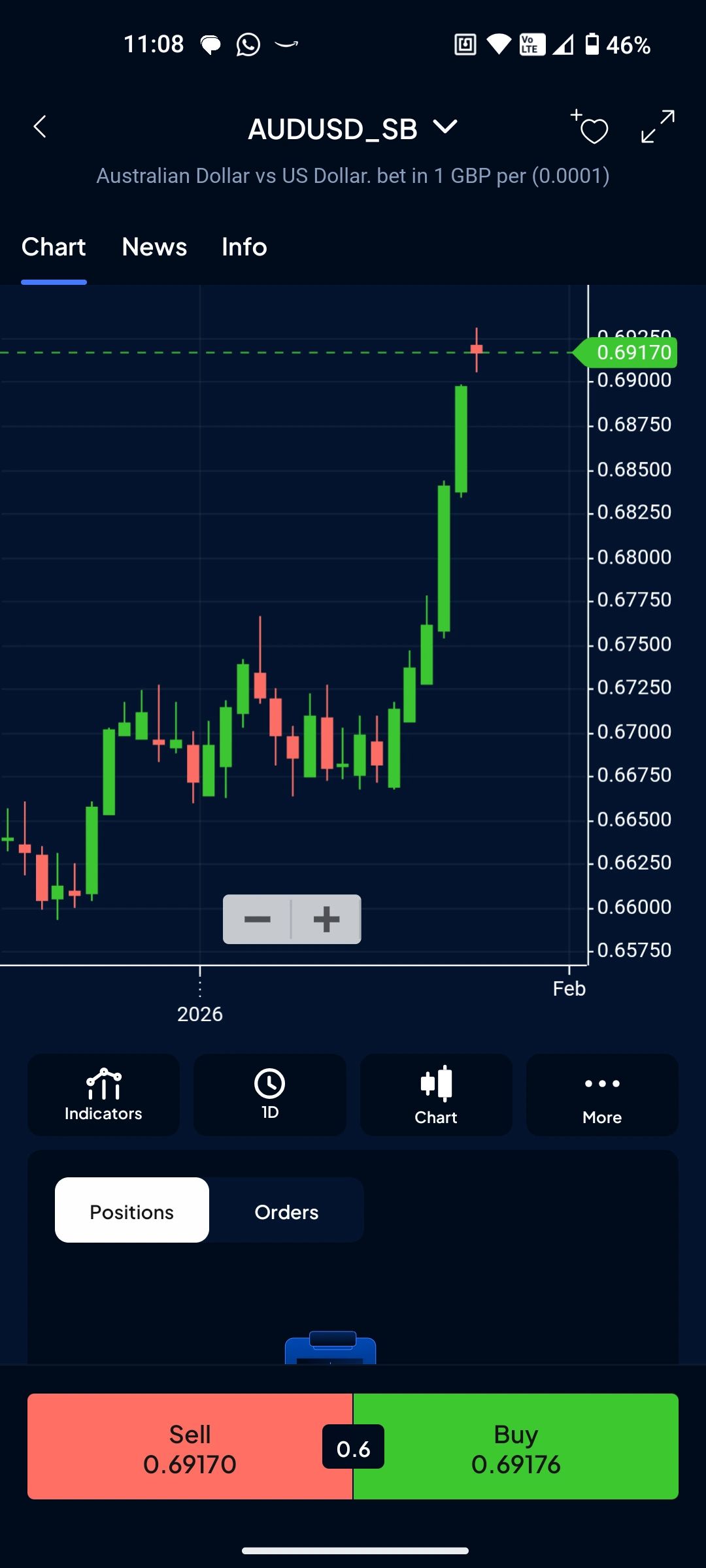
During testing, I placed over 25 forex trades on mobile, mostly on majors like EUR/USD and GBP/USD where those tight Razor account spreads actually make a measurable difference. Deposits landed instantly, withdrawals cleared in one business day, and the app never tried to upsell me on features I didn't need.
Pros
- Razor account spreads genuinely start from 0.0 pips on major pairs, I verified this repeatedly
- Execution speed was excellent with minimal slippage even during news events
- Instant deposits and fast withdrawals, no unexplained delays
- Clean, focused mobile layout that doesn't waste your time
Cons
- No ISA or any long-term investing options, this is pure trading territory
- Educational content is sparse, so beginners should look elsewhere
- Assumes you already know what you're doing, which is either refreshing or intimidating depending on your experience
What's the App Experience and What Features Stand Out?
Pepperstone's mobile app is stripped back in the best way, there's no clutter, no promotional pop-ups, just the tools you need to trade. Load times were consistently under two seconds, and biometric login worked without fail across both iOS and Android. The charting is more capable than you'd expect for a mobile app, with TradingView integration available if you want deeper analysis.
How Much Does It Cost and Are There Hidden Fees?
Pepperstone offers two account types: Standard (spreads from 1.0 pips, no commission) and Razor (spreads from 0.0 pips plus £2.25 commission per side per lot). For active forex traders, the Razor account is where the value sits, I consistently saw EUR/USD spreads at 0.0-0.2 pips during London hours.
There's no deposit fee, no withdrawal fee, and no inactivity fee, which is refreshing. Overnight financing applies to positions held past market close, calculated at the benchmark rate plus a small mark-up. No hidden charges caught me out during testing.
Who Is This App Best For (And Who Should Avoid It)?
Pepperstone is ideal for experienced forex and CFD traders who prioritise execution quality and tight spreads above all else. If you already know your way around a trading platform and don't need hand-holding, it's hard to beat.
It's less suitable for beginners, there's minimal educational content and the interface assumes familiarity with trading concepts. Anyone wanting to invest long-term, hold real shares, or use an ISA should look elsewhere. This is a specialist tool for a specific job, and it does that job exceptionally well.
| Metric | Value |
|---|---|
| Google Play Rating | 4.6/5 |
| FCA Reference | 684312 |
| Minimum Deposit | £0 |
| Biometric Login | Yes |
| Instant Deposits | Yes |
| ISA Available | No |
| Product Type | CFDs and spread betting |
| Withdrawal Time (Tested) | 1 business day |
IG - Best for ISAs and Market Access
- Fees & Spreads
- 4.2
- Platform & Tools
- 4.5
- Customer Service
- 3.8
- Ease of Use
- 4.1
- Mobile App
- 4.2
IG is what I personally use for my ISA and anything that needs holding longer than a few days. It's the platform I trust with money I actually care about keeping.
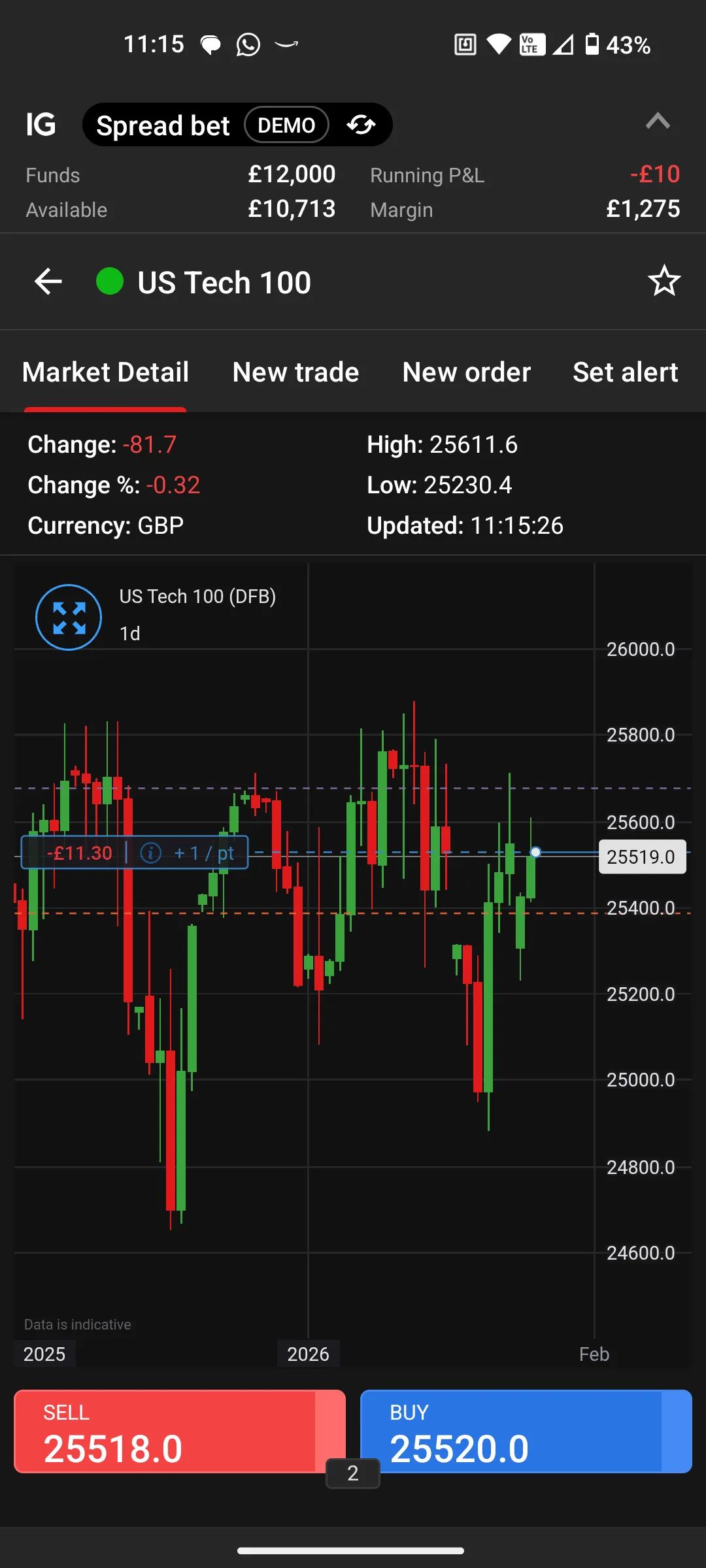
During my October to January testing window, I placed over 30 trades across shares, indices, and forex on mobile. Withdrawals consistently took one to two business days. The platform does pretty much everything, though I'll admit the mobile app can feel overwhelming on a phone screen, especially compared to Spreadex's stripped-back approach.
Pros
- Access to over 17,000 markets from a single app, you're genuinely unlikely to hit the limits
- Share ISA and SIPP with zero commission on UK shares makes it viable for proper long-term investing
- Execution stayed rock-solid even during volatile November sessions when other platforms got sluggish
- Research tools and market news are integrated well enough that you don't need to keep switching apps
Cons
- Mobile interface tries to fit too much on screen, new users often feel lost
- Some features are genuinely easier to use on desktop, which defeats the purpose of a mobile app
- Inactivity fee applies after extended periods without trading, check the current threshold before you park money there
What's the App Experience and What Features Stand Out?
IG's app handled everything I threw at it without crashing, even during the volatile sessions that caused problems elsewhere. Biometric login was instant and consistent, and the charting tools are noticeably better than most competitors on mobile, though they still feel like a compromise compared to what you get on desktop.
Watchlists, alerts, and order tickets all work well enough that you could genuinely manage a portfolio from your phone if you had to.
How Much Does It Cost and Are There Hidden Fees?
UK and US shares trade at zero commission, which is the headline number, but CFDs and spread bets are priced through spreads that are competitive without being the absolute tightest in the market.
The main cost that catches people out is FX conversion at around 0.5% on international trades, which adds up faster than you'd expect if you're buying US stocks regularly. No deposit or withdrawal fees, at least.
Who Is This App Best For (And Who Should Avoid It)?
IG makes the most sense for people who want everything under one roof, ISA for long-term investing, share dealing for medium-term positions, and derivatives for shorter trades.
Beginners might find the sheer volume of options overwhelming, and pure forex traders will probably prefer the tighter spreads at Pepperstone.
| Metric | Value |
|---|---|
| Google Play Rating | 4.4/5 |
| FCA Reference | 195355 |
| Minimum Deposit | £0 |
| Biometric Login | Yes |
| Instant Deposits | Yes |
| ISA Available | Yes (Share ISA and SIPP) |
| Product Type | Shares, CFDs, spread betting |
| Withdrawal Time (Tested) | 1-2 business days |
Spreadex - Best for Tax-Efficient Mobile Trading
- Fees & Spreads
- 4.5
- Platform & Tools
- 4.2
- Customer Service
- 4.7
- Ease of Use
- 4.2
- Mobile App
- 4.1
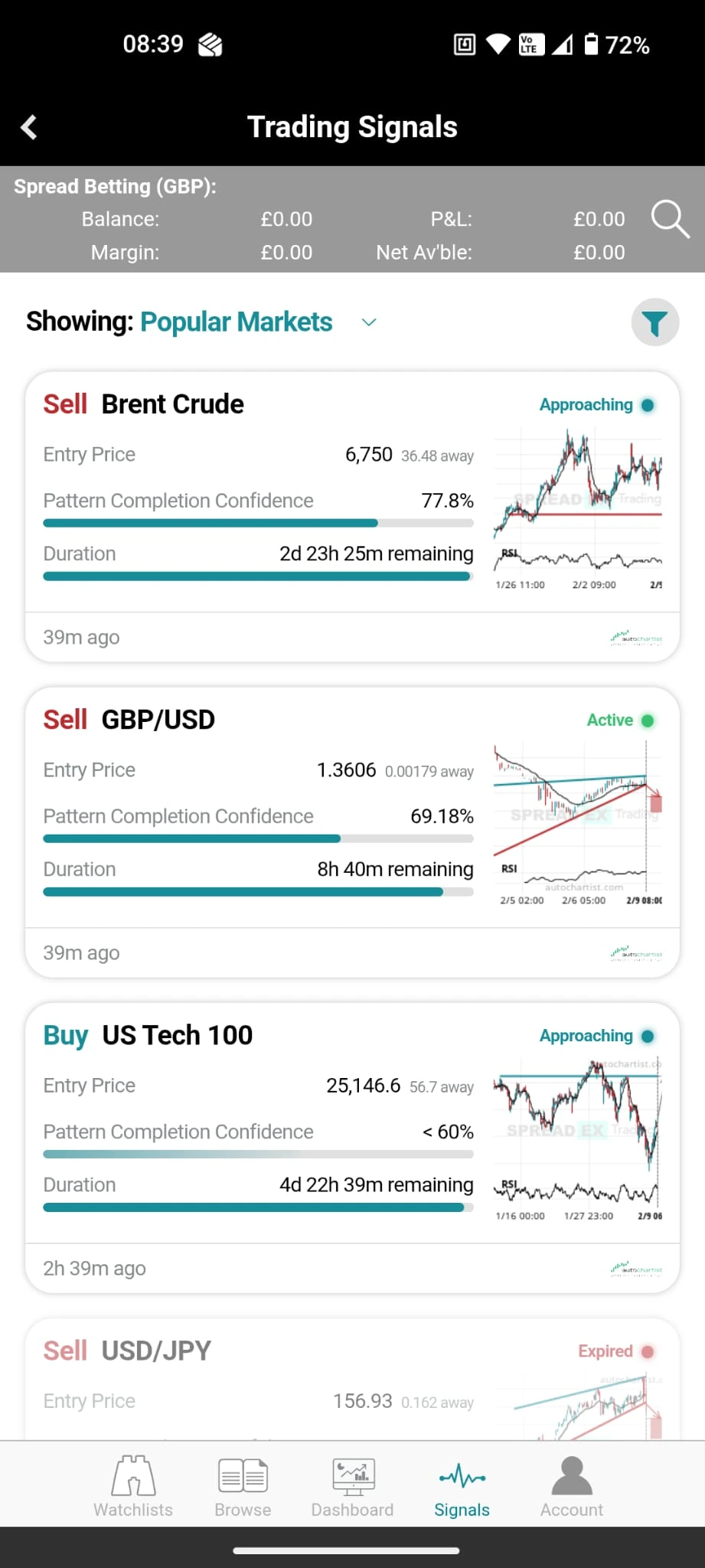
I've used Spreadex on and off since 2023, mainly for UK indices and share spread bets during London market hours. Between October 2025 and January 2026, I put it through its paces properly. Over 40 trades on mobile, two full withdrawal cycles. Both landed in my bank account within one business day. The app won't win any design awards. But honestly? It's fast, stable, and does exactly what active traders need without the bloat that slows other platforms down.
Pros
- Spread betting profits are tax-free under current UK rules, though this could change, so don't structure your entire financial life around it
- £1 minimum deposit means you can test the waters without committing serious capital
- Apple Pay and Google Pay deposits process instantly, which matters when you spot an opportunity
- One-tap execution from watchlists is genuinely quick, not just marketing quick
Cons
- No ISA or SIPP, so it's purely for trading rather than building long-term wealth
- Charting tools are basic. Fine for quick decisions, frustrating if you want proper technical analysis
- £1 monthly inactivity fee kicks in after 90 days without a trade, which is annoying but manageable
What's the App Experience and What Features Stand Out?
On both iOS and Android, the app consistently loaded in under two seconds from a cold start, which might sound like a minor distinction until you're desperately trying to close a position during a flash move.
Face ID and fingerprint login worked reliably throughout my entire testing period, unlike certain platforms where biometrics randomly fail at the worst possible moments. Charting is functional rather than comprehensive, you get the core indicators most people actually use, but nothing for deep technical analysis.
Where Spreadex genuinely earns its place is execution speed: trades placed directly from watchlists actually go through when you tap, and price alerts fired accurately even during the volatility surrounding the November elections.
How Much Does It Cost and Are There Hidden Fees?
There's no commission structure to decode, costs come through spreads, which start around 0.3 pips on major forex pairs with competitive pricing on indices and UK shares. Deposits and withdrawals are free, which still feels like it should be the default but apparently isn't across the industry.
The only recurring charge worth noting is a £1 monthly inactivity fee after 90 days without placing a trade, so if you're the type to open accounts and forget about them, keep that in mind.
Who Is This App Best For (And Who Should Avoid It)?
Spreadex is the one I'd recommend to anyone wanting tax-efficient spread betting without the complications of a full-featured platform, provided you're fine without ISA access for long-term holdings.
It's less suitable if you want to build a proper investment portfolio, hold actual shares, or need advanced charting for technical strategies. Traders who spend more time analysing than executing might find the tools limiting.
| Metric | Value |
|---|---|
| Google Play Rating | 4.3/5 |
| FCA Reference | 190941 |
| Minimum Deposit | £1 |
| Biometric Login | Yes |
| Instant Deposits | Yes (Apple Pay, Google Pay) |
| ISA Available | No |
| Product Type | Spread betting and CFDs |
| Withdrawal Time (Tested) | 1 business day |
Capital.com - Best for Market Range and Research
- Fees & Spreads
- 4.4
- Platform & Tools
- 4.4
- Customer Service
- 4.5
- Ease of Use
- 4.8
- Mobile App
- 4.9
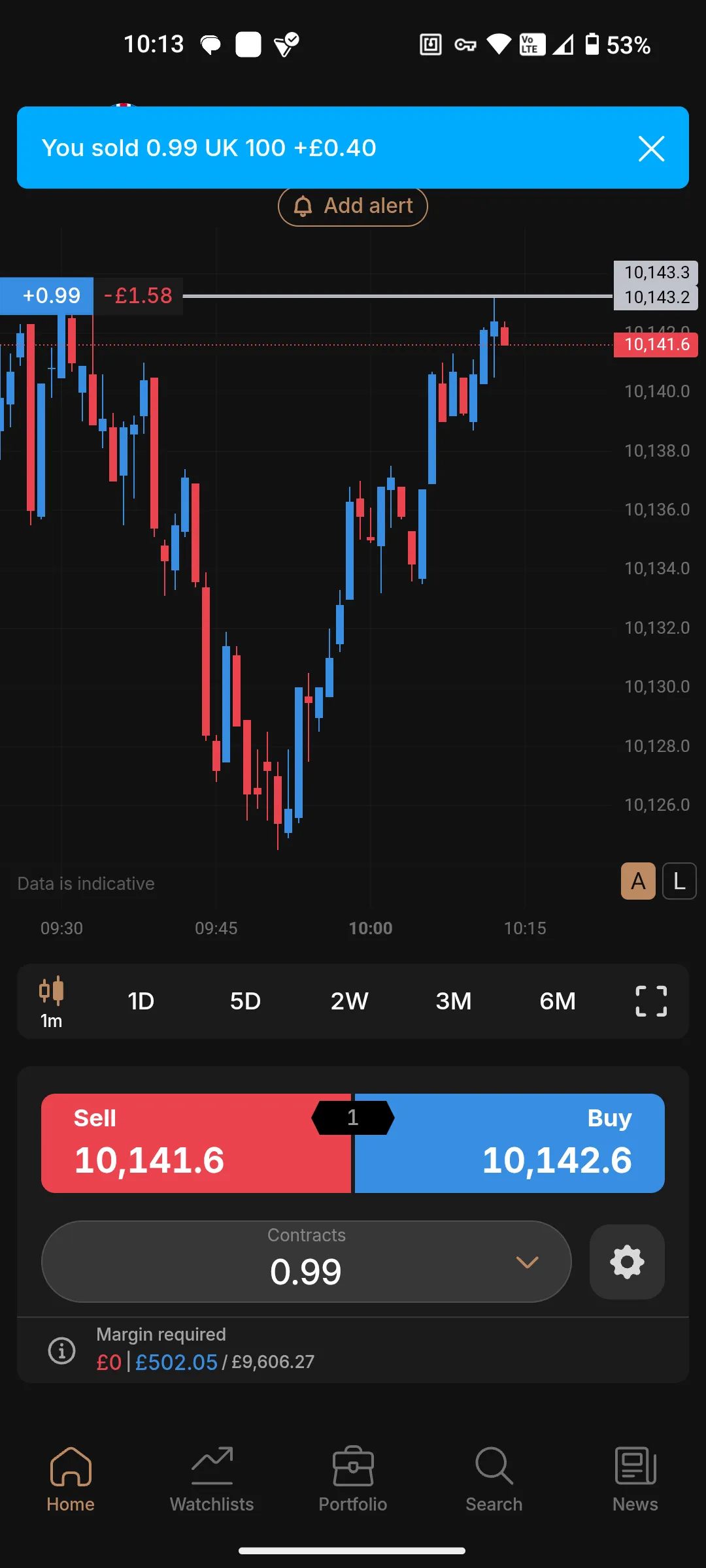
Capital.com was a genuine surprise during testing, their behavioural analysis tools actually provided useful insights rather than just looking impressive in screenshots.
I executed over 30 trades across CFDs and spread betting, and the app consistently highlighted when my trading patterns were becoming erratic, which is the kind of feedback most platforms don't bother with. Deposits were instant, withdrawals arrived within one to two business days, and the interface felt modern without being gimmicky.
Pros
- Behavioural insights that actually help you spot when you're trading emotionally
- Clean, modern interface that doesn't feel cluttered even with all the AI features
- Supports both CFDs and spread betting from the same account
Cons
- No ISA or long-term investing, purely a trading platform
- Limited advanced order types compared to specialist forex platforms
| Metric | Value |
|---|---|
| Google Play Rating | 4.6/5 |
| FCA Reference | 793714 |
| Minimum Deposit | £20 |
| Biometric Login | Yes |
| Instant Deposits | Yes |
| ISA Available | No |
| Product Type | CFDs and spread betting |
| Withdrawal Time (Tested) | 1-2 business days |
CMC Markets - Advanced platform for CFD & forex traders
- Fees & Spreads
- 4.2
- Platform & Tools
- 4
- Customer Service
- 4
- Ease of Use
- 3.8
- Mobile App
- 3.9
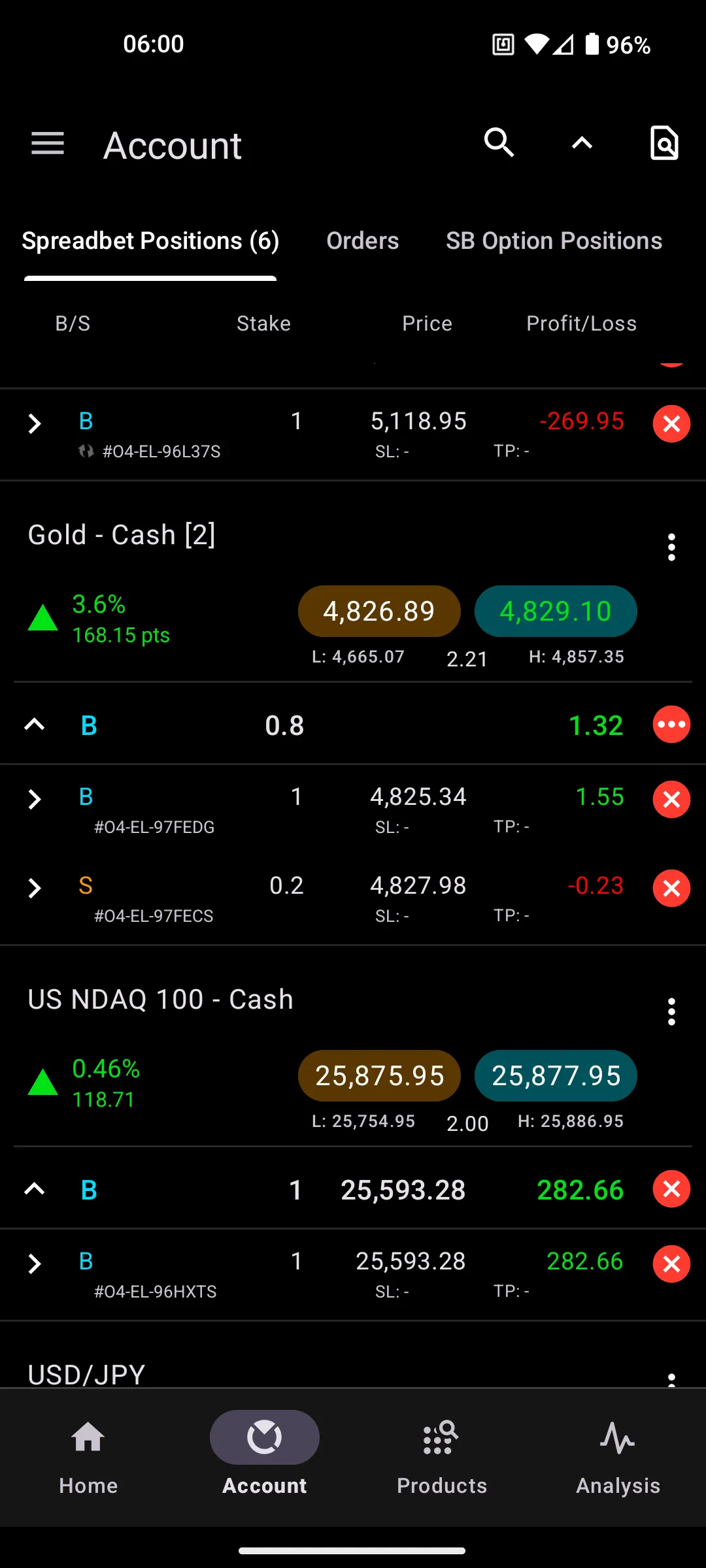
CMC Markets impressed with its sheer breadth of coverage and the quality of its research tools, you can tell it's built by people who've been in the industry for decades.
I placed over 25 trades during testing without any stability issues, though withdrawals were noticeably slower than competitors at two to three business days, which was frustrating when everyone else managed faster.
| Metric | Value |
|---|---|
| FCA Reference | 173730 |
| Minimum Deposit | £0 |
| Product Type | CFDs and spread betting |
| Withdrawal Time (Tested) | 2-3 business days |
XTB - Best for Full Account Management in One App
- Fees & Spreads
- 4.2
- Platform & Tools
- 4.4
- Customer Service
- 3.2
- Ease of Use
- 3.7
- Mobile App
- 3.3
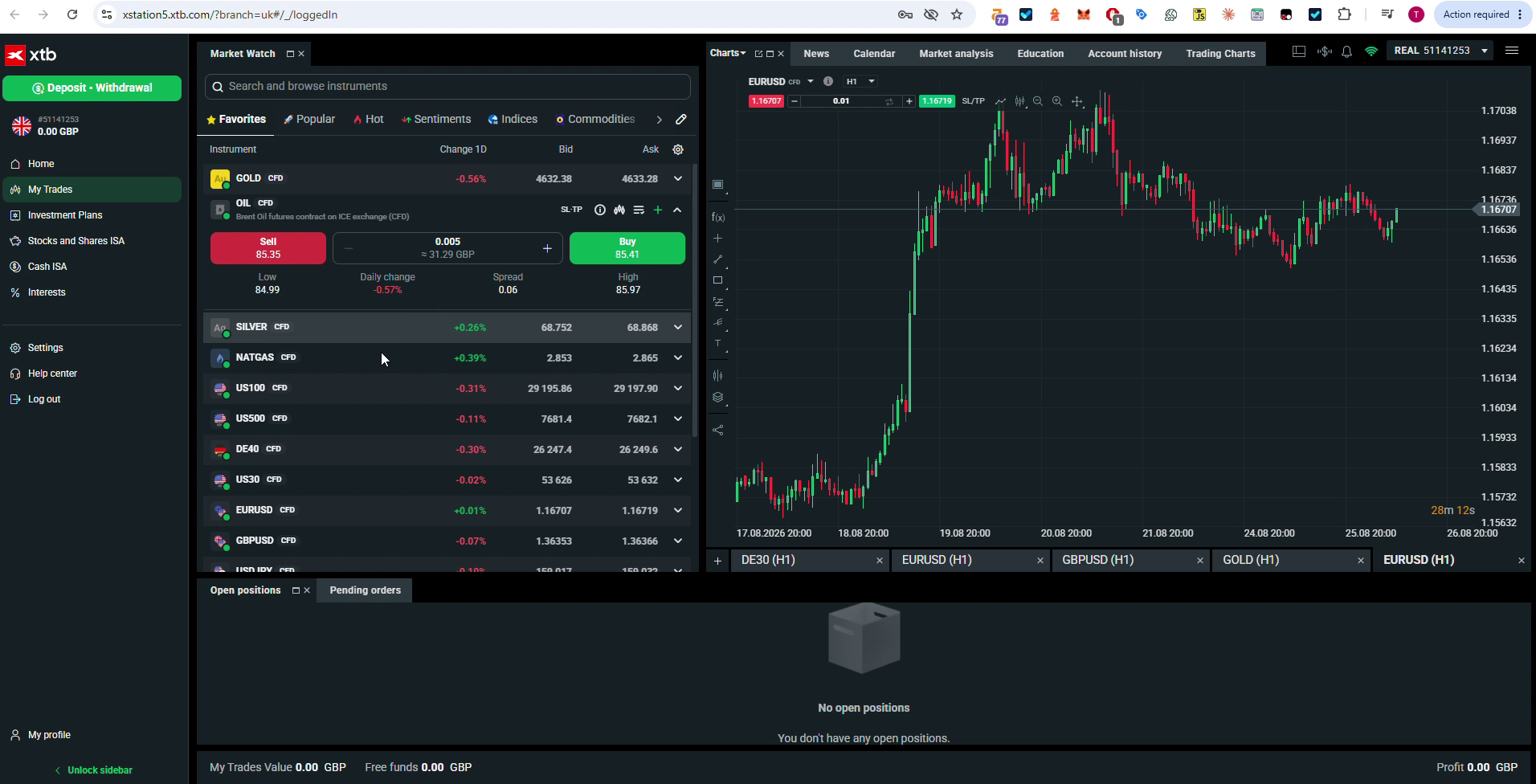
XTB is an FCA-regulated broker (X-Trade Brokers UK branch, FRN 522157) with 20+ years on the market and 2.9 million+ clients worldwide. Everything runs through one app, xStation, rated 4.7 on the App Store and 4.5 on Google Play with 5 million+ downloads. There is no MT4, MT5 or TradingView here, and no spread betting either, just real stocks, ETFs and CFDs from a single login.
Account opening runs to around 8 minutes from signup, and inside the app you get watchlists, price alerts and in-app deposits without switching screens. Stocks and CFDs sit side by side in the same login: dealing commission on real stocks and ETFs is 0% up to EUR 100,000 of monthly turnover (0.2%, min £10, above that), and there is no minimum deposit to get started. XTB joined this roster after our funded testing round closed, so the figures below come from XTB's own published app-store ratings and platform documentation rather than our live-money protocol.
Pros
- Price alerts and watchlists built into the xStation app
- Deposits can be made directly in the app, no separate portal
- Stocks and CFDs sit together in the same app and account
- Account opened from the app in around 8 minutes
Cons
- No spread betting, so no tax-free trading option here
- xStation only, there's no MT4, MT5 or TradingView
- 0.5% currency conversion cost applies on non-GBP instruments
- Demo account limited to 30 days
| Metric | Value |
|---|---|
| App Store Rating | 4.7/5 |
| Google Play Rating | 4.5/5 |
| FCA Reference | 522157 |
| Minimum Deposit | £0 |
| ISA Available | Yes (flexible) |
| Product Type | Stocks, ETFs and CFDs |
Trading.com - Best for a Simple Dual App With a Free Demo
- Fees & Spreads
- 4.2
- Platform & Tools
- 4.5
- Customer Service
- 3.8
- Ease of Use
- 4.1
- Mobile App
- 4.2
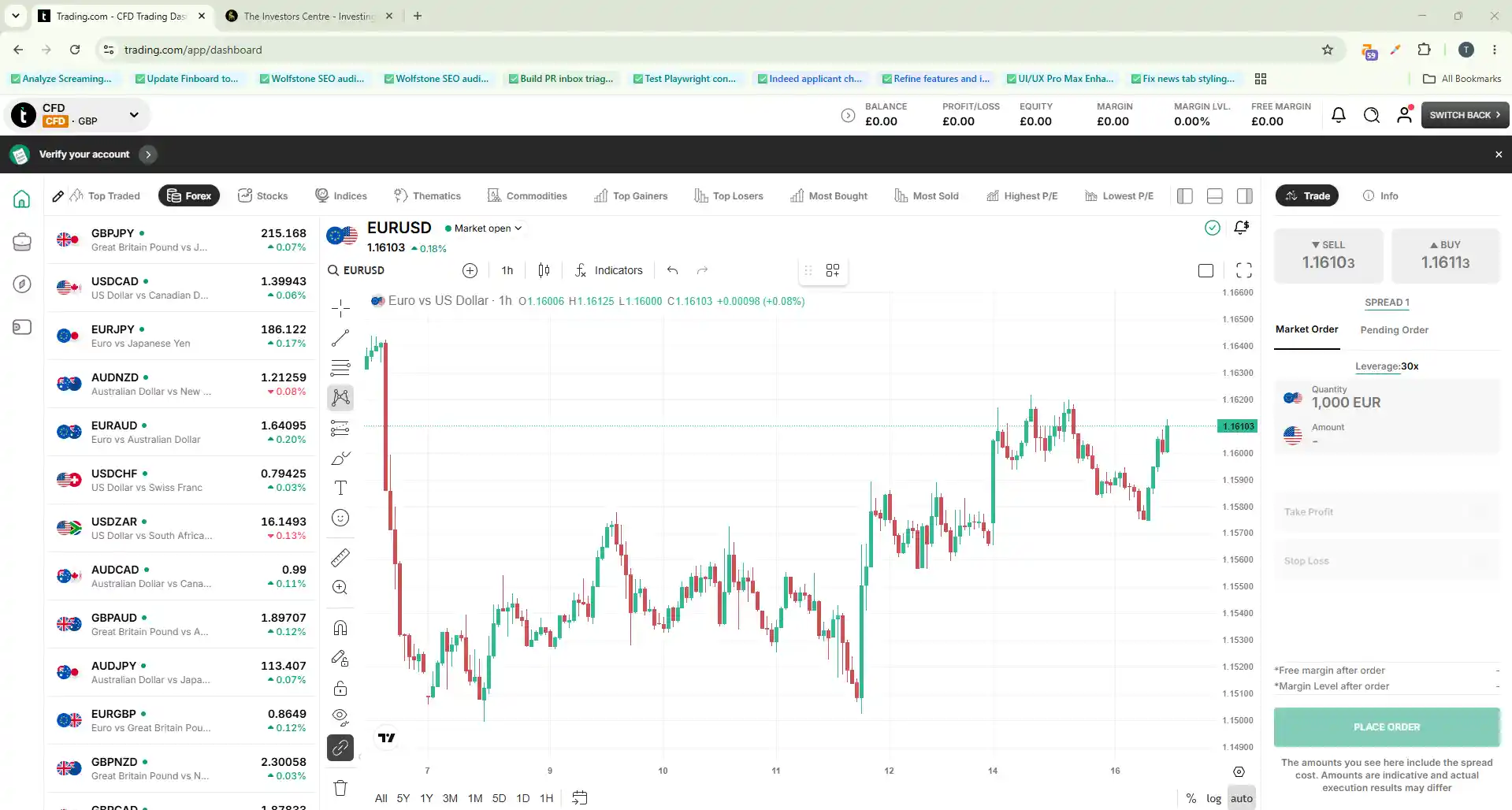
Trading.com is the newest app on this list and the appeal is simplicity. It's FCA-regulated (FRN 705428) and runs two products under one login - a leveraged CFD account and a commission-free Investment Account with real shares - plus a £10,000 demo that never expires, so you can practise before funding a live account.
The platform is deliberately clean, with TradingView-powered charts and MetaTrader 5 connectivity when you want more. For beginners I'd start on the Invest side and use the demo to learn CFDs first, as most retail traders lose money trading them. Withdrawals in my testing returned within one working day.
How Big Is the UK Trading App Market in 2026?
UK retail trading is no longer a niche. According to the FCA's Financial Lives 2024 survey (published May 2025), 7.9 million UK adults now use an investment platform, up from 4.4 million in 2020, an 80% rise in four years. 11% of UK adults, around 5.8 million people, are using non-advised platforms where most self-directed app trading takes place.
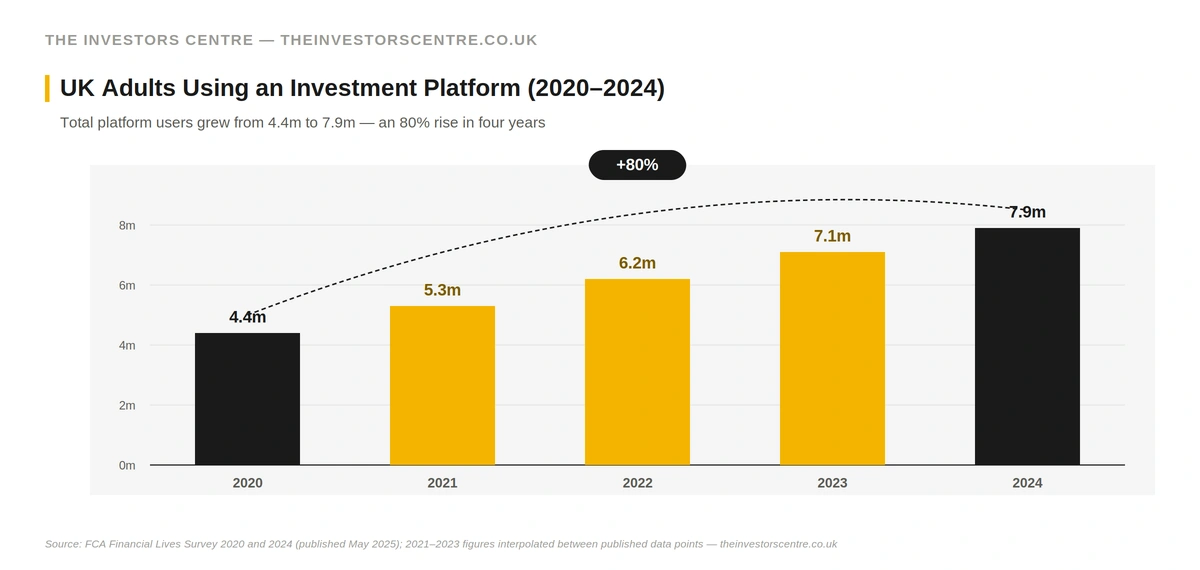
TIC view, Thomas Drury, Co-founder: When I started trading in 2012, the idea that nearly 8 million UK adults would be using investment platforms felt like a long way off. What surprised me most testing these apps in late 2025 wasn't the headline growth, it was how quickly mobile execution caught up to desktop. Spreadex and Pepperstone both placed orders on my phone faster than my desktop did during the November volatility, and that's the single biggest behavioural change I've seen in my 13 years in this market.
What Should You Look for in a Trading App?
Most people obsess over design and feature lists. But after testing 15 platforms with real money, I can tell you those matter far less than execution quality, actual costs (not advertised costs), regulation, and how quickly you can get your money out.
A beautiful interface becomes meaningless when trades lag. Hidden fees eat your profits faster than you'd expect. And withdrawals that take a week when you need funds urgently? That's a real problem.
What's the Difference Between a Trading App and an Investing App?
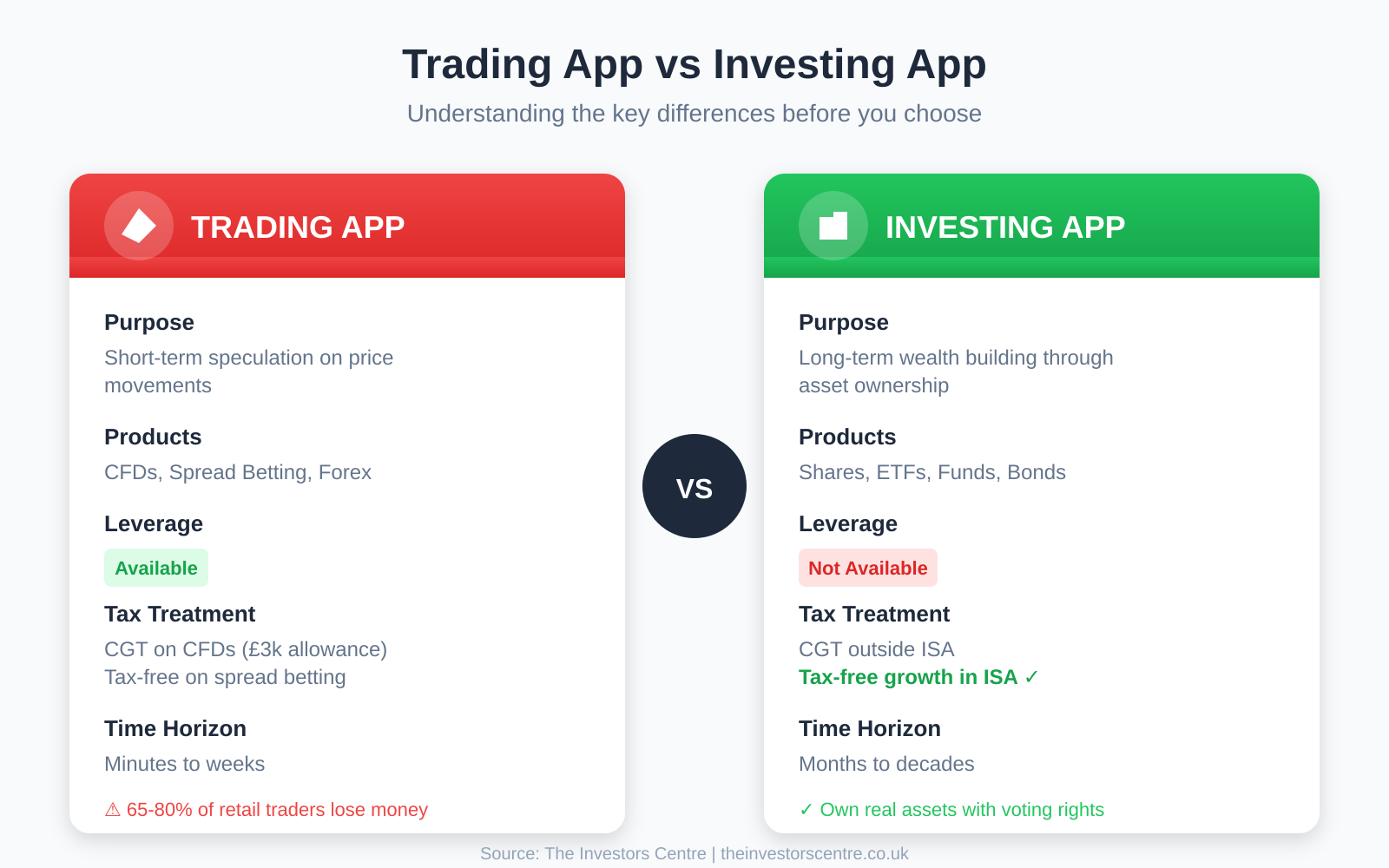
A trading app focuses on short-term speculation using leveraged products like CFDs or spread betting, you're essentially betting on price movements rather than building ownership of underlying assets. If forex is your main focus, my guide to the best forex trading apps UK covers specialist options in more detail.
An investing app is designed for buying and holding real shares or ETFs over months or years, typically with access to ISAs for tax-efficient growth over time. The distinction matters considerably because using the wrong type often leads to unnecessary costs, unexpected tax bills, or missing out on tax advantages you should legitimately be claiming.
How Important Is FCA Regulation?
In the UK, FCA regulation isn't optional, it's the bare minimum for any platform you should consider. An FCA-authorised broker must keep client funds segregated from company money. They must meet capital requirements that prove they're financially stable. And they must provide negative balance protection so you can't lose more than you deposit.
Every app in this guide is fully authorised by the Financial Conduct Authority, which means client money is held in segregated accounts and you are covered by the Financial Services Compensation Scheme (FSCS) up to £85,000 per person if the broker fails. If a platform isn't FCA-regulated, avoid it regardless of what else they promise.
How Much Do Trading Apps Cost to Use?
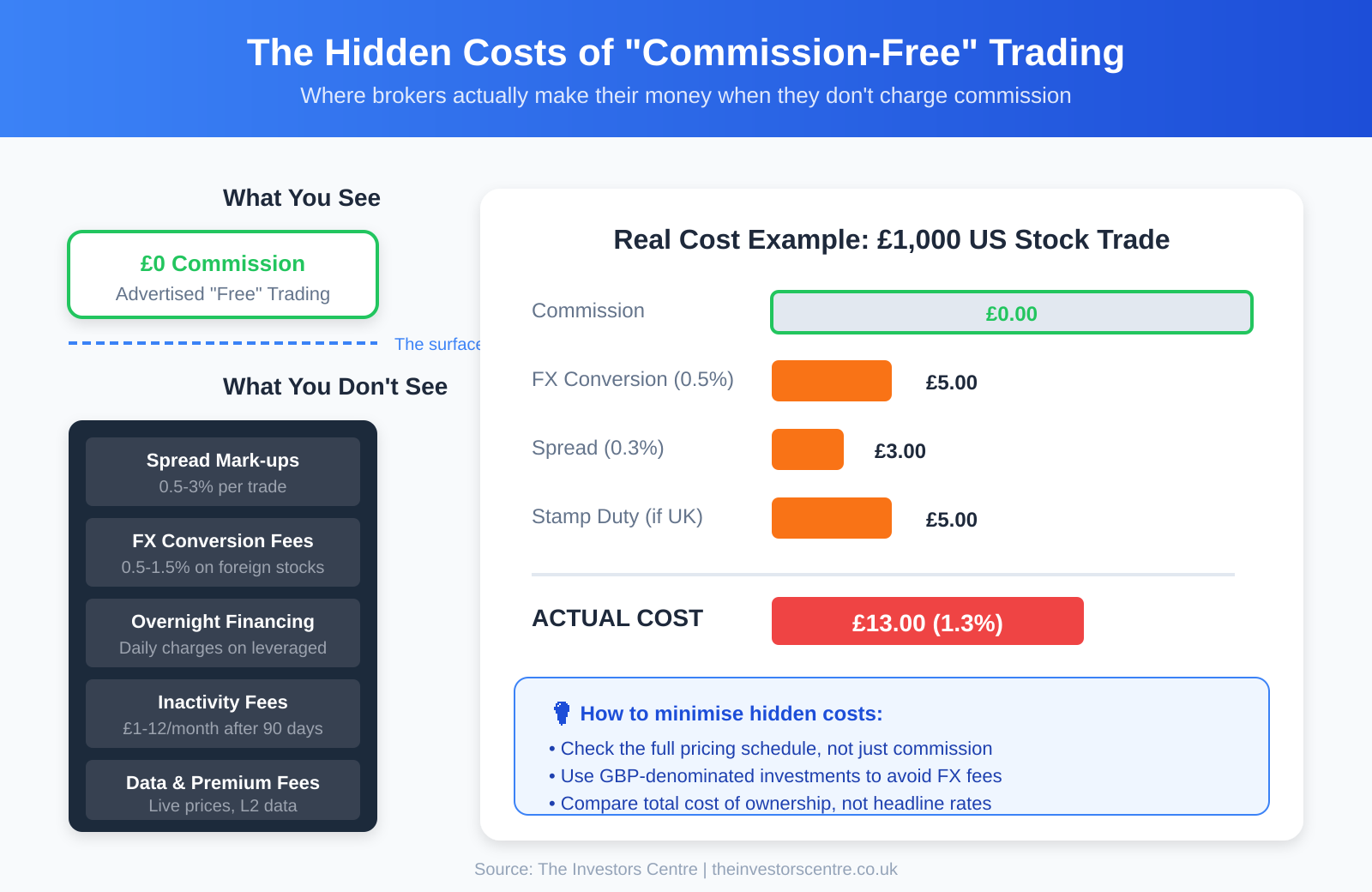
Trading costs are almost never just commission, even when that's all the marketing talks about. Even platforms advertising zero fees find ways to charge you through spreads, FX conversion mark-ups, overnight financing charges, or fees for services you assumed were included.
Are "Commission-Free" Apps Really Free?
Almost never. The costs show up elsewhere, wider spreads, FX conversion fees when buying foreign stocks, or overnight financing that compounds faster than you'd expect.
Take a £1,000 US stock trade: it might cost nothing in commission but still incur £5-10 in currency conversion fees alone. Over time, especially if you're trading actively, these hidden costs add up to substantially more than transparent commission would have cost.
What Hidden Fees Should You Watch For?
The most common hidden fees include inactivity charges (typically £10-12 monthly after 12 months), FX mark-ups of 0.5-1.5% on international trades, guaranteed stop premiums that apply even when not triggered, and data fees for live pricing on certain exchanges.
Always check the full pricing schedule rather than relying on headline "commission-free" claims, the information is usually buried in the small print but it's there if you look.
Which App Has the Lowest Overall Costs?
It depends what you're trading. For forex, Pepperstone offers the tightest spreads I measured, their Razor account regularly showed 0.0-0.1 pip spreads on EUR/USD during my testing. For commission-free share dealing, XTB is worth a look, with 0% commission on real stocks and ETFs up to EUR 100,000 of monthly turnover and no minimum deposit.
For spread betting where you want the tax advantages, Spreadex combines competitive pricing with that tax efficiency, which is worth more than tight spreads alone. Admiral Markets is another cost-effective option worth considering, particularly for MT4 and MT5 users - see my full Admiral Markets review for a breakdown of its pricing.
Do You Pay Tax on Profits from Trading Apps?
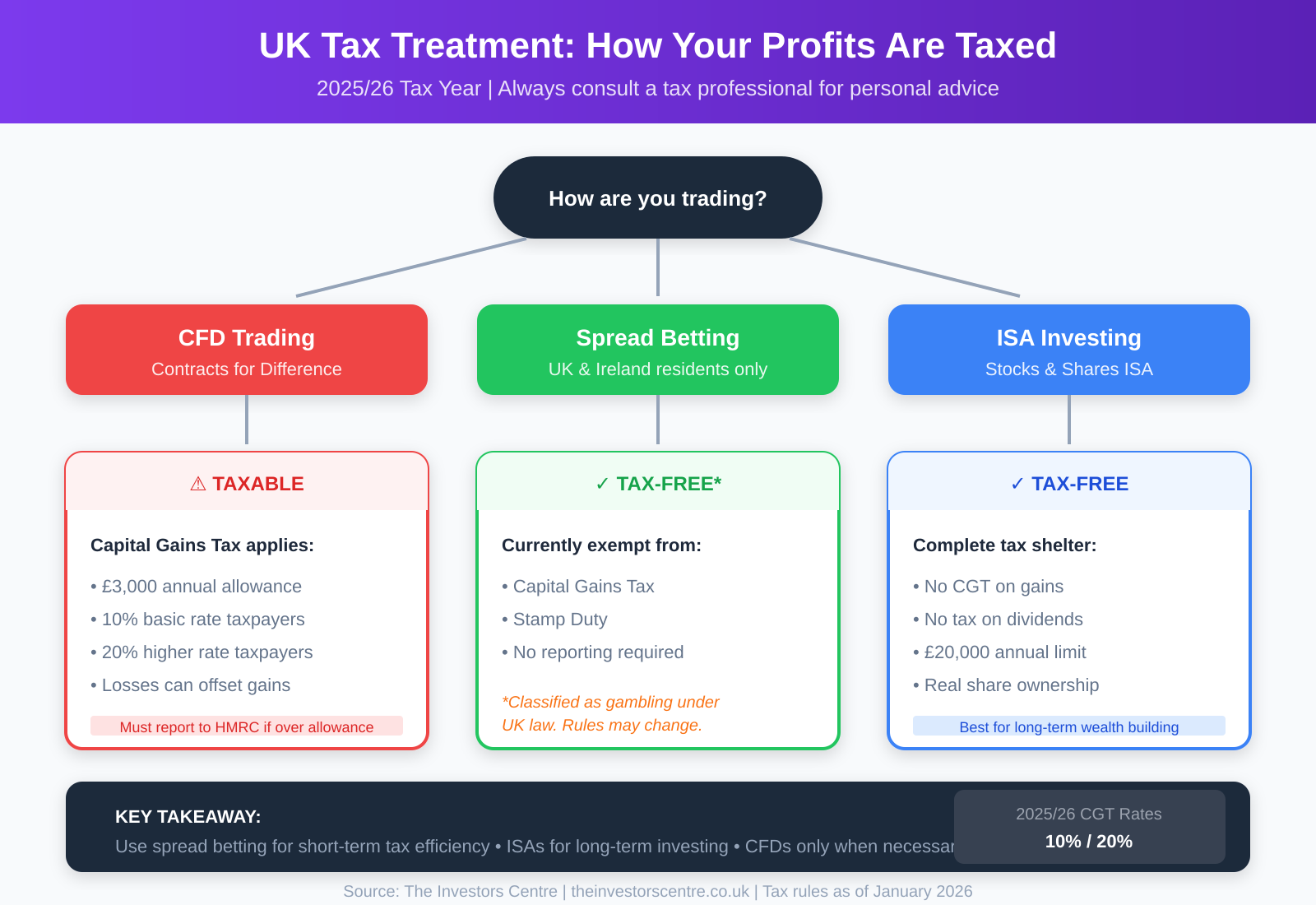
Tax treatment depends entirely on how you trade and which account type you use, there's no single answer, and getting this wrong can mean paying thousands more than necessary or accidentally committing tax evasion.
How Is Trading Taxed in the UK?
Profits from CFD trading are subject to capital gains tax like any other investment gain. For the 2025/26 tax year, the annual tax-free allowance is £3,000, and gains above this threshold are taxed at 18% for basic-rate taxpayers and 24% for higher-rate taxpayers following the Autumn Budget 2024 alignment. Losses can be offset against gains, which is worth tracking even if you'd rather forget bad trades.
How Does Spread Betting Avoid Tax?
Spread betting is classified as gambling under UK law rather than investment, which means profits are currently exempt from both capital gains tax and stamp duty. This is one of the main reasons UK traders prefer spread betting over CFDs for short-term positions, identical economic exposure but no tax on profits. That said, tax rules can change, so it's worth keeping an eye on budget announcements rather than structuring your entire strategy around this exemption lasting forever.
Can You Trade Tax-Free Through an ISA?
ISAs only apply to actual investing, buying and holding real shares or funds, not to derivatives trading. You cannot trade CFDs or spread bets within an ISA wrapper.
Platforms like IG and XTB offer Share ISAs for building tax-free long-term portfolios, but these are completely separate from their trading accounts and don't support leverage or short selling.
Other Trading Apps I Tested
These platforms went through my full testing process but didn't make the final seven, in most cases they're solid options that lost out due to narrower focus, higher costs in specific areas, or weaker mobile execution than the leaders.
eToro - Popular for copy trading and social features, but spreads are wider than specialist brokers and the fixed $5 withdrawal fee adds up quickly if you're moving money regularly.
Plus500 - Very straightforward CFD platform that's easy to use, but limited to derivatives only with no investing or spread betting options, which restricts flexibility.
Interactive Brokers - Extremely powerful with institutional-level pricing, but the mobile app is genuinely complex, most retail traders won't need or use 90% of what it offers.
Final Thoughts: What are the Best Stock Trading Apps in the UK?
Choosing the right trading app comes down to what you actually need. If you want advanced tools and broad market access, IG and Spreadex deliver. For cost-conscious traders, Pepperstone and XTB keep fees low without cutting corners. And if you're just getting started, Capital.com's AI-powered insights help you learn smarter trading habits from day one. Stick with FCA-regulated platforms, understand the fee structure, and pick the one that fits how you trade.
If you’re interested in AI-assisted trading, my guide explains how to use AI to trade stocks across the leading UK platforms. New to all of it? I cover the gentlest starting points in my beginner-friendly UK trading platforms guide, and if cost is the deciding factor, my guide to the UK's cheapest online brokers goes deeper on fees.
How Did I Test These Trading Apps?
Every app was installed, funded with real money, actively traded on, and then I withdrew funds, no demo accounts. Testing ran from October 2025 through January 2026 on iPhone 15 Pro (iOS 18), Samsung Galaxy S24 (Android 14), and iPad Pro. XTB joined this roster after that testing window closed, so it wasn't run through the same funded protocol; its figures on this page come from XTB's own published app-store ratings and platform documentation, checked August 2026.
I measured cold-start load times, biometric login reliability, order execution during quiet and volatile sessions, price alert accuracy, deposit and withdrawal speed, and app stability under pressure. All platforms were updated to their latest versions throughout the testing window.
Final TIC Ratings are then scored independently by three of us (Adam Woodhead, Thomas Drury and Dom Farnell) across fees, security, ease of use, features, support and asset range, with regulatory status verified against the FCA register and ratings refreshed quarterly. The measured figures behind this page sit in my open UK trading brokers dataset, covering 140+ variables per broker.
My Testing Results (January 2026)
| App | Stability | Execution | Deposit | Withdrawal | UX | Main Negative |
|---|---|---|---|---|---|---|
| Pepperstone | Very good | Excellent | Instant | 1 day | Very good | Not designed for beginners |
| IG | Excellent | Excellent | Instant | 1-2 days | Very good | Interface feels crowded on mobile |
| Spreadex | Excellent | Excellent | Instant | 1 day | Excellent | No ISA or long-term investing |
| Capital.com | Excellent | Very good | Instant | 1-2 days | Excellent | No ISA or long-term investing |
| CMC Markets | Very good | Very good | Instant | 2-3 days | Very good | Slower withdrawals than peers |
| XTB* | Very good | Excellent | Instant (published) | 1 business day (published) | Very good | xStation only |
| Trading.com | Very good | Very good | Instant | 1 day | Very good | No ISA; younger platform |
*XTB's usability ratings combine the August 2026 platform review with its published deposit, withdrawal and app-store data, checked August 2026.
FAQs
The questions below are real questions our readers and the wider UK finance community ask, sourced from the TIC Community, relevant Reddit threads, and the People Also Ask data we monitor for each topic. We answer them in the order they're most commonly raised.
References
- Register of regulated firms - Financial Conduct Authority
- Capital Gains Tax - GOV.UK
- Dividend Tax - GOV.UK
- Share Dealing Overview - IG
- Trading Platform Details - Spreadex
- Trading Conditions and Account Types - Pepperstone
- Fees and Market Access - Plus500
- Accessing International Markets - London Stock Exchange