


Quick Answer: Why Is Options Trading So Awkward for UK Retail Traders?
Because the products American traders take for granted mostly are not offered to UK retail accounts. Listed options venues either will not onboard you, bury you in professional-client hoops, or have withdrawn altogether, and IG itself has retired its US listed options offering. What a UK trader actually gets is the OTC route: options traded as spread bets or CFDs, and IG's version of that is genuinely usable, with daily, weekly, monthly and quarterly options on indices and major forex pairs, all cash-settled, with the cost built into the premium spread. It is not the Chicago options floor. But used for what it is good at, defined-cost directional bets and event trading, it works, and this piece covers the mechanics, the real costs and the situations where options beat a stop-loss.

Spread bets and CFDs are complex instruments and come with a high risk of losing money rapidly due to leverage. 70% of retail investor accounts lose money when trading spread bets and CFDs with this provider. You should consider whether you understand how spread bets and CFDs work, and whether you can afford to take the high risk of losing your money.
What Happened to Proper Options Access in the UK?
If you have ever watched an American finance YouTuber casually sell a covered call and wondered why your UK broker looks at you blankly, this section is for you. The short version: the products exist, but the doors to them keep closing.
The listed route keeps narrowing
Exchange-traded options never took off with UK retail the way they did in the US, and the venues that do exist mostly cater to professionals or demand account types most people cannot or should not open. Even IG, which went to the trouble of building a dedicated US options and futures offering on a platform developed with tastytrade, with clearing through Apex, has since retired it: IG's help pages now state it is no longer supporting listed US options and futures for UK clients, and point people to its OTC options instead. When the UK's largest retail broker walks away from listed options, that tells you where the economics of UK retail demand actually sit.
Why the US is different, briefly
American brokers grew up alongside listed options exchanges, commission wars made the contracts nearly free to trade, and a generation of retail traders learned covered calls the way UK traders learned spread betting. None of that infrastructure or culture crossed the Atlantic. What the UK developed instead was its own wrapper: the spread bet, tax-efficient and pounds-per-point, and it is through that wrapper that options survive here.
What is actually left
For a UK retail trader who wants option-shaped exposure, the practical answer is over-the-counter options wrapped as spread bets or CFDs. You are not trading on an exchange; you are trading IG's price on the option. That has real trade-offs, which I will get to, but it also has one big advantage: it exists, it is accessible from a normal retail account with no professional-client gymnastics, and on a spread bet the tax treatment follows the spread betting rules UK traders already know.
How Do IG's Options Actually Work?
IG offers options across four timeframes, and every one of them is cash-settled: at expiry the position simply settles against the settlement price, with no shares or futures changing hands, ever. Calls settle at the settlement price minus your strike, puts at the strike minus the settlement price, and neither can settle below zero, which is the mathematical way of saying a bought option cannot lose more than it cost.
The four expiries and what each is for
Dailies expire the same day and exist for event trading. Weeklies expire the following Friday and suit trading a week's theme, a central bank meeting or an earnings run. Monthlies expire on the third Friday of the month, and quarterlies stretch further out for slower views. For most retail traders the dailies and weeklies do the bulk of the work, because the further out you go, the more you are paying for time you may not need.
The markets you can trade
Daily options run close to 24 hours on the markets short-term traders actually use: the major forex pairs, the FTSE 100, Germany 40, Wall Street and the US 500. IG accepts bets on a daily option from one hour after the previous day's settlement right up until one minute before expiry, so the market is open to a late entry if the day's story develops in the afternoon.
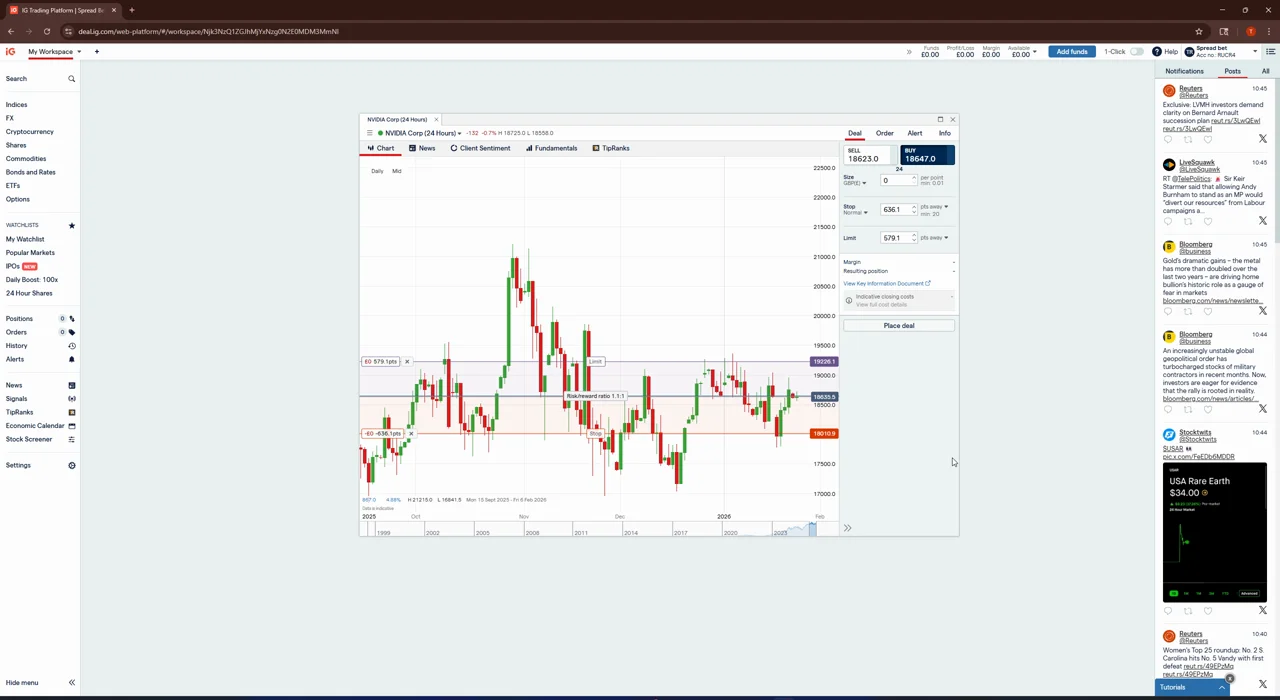
Buying versus selling: two different sports
The margin rules tell you everything about the risk difference, so they are worth reading as a risk lesson rather than as admin.
Buying: your risk is the premium, full stop
Buy a call or a put and IG's margin is the premium times your size, held when you open the trade, because that is the most you can lose. This is the cleanest thing about options for a retail trader, and the reason I think they are underused here: it is leverage with a floor, a defined-cost way to be wrong. No margin call can chase a bought option.
Selling: margined like the underlying, for good reason
Sell an option and the margin is based on the underlying market's deposit factor times your size, capped for index options at no more than an equivalent position in the underlying. In margin language, IG is telling you that a sold option can behave like a full position in the market when things go wrong: capped upside, potentially large downside, and around news events that is a sharp edge. My advice for anyone who needs this article: buy options for a good while before you ever sell one.
What Do IG's Options Honestly Cost?
There is no commission line anywhere.
The cost lives inside the premium: IG quotes each option with a spread, and on the daily index options that spread runs from roughly 2 to 8 points depending on where the market is trading and how long the option has left. An option quoted at 45/50 costs you the 50 to buy; the 5-point gap is the toll, and it is the whole toll.
Reading the spread like a trader
Two practical consequences follow. First, short-dated options on quiet days carry proportionally chunky spreads, so the dailies are best used when you expect real movement, not as a lottery ticket on a flat afternoon; an 8-point toll on a day the FTSE moves 20 points is a bad business model. Second, because the spread is the entire visible cost, comparing an option against simply spread betting the index is easy arithmetic: the option costs more per point of exposure and pays you back in capped risk. Whether that trade is worth it is the entire decision, and it depends on how violently you expect the market to move.
A worked example, in plain numbers
Say the FTSE sits at 8200 on a Bank of England morning and you expect a sharp move up but fear the first reaction. A daily 8200 call quoted around 30/34 at £2 a point costs £68, and that £68 is the absolute worst case. If the decision lands your way and the index settles at 8280, the call settles at 80, worth £160, roughly £92 clear. If the first spike goes 40 points against you before reversing, the spread bettor with a tight stop is out; your option rides through the noise because there is no stop to hit.
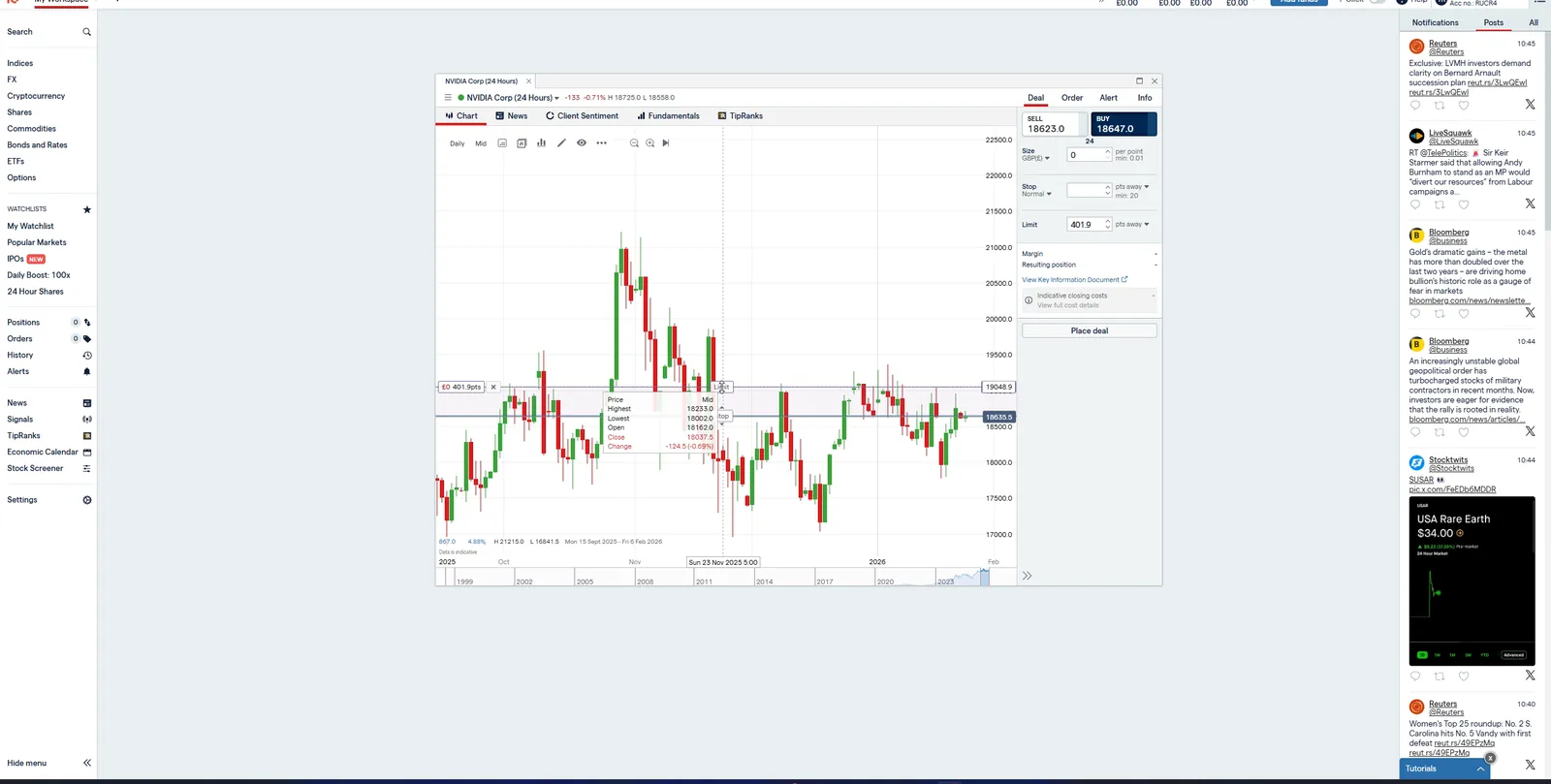
Should You Bother With Options at All?
Plenty of UK traders should not, and that is fine. If your trading is trend-following on the majors with sensible stops, spread betting the market directly is simpler and cheaper. Options earn their place in three specific situations, and it is worth naming them precisely.
The three trades options are actually for
First, trading an event without being stopped out by the noise around it: payrolls, rate decisions, elections, anywhere the first move routinely reverses. Second, defined maximum loss on a contrarian idea, where you want to be early without being carried out for it. Third, staying in a position through a period you know will be violent, where a stop would be a donation to volatility. In each case, the premium buys something a stop-loss cannot: the right to be temporarily wrong.
Learning them without paying tuition to the market
IG's demo account includes the options markets, and its academy covers the mechanics, which is the sensible order: place a dozen demo option trades around real scheduled events, watch how the premium decays and how the spread behaves into expiry, and only then commit real pounds. Options punish vague understanding faster than any other retail product, and the education is free.
The bottom line
UK options access is worse than it should be, and pretending otherwise helps nobody. But the OTC route that remains is genuinely serviceable: four expiries, the markets that matter, cash settlement, honest margin rules, and a cost model simple enough to reason about. If the three trades above describe things you actually want to do, IG's daily and weekly options are the most accessible way a UK retail account gets there today. Start small, buy rather than sell, and treat the premium as the price of admission rather than a bet that must pay off every time.