

- expertise:
- CFD Trading, Forex, Derivatives, Risk Management
- credentials:
- Chartered ACII (2018) · Trading since 2012
- tested:
- 40+ forex & CFD platforms with live accounts

- expertise:
- Broker Comparison, ISA Strategy, Portfolio Management
- credentials:
- Active investor since 2013 · 11+ years experience
- tested:
- 40+ brokers with funded accounts
How We Test
Real accounts. Real money. Real trades. No demo accounts or press releases.
What we measure:
- Spreads vs advertised rates
- Execution speed and slippage
- Hidden fees (overnight, withdrawal, conversion)
- Actual withdrawal times
Scoring:
Fees (25%) · Platform (20%) · Assets (15%) · Mobile (15%) · Tools (10%) · Support (10%) · Regulation (5%)
Regulatory checks:
FCA Register verification · FSCS protection
Testing team:
Adam Woodhead (investing since 2013), Thomas Drury (Chartered ACII, 2018), Dom Farnell (investing since 2013) — 50+ platforms with funded accounts
Quarterly reviews · Corrections: in**@*******************co.uk
Disclaimer
Not financial advice. Educational content only. We're not FCA authorised. Consult a qualified advisor before investing.
Capital at risk. Investments can fall. Past performance doesn't guarantee future results.
CFD warning. 67-84% of retail accounts lose money trading CFDs. High risk due to leverage.
Contact: in**@*******************co.uk
Is trading US indices from the UK actually practical?
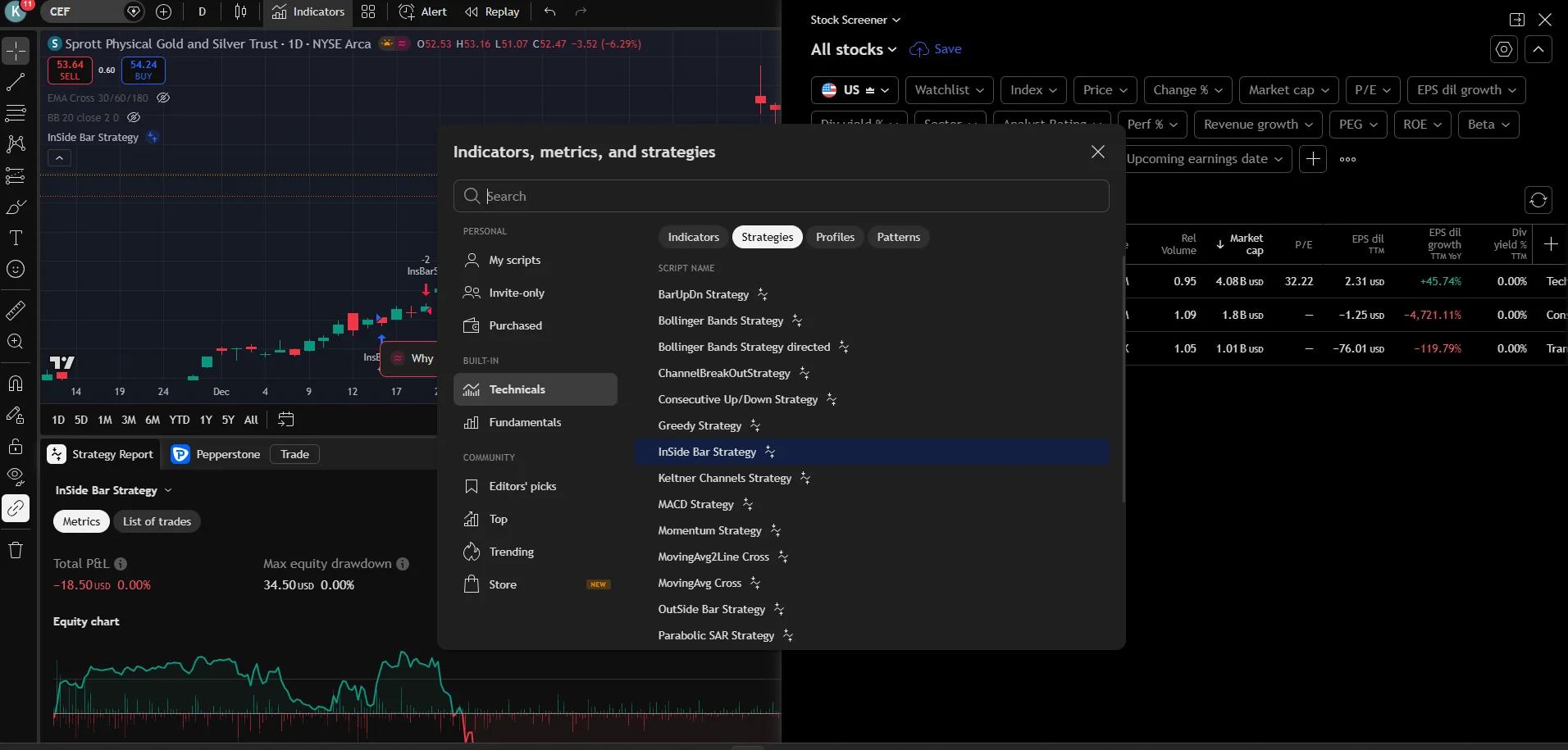
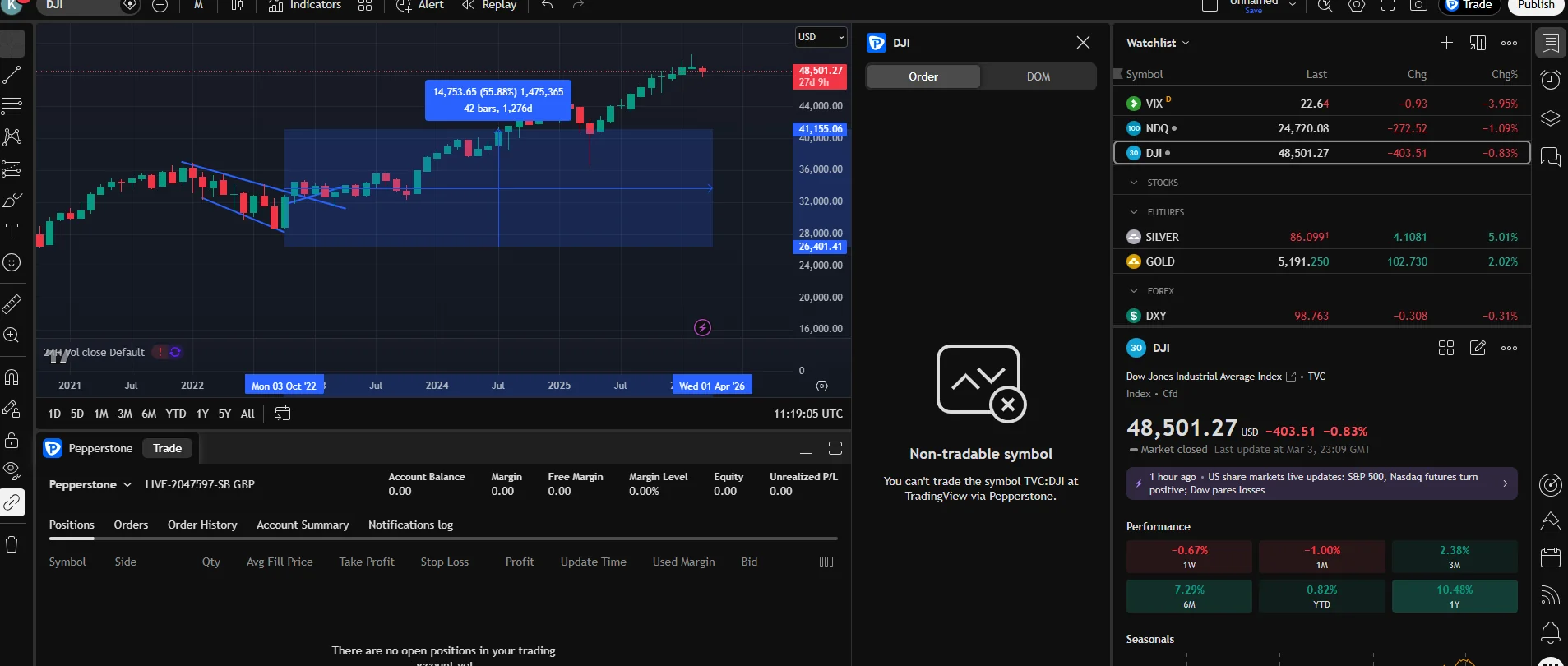
More practical than trading our own index, because the timezone does UK traders a favour it does not do Americans. The US cash session runs 2.30pm to 9pm UK time, which means the day's most liquid index hours land in a British afternoon and evening rather than the middle of the night. On Pepperstone that session costs from 1 point on the Nasdaq (NAS100), 2 points on the Dow (US30) and 0.4 on the S&P 500 (US500), with those spreads identical whether you spread bet or trade the CFD on Standard or Razor, and no commission on indices. The catches are real and listed below: the markets run 01:00 to 23:59 server time rather than a full 24 hours, overnight holds pay a funding formula worth understanding before you meet it, and the 2.30pm open is the most violent half hour of the day.

72.9% of retail investor accounts lose money when trading spread bets and CFDs with this provider.
Why does the US session suit UK traders so well?
Because it is the afternoon shift. New York's 9.30am opening bell rings at 2.30pm in London, so the entire US cash session fits between a late lunch and 9pm. For anyone trading around a job, that is the difference between a market you can actually attend and one you read about the next morning.
The liquidity is in the afternoon anyway
UK-morning trading in US index markets is trading the quiet hours: futures-led, thinner, and prone to drifting on no information until America wakes up. From 2.30pm the cash market opens, volume arrives, and the moves that make the day's range mostly happen between then and the close. A UK trader who only ever trades 3pm to 9pm is not making a compromise; they are keeping the best hours and skipping the worst ones. My news-scalping log found the same shape in forex: the sessions with participants in them are where spreads and fills are honest.
The shift has edges
Two of them. Index pricing on Pepperstone runs 01:00 to 23:59 server time, not a round-the-clock quote, so there is a nightly pause and your stops do not work inside it. And 9pm UK is late enough that a position you cannot close by the bell becomes an overnight hold with a funding cost attached, which is exactly the arithmetic the worked example below prices.
What do NAS100 and US30 cost on Pepperstone?
A spread and nothing else while you are flat by the close. Indices carry no commission on any Pepperstone account, and unusually the index spreads are the same across the spread bet, Standard and Razor routes, so the account choice that matters so much on forex is a non-decision here.
| Market | Pepperstone symbol | Spread from | Hours (server time) |
|---|---|---|---|
| S&P 500 | US500 | 0.4 | 01:00 to 23:59 |
| Nasdaq 100 | NAS100 | 1 | 01:00 to 23:59 |
| Dow Jones | US30 | 2 | 01:00 to 23:59 |
Reading those numbers like a trader
A 1-point Nasdaq spread on an index trading in the tens of thousands is a proportionally tiny toll, and at £1 per point a round trip costs £1 in spread. The from-figures are cash-session numbers, though: in the thin hours before the US open the same markets quote wider, which is one more argument for treating this as an afternoon market. The 20:1 retail CFD leverage cap applies to major indices, so £5,000 of exposure ties up about £250 of margin. The full row-by-row picture across every index Pepperstone offers, including the Europeans I trade in the mornings, lives on my Pepperstone indices page; this page stays deliberately on the US pair of questions, cost and clock.
What does holding a US index overnight cost?
A formula, and it is worth memorising: (closing price x size x (2.5% plus or minus the reference rate)) divided by 360, charged per night. Longs pay the reference rate plus 2.5% annualised; shorts receive the reference rate minus 2.5%, which at current US rates means shorts pay little or occasionally collect. The reference rate is the relevant currency's overnight benchmark, so US indices key off US rates.
The worked example this section is waiting for
TOM-DATA: On [DATE] I held [SIZE] of [NAS100/US30] through the close at [LEVEL]. The formula predicted a nightly debit of [£X.XX]; the statement charged [£X.XX]. Over the [N]-night hold the funding totalled [£XX.XX] against a spread cost of [£X] to open, making financing [N] times the dealing cost. Until those statement lines are in, run the formula with the current benchmark before any hold: on a £10-per-point Nasdaq position the nightly figure is material, and a fortnight of it can quietly eat the profit target.
The pattern that repeats across my logs
This is the same lesson my EUR/USD round-trip cost log priced in forex: dealing costs are the visible pennies, financing is the invisible pounds. Indices sharpen it further because the no-commission, tight-spread front end makes day trading look nearly free, while the funding formula makes position trading on leverage genuinely expensive. Pepperstone's pricing pushes you, whether it means to or not, toward being flat by 9pm.
Should you spread bet US indices or trade the CFD?
The pricing will not decide it for you, so the tax rules have to. Pepperstone quotes identical index spreads on both wrappers, so a spread bet on NAS100 and a CFD on NAS100 cost the same to deal; the difference is that spread betting profits are currently free of capital gains tax for UK individuals, while CFD profits are taxable and CFD losses can offset other gains. For most UK retail index traders that points at the spread bet, sized in pounds per point, with the CFD earning its place for anyone hedging or harvesting losses. The full reasoning, including the cases where the CFD wins, is in our spread betting vs CFDs comparison. Tax treatment depends on individual circumstances and can change.
What are the honest risks of the afternoon shift?
The same features that make the US session attractive make it dangerous, and pretending otherwise would waste your afternoon and mine.
The 2.30pm open is a knife fight
The first half hour of the US cash session compresses overnight news, pent-up orders and every stop resting near the open into thirty minutes of whipsaw. It is the most liquid half hour and the least forgiving one, and beginners who treat 2.30pm as a starting gun usually fund everyone else's afternoon. If you are new to these markets, let the open happen and trade what is left of it from 3pm.
Gaps do not respect stops
Between 23:59 and 01:00 server time the market is shut, and US index futures can and do reprice violently across the gap on earnings and data. A stop resting through the pause fills at the reopen price, not your level. The 20:1 leverage cap limits the damage arithmetic, and negative balance protection means a retail account cannot go below zero, but neither protection recovers the gap itself; only position sizing does that.
One market among thousands
A last piece of perspective: NAS100 and US30 sit inside a range of more than 2,700 spread bets and CFDs at Pepperstone, an FCA-regulated broker (FRN 684312) where most funding methods start from £10. That breadth cuts both ways for an afternoon trader: everything you might want is there, including plenty you have no business trading in your first year. Two liquid US indices, traded in their own session, is a complete strategy; a watchlist of forty markets is a distraction dressed as diversification.
FAQs
References
- FCA Register: Pepperstone Ltd. FRN: 684312
- Pepperstone: costs and fees, including index funding and leverage caps
- The Investors Centre: how we test brokers