


Quick Answer: Which Spread Betting Strategies Actually Survived?
Out of everything this programme has tried with real money since spring, three strategies are still standing: planned index breakouts in the US afternoon, financing-aware swing holds, and news-settle entries taken after the spread calms down rather than during the fireworks. Two approaches got formally retired, news-spike scalping and set-and-forget trend holds, and in both cases it was the costs that did the killing, not the chart. If you are new to spread betting, start with our beginners guide to spread betting strategies; that page teaches the setups. This one is the experienced layer built on top of it, a record of what months of funded, dated testing across our live logs did to those setups.

Spread bets and CFDs are complex instruments and come with a high risk of losing money rapidly due to leverage. 69% of retail investor accounts lose money when trading spread bets and CFDs with this provider. You should consider whether you understand how spread bets and CFDs work, and whether you can afford to take the high risk of losing your money.
What Kills Most Spread Betting Strategies?
Costs kill most of them, not dramatic blow-ups. A strategy that looks profitable on a chart pays the spread on every entry, pays overnight financing for every night it holds, and pays widened spreads whenever it insists on trading through news. Each charge is small. Together they decide everything, because a spread bettor's edge is usually smaller than the friction stacked against it.
The evidence base for this piece is the programme's dated logs rather than my memory. The four-week day trading journal put £1,000 into a live IG account in August 2026 and recorded every trade, including £23.60 of overnight financing that arrived without a single losing trade attached to it. Our scalping log measured what actually happens to spreads around a news release, and the spread betting costs guide explains why advertised spreads only hold in liquid markets. The indices blog and the spread vs commission maths supplied the per-trade cost workings. Everything below leans on those pages, and links them rather than restating them.
Why Did Planned US-Afternoon Index Breakouts Survive?
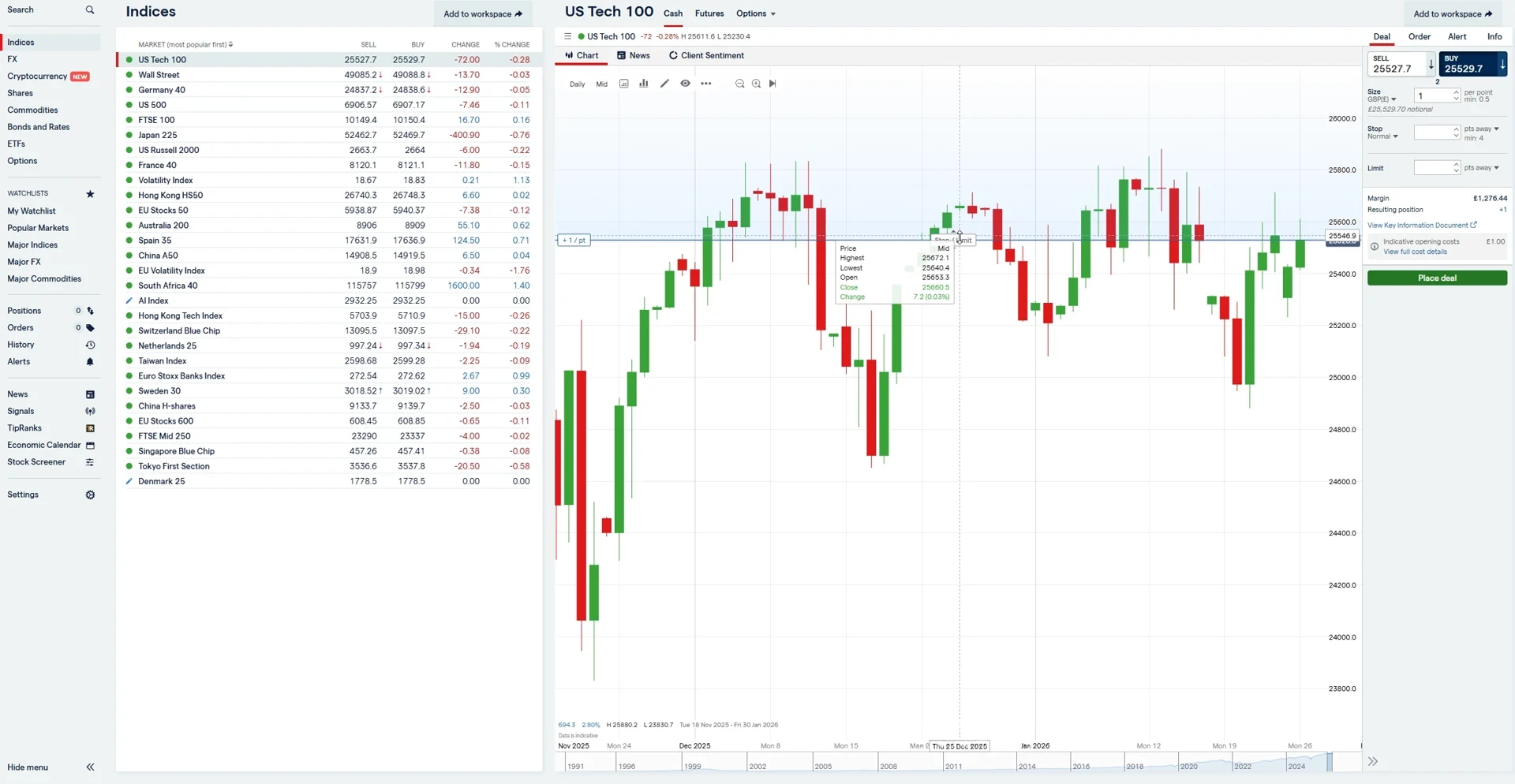
Because the plan is written the night before and the market comes to you. The setup: pick a level on the FTSE 100 or US 500 in the evening, set a price alert, and only trade if the level actually breaks during the liquid US afternoon, UK time roughly 2.30pm to 8pm. One entry, one stop, one target, closed the same day.
It survives the cost test for two reasons. Index spreads are at their tightest exactly when this strategy trades; the journal dealt the FTSE 100 at around 1 point on a live account. And a same-day close means the financing line stays at zero. The journal's own account is the cleanest evidence I have: both of the weeks traded to a written plan were profitable, and every expensive stretch came from unplanned screen-watching trades. It fails on chop days, when a level breaks by a handful of points and reverses, which is why the stop is not optional and why one attempt per level is the rule.
Why Did Financing-Aware Swing Holds Survive?
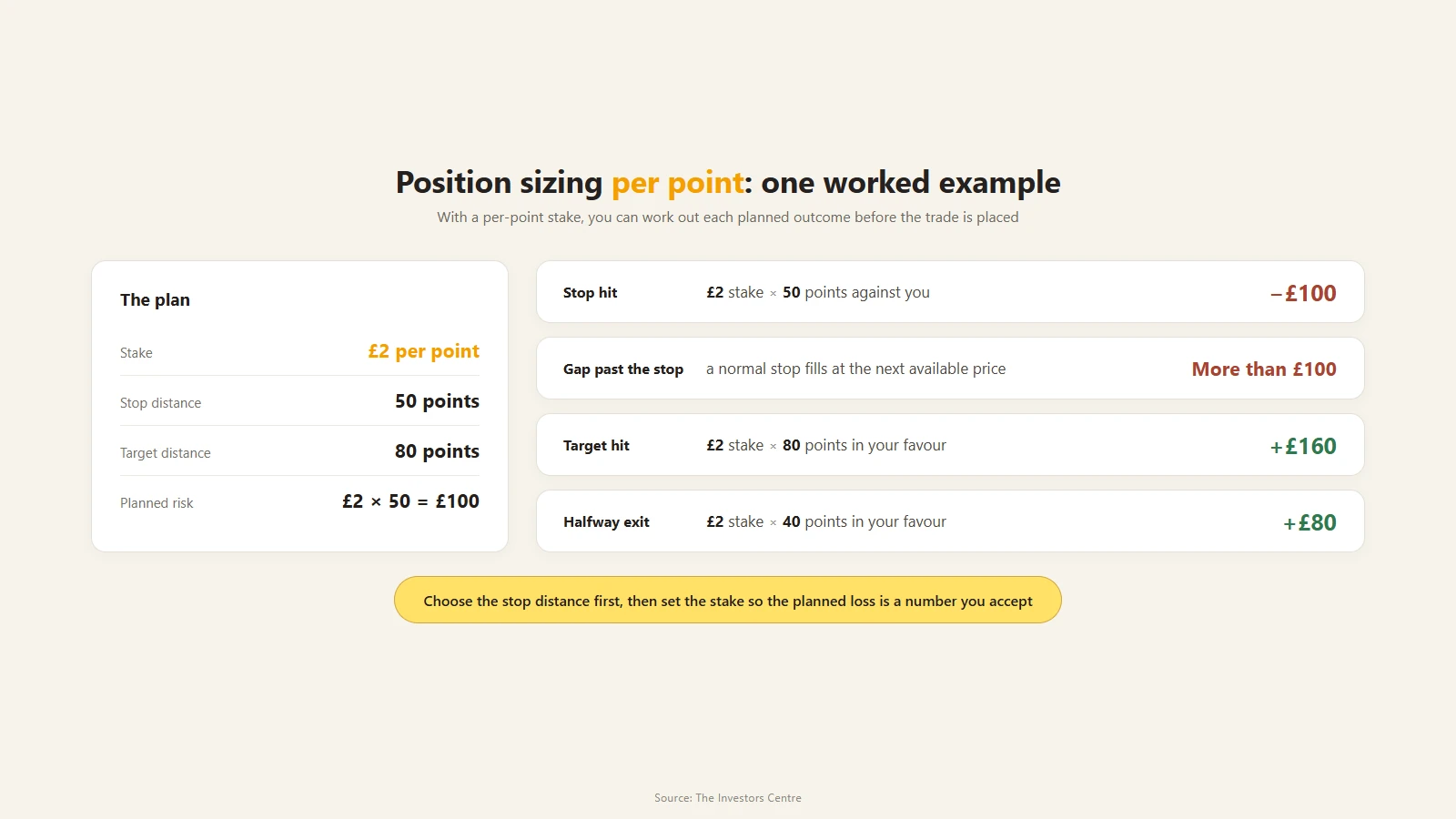
This one survived because it prices the nights before taking the trade. A swing hold runs for days, so overnight financing is not an afterthought, it is a line in the entry maths. The mechanical rule: before entering, write down the nightly funding cost at your stake, multiply by the days you expect to hold, and only take trades whose target is a healthy multiple of that number. If the sums do not clear, no trade.
Gold shows the arithmetic at its friendliest. IG quotes spot gold at a 0.3 point spread with 5% retail margin, and funds overnight positions on the tom-next spread plus a 1% per annum admin fee, all per its product details checked 1 September 2026. A 1% annual rate spread across a two-week hold is a knowable, modest cost, and IG's Weekend Gold market, running Friday 10pm to Sunday 10.40pm UK time, even lets you manage the position through the gap most brokers leave dark. Compare that with what the journal found when overnights were accidental rather than planned: £23.60 of financing in a month, night after night, on positions that were never meant to sleep. Same charge. Entirely different outcome, purely because one trader counted it first. The wrapper choice matters here too, and our spread betting vs CFD tax comparison covers that side.
Why Did News-Settle Entries Survive?
An exception first: this is the one survivor that exists because a retired strategy died. When we measured spreads around Non-Farm Payrolls for our scalping log, the minutes around the release were exactly where quoted costs stopped resembling the advertised ones, which is why our IG day trading review treats the spread as the cost to watch. The trade that survived is the patient version. Let the number land. Let the spread come back to normal, which the logs showed happening within the first half hour. Then trade the direction the market has chosen, with a stop behind the post-news range.
The mechanics are boring by design: no position into the release, an alert at the post-settle level, entry at ordinary spreads. It fails on the days the move never pulls back, and you watch a clean trend leave without you. That happens. Missing a move costs nothing, and that is why the strategy is still on the list.
Which Strategies Did I Retire?
I retired two, and I am naming both. First, news-spike scalping: trading into the release itself to catch the first violent move. The scalping log killed it. Spreads widen at exactly the moment you need them tight, fills land where liquidity allows rather than where the chart says, and the strategy's whole edge lives inside the minutes when trading costs are at their worst. I have not re-run that test since, and I do not plan to.
Second, set-and-forget trend holds: multi-week leveraged positions ridden off a daily chart. The chart logic is fine; the funding maths is not, because a six-week hold pays the overnight line more than forty times, and the journal showed how quickly those charges accumulate even across a single month of stray overnights. On an unleveraged shareholding, time in the market is free. On a leveraged spread bet, time is metered, and a strategy built on ignoring the meter retires itself eventually. I just did it deliberately. The per-trade numbers behind both retirements are unpacked in our spread vs commission maths blog.
How Do You Test a Strategy Without Burning the Account?
The sequence is the same every time: demo, then small stakes, then a written log, and the order is not negotiable.
A demo account runs the strategy against live prices at zero cost, and most ideas fail there, which is the cheapest possible place to learn it. Whatever survives moves to the smallest live stake the platform allows, because real money changes your behaviour in ways a demo never reveals; the journal's week three is £184 of proof. And the log is what separates testing from hoping. Date, level, reason, cost, result. If you cannot write the reason before the trade, the entry does not happen. Every strategy on this page earned its place through that filter, and every retired one was caught by it.
FAQs
References
- The Investors Centre evidence base: the four-week day trading journal (August 2026 account log), the spread betting costs guide, the indices blog and the spread vs commission maths
- IG: commodities spread bet product details (spot gold spread, margin and funding basis; checked 1 September 2026)
- IG: weekend trading markets and hours (checked 1 September 2026)
- The Investors Centre: spread betting strategies for beginners, the primer this piece builds on