

- expertise:
- CFD Trading, Forex, Derivatives, Risk Management
- credentials:
- Chartered ACII (2018) · Trading since 2012
- tested:
- 40+ forex & CFD platforms with live accounts

- expertise:
- Broker Comparison, ISA Strategy, Portfolio Management
- credentials:
- Active investor since 2013 · 11+ years experience
- tested:
- 40+ brokers with funded accounts
How We Test
Real accounts. Real money. Real trades. No demo accounts or press releases.
What we measure:
- Spreads vs advertised rates
- Execution speed and slippage
- Hidden fees (overnight, withdrawal, conversion)
- Actual withdrawal times
Scoring:
Fees (25%) · Platform (20%) · Assets (15%) · Mobile (15%) · Tools (10%) · Support (10%) · Regulation (5%)
Regulatory checks:
FCA Register verification · FSCS protection
Testing team:
Adam Woodhead (investing since 2013), Thomas Drury (Chartered ACII, 2018), Dom Farnell (investing since 2013) — 50+ platforms with funded accounts
Quarterly reviews · Corrections: in**@*******************co.uk
Disclaimer
Not financial advice. Educational content only. We're not FCA authorised. Consult a qualified advisor before investing.
Capital at risk. Investments can fall. Past performance doesn't guarantee future results.
CFD warning. 67-84% of retail accounts lose money trading CFDs. High risk due to leverage.
Contact: in**@*******************co.uk
Quick Answer: Which is the Best Trading Platform?
The best trading platform in the UK is IG: £0 commission on share dealing, a fee-free ISA and SIPP, and 15,000+ shares, ETFs and funds plus 17,000 CFD markets in one app. Is it the cheapest? Not quite. If cost is the only thing you care about, Trading 212, with a 0.15% FX fee, the lowest I measured, and no platform fee. If execution is, Pepperstone, which filled a EUR/USD market order for me in 32ms while the US CPI number was landing.
My best stock trading platforms in the UK shortlist comes from funded live accounts with Capital.com, IG, Spreadex and Pepperstone, opened October 2025 to January 2026. I tested spreads at 10am London, real bank withdrawals, and called every UK support line. In January and February 2026 I extended the same funded testing to Trading 212, eToro, Interactive Investor and Hargreaves Lansdown, in August 2026 I added a funded XTB account, and in September 2026 I added a funded StoneX account. StoneX Trading (formerly City Index) completes my top 10.
- IG, my top pick: one all-in-one app for real shares, ISA, SIPP, CFDs and spread betting, with £0 share-dealing commission and the deepest UK research stack I tested.
- Pepperstone, fastest fills: 32ms market-order fill on EUR/USD during the 14 November 2025 US CPI release, on a funded Razor account.
- Capital.com, best all-round value: clean execution and zero-commission share dealing (*other fees apply) inside a single platform that handles both CFDs and real stocks.

IG
- Best For
- Share dealing, ISA and SIPP combined
- TIC Stock Platform Rating
- 4.9 / 5
- Community Rating
- 4.3 (397 ratings) Have Your Say →
- Spread
- From 0.6 pips
- Cost
- £0 share dealing commission
70% of retail CFD accounts lose money.

Pepperstone
- Best For
- CFD and forex execution speed
- TIC Stock Platform Rating
- 4.8 / 5
- Community Rating
- 4.3 (415 ratings) Have Your Say →
- Spread
- From 0.0 pips (Razor)
- Cost
- £2.25/side/lot (Razor); £0 (Standard)
73.6% of retail CFD accounts lose money.
Spreadex
- Best For
- Simple UK spread betting
- TIC Stock Platform Rating
- 4.7 / 5
- Community Rating
- 4.2 (343 ratings) Have Your Say →
- Spread
- From 0.6 pips
- Cost
- £0 commission
61% of retail CFD accounts lose money.

Capital.com
- Best For
- All-round trading and investing
- TIC Stock Platform Rating
- 4.7 / 5
- Community Rating
- 4.2 (311 ratings) Have Your Say →
- Spread
- From 0.6 pips
- Cost
- £0 commission *other fees apply
65% of retail investor accounts lose money when trading CFDs with this provider.

StoneX Trading
- Best For
- Charting and technical analysis
- TIC Stock Platform Rating
- 4.5 / 5
- Community Rating
- 4 (61 ratings) Have Your Say →
- Spread
- From 0.5 points
- Cost
- £0 commission on CFDs
68% of retail CFD accounts lose money.
XTB
- Best For
- 0% commission real stocks and ETFs
- TIC Stock Platform Rating
- 4.4 / 5
- Community Rating
- 4.2 (103 ratings) Have Your Say →
- Stocks & ETFs
- 9,100+ (EU + US)
- Commission
- 0% to EUR 100k/month*
74% of Retail CFD Accounts Lose Money

Trading 212
- Best For
- Commission-free share dealing
- TIC Stock Platform Rating
- 4.1 / 5
- Community Rating
- 4 (1 rating) Have Your Say →
- Dealing Fee
- £0
- FX Fee
- 0.15%
Sponsored link. Terms apply.

eToro
- Best For
- Social investing and copy trading
- TIC Stock Platform Rating
- 4.0 / 5
- Community Rating
- 4.3 (388 ratings) Have Your Say →
- Dealing Fee
- £0
- FX Fee
- 0.50%
52% of retail CFD accounts lose money when trading CFDs with this provider.

Interactive Investor
- Best For
- Flat-fee investing for larger portfolios
- TIC Stock Platform Rating
- 3.9 / 5
- Community Rating
- 3.5 (51 ratings) Have Your Say →
- Dealing Fee
- £3.99
- FX Fee
- 0.75%
When Investing, Your Capital is at Risk.

Hargreaves Lansdown
- Best For
- Research and customer service
- TIC Stock Platform Rating
- 3.8 / 5
- Community Rating
- 3.4 (48 ratings) Have Your Say →
- Dealing Fee
- £6.95
- FX Fee
- 0.99%
When Investing, Your Capital is at Risk.
How Do These Trading Platforms Compare?
I use three of these platforms simultaneously and I don’t think that’s unusual; no single platform does everything well. The table below is the starting point. The “Can You Own Shares?” column matters more than anything else on this page if you want to build a long-term portfolio rather than trade short-term.
| Rank | Platform | Best For | Own Real Shares? | ISA / SIPP? | Min Deposit | TIC Stock Platform Rating |
|---|---|---|---|---|---|---|
| 1 | IG | Share dealing, ISA and SIPP combined | Yes, 15,000+ shares | ISA + SIPP | £0 | 4.9/5 |
| 2 | Pepperstone | CFD and forex execution speed | No, CFDs only | Neither | £0 | 4.8/5 |
| 3 | Spreadex | Simple UK spread betting | No, spread bets and CFDs only | Neither | £1 | 4.7/5 |
| 4 | Capital.com | All-round trading and investing | Yes, real stocks and ETFs | Neither | £0 | 4.7/5 |
| 5 | StoneX Trading | Charting and technical analysis | No | Neither | £100 by card, £0 by bank transfer | 4.5/5 |
| 6 | XTB | 0% commission real stocks and ETFs | Yes, 9,100+ real stocks and ETFs | ISA (flexible) | £0 | 4.4/5 |
| 7 | Trading 212 | Commission-free share dealing | Yes, fractional from £1 | ISA | £1 | 4.1/5 |
| 8 | eToro | Social investing and copy trading | Yes, fractional from $10 | ISA (via Moneyfarm) | £50 | 4.0/5 |
| 9 | Interactive Investor | Flat-fee investing for larger portfolios | Yes | ISA + SIPP | £0 | 3.9/5 |
| 10 | Hargreaves Lansdown | Research and customer service | Yes | ISA + SIPP | £0 | 3.8/5 |
Trading rows measured October 2025 to January 2026; investing rows measured January to February 2026. Re-checked July 2026.
Which Are the 10 Best Trading Platforms in the UK?
All ten platforms below have been tested with a funded account. All ten are trading platforms; the difference is what you can trade on them and how. Some pair leveraged trading with real share dealing (IG, Capital.com, XTB), some are leveraged products only (Pepperstone, Spreadex, StoneX Trading), and some let you trade shares with no leverage involved at all (Trading 212, eToro, Interactive Investor, Hargreaves Lansdown). Capital.com covers both sides of that line: you can trade CFDs with leverage or buy real stocks without it, on the same login. The “Own Real Shares?” column in the table above tells you which is which.
IG: The All-in-One App That Does Nearly Everything
- Fees & Spreads
- 4.2
- Platform & Tools
- 4.5
- Customer Service
- 3.8
- Ease of Use
- 4.1
- Mobile App
- 4.2
What I tested: Funded IG share-dealing ISA opened October 2024, 14 UK and US equity holdings; SIPP transfer query handled by phone on 17 January 2026. ProRealTime Level 2 data, ISA fee structure (re-checked October 2026 after IG moved to £0 commission on every share deal), support response time.
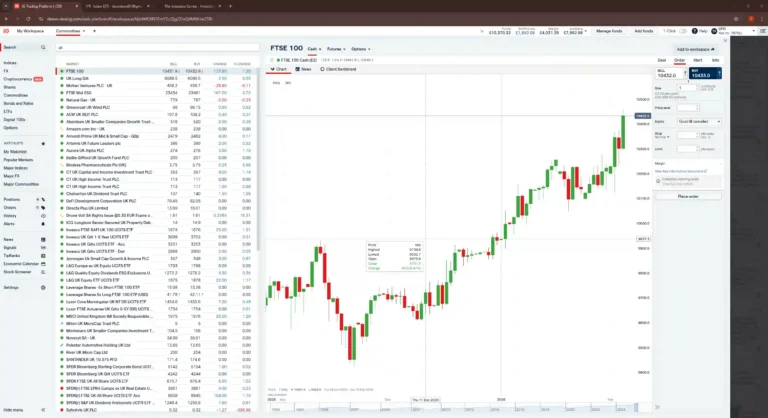
IG charges £0 commission on every share deal, no ISA fee and no platform fee. It’s also the only platform here where I can hold FTSE 100 shares in an ISA, trade forex CFDs on ProRealTime charts and run a SIPP without leaving the app, which is why it’s the one I open most mornings. That breadth creates trade-offs. The interface tries to serve five different types of investor and doesn’t always get the balance right. But the pricing is hard to argue with: the ISA is fee-free and share dealing is £0 commission on every trade, however often you trade.
| Detail | Info |
|---|---|
| Share dealing | £0 commission on UK and US shares (FX fee applies to non-GBP trades) |
| Platform fee | £0 |
| Platforms | IG all-in-one app (web, iOS, Android), TradingView, ProRealTime, MT4/MT5, L2 Dealer |
| Assets | 15,000+ shares, ETFs, funds, investment trusts + 17,000 CFD markets |
| Own real shares? | Yes |
| ISA / SIPP | Both available |
| FCA FRN | 195355 |
Pros
- Extensive market access across global equities, indices, and forex
- Strong research tools and analysis
- Trusted and long-established UK brand
- FCA regulated with FSCS protection up to £85,000
Cons
- 0.7% FX fee on non-GBP shares adds up for regular US buyers
- Steeper learning curve for new investors
Can I Build a Long-Term Portfolio on IG?
Yes. I hold 14 UK and US equities in my IG ISA, including a couple of S&P 500 trackers (I’ve written a full guide on how to invest in the S&P 500 from the UK if that’s your focus). Dividends are paid tax-free, there’s no platform fee eating into returns, and share dealing is £0 commission no matter how often I trade. For a buy-and-hold ISA investor making a handful of trades a quarter, the annual cost on a £20,000 UK portfolio is essentially zero. That puts IG ahead of Hargreaves Lansdown, AJ Bell, and most of the platforms that dominate the best investment platforms rankings, on cost alone.
How Complex Is IG for Someone Who’s Never Traded?
It’s not simple. When Adam first opened his IG account, it took him three days to find where the ISA settings were buried in the app. The onboarding funnels you toward CFDs by default. You have to specifically navigate to “share dealing” to buy real equities. If you’re primarily using your phone to invest, it’s worth comparing IG against the options on my best investment apps list. IG Academy has decent educational content, but the platform itself assumes you already know what you’re doing.
What Was My Experience With IG’s Customer Support?
I called IG’s UK line at 2:14pm on 17 January 2026. Connected in 3 minutes 40 seconds. I asked about transferring a SIPP from another provider. The agent was knowledgeable, didn’t rush the call, and followed up by email within the hour. That’s the best support experience I’ve had from any platform on this list.
What Do Our Readers Think About IG?
IG carries a 4.6 out of 5 community rating from 5 verified reviews, three of which are 5 stars. Platform & Tools is the standout category at a perfect 5.0, with Mobile App at 4.4 and Fees & Spreads at 4.0. The lower scores sit in Customer Service and Ease of Use, both at 3.6, the only sub-3.7 marks across the three brokers surveyed for community feedback. The most recent reviewer, UncleDommo, wrote: “I have been using IG for years and always been very happy with how the platform performs. It has the widest market access of all the platforms I used and great liquidity for smaller cap companies.” That tracks with my own testing: deep on platform, less obvious to navigate. View the full IG community page.
Pepperstone: Fastest Platform for Execution
- Fees & Spreads
- 4.1
- Platform & Tools
- 4.4
- Customer Service
- 4.2
- Ease of Use
- 3.9
- Mobile App
- 4.3
What I tested: Funded Pepperstone Razor account running since April 2024. Market-order fill speed measured during the 14 November 2025 US CPI release (32ms on EUR/USD), Razor vs Standard cost crossover, £1,500 withdrawal to Barclays on 6 December 2025, MT5 and TradingView integration.
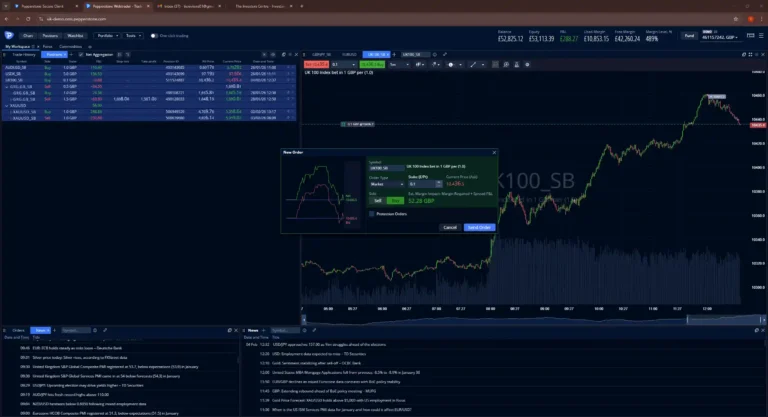
On 14 November 2025, during the US CPI release, I placed a market order on EUR/USD through the Razor account. Filled in 32 milliseconds. The spread widened to about 1.2 pips for a few seconds and was back under 0.2 within fifteen. That kind of execution isn’t theoretical. I watched it happen in real time, and it’s why Pepperstone has been my primary CFD broker since 2024. If you’re trading forex or indices and you care about where your order gets filled, this is the platform I’d pick without hesitation. It also tops my best day trading platforms list for the same reasons.
| Detail | Info |
|---|---|
| Spreads | From 0.0 pips (Razor) / ~1.0 pip (Standard) |
| Commission | Razor: £2.25/side/lot · Standard: £0 |
| Platforms | MT4, MT5, cTrader, TradingView |
| Assets | 1,200+ markets, all available as CFDs only: forex, indices, commodities and shares |
| Own real shares? | No, CFD only |
| ISA / SIPP | Not available |
| FCA FRN | 684312 |
All Pepperstone markets are available as CFDs only: you trade on price movements and never own the underlying asset. Cryptocurrency is offered as a CFD only and is not available to UK retail clients, as the FCA bans the sale of crypto derivatives to UK retail consumers. CFDs are leveraged products that carry a high risk of losing money.
Pros
- Ultra-fast trade execution
- Competitive spreads on Razor account
- Strong platform integrations (MT4, MT5, TradingView)
- No minimum deposit
Cons
- CFD-only trading (no real shares)
- Not ideal for long-term investors
- No ISA or SIPP accounts
What Does It Cost to Trade on Pepperstone?
I use the Razor account because at the volumes I trade, the £2.25 per side commission with near-zero spreads works out considerably cheaper than the Standard’s commission-free structure with its ~1 pip markup. The crossover point is roughly £50,000 in notional position size: below that, Standard is simpler and slightly cheaper. Above it, Razor saves you money on every single trade. For a full breakdown, I’ve written a dedicated Razor vs Standard comparison.
No platform fee. No inactivity fee. No deposit or withdrawal charges. That fee structure is clean, one of the simplest in the industry.
Where Does Pepperstone Fall Short?
You can’t buy shares. You can’t open an ISA. There’s no investment portfolio feature, no fractional shares, no dividend income. If you’re building long-term wealth, Pepperstone isn’t the tool for that. It’s a trading engine, not an investment platform. I pair it with IG for the investing side. If your search brought you here because you want to buy and hold shares, skip to the IG or Capital.com sections.
How Did Pepperstone Handle My Withdrawal?
I withdrew £1,500 to my Barclays account on 6 December 2025. The money arrived in two working days. Pepperstone sent a confirmation email within 15 minutes. No fees deducted. The process was straightforward, but I’d note that first withdrawals take longer because of additional verification checks required under FCA anti-money-laundering rules.
Spreadex: The Simplest Platform on This List
- Fees & Spreads
- 4.5
- Platform & Tools
- 4.2
- Customer Service
- 4.7
- Ease of Use
- 4.2
- Mobile App
- 4.1
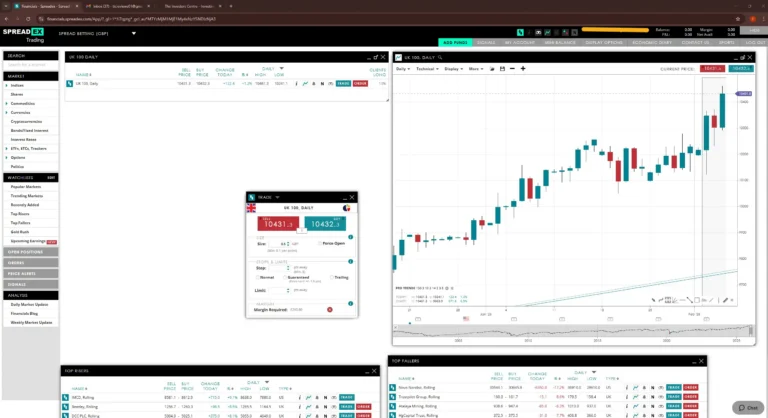
What I tested: Funded Spreadex spread-betting account opened November 2025, £100 deposit. UK 100 spread-bet entry on the proprietary app, charting depth, onboarding ease (a non-trader family member opened her own account in twenty minutes), customer support on the UK line.
Spreadex is the simplest platform on this list: zero commission, no inactivity fees and a £1 minimum deposit. It won’t impress anyone looking for institutional-grade tools. It isn’t trying to. What it does is offer spread betting and CFDs in an interface that’s cleaner and less cluttered than anything else I’ve tested. I recommended it to a family member who’d never traded before, and she was placing a bet on the FTSE within twenty minutes of downloading the app. That’s not something I could say about IG or StoneX Trading.
| Detail | Info |
|---|---|
| Spreads | All costs included in the spread |
| Commission | £0 |
| Platforms | Spreadex proprietary (web + app) |
| Assets | Spread betting & CFDs on indices, forex, shares, commodities |
| Own real shares? | No, spread bets and CFDs only |
| ISA / SIPP | Not available |
| FCA FRN | 190941 |
Pros
- Simple, user-friendly interface
- Low minimum deposit (£1)
- No inactivity or platform fees
- Good UK-based customer service
Cons
- Limited access to global markets
- Basic toolset may not suit advanced traders
Is Spread Betting Actually Tax-Free?
Under current HMRC rules, spread betting profits are exempt from both Capital Gains Tax and Stamp Duty. That’s a real advantage for active traders, but it only applies if HMRC considers you a speculator, not someone deriving their primary income from trading. If you’re trading full-time and spread betting represents your main earnings, take professional tax advice on this. The exemption isn’t as unconditional as most broker websites imply. I cover the full picture in my best spread betting platforms guide.
What Can’t I Do on Spreadex?
You can’t buy shares. You can’t open an ISA. Global market access is limited. If you want to trade Japanese equities or emerging market forex pairs, this isn’t the platform. The charting tools are basic. There’s no TradingView integration, no algorithmic trading, no API access. If any of those matter to you, look at Pepperstone or StoneX Trading instead. Spreadex is a focused tool for a specific job, and it does that job well.
What Do Our Readers Think About Spreadex?
Spreadex sits at 4.8 out of 5 across 5 verified community reviews, the highest score of any broker on this comparison. Four out of five reviewers gave the maximum 5 stars. Customer Service leads the sub-scores at 4.8, mirroring my own experience on the UK support line, with Fees & Spreads at 4.0. Platform & Tools is the lowest at 3.4, the only sub-3.5 category across the three brokers surveyed. TIC Tom's 5-star review summarised it as “Really good overall, UI could do with a little work”, which is precisely the trade-off Spreadex makes: clean UK service, basic platform. View the full Spreadex community page.
Capital.com: Outstanding Value for Commission-Free Investing
- Fees & Spreads
- 4.4
- Platform & Tools
- 4.4
- Customer Service
- 4.5
- Ease of Use
- 4.8
- Mobile App
- 4.9
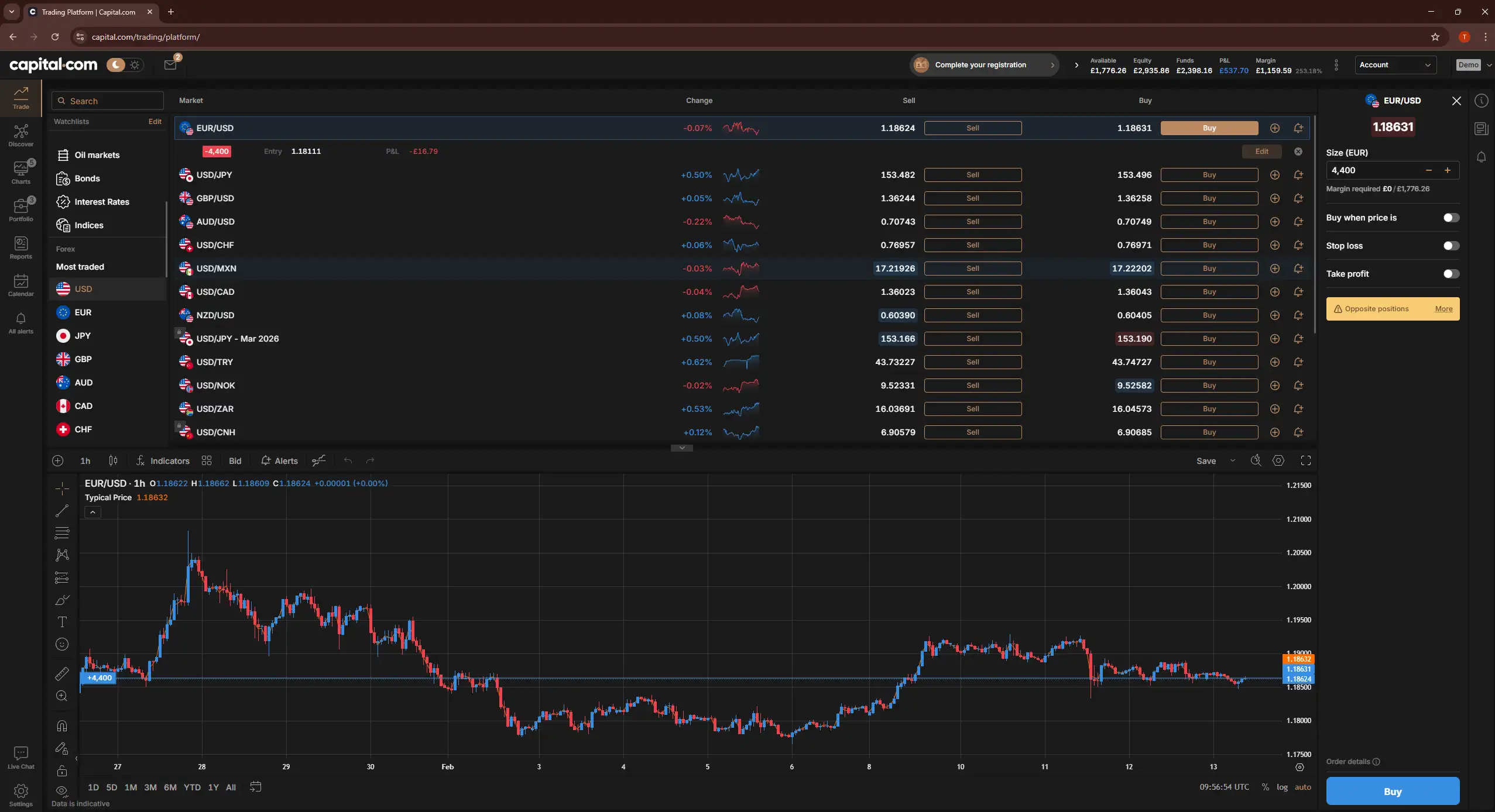
What I tested: Funded Capital.com share-dealing account opened December 2025, £2,000 deposit. Real-stock execution on FTSE 100 and FTSE 250 names, CFD spreads on indices, mobile vs web parity, market-insight quality.
Capital.com gives you commission-free share dealing on real stocks and ETFs (other fees apply), CFD spreads from 0.6 pips, no platform fee and no minimum deposit. Who’s it for? Anyone who asks “where should I start?” without knowing whether they want to trade short-term or invest long-term, because it does both and does both well. The interface is one of the cleanest I’ve used: intuitive enough for someone opening their first account, yet deep enough that I haven’t felt the need to switch away for my own trading.
| Detail | Info |
|---|---|
| Share dealing | £0 commission on real stocks & ETFs *other fees apply |
| CFD spreads | From 0.6 pips (EUR/USD) · tight spreads on indices |
| Platforms | Capital.com proprietary (web + mobile), TradingView, MT4 |
| Assets | 5,000+ markets including real stocks, ETFs, and CFDs |
| Own real shares? | Yes, real stocks and ETFs |
| ISA / SIPP | Not available |
| FCA FRN | 793714 |
Pros
- Zero-commission share dealing on real stocks and ETFs *other fees apply
- Excellent, intuitive user interface across web and mobile
- Strong educational content and real-time market insights
- No minimum deposit and no platform fee
Cons
- No ISA or SIPP, so no tax wrapper for long-term holdings
- Smaller share range than IG or Interactive Brokers
- Relatively newer brand compared to established incumbents
What Makes Capital.com’s Interface Stand Apart?
Most platforms force you to choose between simplicity and depth. Capital.com manages to avoid that trade-off. The dashboard surfaces market movers, watchlists, and portfolio performance without burying anything behind three sub-menus. The market insights are useful: they flagged unusual volume on two FTSE 250 stocks I was watching before I noticed it myself. The mobile app mirrors the web experience closely, which sounds obvious but isn’t. Spreadex still shows the odd feature gap between desktop and mobile. Capital.com doesn’t.
How Does Capital.com Handle Investing Alongside Trading?
This is what pushes it so high up the list. You can buy real shares and ETFs with zero commission (*other fees apply) and manage CFD positions from the same platform. IG does something similar, but the interface is more cluttered because it’s been built up over decades. Capital.com’s investing and trading sides feel like they were designed together from the start. For someone who wants to hold a stock portfolio while also trading index CFDs occasionally, this is the cleanest setup I’ve tested. The catch on the long-term side: there’s no ISA and no SIPP, so your holdings sit in a general account with no tax wrapper. If that matters to you, IG covers both.
What’s the Catch?
The share range is smaller than IG’s 15,000+ instruments or Interactive Brokers’ global coverage. If you need access to obscure small-cap Japanese equities or listed options, Capital.com isn’t the platform for that. The brand is also younger than IG, founded in 1974: Capital.com launched in 2016, though it holds full FCA authorisation (FRN 793714) and client funds are FSCS-protected up to £85,000. For the vast majority of UK traders and investors buying mainstream equities, indices, and ETFs, those limitations won’t matter.
What Do Our Readers Think About Capital.com?
Capital.com holds a 4.6 out of 5 community rating from 5 verified reviews on the TIC platform, with the most recent posted within the last few days. Three reviewers gave the maximum 5 stars; the remaining two gave 4. The standout sub-scores are Ease of Use and Mobile App, both at 4.8, with Platform & Tools at 4.6 and Customer Service at 4.4. Fees & Spreads score 4.2, the lowest of the five categories, suggesting reviewers see the broker's pricing as competitive but not class-leading. View the full Capital.com community page.
StoneX Trading: Best Charting I’ve Used on a Retail Platform
- Fees & Spreads
- 4
- Platform & Tools
- 3.3
- Customer Service
- 3.3
- Ease of Use
- 3.5
- Mobile App
- 3.7
What this section covers: StoneX Trading's WebTrader features, TradingView Pro charts inside the platform, Performance Analytics, the fixed 1-point UK 100 spread during market hours, and its 24/5 support line.
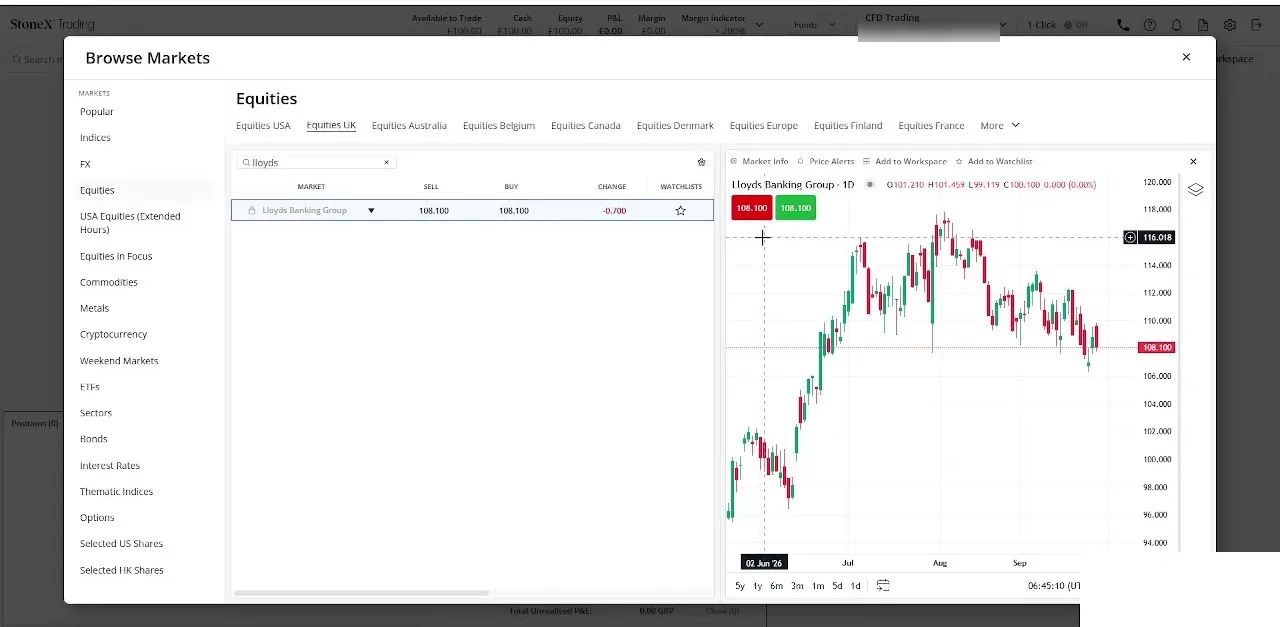
StoneX Trading has the best charting I’ve used on a retail platform. TradingView Pro Supercharts are built into WebTrader, so there’s no second tab, and the layouts you build stay saved against each instrument. FCA-regulated as StoneX Financial Ltd, with the same accounts and platforms carried over from the old brand. Performance Analytics then breaks closed trades down by time of day, instrument and duration, which is the kind of review most brokers leave you to do in a spreadsheet.
The UK 100 spread is published as fixed at 1 point from 8am to 4.30pm, and TradingView Pro is a genuine step up from a bolt-on chart widget. Where it's more limited: there's no ISA and no share dealing, so this is a CFD and spread betting account only, and 85 FX pairs is fewer than some rivals on this page if forex is your main interest.
| Detail | Info |
|---|---|
| CFD spreads | From 0.5 points |
| Commission | £0 on CFDs and spread bets |
| Platforms | WebTrader (proprietary), MT4, TradingView |
| Assets | 13,500+ markets, 4,700+ equities, 85 FX pairs |
| Own real shares? | No, CFDs and spread bets only |
| ISA / SIPP | Not offered |
| FCA FRN | 446717 |
Pros
- TradingView Pro charting built into WebTrader
- Performance Analytics breaks down every closed trade
- Fixed 1-point UK 100 spread, 8am to 4.30pm
- Backed by Nasdaq-listed StoneX Group, a Fortune 50 company
Cons
- No ISA or share dealing
- 85 FX pairs, fewer than some rivals here
- £12 monthly inactivity fee after 12 months idle
What Changed When the Broker Rebranded to StoneX Trading?
The name and the branding, not the account. StoneX retired the old brand on 12 September 2026 after owning the business since its 2020 acquisition of GAIN Capital. The regulated entity, FCA reference 446717, is unchanged, as are existing logins, platforms and open positions. If you held an account under the old name, nothing about the underlying product moved: you're still trading through the same FCA-regulated firm, now under the StoneX Trading name and backed by StoneX Group's wider institutional business.
Why Wouldn’t I Just Use TradingView Instead?
Fair question. TradingView is superb, and you can use it with Pepperstone. The difference is that StoneX's TradingView Pro charts sit natively inside WebTrader, alongside Performance Analytics on the same screen. There's no separate tab to manage and no exporting trade history elsewhere to review it. If charting and trade analysis sitting in the same environment matters to your strategy, StoneX Trading has the edge.
XTB: 9,100+ Real Stocks and ETFs With 0% Commission and a Flexible ISA
- Fees & Spreads
- 4.6
- Platform & Tools
- 4
- Customer Service
- 4.8
- Ease of Use
- 4.6
- Mobile App
- 4.3
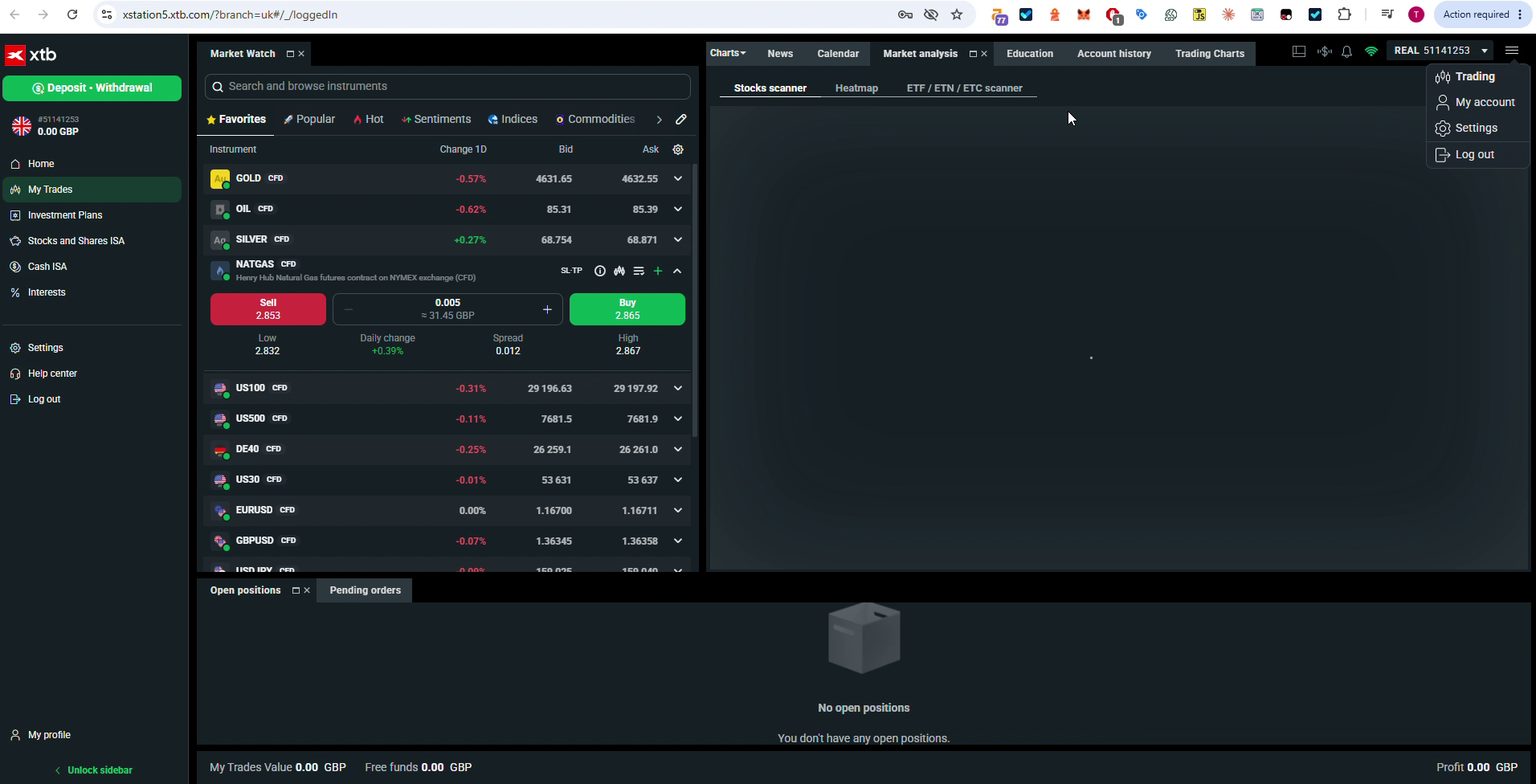
What I tested: Funded XTB xStation 5 account opened August 2026. Account-opening time, dealing commission on real stocks and ETFs up to and beyond the EUR 100,000 monthly turnover threshold, fractional investing across the 9,100+ security range, and GBP interest on uninvested cash.
XTB gives you 9,100+ real stocks and ETFs with 0% commission up to EUR 100,000 of monthly turnover, a flexible ISA, 4% on uninvested GBP, and 2,600+ CFD markets on the same login. Strong offer. The account opened in 8 minutes. XTB is the UK branch of X-Trade Brokers (FRN 522157), 20+ years in the market, 2.9 million clients.
Account opening took 8 minutes from signup to a funded platform when I tested in August 2026. Fractional investing works across the full 9,100+ security range, so small amounts can buy into higher-priced shares. Uninvested GBP earns 4% interest, calculated daily and paid monthly, and there is no custody fee below EUR 250,000. XTB also offers a flexible Stocks and Shares ISA, free to open, with the same 0% commission threshold inside the wrapper.
| Detail | Info |
|---|---|
| Share dealing | 0% commission to EUR 100,000/month*, then 0.2% (min £10) |
| Custody fee | None below EUR 250,000; 0.02% p.a. (min £10) above |
| Platforms | xStation 5 (web, desktop, mobile) |
| Assets | 11,700+ instruments: 9,100+ real stocks and ETFs (EU + US), plus 2,600+ CFD markets |
| Own real shares? | Yes, 9,100+ real stocks and ETFs |
| ISA / SIPP | Flexible Stocks and Shares ISA · No SIPP |
| FCA FRN | 522157 |
*0% commission on stocks and ETFs applies up to EUR 100,000 of monthly turnover; 0.2% (minimum £10) applies above that threshold, and a 0.5% currency conversion cost may apply on non-GBP instruments such as US shares. CFDs are complex instruments and come with a high risk of losing money rapidly due to leverage. 74% of retail investor accounts lose money when trading CFDs with this provider.
Pros
- 9,100+ real stocks and ETFs across EU and US markets
- 0% dealing commission up to EUR 100,000 monthly turnover
- Fractional shares plus auto-invest Investment Plans
- 4% interest on uninvested GBP, calculated daily and paid monthly
Cons
- 0.5% currency conversion on non-GBP stocks such as US shares
- 0.2% (min £10) commission above the EUR 100k monthly threshold
- Proprietary xStation platform only
- Custody fee of 0.02% p.a. applies above EUR 250,000
Can I Hold XTB Shares Inside an ISA?
Yes. XTB’s Stocks and Shares ISA is free to open, carries the same 0% commission threshold as the standard account, and pays up to 4% interest on GBP free funds held inside it. The ISA is flexible, so money withdrawn and paid back in during the same tax year does not eat into the £20,000 annual allowance, and ISA transfers in are supported. XTB also runs a separate Cash ISA for savers who want to keep cash outside the market.
What Happens Once I Pass the EUR 100,000 Monthly Threshold?
Dealing commission steps up to 0.2% (minimum £10) on turnover above EUR 100,000 in a calendar month, then resets the following month. That threshold covers the vast majority of retail activity. The 0.5% currency conversion cost on non-GBP instruments, such as US shares settled in dollars, applies regardless of which side of the threshold you sit on.
How Fast Can I Start Investing With XTB?
Account opening took 8 minutes from signup to a funded platform when I tested it in August 2026, and there is no minimum deposit to start. A free 30-day demo account is available first if you would rather test xStation 5 with no money at risk before committing.
Trading 212: Commission-Free Shares and the Lowest FX Fee I Measured
- Fees & Spreads
- 4.3
- Platform & Tools
- 3.5
- Customer Service
- 3.6
- Ease of Use
- 4.4
- Mobile App
- 4.3
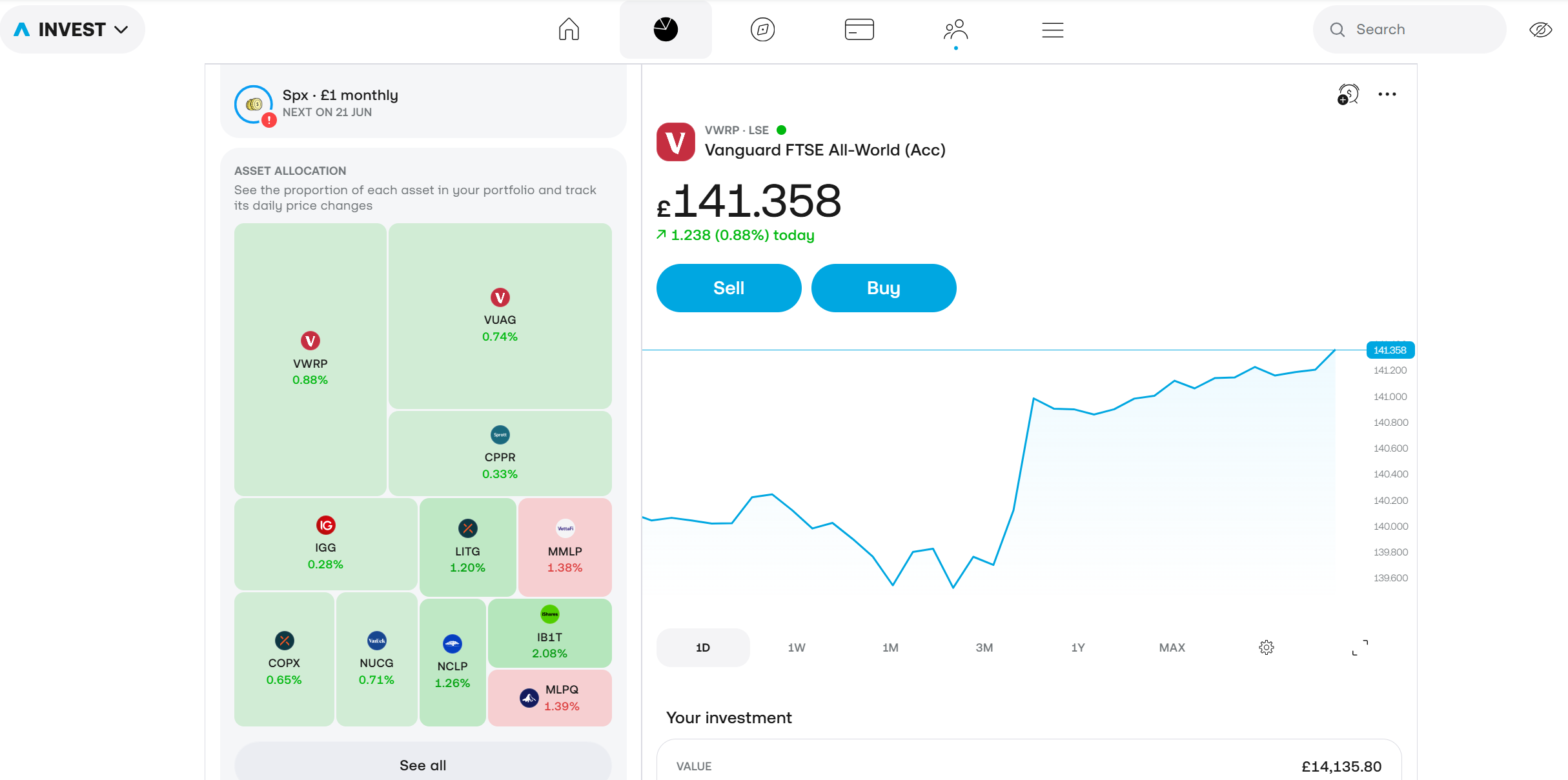
What I tested: Invest account funded since 2024, now holding a live portfolio worth around £14,000. In January 2026 I re-tested fractional share execution, ISA setup, FX cost on a US order, withdrawal speed and interest on uninvested cash.
Trading 212 is where I'd send anyone whose priority is keeping costs near zero. No dealing commission, no platform fee, and the FX charge of 0.15% was the lowest of any platform in my January round: eToro charges 0.5%, Interactive Investor 0.75% and Hargreaves Lansdown 0.99% on the same US order. Fractional shares start at £1, uninvested GBP earned 3.8% interest during my test window, and my test withdrawal cleared the same day, the fastest of the four. The trade-offs are real, though: research and education are thin next to IG, and there's no SIPP, so pension money has to live elsewhere.
| Detail | Info |
|---|---|
| Dealing fee | £0 (UK and US shares) |
| Platform fee | £0 |
| FX fee | 0.15% (lowest I measured) |
| Fractional shares | Yes, from £1 |
| ISA / SIPP | ISA in-app · No SIPP |
| Withdrawal (measured) | Same day |
| FCA FRN | 609146 |
What Do Our Readers Think About Trading 212?
Trading 212 is newer to the TIC community than eToro, with a single verified rating so far: 4 stars from Wolfstone, a Trusted-tier reviewer, posted two months ago. The sub-scores from that rating sketch the platform fairly: Ease of Use at a perfect 5.0 and Mobile App at 4.0, with Fees & Spreads and Customer Service at 3.0. One rating is a data point, not a consensus, so weigh it alongside the funded testing above. Have your say on the Trading 212 community page.
eToro: Social Investing and the Fastest Account Opening I've Timed
- Fees & Spreads
- 3.8
- Platform & Tools
- 3.8
- Customer Service
- 3.7
- Ease of Use
- 4.8
- Mobile App
- 4.1
What I tested: Account funded January 2026 with the £50 minimum. Sign-up to verified timed by stopwatch, real US stock orders, CopyTrader, FX and withdrawal costs.
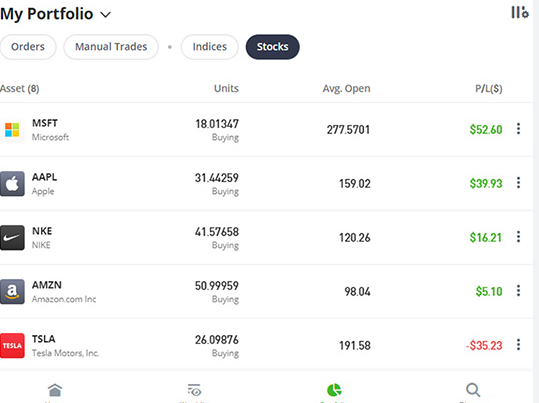
Nine minutes. That's how long it took from starting eToro's sign-up to a verified, funded account able to place a trade, the fastest onboarding I've timed on any platform this year (Interactive Investor took two days). Share dealing is commission-free with fractional buying from $10, and the social layer is genuinely distinct: CopyTrader lets you mirror another investor's book, which no other platform on this page offers. The costs sit in the plumbing rather than the headline: 0.5% FX on GBP deposits and a flat $5 withdrawal fee, and my test withdrawal took two working days. A Stocks and Shares ISA is available through eToro's Moneyfarm partnership rather than in-app. New customers should also check the current tiered deposit offer, which I verify monthly in my eToro bonus guide.
| Detail | Info |
|---|---|
| Dealing fee | £0 (real stocks and ETFs) |
| FX fee | 0.50% on GBP deposits |
| Withdrawal fee | $5 flat |
| Fractional shares | Yes, from $10 |
| ISA / SIPP | ISA via Moneyfarm partnership · No SIPP |
| Verification (measured) | 9 minutes |
| FCA FRN | 583263 |
What Do Our Readers Think About eToro?
eToro is the most-reviewed broker on the whole TIC community: 4.4 out of 5 from 155 verified ratings, every single one of them 4 or 5 stars. Ease of Use and Mobile App lead the sub-scores at 4.4, while Fees & Spreads at 4.1 is the relative weak spot, which lines up with the FX and withdrawal fees flagged above. The most recent reviewer, MrMalik, wrote a week ago: “eToro has been a reliable platform for me. The account setup was quick, the mobile app works well and I appreciate the educational resources.” That quick-setup point tracks with the nine-minute verification I timed. View the full eToro community page.
Interactive Investor: Flat Fees That Get Cheaper as Your Portfolio Grows
- Fees & Spreads
- 3.9
- Platform & Tools
- 4.3
- Customer Service
- 3.8
- Ease of Use
- 4.2
- Mobile App
- 3.6
What I tested: £25,000 model portfolio funded January to February 2026 under ii's new three-tier pricing (launched 1 February 2026). Annual running cost, dealing fees, SIPP fee cap, verification and withdrawal timing.
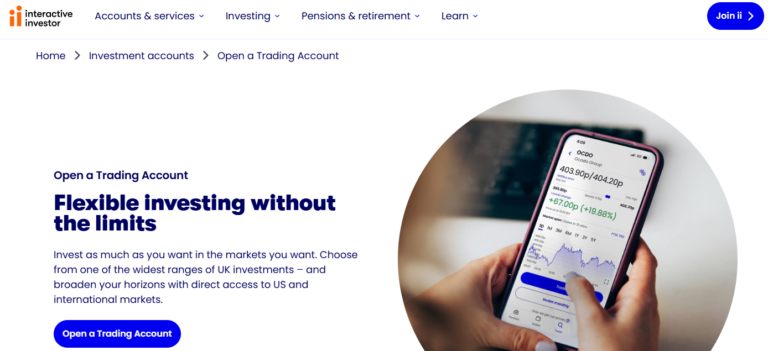
Interactive Investor charges a flat monthly subscription from £5.99 instead of a percentage of your portfolio, and that changes the maths as you grow. My £25,000 model portfolio cost £120 for the year on ii against £171 on Hargreaves Lansdown; on the £50,000 international version the gap widened to £232 against £357. Dealing is £3.99 a trade under the February 2026 pricing, and the SIPP fee is capped at £10 a month, which makes ii the strongest pension option of these four. The costs of admission: verification was the slowest I measured at two days, there are no fractional shares, and the 0.75% FX fee stings on US orders next to Trading 212's 0.15%.
| Detail | Info |
|---|---|
| Platform fee | From £5.99/month flat (three tiers from 1 Feb 2026) |
| Dealing fee | £3.99 (UK and US shares) |
| FX fee | 0.75% |
| Measured cost, £25k portfolio | £120/year |
| ISA / SIPP | Both · SIPP fee capped £10/month |
| Verification (measured) | 2 days (slowest of the four) |
| FCA FRN | 141282 |
What Do Our Readers Think About Interactive Investor?
The TIC community is cooler on Interactive Investor than I am: 3.4 out of 5 across 53 verified ratings, with almost everyone landing on 3 or 4 stars and just one 5-star among them. Ease of Use and Mobile App top the sub-scores at 3.8; Fees & Spreads and Customer Service sit at 3.2. My read on that gap: a flat £5.99 monthly fee feels like poor value on a small portfolio and excellent value on a large one, so where you sit on that curve will likely decide which side of the community you land on. View the full Interactive Investor community page.
Hargreaves Lansdown: The Service and Research Benchmark, at a Price
- Fees & Spreads
- 3.2
- Platform & Tools
- 3.6
- Customer Service
- 3.7
- Ease of Use
- 3.4
- Mobile App
- 3.4
What I tested: £25,000 model portfolio funded January to February 2026. Annual running cost, the March 2026 dealing-fee change, research depth, support quality, withdrawal timing.
Hargreaves Lansdown is the UK's largest platform, running since 1981, and it remains the best customer service I've encountered anywhere in my testing. It's also become meaningfully cheaper to deal on: the standard share-dealing fee dropped from £11.95 to £6.95 in March 2026, which softens my old cost objection without removing it. My £25,000 model portfolio still cost £171 for the year, the most expensive of these four, and the 0.99% FX fee was the highest I measured on any platform. What you get for it is the deepest research library of the four, ISA and SIPP under one roof, and a next-day withdrawal in my test. If you want hand-holding, phone support that answers, and research you'll actually read, HL is where those things live.
| Detail | Info |
|---|---|
| Dealing fee | £6.95 UK shares (cut from £11.95, March 2026) |
| FX fee | 0.99% (highest I measured) |
| Measured cost, £25k portfolio | £171/year |
| ISA / SIPP | Both available |
| Withdrawal (measured) | Next working day |
| Founded | 1981 · largest UK platform by assets |
| FCA FRN | 115248 |
What Do Our Readers Think About Hargreaves Lansdown?
Hargreaves Lansdown polls at 3.4 out of 5 from 48 verified community ratings, and notably nobody has given it 5 stars: 21 reviewers scored it 4 and 27 scored it 3. Fees & Spreads is the floor at 3.0, the same cost objection my testing surfaced, with Ease of Use the ceiling at 3.8. The one place I part company with the community is Customer Service at 3.1: my own phone experience was the best of any platform I've tested, so I'd encourage you to read the individual reviews and judge the pattern yourself. View the full Hargreaves Lansdown community page.
Why There Isn't a Single Right Answer
There isn't really a wrong answer here. Every broker on this list is FCA regulated and I've funded a live account with each, and my rankings come from real data on spreads, fills, fees and withdrawal times. Different platforms suit different people, so pick the one that fits you, not the one I ranked highest. If you'd rather not pick from a ranked list, the Broker Match Tool asks a few questions about how and what you trade, then suggests the brokers from this comparison that fit you best. It takes about a minute, with no signup.
How I Tested These Platforms
Every platform on this list has been funded with real money. Mine, Adam’s, or both. Here’s what the testing actually involved:
- Spreads: captured at 10am on weekday mornings, October 2025 to January 2026, when London liquidity is deepest.
- Execution: real market orders placed through funded accounts, including through the 14 November 2025 US CPI release on Pepperstone.
- Withdrawals: real bank-to-bank transfers from every platform, timed from request to cleared funds.
- Support: I called each broker’s UK line, timed the wait, and asked the same technical question about transferring an ISA.
- Mobile: Adam used each app daily for two weeks, on both iOS and Android.
- Share dealing: accounts opened in Q4 2025 on IG, Interactive Brokers and eToro, then a further funded round in January and February 2026 on Trading 212, eToro, Interactive Investor and Hargreaves Lansdown: verification timed by stopwatch, £25,000 and £50,000 model portfolios run for a full annual cost, withdrawals tested back to a UK bank account. A funded XTB account followed in August 2026, tested for dealing commission, fractional investing and account-opening speed.
- Regulation: pass/fail gate. I don’t test or recommend non-FCA-regulated platforms.
How the Scores Are Weighted
| Pillar | Weight |
|---|---|
| Fees | 25% |
| Platform & tools | 20% |
| Asset range | 15% |
| Mobile | 15% |
| Research & education | 10% |
| Support | 10% |
| Regulation | Pass/fail gate |
Every review is independently scored by three of us, Adam Woodhead, Thomas Drury and Dom Farnell, and we didn't fully agree on this one: Adam rated Capital.com highest on combined trading-and-investing UX, I scored IG higher for long-term ISA and SIPP use, and Dom flagged Spreadex for the simplest beginner onboarding he has tested. Full methodology in the How We Test guide, and the numbers behind every claim on this page are published in the open datasets hub.
What FCA Rules Apply When You Trade in the UK?
Every platform on this list is FCA-authorised, and the rules that govern what they can offer UK retail clients are the same across the board. The leverage rules below apply to the CFD and spread-betting accounts on platforms 1 to 6; if you only buy real shares on the platforms further down this page, leverage caps never touch you. The headline ones to know:
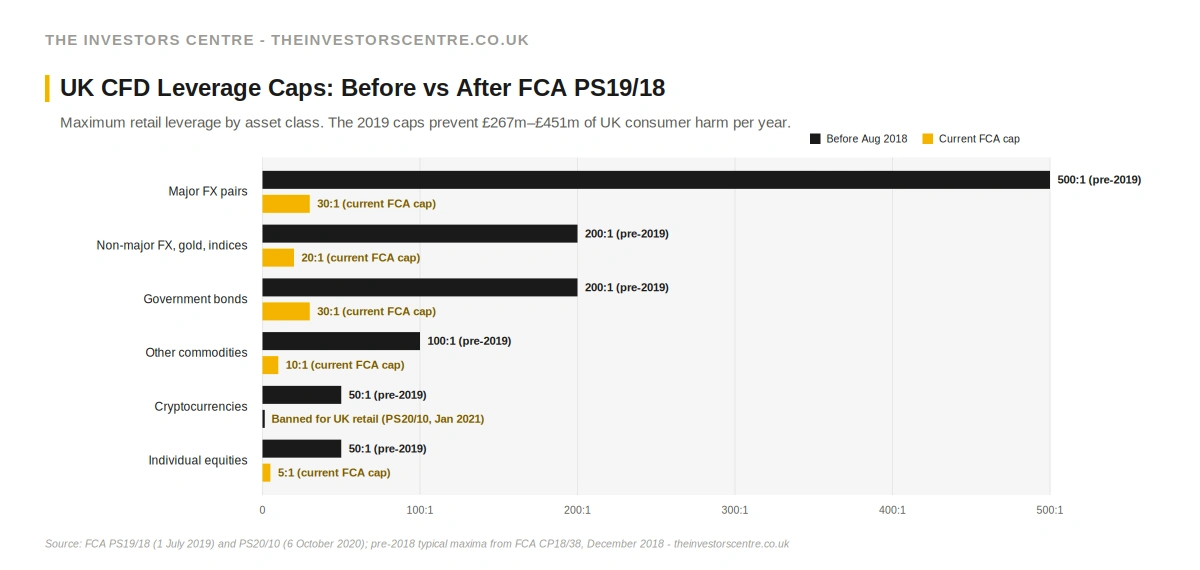
Leverage caps. Since 1 August 2019, under FCA Policy Statement PS19/18, retail CFD leverage in the UK has been capped at 30:1 on major FX pairs, 20:1 on non-major FX, gold and major indices, 10:1 on other commodities, 5:1 on individual equities, and 2:1 on cryptocurrencies. Crypto-CFDs were banned outright for UK retail clients on 6 January 2021 under PS20/10. Before these caps, UK retail traders could routinely access 500:1 leverage on major FX and around 50:1 on single-stock CFDs.
What that prevents. The FCA estimates its 2019 leverage caps and negative balance protection rules (which apply to retail clients) prevent between £267 million and £451 million of UK retail consumer harm every year. The vast majority of that figure (£259m–£443m) comes from the leverage caps themselves; negative balance protection adds about £6m. In a three-month ESMA temporary ban window before the FCA made the rules permanent, UK retail loss reduction was measured at £77m.
What it doesn't change. CFDs remain a high-loss-rate product. The standard FCA-mandated risk warning each broker on this page displays comes from rolling 12-month firm-specific data, and the disclosed rates across the six brokers reviewed here range from 62% (Capital.com) to 74% (XTB). Lower leverage reduces the size of typical losses, not the frequency. Treat the disclosure number as a floor, not a ceiling.
Source: FCA PS19/18 (1 July 2019) · FCA PS20/10 (6 October 2020)
Platforms That Didn't Make the Cut
I tested more platforms than the ten that made this list. One came close but stayed out:
- Interactive Brokers: the most capable platform I tested (150+ markets, options, futures, bonds), let down by a dated Trader Workstation interface and a steep learning curve at sub-£50,000 portfolio sizes.
For MT4 and MT5 users who want a multi-asset broker with competitive costs, Admiral Markets is another option I've tested. See my full Admiral Markets review for the breakdown. If your needs lean more toward long-term investing than active trading, my best investment platforms UK guide covers that angle in more depth.
Do Fees Really Make That Much Difference?
Yes. More than most people realise, and in ways that aren’t obvious until you sit down with a calculator, as the scenarios in the table below show.
But here’s what matters more than any single line item: a £3 saving per trade is meaningless if the platform’s execution quality costs you 2 pips in slippage. A 0% commission platform that charges 0.5% on FX conversion costs more than a £5-per-trade platform if you’re buying US stocks every month. Fees are a system, not a number. I’ve broken this down further in my cheapest online broker comparison, and for forex-specific costs, my lowest spread forex brokers guide.
What Each Platform Costs Per Year (Measured)
These aren't compiled from pricing pages. In January and February 2026 I ran two model portfolios on each platform below that offers share dealing, a £25,000 UK portfolio and a £50,000 portfolio with international holdings, and recorded what a year actually costs, including dealing fees and FX charges:
| Platform | £25k UK portfolio (annual) | £50k international portfolio (annual) | UK dealing fee | FX fee |
|---|---|---|---|---|
| Trading 212 | £0 | £23 | £0 | 0.15% |
| eToro | £0 | £0* | £0 | 0.50% |
| IG | £0† | £105 | £0 | 0.70% |
| Interactive Brokers | £15 | £40 | £1.50 | 0.20% |
| Interactive Investor | £120 | £232 | £3.99 | 0.75% |
| Hargreaves Lansdown | £171 | £357 | £6.95 | 0.99% |
Measured on funded model portfolios, January to February 2026, re-checked July 2026. *eToro's ongoing cost is zero but FX applies on deposits and there's a $5 withdrawal fee. †IG moved to £0 share-dealing commission regardless of trading volume in 2026; the £25k figure reflects this, and the £50k international figure is driven by the 0.70% FX fee. Pepperstone, Spreadex and StoneX Trading are excluded because you never own the underlying shares there; Capital.com's share-dealing costs weren't part of this measured round. Full per-platform measurements live in the open datasets hub.
What Type of Account Should You Actually Open?
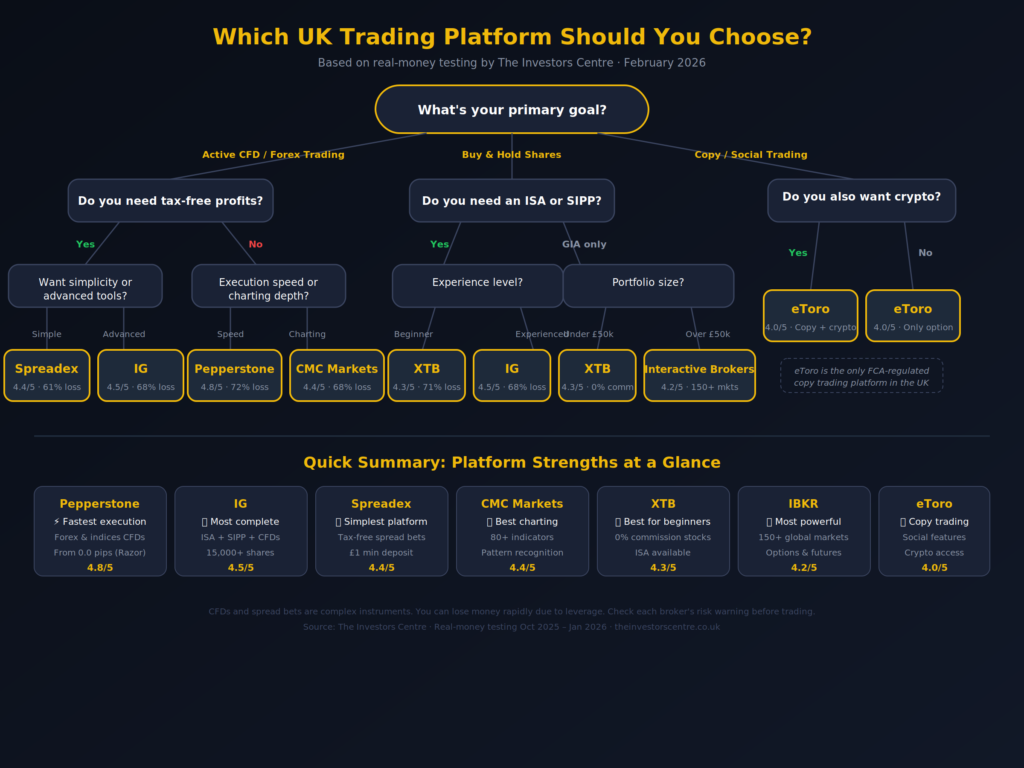
The account type you choose matters more than which broker you pick.
A General Investment Account (GIA) has no limits and full flexibility, but profits above the £3,000 annual exemption (2025/26 tax year) are subject to Capital Gains Tax. A Stocks and Shares ISA allows up to £20,000 per tax year, with all gains and dividends completely tax-free. I compare ISA-offering platforms in my best investment platforms guide. A SIPP (Self-Invested Personal Pension) offers tax-free growth plus tax relief on contributions, but your money is locked until age 55, rising to 57 from April 2028.
Account Type Availability
| Platform | GIA | Stocks & Shares ISA | SIPP |
|---|---|---|---|
| IG | Yes | Yes | Yes |
| Pepperstone | CFD account only | No | No |
| Spreadex | Spread bet & CFD account only | No | No |
| Capital.com | Yes | No | No |
| StoneX Trading | No | No | No |
| XTB | Yes | Yes (flexible) | No |
| Trading 212 | Yes | Yes | No |
| eToro | Yes | Yes (via Moneyfarm) | No |
| Interactive Investor | Yes | Yes | Yes |
| Hargreaves Lansdown | Yes | Yes | Yes |
What Tax Will You Pay When You Trade?
Stamp Duty Reserve Tax (SDRT): 0.5% on UK share purchases settled electronically through CREST. It’s automatically deducted by your broker. You won’t see a separate charge, but it’s built into the transaction. SDRT doesn’t apply to CFDs, spread bets, ETFs traded on overseas exchanges, or AIM-listed shares. If you’re on Pepperstone or Spreadex, you’ll never encounter this because you never own the underlying asset.
Capital Gains Tax (CGT): 18% for basic-rate taxpayers and 24% for higher-rate taxpayers on gains above the £3,000 annual exemption (2025/26 tax year). This does not apply to gains inside an ISA or SIPP, which is precisely why the account type table above matters so much.
Dividend Tax: 8.75% (basic rate), 33.75% (higher rate), and 39.35% (additional rate) on dividend income above the £500 annual allowance (2025/26). Again, none of this applies inside an ISA. This is why the ISA column keeps coming up, and why my investing hub focuses heavily on tax-efficient wrappers.
Spread betting: Profits are currently tax-free under HMRC rules for speculators. But, and this is important: if HMRC decides trading is your primary income source, the exemption may not apply. Get professional advice if this is relevant to your situation.
Sources: HMRC CGT rates (gov.uk) · FSCS (fscs.org.uk)
Is Your Money Safe if a Broker Goes Bust?
Every platform on this list is FCA-authorised, which means client funds are held in segregated accounts separate from the broker’s own money. On top of that, the Financial Services Compensation Scheme (FSCS) covers up to £85,000 per eligible person per firm for investment claims if a broker fails financially. You can verify any broker’s authorisation at register.fca.org.uk, and I’ve included the FRN for each broker in its fact table above. If those numbers aren’t on the register, don’t use the platform.
The nuance most people miss: FSCS protects you if the broker goes bust, not against market losses. Being FCA-regulated makes a broker safer to hold your money with; it does not make trading itself safe. If your shares fall in value, that’s your risk; if you trade CFDs, those are leveraged products that carry a high risk of losing money regardless of how well-regulated the broker is. FSCS only covers a broker failing and a shortfall on your segregated funds, up to £85,000. Regulation is one of the core criteria in how I test every platform, and you can read more on the corporate governance page.
Final Thoughts
Most people reading this will be better served by two platforms rather than one: a trading account for short-term positions and an ISA for long-term holdings. That’s exactly what I do: my ISA sits with IG, Capital.com covers combined stock and CFD trading in a general account, and Pepperstone gets the call when execution speed matters. The platforms on this list are all FCA-regulated, all funded by us with real money, and all worth your time. The risk is real, the rankings are guidance, and the FCA register is your final check before depositing a penny.
FAQs
The questions below are real questions readers and the wider UK finance community ask, sourced from the TIC Community, relevant Reddit threads, and the People Also Ask data I monitor for each topic. I answer them in the order they're most commonly raised.
References
- IG Group – Share Dealing and Trading
- StoneX Trading – WebTrader Platform
- Spreadex – Spread Betting and CFDs
- Capital.com – Trading and Investing
- XTB – xStation 5 Trading Platform
- Pepperstone – CFD and Forex Trading
- Trading 212 – Commission-Free Investing
- eToro – Social Investing Platform
- Interactive Investor – Flat-Fee Investment Platform
- Hargreaves Lansdown – Savings and Investments
- FCA Register – Financial Services Register
- Trustpilot – Trustpilot UK