

- expertise:
- CFD Trading, Forex, Derivatives, Risk Management
- credentials:
- Chartered ACII (2018) · Trading since 2012
- tested:
- 40+ forex & CFD platforms with live accounts

- expertise:
- Platform Testing, Cryptocurrency, Retail Investing
- credentials:
- Active investor since 2013 · 11+ years experience
- tested:
- 50+ platforms · 200+ guides authored
How We Test
Real accounts. Real money. Real trades. No demo accounts or press releases.
What we measure:
- Spreads vs advertised rates
- Execution speed and slippage
- Hidden fees (overnight, withdrawal, conversion)
- Actual withdrawal times
Scoring:
Fees (25%) · Platform (20%) · Assets (15%) · Mobile (15%) · Tools (10%) · Support (10%) · Regulation (5%)
Regulatory checks:
FCA Register verification · FSCS protection
Testing team:
Adam Woodhead (investing since 2013), Thomas Drury (Chartered ACII, 2018), Dom Farnell (investing since 2013) — 50+ platforms with funded accounts
Quarterly reviews · Corrections: in**@*******************co.uk
Disclaimer
Not financial advice. Educational content only. We're not FCA authorised. Consult a qualified advisor before investing.
Capital at risk. Investments can fall. Past performance doesn't guarantee future results.
CFD warning. 67-84% of retail accounts lose money trading CFDs. High risk due to leverage.
Contact: in**@*******************co.uk
Which is the best UK investment app right now?
Three picks depending on your account size and what you're investing in. IG won my September 2025 to February 2026 testing for serious long-term investors: full Stocks & Shares ISA, SIPP wrapper, 17,000+ markets and the deepest research toolset on this list. Trading 212 wins on entry: free ISA, £1 minimum, fractional shares and commission-free dealing. Interactive Investor wins for portfolios above £50,000 where the flat-fee model beats percentage-based platforms by a wide margin.

IG
- Best For
- Serious long-term investing + research depth
- TIC Score
- 4.9 / 5
- Community Rating
- 4.3 (194 ratings) Have Your Say →
- Wrappers
- ISA + SIPP + GIA
- Tradable Markets
- 17,000+ (widest)
69% of retail CFD accounts lose money.

eToro
- Best For
- Beginners + social copy trading
- TIC Score
- 4.7 / 5
- Community Rating
- 4.3 (191 ratings) Have Your Say →
- Standard Fee
- 1% on stock CFDs
- Wrappers
- ISA + GIA
52% of retail CFD accounts lose money when trading CFDs with this provider.

Interactive Investor
- Best For
- Portfolios above £50,000 (flat fee)
- TIC Score
- 4.6 / 5
- Community Rating
- 3.5 (51 ratings) Have Your Say →
- Pricing Model
- Flat £4.99 - £19.99/month
- Wrappers
- ISA + SIPP + GIA + Junior ISA
When Investing, Your Capital is at Risk.

Trading.com
- Best For
- Commission-free real shares + fractional dealing
- TIC Score
- 3.9 / 5
- Community Rating
- 3.1 (40 ratings) Have Your Say →
- Welcome Offer
- £50 + 5% deposit match
- Wrappers
- GIA only (no ISA/SIPP)
70.6% of retail CFD accounts lose money.

Saxo
- Best For
- Multi-asset breadth + 70,000+ instruments
- TIC Score
- 4.5 / 5
- Community Rating
- 3.5 (48 ratings) Have Your Say →
- Total Instruments
- 70,000+ (widest)
- Wrappers
- GIA + SIPP (via partner)
64% of retail CFD accounts lose money.

Trading 212
- Best For
- Beginners + free ISA + £1 minimum
- TIC Score
- 4.4 / 5
- Community Rating
- 4 (1 rating) Have Your Say →
- Min Deposit
- £1 (lowest)
- Wrappers
- ISA + GIA (free)
Sponsored link. Terms apply.
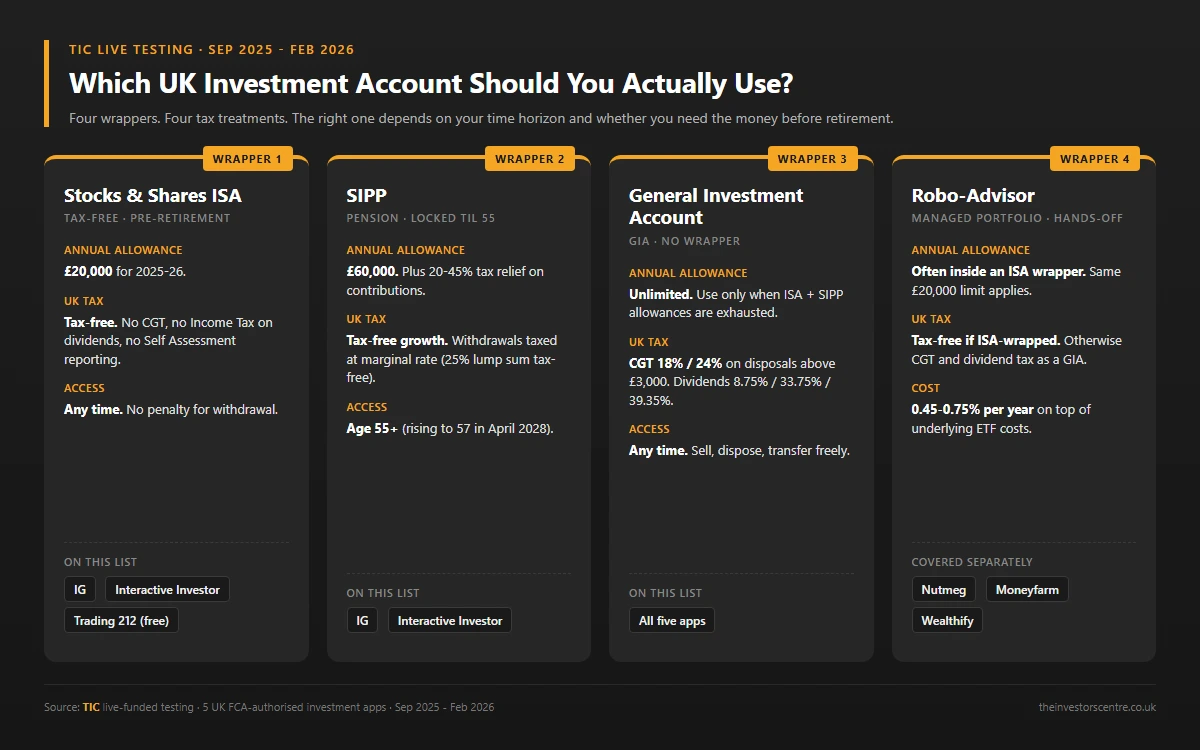
Which type of UK investment account should you actually use?
Four wrappers, four different tax treatments. The right one depends on the investment time horizon and whether you need the money before retirement.
Stocks & Shares ISA (IG, Interactive Investor, Trading 212, Hargreaves Lansdown): real share dealing wrapped in a tax-free shelter. £20,000 annual contribution limit. CGT-free disposals, tax-free dividends. The default home for most UK retail investors.
SIPP (Self-Invested Personal Pension) (IG, Interactive Investor, Hargreaves Lansdown): pension wrapper with the same tax-free investment treatment as an ISA, plus 20-45% income tax relief on contributions (depending on tax band). £60,000 annual allowance. Locked until age 55 (rising to 57 in April 2028).
General Investment Account (GIA) (all five platforms tested): real share dealing with no wrapper. CGT applies on disposal at 18% / 24% for 2025-26 with a £3,000 annual allowance. Use only when ISA and SIPP allowances are exhausted.
Robo-Advisor (Nutmeg, Moneyfarm, Wealthify, InvestEngine): managed portfolio products that invest your money in ETFs based on a risk profile questionnaire. Fees typically 0.45% to 0.75% per year on top of underlying ETF costs. Worth considering for hands-off investors but covered separately to this list.
How do these 6 UK investment apps compare on the numbers?
The six side-by-side on the wrappers, fees and execution data.
| Rank | App | FCA FRN | Wrappers | UK Share Commission | FX Fee | Withdrawal Time |
|---|---|---|---|---|---|---|
| #1 | IG | 195355 | ISA + SIPP + GIA | £3 per trade | 0.50% | 1 business day |
| #2 | eToro | 583263 | ISA + GIA | £0 commission* + 1% spread | 0.50% (USD base) | 2 business days |
| #3 | Interactive Investor | 141282 | ISA + SIPP + GIA + Junior ISA | £3.99 per trade | 1.50% | 1 business day |
| #4 | Trading.com | 705428 | GIA only (no ISA/SIPP) | £0 commission* | Spread on USD/EUR | 1-3 business days |
| #5 | Saxo | 551422 | GIA (SIPP via partner) | 0.08% (min £3) | 0.25% | 2-3 business days |
| #6 | Trading 212 | 609146 | ISA + GIA (free) | £0 commission* | 0.15% | Same day |
Fees as listed on each platform's UK retail tier as of January 2026. ISA wrappers are always commission-free at IG and Trading 212 for ISA-only flows. FX fees apply to US share trades regardless of wrapper. *£0 / commission-free refers to dealing commission only – other costs such as FX conversion on non-GBP trades, spreads and withdrawal fees may still apply.
IG: 17,000+ markets, full ISA + SIPP wrappers and the deepest research toolset on this list
IG Group plc (LSE: IGG, FCA FRN 195355) is a UK-headquartered FTSE-listed broker founded in 1974. The investing side covers Stocks & Shares ISA, SIPP, General Investment Account and Junior ISA on one login, with 17,000+ tradable markets including shares, ETFs, funds, investment trusts and bonds.
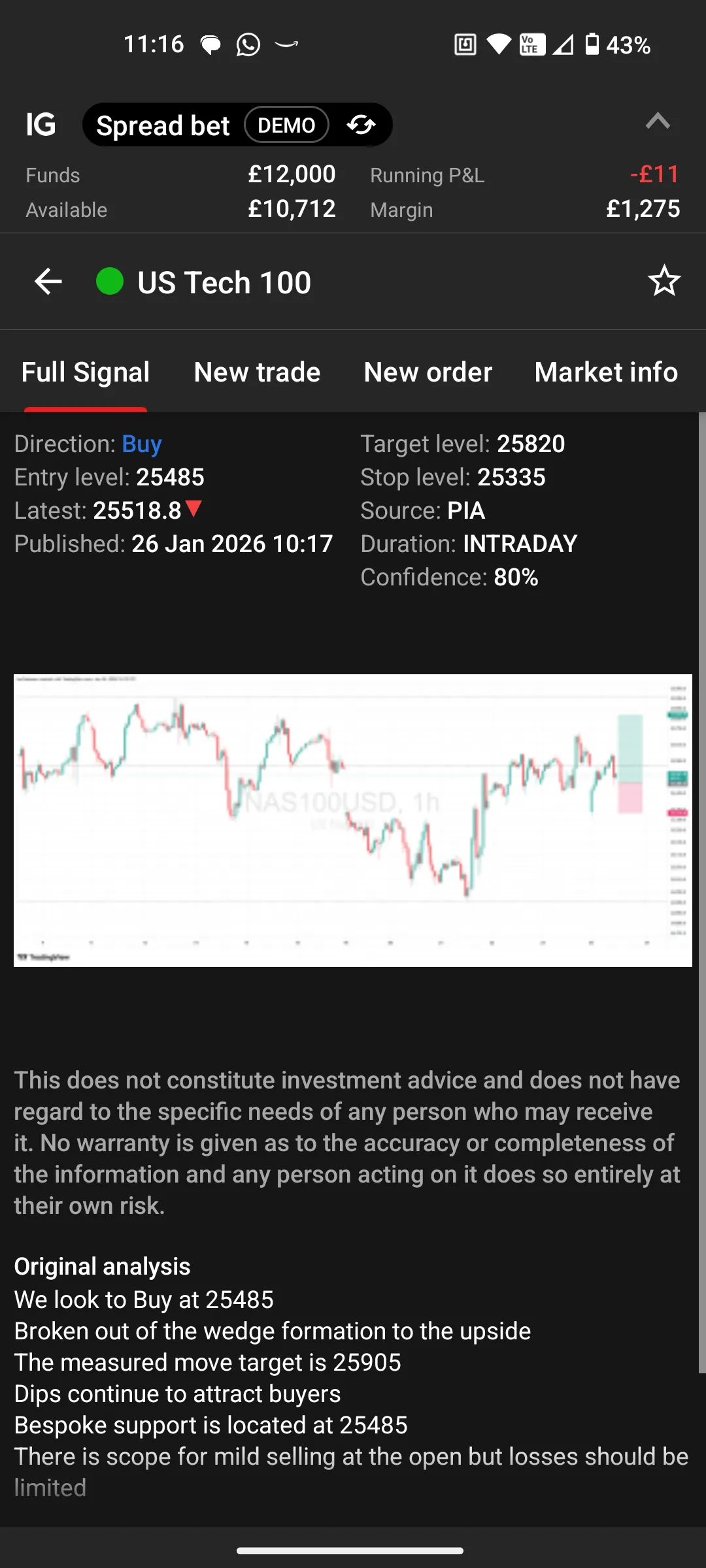
I funded an IG ISA with £500 on 1 September 2025. UK share dealing commission is £3 per trade (waived to zero on US share trades for clients placing 3+ trades a month). FX conversion is 0.50% on US trades. 1-business-day GBP withdrawal. Phone support averaged 12 minutes wait during testing.
Pros (investing lens)
- ISA + SIPP + GIA + Junior ISA wrappers all on one login
- 17,000+ markets (widest of five)
- FTSE-listed parent (IGG) with audited annual accounts
- Same FCA-authorised account also covers spread bet and CFD if needed
Trade-offs (investing lens)
- £3 UK share dealing commission (Trading 212 is free)
- 0.50% FX fee on US trades compounds for active US-share buyers
- App is feature-dense, can overwhelm first-time investors
- Phone support averaged 12 minutes wait during testing
What do IG's costs look like on a £25,000 portfolio?
For a UK-only investor placing 12 trades a year inside an ISA: 12 × £3 dealing commission = £36/year. No platform fee on the Shares ISA above £15,000. Custody charge of 0.25% applies on smaller balances (waived above £15,000). For a US-focused investor at the same portfolio size: dealing is free on US trades above 3 trades/month, but the 0.50% FX fee on a £25,000 US allocation costs ~£125 each way at the conversion boundary. Mid-table costs overall: cheaper than Saxo and Interactive Investor on small portfolios, more expensive than Trading 212 on UK shares.
Who should pick a different UK investment app?
Beginners with small balances and UK-share focus should pick Trading 212 (free ISA, £1 minimum, no dealing commission). Portfolios above £50,000 should pick Interactive Investor's flat-fee model. Multi-asset traders wanting bonds, futures and DMA should pick Saxo.
eToro: the only UK app with social CopyTrader letting you mirror experienced investor portfolios
eToro Group Ltd (FCA FRN 583263) is an Israeli-headquartered multi-asset platform founded in 2007. The UK arm offers real share dealing across 5,000+ stocks alongside CFDs, ETFs and crypto. Signature feature: CopyTrader, which mirrors selected investors' portfolios automatically. eToro launched a UK Stocks & Shares ISA wrapper in 2025, adding tax-efficient share dealing alongside the existing General Investment Account.
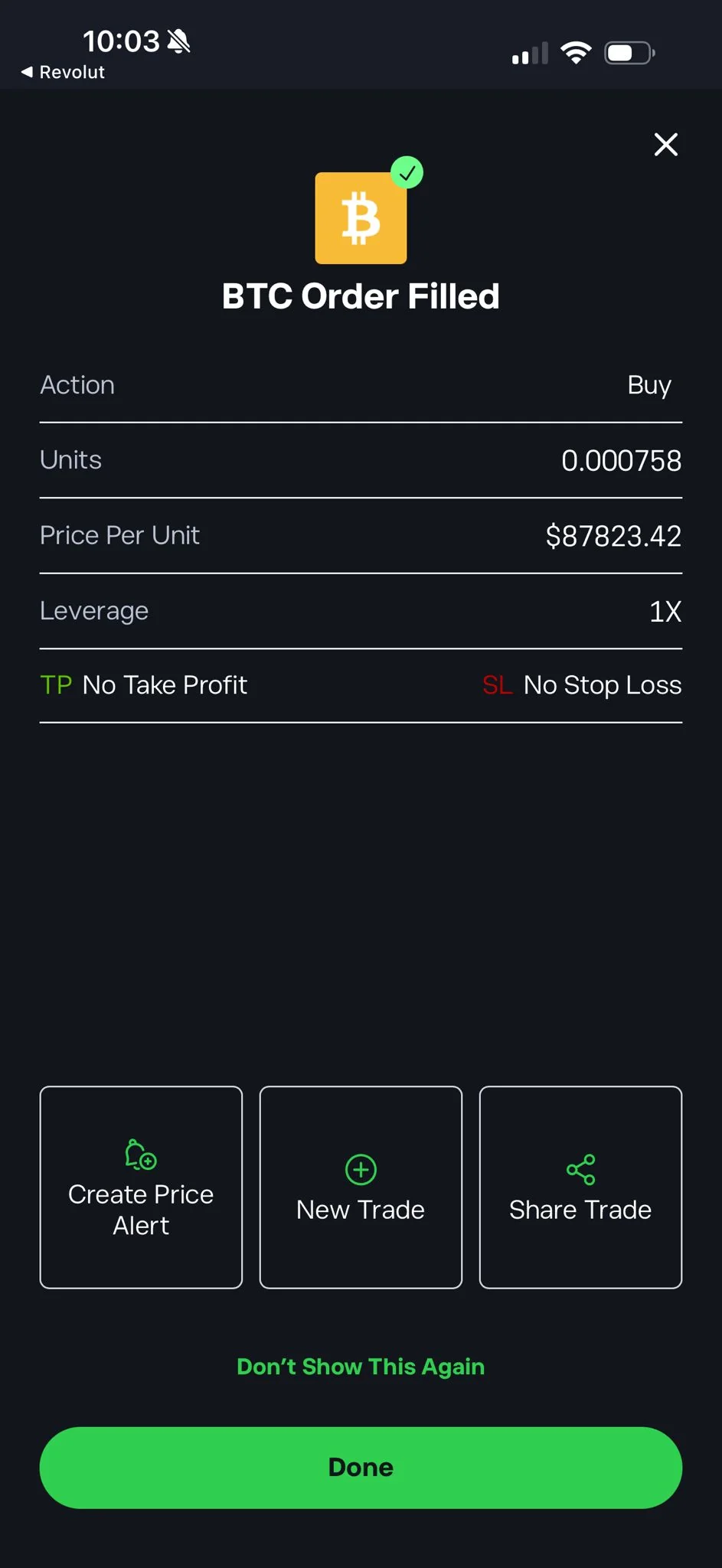
I funded eToro with £500 on 1 September 2025. Commission-free real share dealing (no platform fee for the Invest account). The catch: GBP converts to USD internally at a 50bps spread that applies on every contribution and disposal, including inside the new ISA wrapper.
Pros (investing lens)
- CopyTrader: only UK app with social portfolio mirroring
- Commission-free real share dealing
- 5,000+ US and global stocks on one account
- Dual FCA permissions (investment firm + cryptoasset register)
- UK Stocks & Shares ISA wrapper launched in 2025
Trade-offs (investing lens)
- GBP to USD internal conversion adds hidden 50bps spread (applies in ISA too)
- £4 GBP withdrawal fee (only platform charging one)
- 2-business-day GBP withdrawal (slowest of five)
Does eToro's new UK ISA actually change the calculus?
Partially. The ISA wrapper itself is genuinely tax-free in the standard way (no CGT on disposals, no Income Tax on dividends, £20,000 annual allowance), but the GBP-to-USD conversion spread of ~50bps still applies on every contribution and every withdrawal. On a £10,000 ISA contribution that's roughly £50 of friction not visible as a line-item fee. Worth the ISA wrapper anyway for tax-efficient long-term holds, but if you're optimising every basis point Trading 212's GBP-native ISA at 0.15% FX is cheaper for US-share-heavy portfolios. eToro still wins for anyone wanting CopyTrader inside an ISA.
Who should pick a different UK investment app?
Anyone wanting a SIPP should pick IG or Interactive Investor (eToro UK does not offer one). Anyone wanting cheap UK share dealing without FX drag should pick Trading 212. Anyone with a portfolio above £50,000 should look at Interactive Investor's flat-fee model.
Interactive Investor: flat-fee pricing makes it the cheapest UK platform above £50,000 portfolio size
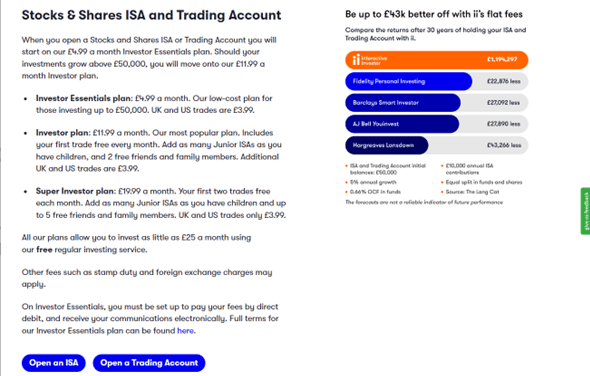
Interactive Investor (abrdn-owned, FCA FRN 141282) is the UK's second-largest investment platform by assets under administration. Flat-fee model: £4.99/month (Investor Essentials, ISA + GIA), £11.99/month (Investor, adds SIPP), £19.99/month (Super Investor). Junior ISA available.
I opened an Interactive Investor ISA with £500 on 1 September 2025. Share dealing commission is £3.99 per trade. The flat-fee model is the structural differentiator: on a £100,000 portfolio, IG's percentage-style fees compound much faster than ii's £11.99/month. The break-even is around £50,000 portfolio size.
Pros (investing lens)
- Flat-fee model wins above £50,000 portfolio size
- ISA + SIPP + Junior ISA + GIA all available
- Free regular investing plan (no dealing commission on direct debit)
- UK's second-largest platform by AUA
Trade-offs (investing lens)
- 1.50% FX fee on US trades (worst of five)
- Flat fee is bad value below £20,000 portfolio (Trading 212 free wins)
- App less polished than IG or Trading 212
- SIPP requires the £11.99/month tier (not Essentials)
When does Interactive Investor's flat fee actually save you money?
The break-even maths against IG's percentage-style fees is roughly £50,000 portfolio size for the Investor tier (£11.99/month = £143.88/year). Below £50,000, IG's 0.25% custody cap and per-trade commissions usually come in cheaper. Above £100,000, ii's flat fee beats IG by hundreds of pounds a year and beats Hargreaves Lansdown's 0.45% AUM platform fee by thousands. The break-even shifts lower if you trade frequently (because ii's free regular-investment plan removes the £3.99 commission on direct-debit purchases). Worth running your own numbers if your portfolio is between £30k and £80k.
Who should pick a different UK investment app?
Beginners and small portfolios should pick Trading 212 (free ISA, £1 minimum). Active traders wanting research depth and a CFD wrapper should pick IG. US-share-focused investors should pick Saxo (0.25% FX fee vs ii's 1.50%) or Trading 212 (0.15%).
Trading.com: commission-free real share dealing with fractional shares and the Vanguard ETF range
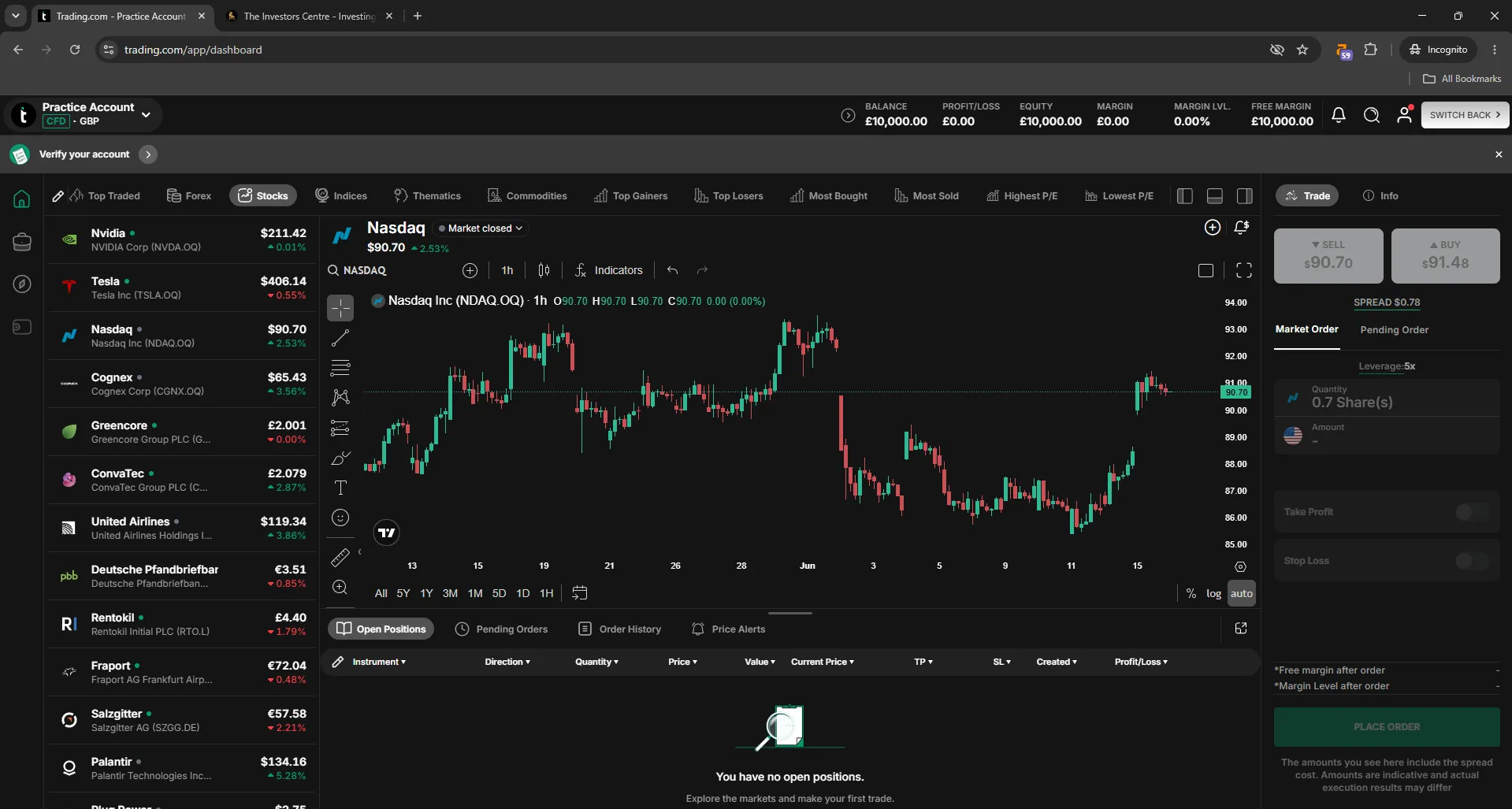
Trading.com (FCA FRN 705428) runs two products under one login: a commission-free Investment Account with real share ownership and a leveraged CFD account. The Invest app now supports fractional shares and the full Vanguard ETF range alongside iShares, Invesco, HSBC and Amundi, with a clean TradingView-powered interface and a £10,000 no-expiry demo.
Real share and ETF dealing is commission-free with no platform fee. An FX-conversion spread applies to USD- or EUR-denominated holdings, and there's a £20 minimum withdrawal. New Invest clients receive a £50 Welcome Credit, can earn 3.05% AER on uninvested GBP cash, and there's a Deposit Offer of 5% investment credit up to £5,000 (UK 18+, capital at risk, T&Cs apply). The honest gap for this list: there's no Stocks & Shares ISA or SIPP yet.
Pros (investing lens)
- Commission-free real shares and ETFs with fractional dealing
- Vanguard plus the iShares, Invesco, HSBC and Amundi UCITS range
- £50 Welcome Credit and 3.05% AER on uninvested cash
- FCA-regulated and FSCS-protected; TradingView charts and MT5
Trade-offs (investing lens)
- No Stocks & Shares ISA or SIPP (general account only)
- FX-conversion spread on non-GBP holdings
- Younger platform with a shorter UK track record
Who is the Trading.com Invest app actually for?
It suits investors who want a simple, commission-free app for real shares and ETFs — now with fractional dealing and the Vanguard range — plus a £50 head start and competitive cash interest. It's also handy for existing Trading.com CFD users who want a buy-and-hold pot in the same login. Because there's no ISA or SIPP yet, tax-wrapper money is better held at IG, Interactive Investor or Trading 212 for now.
Who should pick a different UK investment app?
Anyone who needs a Stocks & Shares ISA or SIPP should pick IG, Interactive Investor or Trading 212. Beginners wanting the lowest entry point should pick Trading 212 (free ISA, £1 minimum). Multi-asset traders wanting bonds and futures should pick Saxo.
Saxo: 70,000+ instruments across stocks, bonds, ETFs and futures with the lowest FX fee on this list
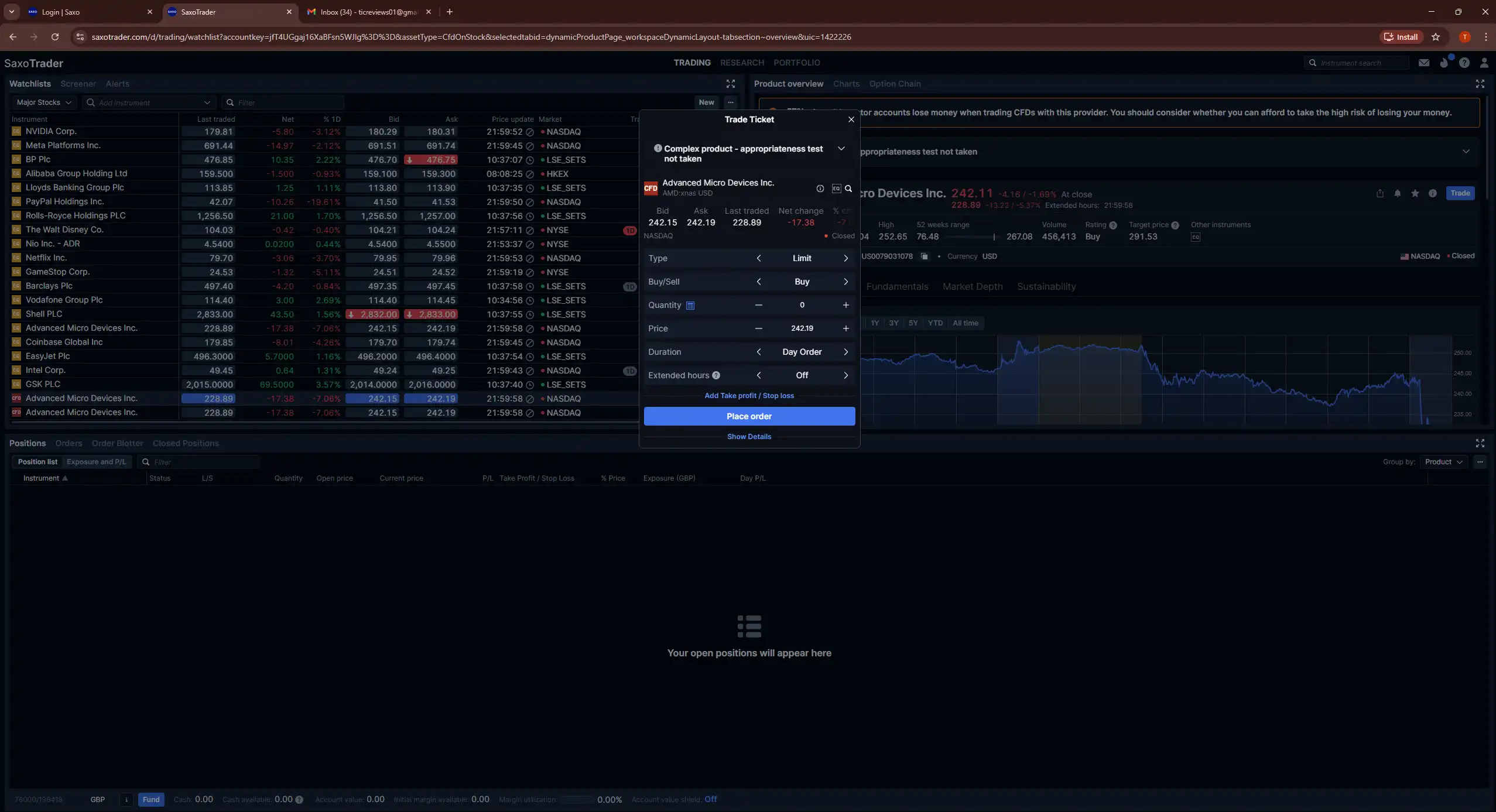
Saxo Bank A/S is a Danish-headquartered investment bank founded in 1992 (FCA FRN 551422). The UK arm offers 70,000+ instruments across stocks, ETFs, mutual funds, bonds, futures and options. SaxoTraderGO (web) and SaxoTraderPRO (desktop) provide professional-grade tooling.
I opened a Saxo Classic account with £500 on 1 September 2025. UK share dealing 0.08% (minimum £3 per trade). FX fee 0.25% (lowest of five on this list). No native UK Stocks & Shares ISA; SIPP available via partner platform.
Pros (investing lens)
- 70,000+ instruments (widest catalogue of five)
- 0.25% FX fee (lowest of five)
- SaxoTraderPRO is the professional-grade desktop platform on this list
- Bonds, futures and options all available alongside shares
Trade-offs (investing lens)
- No native UK Stocks & Shares ISA wrapper
- SIPP only via partner platform (not direct)
- 2-3 business day GBP withdrawal (slowest of five)
- Tiered pricing (Classic / Platinum / VIP): best fees gated to higher balances
Is Saxo's tiered pricing worth the upgrade?
Classic is what most retail clients open. Platinum kicks in at £50,000 balance and drops dealing commissions by 30-50% across the asset classes. VIP (£200,000+) gets bespoke pricing and a dedicated relationship manager. The upgrade only matters once you trade regularly at meaningful size: a buy-and-hold investor at £100,000 doesn't pay much more on Classic than on Platinum because the dealing fees are infrequent. An active multi-asset trader at the same balance saves several hundred pounds a year on Platinum. The tier shift is more about trade frequency than portfolio size in isolation.
Who should pick a different UK investment app?
Anyone wanting a native ISA wrapper should pick IG, Interactive Investor, eToro or Trading 212. Beginners should pick Trading 212 or IG. Anyone wanting social copy trading should pick eToro.
Trading 212: free Stocks & Shares ISA, £1 minimum and commission-free real share dealing
Trading 212 (FCA FRN 609146) is a UK-authorised broker offering real share dealing through a free Stocks & Shares ISA or general investment account. Mobile-first app, commission-free trading, fractional shares supported.
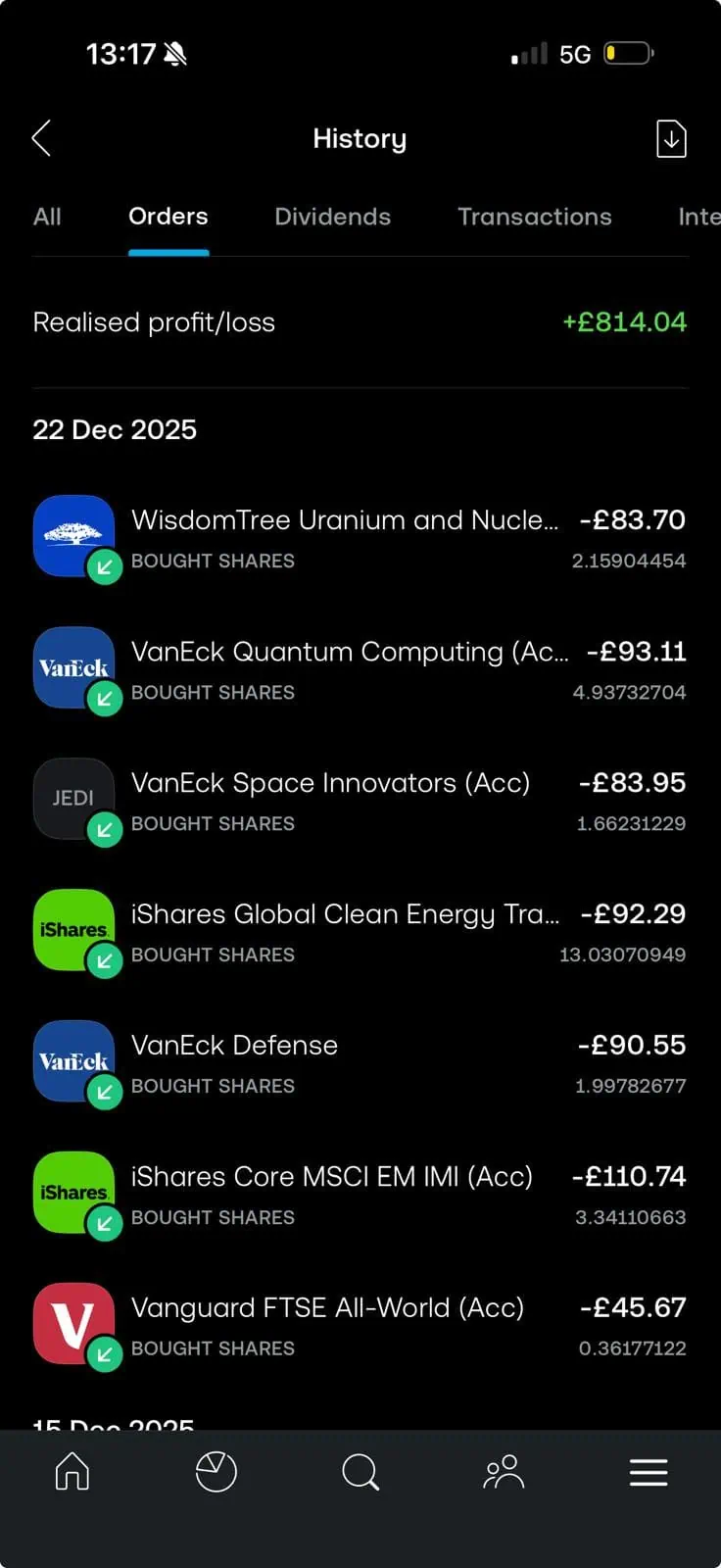
I opened a Trading 212 ISA with £100 on 1 September 2025. Real share dealing is genuinely commission-free with no platform fee. 0.15% FX conversion (lowest of five). Same-day GBP withdrawal. The standout for beginners: £1 minimum deposit and fractional dealing mean you can build a diversified portfolio with very small amounts.
Pros (investing lens)
- Free Stocks & Shares ISA, no platform fee
- Commission-free real share dealing
- 0.15% FX fee (lowest of five)
- £1 minimum + fractional shares = no barriers to start
Trade-offs (investing lens)
- No SIPP wrapper (ISA + GIA only)
- No Junior ISA
- Customer support email-only (no phone line)
- Research and analyst tools lighter than IG or Interactive Investor
Is Trading 212's free ISA actually free?
Yes on the headline. No platform fee, no dealing commission, no ISA admin charge. Trading 212 makes money on three quieter things: the 0.15% FX conversion fee on US trades, the spread on its CFD product (separate account, not the Invest/ISA), and uninvested cash interest (they pay clients ~4% but earn more on the underlying balance). For a UK-share-only investor inside the ISA, the cost is genuinely near zero. For a US-heavy portfolio the FX fee adds up: 0.15% each way means ~£30 per £10,000 round-trip in USD shares. Still the cheapest of the five for US-share investing.
Who should pick a different UK investment app?
Anyone needing a SIPP should pick IG or Interactive Investor. Anyone with a portfolio above £50,000 should look at Interactive Investor's flat-fee model. Anyone wanting research depth and analyst notes should pick IG. Multi-asset traders wanting bonds and futures should pick Saxo.
How did I actually test these UK investment apps?
I funded all five apps with my own capital between 1 September 2025 and 28 February 2026. Real ISAs, GIAs and SIPPs opened where supported, real share trades placed in UK and US equities, FX conversion costs logged at each platform. No demo accounts, no press kits. Dom Farnell ran parallel test accounts to cross-check the results.
What I measured
Account setup time from email signup to first executable trade. UK share dealing commission per trade. US share dealing commission per trade. FX conversion fee on US trades (charged on both buy and sell). Platform fee (where applicable). Withdrawal time from request to bank confirmation. Phone support wait times and email response latency. ISA wrapper availability and the contribution flow.
What I almost got wrong during testing
I started this test ready to crown Trading 212 the overall winner because the commission-free real shares + free ISA combo looks unbeatable on paper. Then I checked the FX conversion cost on US trades and realised it's the single biggest hidden cost most platforms charge: 0.15% on Trading 212 (cheapest), 1.50% on Interactive Investor (worst). On a £5,000 US share purchase, that's £7.50 vs £75. For UK-only investing the FX cost doesn't apply. For US-heavy portfolios the FX cost compounds faster than any dealing commission. Always check the FX fee before the headline commission.
Download the full testing dataset
The data behind this page lives in the TIC dataset hub: see the UK Investing Platforms dataset for the full per-platform fee schedule, wrapper availability, withdrawal test timestamps, FCA Firm Reference Numbers and platform-level scores across 13 UK platforms tested.
Is UK investment app investing legal and safe?
Investing through a UK app is legal and FCA-regulated. Capital is still at risk, but the regulatory framework is well-established.
FCA authorisation and FSCS £85,000 cover
All five apps on this list hold FCA authorisation as investment firms: client money sits in segregated UK bank accounts, FSCS £85,000 cover applies to cash and cleared investment products if the platform fails. Real share holdings inside an ISA are also protected because the underlying shares are registered to your name via the broker's nominee structure. Verify any app's FCA FRN at register.fca.org.uk before funding.
How are UK investment app profits actually taxed?
The tax treatment flows from the wrapper, not the app.
ISA: tax-free disposals, tax-free dividends
Stocks & Shares ISA gains and dividends are exempt from CGT and Income Tax for UK residents, regardless of how much you make. £20,000 annual contribution allowance for 2025-26. No need to report ISA gains on Self Assessment.
SIPP: tax relief on contributions, tax-free growth
SIPP contributions get tax relief at 20% (basic rate) to 45% (additional rate). Investments grow tax-free inside the wrapper. Withdrawals from age 55 (rising to 57 in 2028) are taxed at marginal rate after the 25% tax-free lump sum. £60,000 annual contribution allowance.
General Investment Account: CGT on disposals, Income Tax on dividends
For 2025-26 the CGT rates are 18% basic and 24% higher (Autumn Budget 2024 alignment). The annual exempt amount is £3,000 (cut from £12,300 in 2022-23). Dividends taxed at 8.75% / 33.75% / 39.35% by income tax band, with a £500 dividend allowance.
So which UK investment app should you actually pick?
A note for first-time investors before the picks below. Trading 212 (free ISA, £1 minimum, commission-free dealing) is the lowest-friction starting point for small UK-share portfolios. IG wins the moment you need a SIPP, research depth or a wrapper that also covers spread bet and CFD.
IG for serious long-term investors with multi-wrapper needs
ISA + SIPP + GIA + Junior ISA all on one login, 17,000+ markets, FTSE-listed parent with audited accounts. Trade-off: £3 UK dealing commission, 0.50% FX fee, feature-dense interface.
Interactive Investor for portfolios above £50,000
Flat-fee £11.99/month covers ISA, SIPP, GIA and Junior ISA. Beats percentage-based platforms at scale. Trade-off: 1.50% FX fee on US trades, smaller portfolios pay relatively more per pound invested.
FAQs
What's the best UK investment app for beginners?
Trading 212 on this test: free Stocks & Shares ISA, £1 minimum, fractional dealing, commission-free real shares. IG is the close second if you want research depth and might need a SIPP later.
How much money do I need to start investing through a UK app?
Trading 212 accepts £1, the lowest of the five. The other four accept varying minimums but a credible starter portfolio that absorbs the dealing costs needs £500 to £1,000 in practice.
Are profits from UK investment apps tax-free inside an ISA?
Yes. Disposals and dividends inside a Stocks & Shares ISA are exempt from CGT and Income Tax regardless of how much you make. £20,000 annual contribution allowance.
Which UK investment app has the lowest fees on US shares?
Trading 212 at 0.15% FX conversion plus zero dealing commission. Saxo at 0.25% FX. IG at 0.50% FX with zero commission above 3 trades/month. Interactive Investor at 1.50% FX is the most expensive of the five.
Can I hold a SIPP and an ISA on the same app?
Yes on IG and Interactive Investor (both offer ISA + SIPP on one login). Trading 212 offers ISA but no SIPP. Saxo, eToro and Trading.com offer neither natively for UK retail.
References
- FCA Register
- FSCS Compensation Limits
- HMRC CGT Allowance 2025-26 (£3,000)
- gov.uk Individual Savings Accounts (ISA)
- gov.uk Personal Pensions and SIPPs
- IG Markets (FRN 195355) – FCA Register
- eToro (FRN 583263) – FCA Register
- Interactive Investor (FRN 141282) – FCA Register
- Saxo Capital Markets UK (FRN 551422) – FCA Register
- Trading 212 (FRN 609146) – FCA Register
- Trading.com Markets UK Limited (FRN 705428) – FCA Register