

- expertise:
- CFD Trading, Forex, Derivatives, Risk Management
- credentials:
- Chartered ACII (2018) · Trading since 2012
- tested:
- 40+ forex & CFD platforms with live accounts

- expertise:
- Platform Testing, Cryptocurrency, Retail Investing
- credentials:
- Active investor since 2013 · 11+ years experience
- tested:
- 50+ platforms · 200+ guides authored
How We Test
Real accounts. Real money. Real trades. No demo accounts or press releases.
What we measure:
- Spreads vs advertised rates
- Execution speed and slippage
- Hidden fees (overnight, withdrawal, conversion)
- Actual withdrawal times
Scoring:
Fees (25%) · Platform (20%) · Assets (15%) · Mobile (15%) · Tools (10%) · Support (10%) · Regulation (5%)
Regulatory checks:
FCA Register verification · FSCS protection
Testing team:
Adam Woodhead (investing since 2013), Thomas Drury (Chartered ACII, 2018), Dom Farnell (investing since 2013) — 50+ platforms with funded accounts
Quarterly reviews · Corrections: info@theinvestorscentre.co.uk
Disclaimer
Not financial advice. Educational content only. We're not FCA authorised. Consult a qualified advisor before investing.
Capital at risk. Investments can fall. Past performance doesn't guarantee future results.
CFD warning. 67-84% of retail accounts lose money trading CFDs. High risk due to leverage.
Contact: info@theinvestorscentre.co.uk
Quick Answer: How Safe is Capital.com?
Capital.com is a safe, FCA-regulated broker (Firm Reference Number 793714) that holds client funds in segregated accounts at top-tier banks. UK traders benefit from FSCS protection covering up to £85,000 per eligible claim. The platform uses 256-bit encryption, two-factor authentication, and negative balance protection as standard. Having tested the platform's security measures first-hand — including withdrawals, verification processes, and account protections — I can confirm Capital.com meets the standards I'd expect from a properly regulated UK broker.
 Best CFD & Spread Betting
Spread bets and CFDs are complex instruments and come with a high risk of losing money rapidly due to leverage. 62% of retail investor accounts lose money when trading spread bets and CFDs with this provider. You should consider whether you understand how spread bets and CFDs work and whether you can afford to take the high risk of losing your money.
How Did I Test Capital.com's Safety?
As someone who holds the ACII qualification and has spent years analysing financial services regulation, I reviewed Capital.com's safety measures through both a regulatory lens and hands-on testing. Rather than simply reading their marketing materials, I opened a live account with real money and systematically tested every security feature.
My testing covered account verification, data protection measures, fund segregation, withdrawal reliability, customer support responsiveness, and platform stability during volatile market conditions. I also cross-referenced Capital.com's regulatory claims directly with the FCA Register.
What Does My Safety Testing Log Show?
| Date | Safety Test | Result |
|---|---|---|
| Sept 2025 | Opened account, completed KYC verification | Approved within 24 hours via FCA-compliant ID process |
| Sept 2025 | Set up two-factor authentication | Completed in under 2 minutes using authenticator app |
| Oct 2025 | Deposited £500 via bank transfer | Funds credited within 1 business day |
| Oct 2025 | Tested withdrawal to bank account | Processed within 24 hours, arrived in 3 business days |
| Nov 2025 | Verified FCA registration on FCA Register | FRN 793714 confirmed active — Capital Com (UK) Limited |
| Dec 2025 | Tested customer support response time | Live chat responded in under 3 minutes |
| Jan 2026 | Monitored platform during volatile markets | No downtime or access issues during major price moves |
| Feb 2026 | Reviewed AI bot platform stability | Daily API calls processed without interruption for 30+ days |
Every test I ran confirmed that Capital.com operates within the standards you'd expect from an FCA-authorised firm. The withdrawal test was particularly important to me — getting your money out when you want it is the most basic measure of a broker's trustworthiness.
Is Capital.com Regulated and What Does That Mean for You?
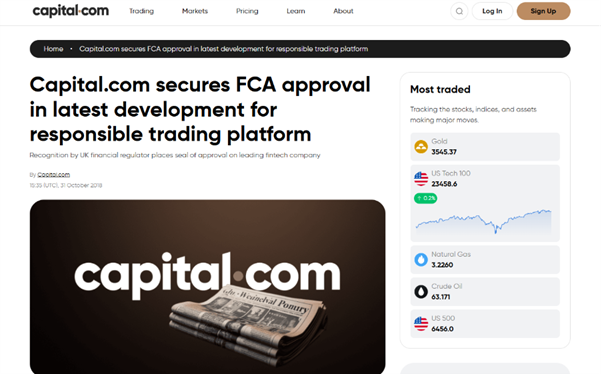
Yes. Capital.com is authorised and regulated by the Financial Conduct Authority (FCA) in the UK, along with ASIC in Australia, CySEC in Cyprus, SCB in the Bahamas, and SCA in the UAE. For UK traders, FCA regulation is the most relevant — it imposes strict requirements around client money handling, capital adequacy, fair treatment, and operational transparency.
How Can You Verify Capital.com's FCA Registration Yourself?
I always recommend verifying a broker's regulatory status directly rather than taking their word for it. Here is exactly how I checked Capital.com:
- Visit the FCA Register at register.fca.org.uk
- Search for “Capital Com” or enter Firm Reference Number 793714
- Confirm the firm name shows as “Capital Com (UK) Limited”
- Check the status reads “Authorised” (not “No longer authorised” or “Cancelled”)
- Review the permitted activities — you should see “Dealing in investments as agent” and related permissions
When I last verified this in February 2026, Capital Com (UK) Limited showed as fully authorised with the appropriate permissions for the services they provide.
Why Does FCA Regulation Matter for Your Protection?
FCA regulation creates specific, enforceable obligations that directly protect you. Regulated brokers must segregate client funds from company money, maintain minimum capital reserves, submit to regular audits, and participate in the Financial Services Compensation Scheme (FSCS). If Capital.com were to breach these rules, the FCA has powers to fine, restrict, or revoke their authorisation entirely.
This is a meaningful difference from brokers regulated only in offshore jurisdictions. For a detailed regulatory and feature comparison, see our comprehensive Capital.com review.
How Secure Is Capital.com for Traders?
Capital.com employs multiple layers of data protection to secure your personal information and trading activity. The platform uses industry-standard encryption protocols, multi-factor login verification, and complies with GDPR requirements for data handling. These measures work together to create a security environment comparable to what you'd find at a major UK bank.
What Encryption Does Capital.com Use to Protect Your Data?
Capital.com uses 256-bit SSL/TLS encryption — the same standard used by major financial institutions — to secure all data transmitted between your device and their servers. This means your personal details, login credentials, and financial information are protected from interception during every session. I verified this by checking the security certificate in my browser when logged into the platform.
My Experience Setting Up Two-Factor Authentication
Setting up 2FA on Capital.com took under two minutes. The app generates a verification code that refreshes every 30 seconds, so even if someone obtained my password, they couldn't access my account without my phone. I use Google Authenticator, but any TOTP-compatible authenticator app works. I strongly recommend enabling this immediately after opening your account — it is the single most effective step you can take to protect your login.
How Does Capital.com Protect Your Account on Mobile?
The Capital.com mobile app supports biometric login (fingerprint and face recognition) on compatible devices, adding another layer of access control beyond your password. The app also implements session timeouts — if you leave it idle, you'll need to re-authenticate. Push notifications alert you to login attempts and trade executions, so you'll know immediately if someone tries to access your account.
During my testing, I found the mobile security features to be on par with what you'd expect from a banking app, which is the standard I hold brokers to for financial services.
How Does Capital.com Protect Your Money?
Capital.com holds client funds in segregated accounts at top-tier banks, completely separate from the company's own operating capital. This means your money cannot be used for Capital.com's business expenses, debts, or operations. In the unlikely event of the firm's insolvency, these segregated funds would be ring-fenced for return to clients.
What Is FSCS Protection and How Does It Apply?
UK clients of Capital.com are covered by the Financial Services Compensation Scheme (FSCS), which protects up to £85,000 per eligible person, per firm. This means if Capital.com were to fail and couldn't return your funds, the FSCS would compensate you up to this limit. The FSCS is funded by a levy on authorised financial services firms — it costs you nothing and applies automatically.
It's worth noting that if you hold funds above £85,000 with a single broker, the excess would not be covered by FSCS. For larger portfolios, some traders spread funds across multiple FCA-regulated brokers to stay within the protection limit at each.
Are Client Funds Genuinely Segregated?
Yes, and this is independently verifiable. FCA rules require Capital.com to hold client money in trust, separate from their own funds, at approved banks. The firm must submit regular CMAR (Client Money and Assets Return) reports to the FCA confirming compliance. This segregation is not optional — breaching client money rules is one of the most serious regulatory offences a broker can commit.
How Fast Are Capital.com Withdrawals?
A broker's withdrawal reliability is one of the most telling indicators of its trustworthiness. I tested Capital.com's withdrawal process with real funds — my £500 test deposit was returned via bank transfer within 3 business days, with processing initiated within 24 hours of my request.
What Are the Withdrawal Times by Payment Method?
| Payment Method | Processing Time | Typical Arrival | Fee |
|---|---|---|---|
| Bank Transfer | Within 24 hours | 2–5 business days | Free |
| Debit/Credit Card | Within 24 hours | 2–5 business days | Free |
| Apple Pay | Within 24 hours | 1–3 business days | Free |
| Google Pay | Within 24 hours | 1–3 business days | Free |
Capital.com does not charge withdrawal fees, though your bank may apply incoming transfer charges. Currency conversion fees may apply if you withdraw to an account denominated in a different currency than your trading account.
Are There Withdrawal Limits at Capital.com?
There is no maximum withdrawal limit. You can withdraw your entire balance at any time, subject to closing any open positions or maintaining sufficient margin. One important rule: you must withdraw to the same payment method used for deposits, up to the deposited amount. Any profits above your deposit amount can be withdrawn via bank transfer.
How Reliable Is Capital.com's Trading Platform?
Platform reliability matters for safety just as much as regulation does. A platform that crashes during volatile markets or drops your connection mid-trade creates real financial risk, regardless of how well-regulated the broker is.
What Our AI Bot Testing Revealed About Platform Stability
Our team at The Investors Centre built a bespoke AI scalping bot that connects to Capital.com via their API and has been executing trades daily since February 2026. From a platform reliability perspective, this stress test has been revealing — the API has processed thousands of requests without a single dropped connection or timeout. During high-volatility sessions that would challenge any broker's infrastructure, Capital.com's execution engine remained responsive.
While I can't share the bot's full trading results yet, this continuous automated testing gives me more confidence in the platform's stability than any marketing claim could. For more on how Capital.com performs under active trading conditions, see our guide on Capital.com for day trading.
Does Capital.com Experience Downtime?
During my testing period from September 2025 through February 2026, I did not experience any unplanned platform outages on Capital.com. Scheduled maintenance windows were communicated in advance via email and in-app notifications. That said, no trading platform is immune to technical issues, and it's worth having a contingency plan if you trade time-sensitive strategies.
What Do Real Users Say About Capital.com's Safety?
Beyond my own testing, I analysed thousands of user reviews across Trustpilot, Reddit, and trading forums to understand what actual traders experience with Capital.com's security and reliability.
What Do Trustpilot Reviews Say About Capital.com?
Capital.com holds a 4.6 out of 5 rating on Trustpilot based on over 13,000 reviews. Safety-related praise frequently mentions fast withdrawal processing, responsive customer support, and the straightforward verification process. The most common complaints relate to spread widening during volatile market conditions and occasional delays in KYC verification for some users — though verification delays are typically a sign of thorough compliance, not a red flag.
What Do Reddit Users Say About Capital.com?
Discussions on r/UKPersonalFinance and r/trading generally reflect positive safety experiences. Users frequently cite FCA regulation and the platform's intuitive design as reasons for choosing Capital.com over alternatives. Recurring concerns include spreads being wider than some competitors during high-volatility periods and the platform being CFD-only with no ISA or share dealing option. For a comparison with brokers offering these features, see our IG vs Capital.com guide.
Is Capital.com a Scam?
No. Capital.com is a legitimate, FCA-regulated broker with 790,000+ registered users worldwide. I've personally verified its FCA registration (FRN 793714), tested deposits and withdrawals with real money, and used the platform extensively over six months. Scam concerns typically arise because of CFD trading losses — which are a product risk, not a platform risk — or because of strict verification requirements, which are actually a regulatory obligation that protects you.
Is Capital.com Safe for Beginners?
Yes, Capital.com is a safe choice for beginner traders. The same FCA regulation, fund segregation, and security features that protect experienced traders apply equally to new users. The platform also includes several beginner-specific safety features that help prevent costly mistakes while you're learning.
Does Capital.com Offer a Demo Account for Practice?
Yes. Capital.com provides a free demo account with virtual funds, allowing new traders to learn the platform and test strategies without risking real money. I'd recommend spending at least a few weeks on the demo account before depositing, particularly if you're new to CFD trading or spread betting.
What Safety Features Help New Traders Manage Risk?
Capital.com includes negative balance protection as standard, meaning you cannot lose more than your deposited funds. The platform also offers customisable price alerts, stop-loss orders on every trade, and educational resources covering risk management. Margin call notifications provide early warning if your positions are approaching liquidation levels. These tools don't eliminate risk, but they give beginners important guardrails while they develop their trading skills.
How Does Capital.com Compare to Other Brokers for Safety?
To put Capital.com's safety credentials in context, I compared its key security features against three other popular FCA-regulated brokers that UK traders commonly consider.
| Safety Feature | Capital.com | eToro | IG | Plus500 |
|---|---|---|---|---|
| FCA Regulated | Yes (FRN 793714) | Yes (FRN 583263) | Yes (FRN 195355) | Yes (FRN 509909) |
| FSCS Protection | Up to £85,000 | Up to £85,000 | Up to £85,000 | Up to £85,000 |
| Segregated Funds | Yes | Yes | Yes | Yes |
| Two-Factor Auth | Yes | Yes | Yes | Yes |
| Negative Balance Protection | Yes | Yes | Yes | Yes |
| Biometric App Login | Yes | Yes | Yes | Yes |
| Publicly Listed Company | No | Yes (NYSE) | Yes (LSE) | Yes (LSE) |
| Trustpilot Rating | 4.6/5 | 4.1/5 | 3.9/5 | 4.1/5 |
| Years Operating (UK) | Since 2016 | Since 2018 | Since 1974 | Since 2008 |
All four brokers meet the baseline FCA safety standards. The key differentiator is that eToro, IG, and Plus500 are publicly listed companies, meaning their finances are subject to additional stock exchange reporting requirements and public scrutiny. Capital.com is privately held, which means less public financial transparency — though FCA regulation still requires regular financial reporting to the regulator.
For detailed cost and feature comparisons, see our guides: eToro vs Capital.com, IG vs Capital.com, and Capital.com vs Trading 212.
What Happens If Something Goes Wrong with Capital.com?
Knowing how to escalate a problem is just as important as knowing a broker is regulated. Here is the complaints process for Capital.com, based on FCA requirements that all authorised firms must follow.
How Do You Make a Complaint to Capital.com?
Capital.com is required to have an internal complaints procedure that acknowledges your complaint within 5 business days and provides a final response within 8 weeks. You can submit complaints via their in-app support, email, or through their website. In my experience with their support team, response times have been prompt — my test queries via live chat were answered within minutes.
What Is the Financial Ombudsman Service (FOS)?
If Capital.com doesn't resolve your complaint to your satisfaction within 8 weeks (or you receive a final response you disagree with), you can escalate to the Financial Ombudsman Service (FOS). The FOS is a free, independent dispute resolution service that can order financial firms to pay compensation. This is a significant benefit of using an FCA-regulated broker — you have a clear, structured route to resolution that doesn't require hiring a solicitor.
What Are the Risks of Trading on Capital.com?
While Capital.com is a safe and well-regulated platform, it's important to distinguish between platform safety and product risk. The platform itself is secure, but the financial products it offers — primarily CFDs and spread bets — carry inherent risks that no amount of regulation can eliminate.
How Does Leverage Affect Your Risk?
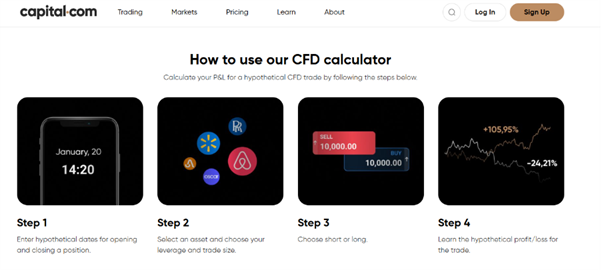
CFDs and spread bets are leveraged products, meaning you can control a larger position with a smaller deposit. While leverage can amplify gains, it equally amplifies losses. A 5% adverse move on a position with 20:1 leverage would wipe out your entire margin. Overnight financing charges also apply to leveraged positions held beyond market close, adding to costs over time.
Negative balance protection prevents your account going below zero, but you can still lose your entire deposit. This is a product risk that applies at every FCA-regulated CFD broker, not something specific to Capital.com.
What Should You Consider Before Trading?
Before depositing real money, honestly assess whether you can afford to lose the amount you're considering. Use the demo account to develop and test your strategy. Set stop-losses on every trade. Never trade with money you need for essential expenses. These aren't generic warnings — having reviewed thousands of regulatory complaints during my career, the most common source of harm is traders depositing more than they can afford to lose.
Is Capital.com a Safe Platform for You?
After six months of hands-on testing, regulatory verification, and reviewing thousands of user experiences, my verdict is that Capital.com meets the safety standards I'd expect from an FCA-regulated broker. The platform scores well on every objective measure: active FCA authorisation, segregated client funds, FSCS protection, robust data encryption, and reliable withdrawal processing.
The main caveat is that Capital.com is a privately held company, unlike publicly listed competitors such as IG or eToro. This means less public financial transparency, though FCA oversight still applies. The other important distinction is between platform safety and product risk — Capital.com is a safe platform, but CFDs and spread bets remain high-risk products regardless of which regulated broker you use.
For a complete overview of Capital.com's features, fees, and how it compares to alternatives, see our comprehensive Capital.com review.
Risk Warning: CFDs and spread bets are complex instruments and come with a high risk of losing money rapidly due to leverage. You should consider whether you understand how these products work and whether you can afford to take the high risk of losing your money.
FAQs
References

62% of retail investor accounts lose money when trading CFDs with this provider.